

Fast, Reliable Spray Foam Insulation Across Quartz Hill
Spray foam insulation in Quartz Hill typically runs $2,800-$7,500 depending on scope, with most attic and rim-joist jobs completed in one day. Our crews serve Quartz Hill from our Los Angeles dispatch office, and we answer calls live 24/7 at (661) 526-2890. If you’re tired of summer utility bills that don’t match what your neighbors pay, the problem usually isn’t your HVAC unit. It’s the envelope.
We’ve worked enough Quartz Hill homes to know the pattern. The 1970s and 1980s tract houses between 50th Street West and Avenue L, the ranch-style builds near the Quartz Hill Library, the post-boom neighborhoods off Challenger Way - they share a common flaw. Builders in the Antelope Valley’s affordability rush framed with 2×4 walls, dropped in minimal R-19 batts, and moved to the next lot. Forty years of 130°F seasonal swings later, that insulation has settled to half its rated value, and the wall cavities are bleeding conditioned air every time the high-desert wind picks up.
Why Topside Attic Insulation Lancaster Is Quartz Hill’s Preferred Spray Foam Insulation Company
We’ve sealed and insulated over 9,000 homes since 2016, and a growing share of them sit right here in Quartz Hill. Our reviews from local homeowners consistently mention the same thing: we find the air leaks others skip. One recent customer on the west side near 50th Street West noted that three prior contractors quoted insulation without ever mentioning the open rim joists pulling desert air through her walls.
Response time to Quartz Hill runs same-day or next-day for most calls. Our crews know the local housing stock - the low-pitched roofs that bake in summer sun, the vented attics that turn into convection ovens in July, the original construction dates that tell us what we’ll find before we pull the hatch. We don’t guess. We test, document, and show you the numbers.
Under Haven Standard: Arrive on schedule, you get a named technician and a text when they are on the way. Every job begins with a written price and ends with a Documented Photo Record. On applicable jobs, we provide before-and-after blower-door readings so you can verify the air-sealing result in a single figure.
Our Spray Foam Insulation Services in Quartz Hill
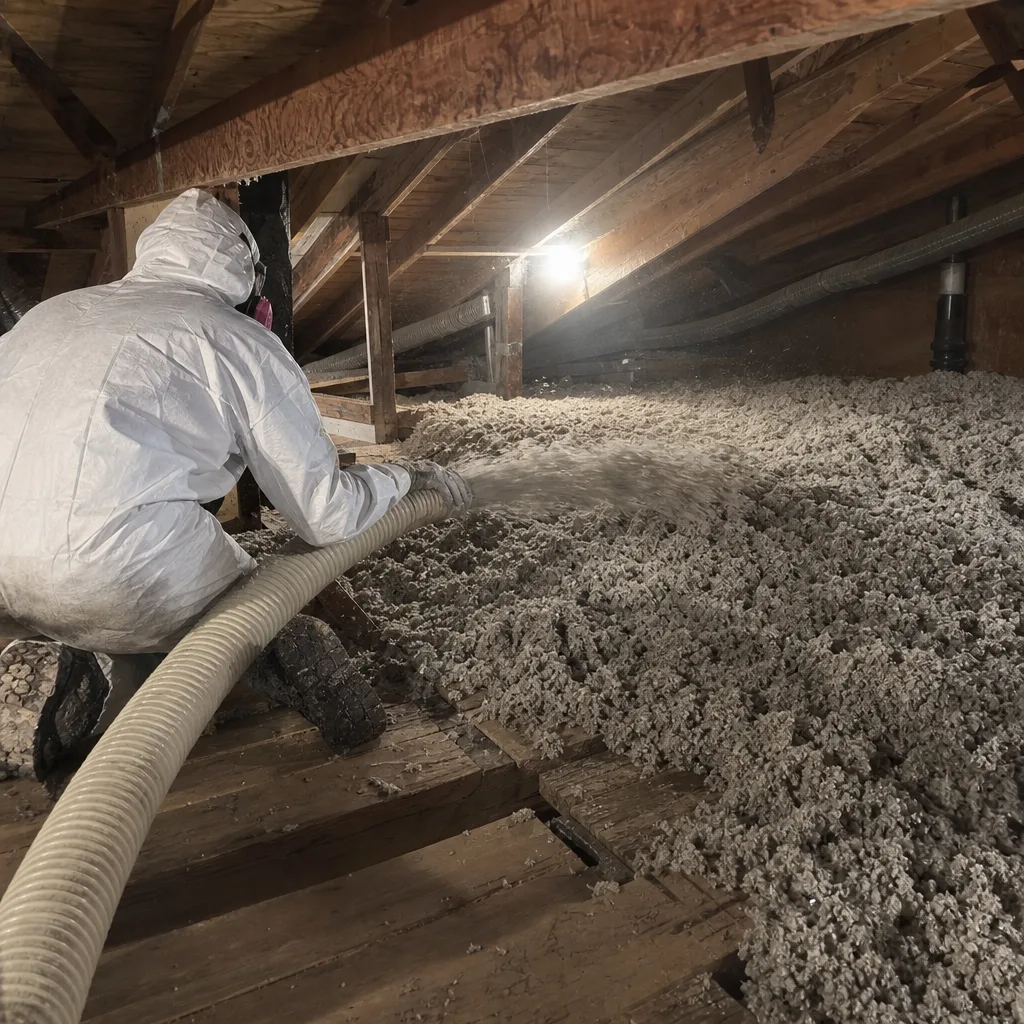
Closed-Cell Spray Foam
Closed-cell spray foam is our primary recommendation for Quartz Hill’s 2×4 wall cavities and rim joists. At roughly R-6.5 per inch, it delivers the highest R-value per inch available in residential work, and its rigid structure adds shear strength to walls that weren’t designed for Antelope Valley wind loads. We source closed-cell products from Johns Manville and CertainTeed - no proprietary lock-in, so we spec what’s right for your assembly, not what’s cheapest for us to stock.
In Quartz Hill specifically, closed-cell shines where wind-driven air infiltration is the real enemy. The foam adheres to framing members and sheathing, creating a monolithic air barrier that stops the pressurization cycle: wind hits the windward wall, forces into the attic through open top plates, and sucks conditioned air straight out the stud bays. R-value alone never fixes this. Air sealing does.
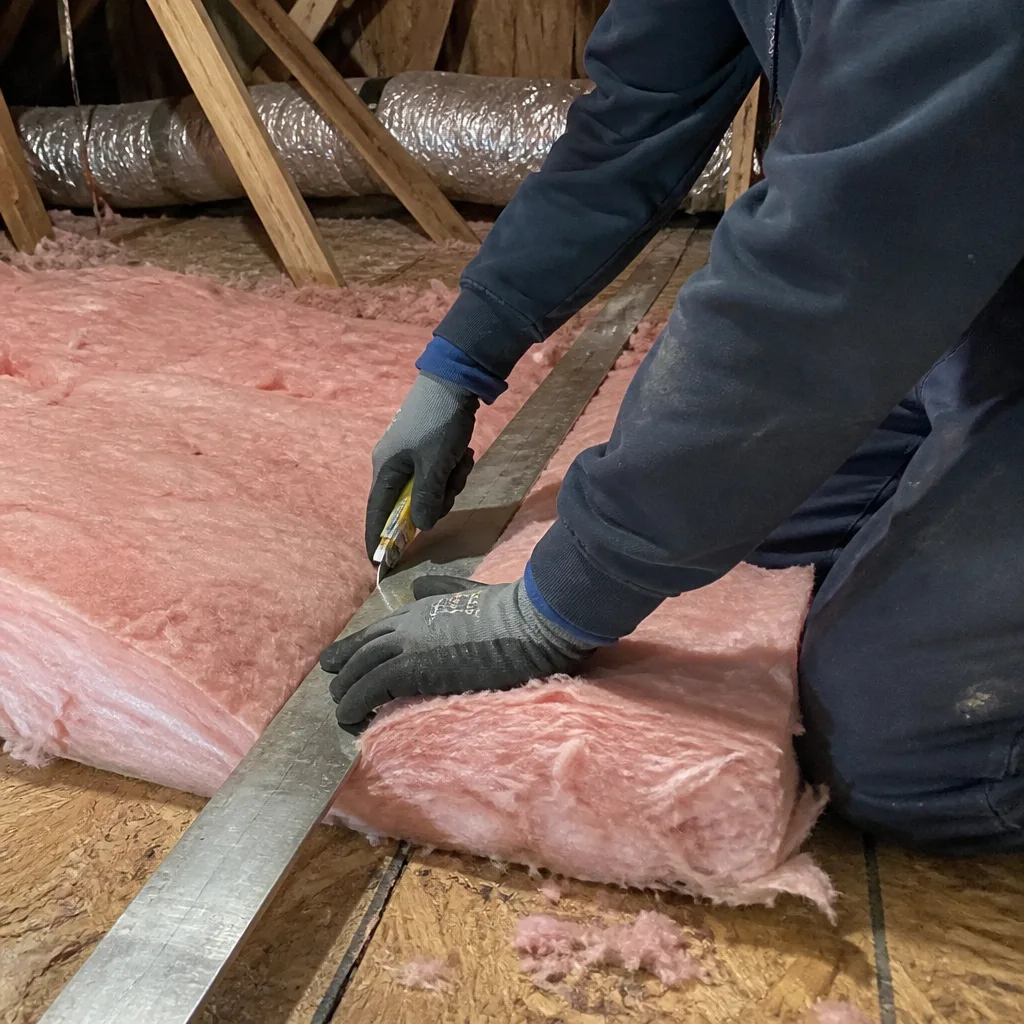
Open-Cell Spray Foam
Open-cell spray foam runs roughly R-3.5 per inch and remains slightly permeable to moisture vapor, which makes it appropriate for certain attic applications in Quartz Hill where assembly drying matters. We use it selectively - typically in roof decks where we need the foam to expand into irregular cavities without the density cost of closed-cell. It’s not our default for exterior walls here, where the wind load and temperature swing demand the denser product.
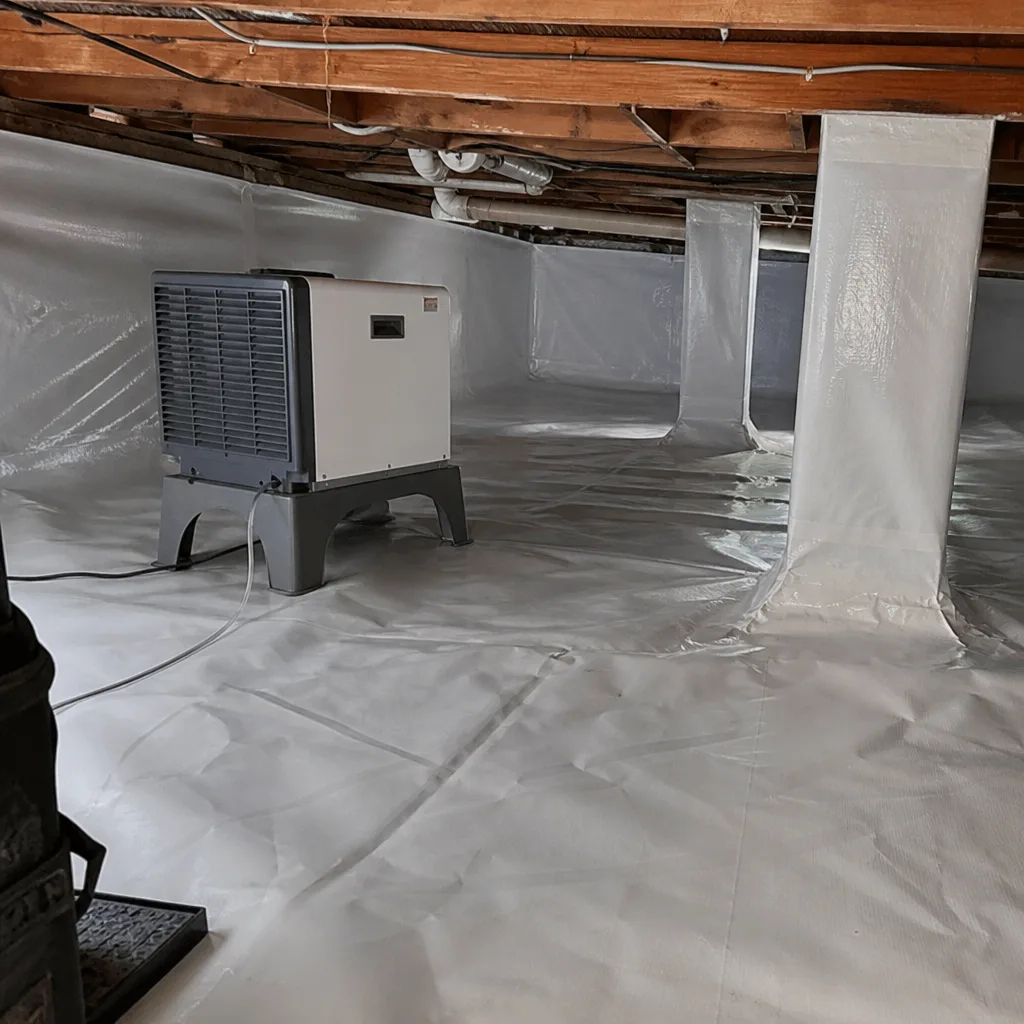
Rim Joist Spray Foam
Rim joist work is where we see the biggest performance gains for the dollar in Quartz Hill. The field vignette tells the story: a 1980s ranch near 50th Street West, original R-19 batts settled to R-8, rim joists open to outside air. On a windy day you could feel the desert air being pulled straight through the windward wall cavity. We air-sealed the top plates and rim joists with closed-cell spray foam and blew in fresh Owens Corning insulation over the existing batts. The homeowner reported the house finally held temperature through both a 105°F afternoon and a below-freezing night without the system running nonstop.
This is standard findings in Quartz Hill’s 1970s-80s stock. The rim joist - the framing member where the wall meets the floor system - was rarely sealed in that construction era. It’s a thermal bypass and an air bypass, and it’s invisible until someone looks.
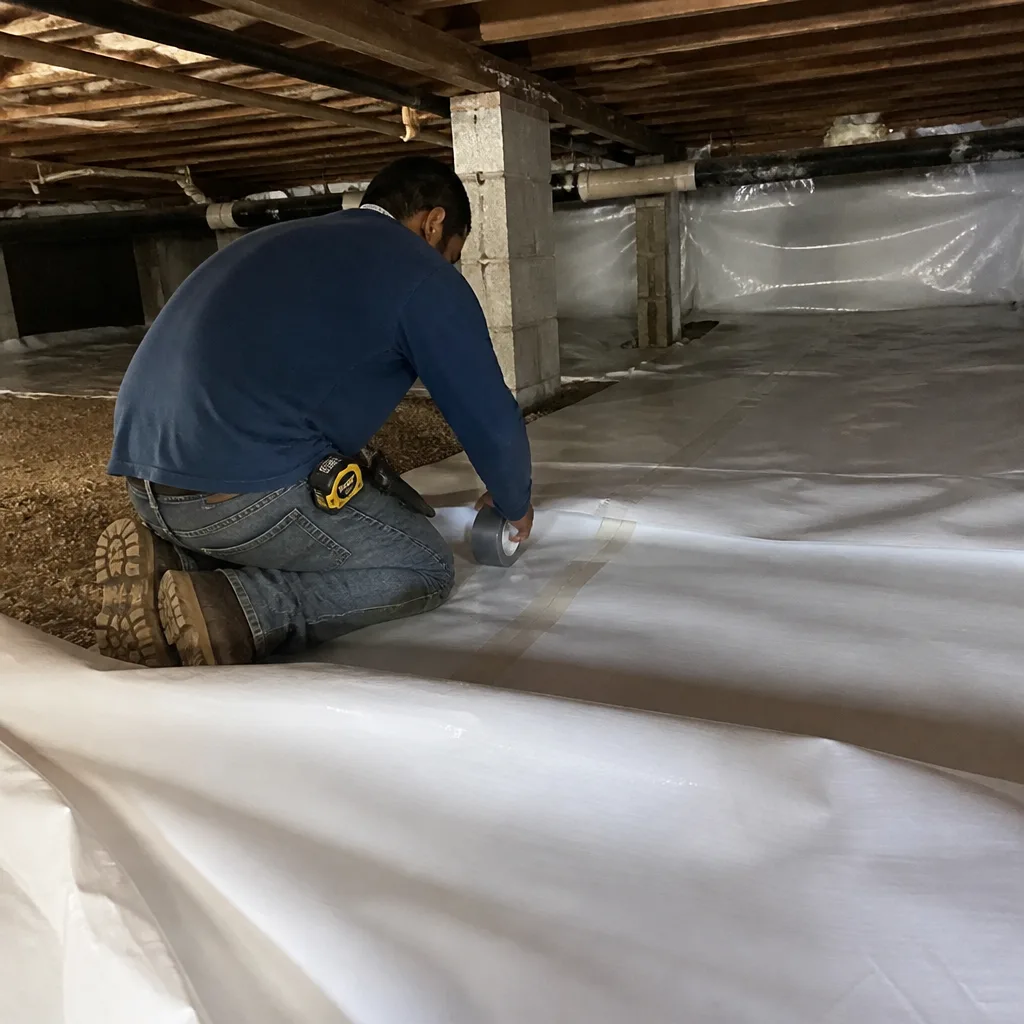
Garage Ceiling Spray Foam
Garage ceilings in Quartz Hill often separate conditioned living space from an unconditioned garage that’s hitting 120°F in summer and dropping near ambient in winter. Spray foam at the garage ceiling deck, applied to the underside of the floor above, stops both conductive heat transfer and air leakage through plumbing and electrical penetrations. We see this detail missed frequently in homes near Avenue L and Challenger Way, where garage conversions and additions have complicated the original envelope without updating the separation.
Spray Foam Roof Deck
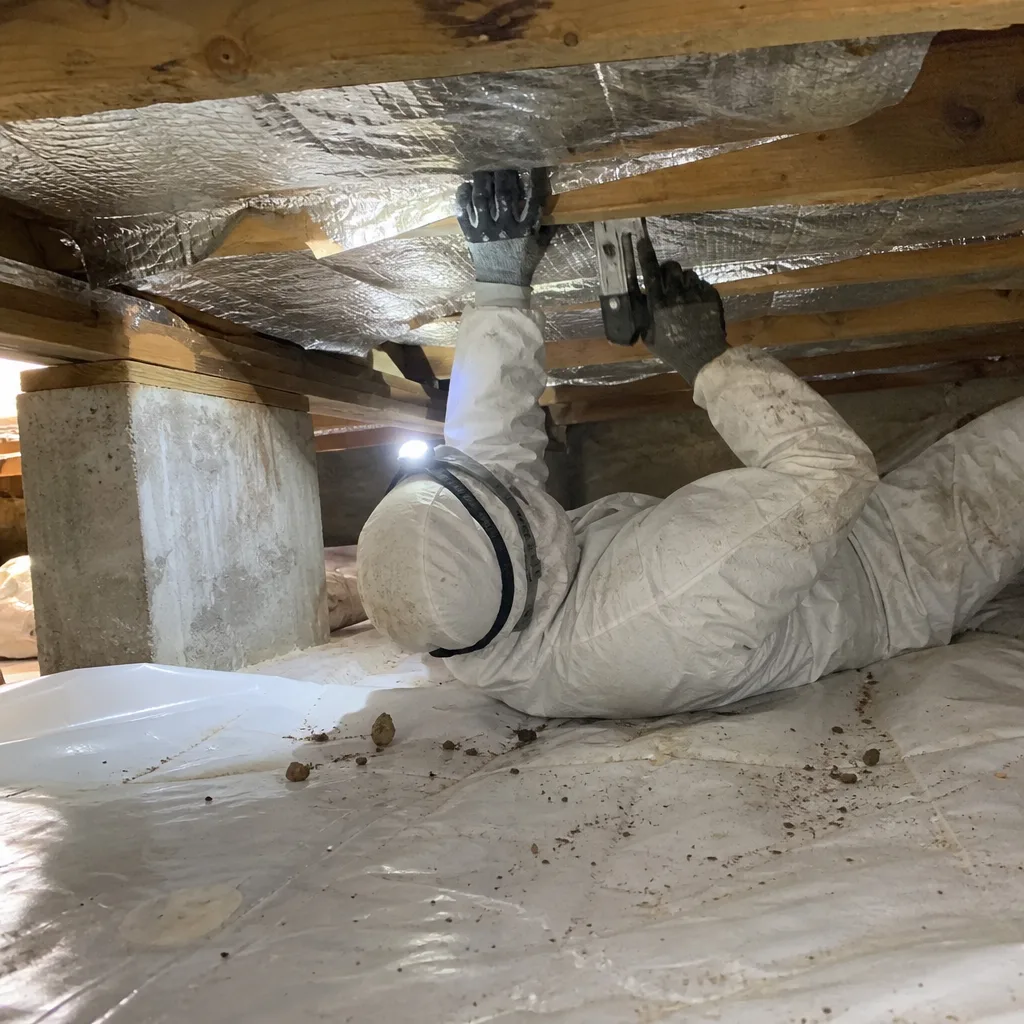
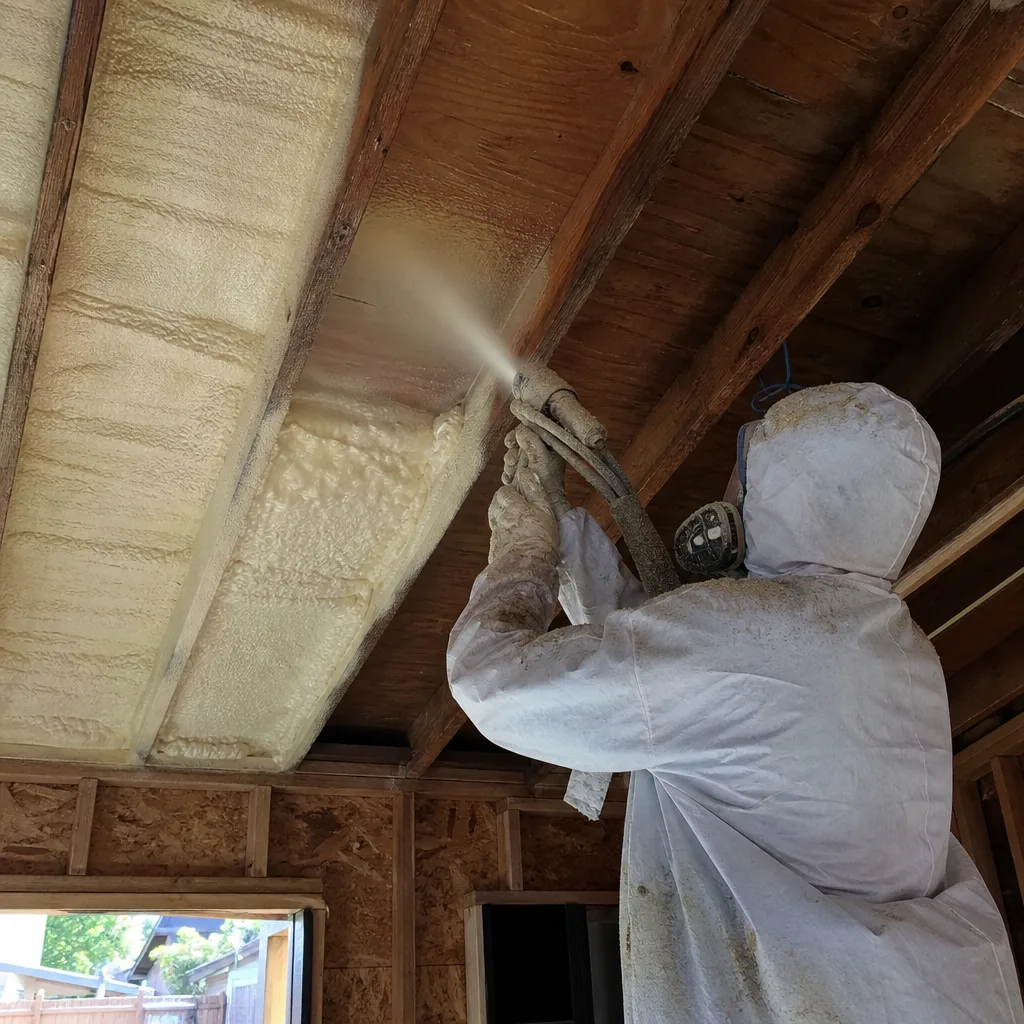
Low-pitched roofs dominate Quartz Hill’s residential architecture, and they suffer uniquely here. The solar gain is intense - roof deck surface temperatures exceed 150°F regularly - and the wind uplift is real. Spray foam applied directly to the roof deck underside creates an unvented, conditioned attic that eliminates the convection loop cooking your ductwork. But adhesion and edge detailing matter enormously in this climate zone. Poorly adhered foam at the roof deck edge can separate under wind uplift, allowing air to peel insulation away from sheathing. We document our spray patterns and thickness with photos, and we don’t close the job until the coverage is verified.
Our Spray Foam Insulation team has handled roof deck work across California Climate Zone 14, and Quartz Hill’s combination of low pitch, high heat, and wind exposure is among the most demanding we see.
What happens when you call
- 1
A real person answersNo phone trees - you reach a local pro.
- 2
You get an upfront price rangeHonest numbers before anyone is dispatched.
- 3
A background-checked tech heads outLicensed & insured, dispatched right away.
- 4
You approve before work beginsNothing starts until you say go.
Trusted Brands We Service in Quartz Hill
We source spray foam materials from Johns Manville, Knauf, CertainTeed, and other major manufacturers - no proprietary product lock-in that limits what’s available for your job. For Quartz Hill customers, this means we match the material to the assembly condition rather than forcing a one-product solution. Closed-cell from Johns Manville for rim joists and wall cavities where density and air sealing are critical. Open-cell from Knauf where roof deck permeability matters. We stock local inventory for fast turnaround, and our technicians are trained on multiple product lines so the specification isn’t limited by who showed up with the truck that day.
Common Spray Foam Insulation Problems We See in Quartz Hill Homes
- Wind-driven air infiltration through open top plates and rim joists. In 1970s-80s 2×4 wall construction, the windward side of the house pressurizes the attic and forces conditioned air straight out the stud bays. This is an envelope failure that R-value alone never fixes, and it’s nearly universal in Quartz Hill’s original housing stock.
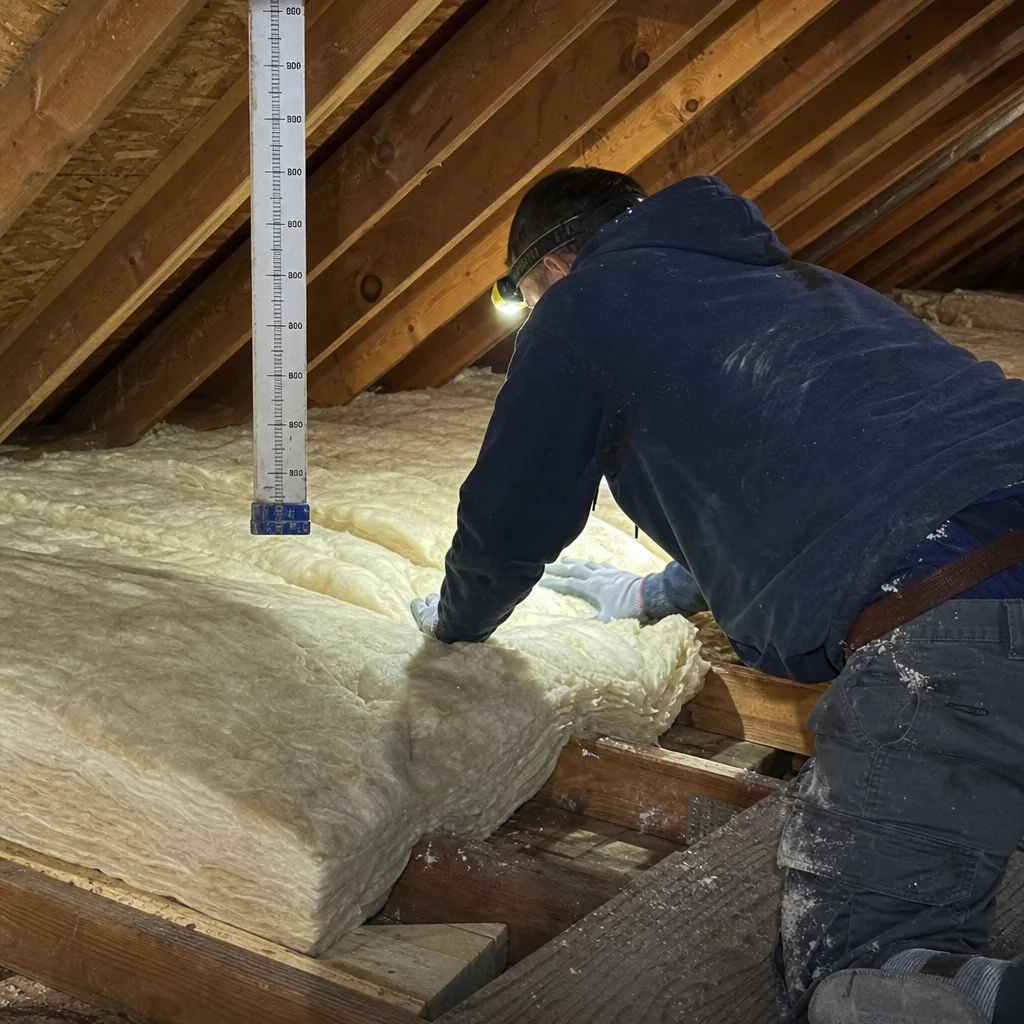
- Original R-19 batt insulation settled to half its rated value. After 40+ years of 130°F seasonal swings, the batts have compressed, degraded, or shifted, leaving the attic at roughly R-8 to R-10. The attic can’t buffer heat gain or loss, and the HVAC system runs continuously to compensate.
- Low-pitched roof decks with poorly adhered or unsealed spray foam edges. Intense solar gain and high-wind uplift stress the roof deck insulation interface. Foam that wasn’t properly applied at the edge can separate, allowing wind to peel insulation away from sheathing and creating both a thermal bypass and a moisture risk.
- Insulation installed over unsealed air leaks. Previous contractors blew new material over the old without sealing top plates, can lights, or penetrations. The new insulation performs fractionally better while the air leakage continues unabated. We remove or work around existing material, seal first, then insulate - in that order.
Pricing for Spray Foam Insulation in Quartz Hill, CA
Most spray foam jobs in Quartz Hill fall into these ranges:
- Rim joist sealing (typical 1,200-1,800 sq ft home): $2,800-$4,200
- Attic roof deck, open-cell (complete): $4,500-$6,800
- Attic roof deck, closed-cell (complete): $5,500-$8,200
- Garage ceiling spray foam: $2,200-$3,600
- Whole-house wall cavity fill (closed-cell, 2×4 construction): $6,500-$10,500
What moves the number: accessibility of the work area, existing insulation that must be removed, repairs needed to framing or sheathing before foam can be applied, and whether we’re air-sealing first (we always do - it’s not optional). Every job gets a written price before any work starts, under Haven Standard Clause 1. No exceptions. We also offer a Free Second Opinion on any written estimate from another contractor - bring us the quote and we’ll read it with you. Call (661) 526-2890 for your written price.
We Also Serve Cities Near Quartz Hill
Our crews work throughout the Antelope Valley, including Quartz Hill and neighboring Lancaster, Desert View Highlands, Palmdale, and Leona Valley. Dispatch and scheduling are coordinated from our Los Angeles office, with local crews serving each area. The same Haven Standard applies everywhere: written price first, documented record last, blower-door numbers when applicable.
Serving Quartz Hill, CA - Our Local Coverage Area
We’re based in the Quartz Hill area and know this community well. Use the map below to see our service coverage - if you’re nearby, we can almost certainly help.
FAQs - Spray Foam Insulation in Quartz Hill
The draftiness comes from air leakage through wall cavities and rim joists, not from insufficient attic R-value. In Quartz Hill’s 1970s-80s tract homes, the 2×4 walls were rarely insulated properly and the rim joists were left open to outside air. When high-desert winds pressurize the attic, conditioned air gets forced straight out the stud bays. Spray foam sealing at the rim joists and top plates stops this bypass. Call (661) 526-2890 and we’ll show you exactly where the air is moving - estimates are free.
Yes, wind directly degrades performance when the envelope isn’t sealed. Unsealed top plates and rim joists allow wind to pressurize the attic and pull conditioned air through wall cavities - a mechanism called stack effect, accelerated by wind. Spray foam’s air-sealing property is actually more valuable here than its R-value, because it stops the air movement that carries heat and moisture. The foam itself isn’t damaged by wind; the problem is what wind does through gaps the foam should have closed.
Sometimes, but we rarely recommend it without inspection first. Original R-19 batts in 1980s Quartz Hill homes have typically settled to R-8 or worse, and may harbor moisture, rodent activity, or compressed areas that compromise the new foam’s adhesion and performance. Our process: inspect, test, document. If the existing material is clean and dry, we may leave it and spray over. More often, we remove degraded material, air-seal the substrate with closed-cell foam, then install new insulation to spec. You’ll get a written scope before we start, including what stays and what goes.
Closed-cell spray foam applied directly to the roof deck underside, creating an unvented conditioned attic. The low pitch that characterizes Quartz Hill’s ranch-style homes traps heat in vented attics - there’s insufficient stack height for natural ventilation to work. Converting to an unvented assembly with spray foam eliminates the convection loop, drops attic temperatures from 150°F+ to within 10°F of conditioned space, and protects ductwork that was never designed for that thermal load. Edge adhesion and thickness verification are critical; we document both with photos.
The 130°F seasonal swing stresses the building envelope, but properly applied spray foam handles it without degradation. The risk isn’t the foam itself - it’s the air and moisture that move through gaps the foam should seal. When warm interior air hits cold sheathing in winter, condensation forms. In summer, the reverse drives moisture inward. Closed-cell spray foam at proper thickness creates a vapor barrier and air barrier in one, stopping both heat flow and moisture transport. Open-cell in exterior walls would be a mistake here; the permeability and lower R-value per inch don’t match Climate Zone 14’s demands.
Under our 365-Day Done Right Promise, if the performance doesn’t match the scope, we make it right. Written warranty, written scope, documented result.
Written by Wes Okafor, Owner at Topside Attic Insulation Lancaster, serving Quartz Hill since 2016.