
Last updated September 23, 2026
Insulation Cost Breakdown: The Lancaster Homeowner’s Reference for 2026
In 2025, a Lancaster homeowner received three attic insulation bids: $1,400, $2,200, and $3,800 for the same 1,800-square-foot attic. The $1,400 bid excluded air sealing entirely. The $2,200 bid included it as a vague line item with no measurable standard. Only the $3,800 bid specified ACH50 targets and included a post-job blower-door reading. The cheapest bid delivered the most expensive outcome. This guide shows you how insulation bids in Lancaster actually work, what line items to require on every proposal, and how to build an apples-to-apples comparison that protects your investment. For more guides & resources, visit our blog.
Quick Answer
Most Lancaster homeowners pay between $2,400 and $5,400 for a complete attic insulation job in 2026, with blown fiberglass to R-38 running $1.20-$1.60 per square foot, dense-pack cellulose at $1.50-$2.00 per square foot, and open-cell spray foam at the roof deck costing $2.80-$3.50 per square foot. The total depends on whether air sealing labor is itemized separately (it should be 20-35% of labor cost), which material you choose, and whether your contractor provides documented blower-door verification. Bids that exclude air sealing or post-installation testing are not comparable to bids that include them.
Table of Contents
- Why Lancaster Insulation Bids Vary by 40-60% for the Same Job
- The Five Cost Components Every Bid Should Itemize
- 2026 Installed Cost Ranges for Lancaster Homes
- How to Calculate the Air-Sealing Labor Portion
- California TECH Clean and LADWP Rebates in 2026
- The Simple Payback Calculation Every Homeowner Should Run
- How Lancaster’s Climate and Code Affect Your Costs
- How to Compare Bids Apples-to-Apples
Why Lancaster Insulation Bids Vary by 40-60% for the Same Job
The 40-60% spread in Lancaster insulation bids isn’t random. It’s structural, and it stems from what contractors choose to include or omit rather than from material quality differences.
We’ve reviewed hundreds of competing bids brought in for our free second opinion service. The pattern is consistent. The low bid almost always treats insulation as a commodity install: blow material to a depth, invoice, leave. The mid bid adds a generic “air sealing” line item with no measurable completion standard. The high bid itemizes air-sealing labor by penetration type, specifies R-value and coverage rate, includes blower-door testing, and delivers written documentation.
Here’s what creates the gap:
- Air sealing omitted entirely. The low bid assumes the attic floor is already tight. In a 1970s Lancaster tract home in Quartz Hill or a 1990s build in West Lancaster, it never is. Top plates leak, can lights vent directly to attic space, and plumbing penetrations are unsealed.
- No blower-door testing. Without a pressurization reading before and after, there’s no way to verify that air sealing actually happened. The contractor saves 2-3 hours of labor and the equipment cost.
- Material specification vague. “Blown insulation” doesn’t state type (fiberglass vs. cellulose), brand, or R-value per inch. Owens Corning AttiCat fiberglass and GreenFiber cellulose perform differently at the same settled depth.
- No permit or code compliance. Lancaster requires permits for spray foam applications and for any work affecting the thermal envelope of homes built after Title 24 updates. Some contractors skip this step.
- Warranty differences. A one-year workmanship warranty against a 365-Day Done Right Promise with written scope isn’t the same risk profile for the homeowner.
The result: a $1,400 job that adds R-value without reducing air leakage performs like a $1,400 job. A $3,800 job that drops the blower-door reading from 4,200 CFM50 to 2,100 CFM50 and delivers a written record performs like a $3,800 job. The homeowner who chose the $1,400 bid in our opening example called us eighteen months later. Their energy bills hadn’t moved. We found the new insulation sitting on top of the same leaky attic floor.
The Five Cost Components Every Bid Should Itemize
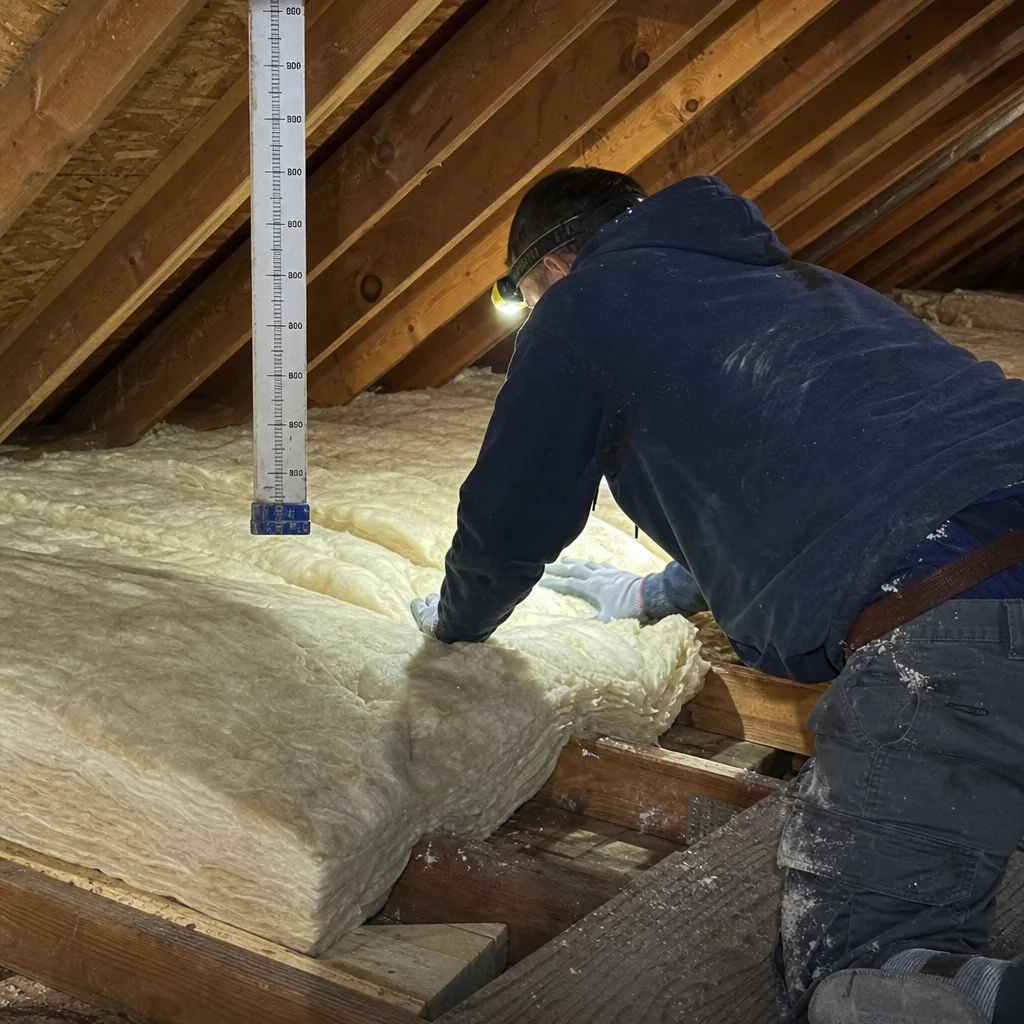
Any insulation proposal you consider in Lancaster should break out these five line items separately. If they’re rolled into a single “insulation” figure, you can’t evaluate what you’re buying.
1. Air-Sealing Labor
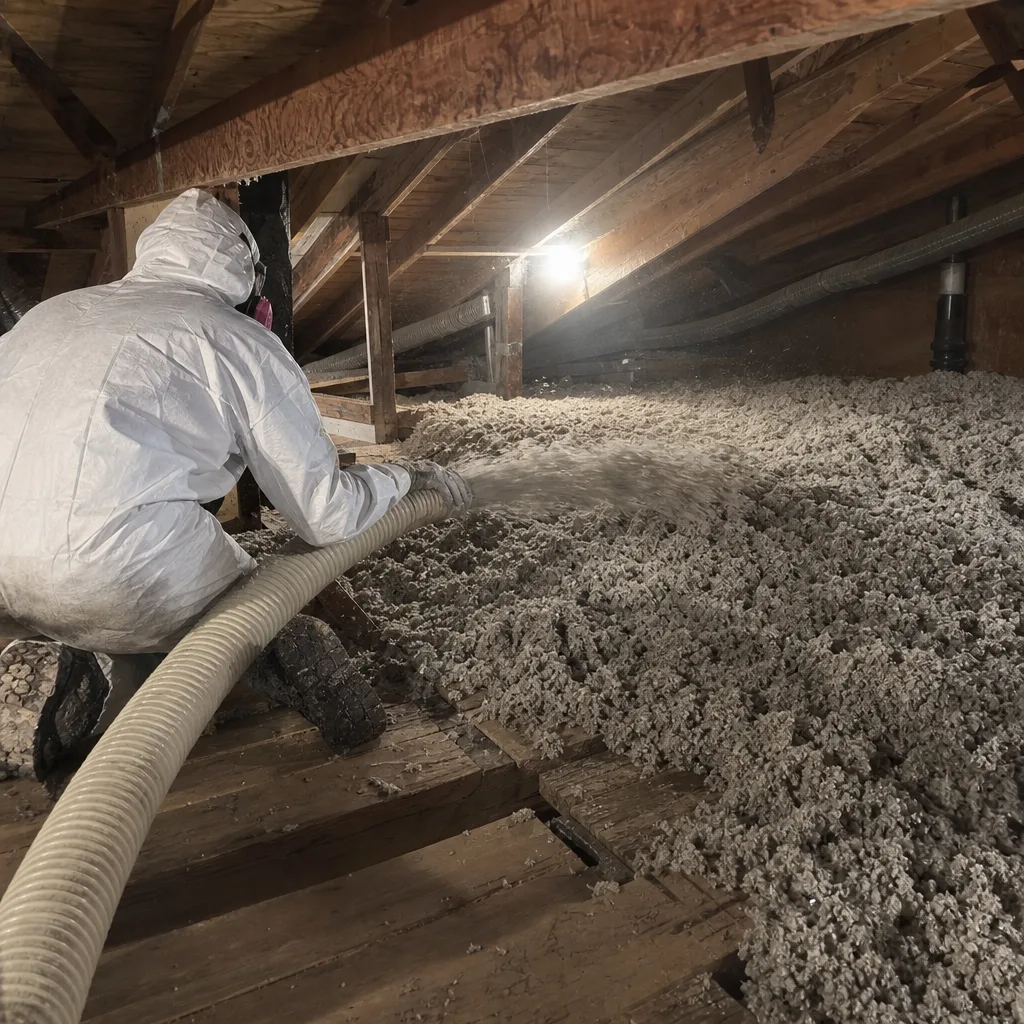
This is the preparation work: sealing top plates with caulk or foam, boxing can lights with fire-rated covers, sealing around chimney chases, plumbing vents, and electrical penetrations. In our experience across Lancaster’s housing stock, from the older homes near Lancaster Boulevard to newer builds in East Lancaster, this labor typically takes 4-8 hours for a 1,500-2,500 square foot attic. It should be priced separately so you can verify it’s actually being performed.
2. Material (Type, Coverage Rate, and R-Value Per Inch)
The bid should state:
- Product name and manufacturer (e.g., Johns Manville Climate Pro blown fiberglass, or Knauf Jet Stream Ultra)
- Installed R-value and settled depth
- Coverage rate in square feet per bag at that depth
- Total bag count
Without this, a contractor can quote “R-38” but install to a depth that settles to R-30.
3. Equipment (Blower Door, If Applicable)
A blower-door test, a pressurization reading that shows in one number how much air your building envelope is losing, requires specialized equipment and trained operation. The test itself takes 45-90 minutes depending on home size and complexity. If your bid includes pre- and post-installation blower-door readings, the equipment and labor should appear as a line item or be clearly included in the air-sealing labor figure.
4. Permit Fees (If Triggered)
Lancaster building permits are required for spray foam installation and for thermal envelope modifications on certain home vintages. The 2022 Title 24 update tightened requirements. See our detailed guide on Insulation Permits, Codes & Inspections in CA: What You Need to Know. A legitimate bid either includes the permit fee or notes clearly that no permit is required for your specific scope. Never accept “we’ll handle it” without seeing the permit card posted.
5. Post-Installation Documentation
This is what you walk away with: the written scope, the blower-door readings, the photo record, the warranty document. At Topside Attic Insulation Lancaster, we deliver a Documented Photo Record on every visit and before-and-after blower-door numbers on every applicable job. If documentation isn’t itemized, ask what you’ll receive and when.
2026 Installed Cost Ranges for Lancaster Homes
These ranges reflect what we’re seeing in the Lancaster market for completed jobs in early 2026, including air sealing labor and blower-door verification. They’re based on typical 1,500-2,500 square foot homes with accessible attics. Steep pitches, limited access, or extensive remediation work moves the needle up.
| Material | Installed Cost Per Sq Ft | Typical Total Job (1,800 sq ft attic) | What Drives the Range |
|---|---|---|---|
| Blown fiberglass to R-38 | $1.20-$1.60 | $2,160-$2,880 | Brand (Owens Corning, Johns Manville, CertainTeed), access difficulty, existing insulation removal |
| Dense-pack cellulose | $1.50-$2.00 | $2,700-$3,600 | Wall cavity vs. open attic, moisture history, baffle installation needed |
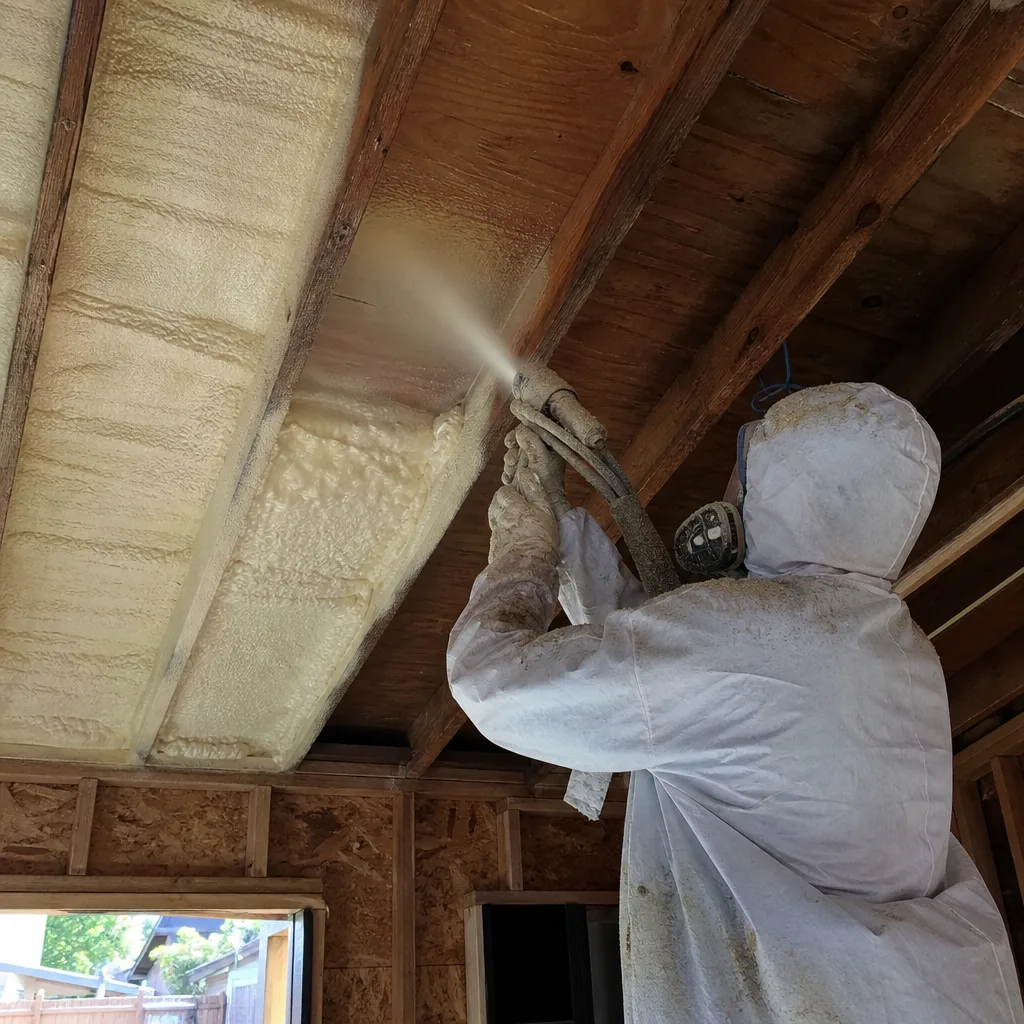
| Open-cell spray foam at roof deck | $2.80-$3.50 | $5,040-$6,300 | Thickness (5.5″ for R-38), ventilation strategy, ignition barrier requirements |
| Closed-cell spray foam | $3.50-$4.50 | $6,300-$8,100 | 2″-3″ application, structural reinforcement needs, chemical handling protocols |
What moves a job toward the high end of these ranges:
- Existing insulation removal. Homes in Lancaster’s older neighborhoods, particularly near the original downtown grid, often have degraded fiberglass or rodent-compromised material. Removal and disposal adds $0.40-$0.70 per square foot.
- Attic air sealing extent. A home with 40 can lights, multiple HVAC penetrations, and an open chase to the garage requires more sealing labor than a home with 6 recessed fixtures and minimal penetrations.
- Material brand and specification. Rockwool Comfortbatt in a wall retrofit costs more per square foot than standard fiberglass batts but delivers different fire and acoustic performance. The bid should say which you’re getting.
- Seasonal demand. Lancaster’s summer heat drives peak demand June through September. We’re seeing 10-15% tighter scheduling and occasionally longer lead times, but we don’t adjust pricing seasonally.
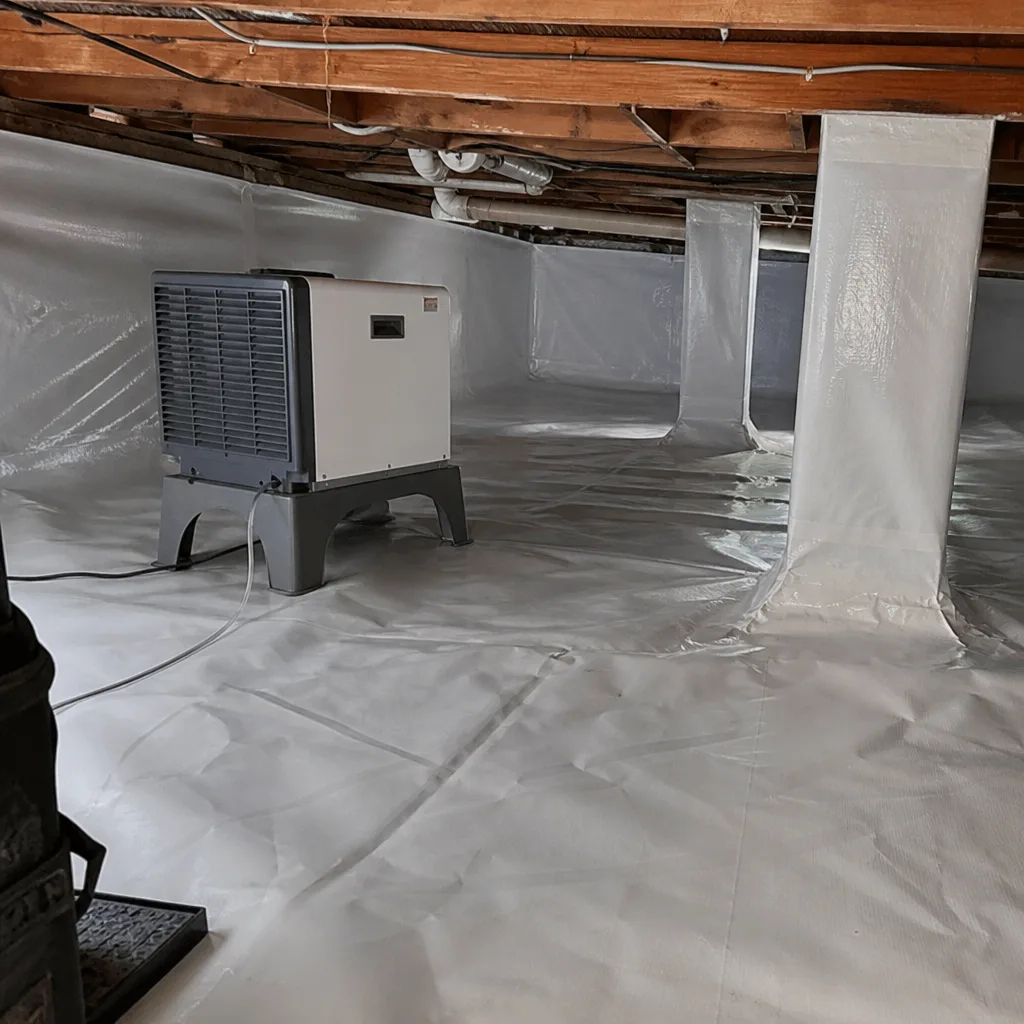
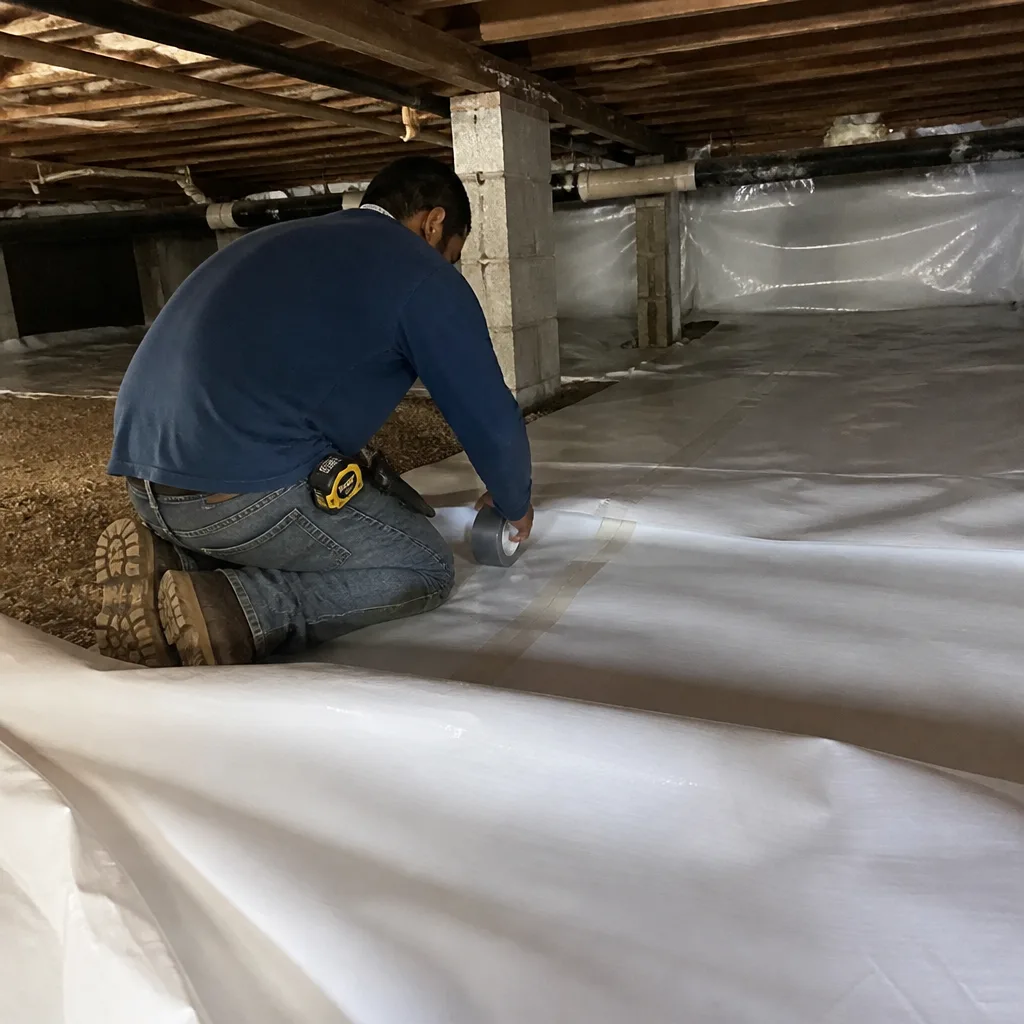
For crawl space encapsulation and vapor barrier work, which often pairs with insulation in Lancaster’s older homes with raised foundations, expect $4,500-$8,500 for a full encapsulation with 12-mil vapor barrier, sealed vents, and dehumidification.
How to Calculate the Air-Sealing Labor Portion
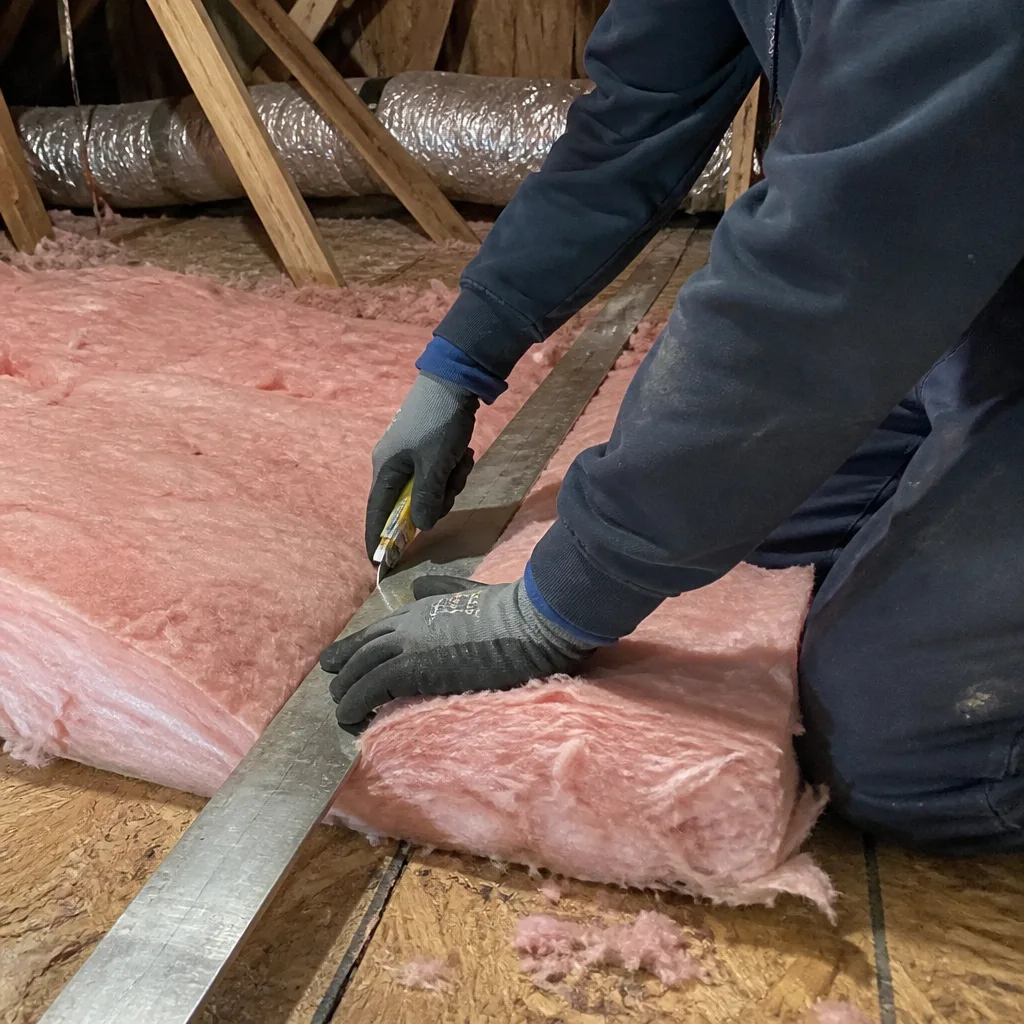
In a properly scoped insulation job, air-sealing labor should represent 20-35% of total labor cost. This is the rule of thumb we’ve validated across our 9,000+ jobs since 2016. Here’s how to check it on any bid you receive.
- Isolate labor from material. If the bid combines labor and material, ask for a breakout. You’re looking for the human-hours portion, not the product cost.
- Identify air-sealing hours. Look for line items: top plate sealing, can light boxing, penetration sealing, damming around heat sources. Add these hours.
- Divide by total labor hours. Air-sealing hours ÷ total labor hours = your percentage.
What the percentage tells you:
- Under 10% or absent: The contractor is omitting meaningful air sealing or burying it in a vague “prep” line item. In Lancaster’s climate, with summer attic temperatures exceeding 140°F and winter nights below freezing, this is a significant omission.
- 10-20%: Minimal air sealing, likely limited to obvious penetrations. May not include top plates or can lights.
- 20-35%: Appropriate for most Lancaster homes built 1970-2010. Includes systematic sealing of the attic floor plane.
- Above 35%: May indicate extensive remediation, older home with balloon framing, or a home with known air leakage issues (prior ice dam damage, visible dust staining on insulation).
Here’s a real example from a 2019 job in Rancho Vista: total labor $2,800, air-sealing labor $840 (30%). The blower-door reading dropped from 3,800 CFM50 to 1,900 CFM50. The homeowner’s summer cooling load dropped measurably. The bid that competed against ours showed 8% air-sealing labor, no blower-door test, and no material specification. That homeowner chose us and later brought us the competing bid for our free second opinion. The difference was visible on paper before anyone entered the attic.
California TECH Clean and LADWP Rebates in 2026
State and utility incentives can offset 10-30% of your insulation investment in 2026, but the documentation requirements are specific and unforgiving. We’ve guided hundreds of Lancaster homeowners through this process. Here’s what’s available and what you’ll need.
TECH Clean California
The TECH Clean program provides rebates for energy efficiency improvements that meet California Energy Commission standards. For insulation work, the key requirements in 2026:
- Work performed by a TECH Clean participating contractor
- Pre-installation energy assessment with documented baseline
- Post-installation verification including CF2R form (Certificate of Final Inspection for Energy Efficiency)
- Pre- and post-blower-door readings for air-sealing components
The CF2R form is critical. It’s the standardized documentation that proves the work was completed to spec. Without it, your rebate application is rejected. We complete this form on every qualifying job and provide a copy to the homeowner before we leave the site.
LADWP Rebates
Lancaster homes served by Los Angeles Department of Water and Power may qualify for additional rebates through the Home Energy Improvement Program. In 2026, insulation rebates typically require:
- Minimum R-value increase (varies by application: attic, wall, or floor)
- Installation by a licensed C-2 or B contractor
- Itemized invoice matching the rebate application
- In some cases, pre-approval before work begins
The rebate amount varies by project scope and available funding. We’ve seen LADWP rebates range from $300 for attic insulation upgrades to $1,200 for comprehensive envelope improvements including air sealing and insulation. The key is starting the application before work begins if pre-approval is required.
What We Handle vs. What You Handle
At Topside Attic Insulation Lancaster, we complete all contractor-side documentation: the CF2R form, the blower-door readings, the itemized invoice, the installation photos. We provide these to you in a packet. You submit the rebate application to the program administrator. We can’t submit on your behalf, but we can review your application before you send it. Under Haven Standard: Have it in writing, and that includes your rebate documentation.
The Simple Payback Calculation Every Homeowner Should Run
Any contractor who won’t provide an estimated annual energy savings figure in writing should be asked why not. This isn’t a guarantee; it’s a projection based on blower-door results, local climate data, and fuel costs. Without it, you can’t calculate payback.
The formula is straightforward:
Total job cost ÷ estimated annual energy savings (in dollars) = payback period in years
Example from a 2024 Lancaster job in Quartz Hill:
- Total job cost: $3,400 (attic air sealing + blown fiberglass to R-38)
- Estimated annual savings: $680 (based on pre-blower-door reading of 4,100 CFM50, post-reading of 2,200 CFM50, 2,100 sq ft home, LADWP electric rates, gas heating)
- Payback period: 5 years
What makes a payback estimate credible:
- It’s based on a measured starting point. The pre-installation blower-door reading gives a baseline for air leakage. Without it, the savings estimate is guesswork.
- It uses local energy rates. LADWP’s tiered electric rates and SoCalGas pricing, not national averages.
- It accounts for Lancaster’s climate. 280+ cooling degree days annually, significant diurnal temperature swings, and low humidity that affects how insulation performs.
- It’s provided in writing. Under Haven Standard Clause 1, the written scope includes what you’re paying and what you can reasonably expect.
Be cautious of payback claims based on percentage savings alone. “30% energy savings” sounds impressive, but 30% of what? A poorly insulated home with high baseline usage saves more absolute dollars than an efficient home with the same percentage improvement. Demand the dollar figure.
How Lancaster’s Climate and Code Affect Your Costs
Lancaster sits at 2,350 feet in the western Mojave Desert. This geography creates specific conditions that shape insulation decisions and costs.
Extreme attic temperatures. In July and August, Lancaster attics routinely reach 140-160°F. Insulation at the attic floor (blown fiberglass or cellulose) separates this radiant heat from your conditioned space. Insulation at the roof deck (spray foam) brings the attic into the thermal envelope, reducing duct losses but requiring different ventilation strategy. The choice affects material cost by 100% or more.
High diurnal temperature swings. Summer days hit 100°F; nights drop to 60°F. This expansion and contraction cycle stresses air sealing materials. We use polyurethane sealants and high-quality acrylic caulks rated for temperature cycling, not the cheapest caulk on the truck. The material cost difference is small; the performance difference over 10 years is substantial.
Wind-driven dust. Lancaster’s wind patterns, particularly in spring, force fine particulate into every building envelope gap. Homes with poor air sealing show visible dust staining on insulation within 2-3 years. This isn’t cosmetic; it indicates conditioned air escaping and unconditioned air entering. Proper air sealing before insulation installation prevents this.
Title 24 compliance. California’s energy code, updated in 2022, sets minimum insulation levels for new construction and significant alterations. For Lancaster’s climate zone (Zone 15), attic insulation must meet minimum R-38 for new construction and R-30 for retrofits where existing insulation is removed. A contractor who doesn’t mention code compliance may not be pulling permits or may be installing below-code material.
Local neighborhood variation. Homes in the older sections near Lancaster Boulevard, built 1910-1950, often have knob-and-tube wiring, balloon framing, and no existing insulation. Homes in West Lancaster and Quartz Hill, built 1980-2000, typically have some fiberglass batt insulation but minimal air sealing. Newer builds in East Lancaster may have code-minimum insulation but still benefit from air sealing and upgrade to higher R-values. Each scenario changes the labor hours and material quantities.
How to Compare Bids Apples-to-Apples
Here’s the practical framework we recommend to every Lancaster homeowner who brings us multiple bids for review.
- Create a comparison grid. Down the left side, list the five cost components: air-sealing labor, material specification, equipment/testing, permits, documentation. Across the top, list each contractor. Fill in every cell. Empty cells are red flags.
- Normalize for R-value, not depth. “12 inches of blown fiberglass” doesn’t equal “12 inches of blown cellulose.” Convert to R-value: fiberglass runs roughly R-2.5 per inch, cellulose R-3.2-R-3.8 per inch. A bid specifying R-38 is comparable; a bid specifying depth without material type is not.
- Verify air-sealing scope. If two bids are close in total but one shows 25% air-sealing labor and the other shows 8%, the lower-percentage bid is either under-scoped or burying costs elsewhere. Ask for the hour breakdown.
- Check for blower-door inclusion. Pre- and post-readings should appear explicitly. “We test if needed” means we don’t test unless you ask, which means you’ll never ask at the right moment.
- Confirm permit status. For spray foam, this is non-negotiable. For blown insulation in older homes, permit requirements vary. The bid should state clearly: permit required, permit included, or no permit required with brief rationale.
- Review documentation deliverables. What do you receive, in what format, and when? A verbal promise of “we’ll send photos” differs from “Documented Photo Record included on every visit, delivered via email within 24 hours.”
Here’s what this looks like in practice. A homeowner in East Lancaster brought us three bids for a 2,200 sq ft attic:
- Bid A: $2,100. “Blown insulation to R-38, includes prep.” No material named. No air-sealing percentage. No blower-door. No permit mention.
- Bid B: $2,850. “Owens Corning fiberglass, R-38, air sealing included, blower-door test.” Air sealing: 12% of labor. No permit. No documentation specified.
- Bid C: $3,400. “Johns Manville Climate Pro, R-38 at settled depth, air sealing 28% of labor, pre/post blower-door, permit if required, photo record and written scope delivered same day.”
Bid C is the only one that can be evaluated against a standard. The others require follow-up questions that many homeowners don’t know to ask. This is why we publish our scope format and welcome comparison. Under Haven Standard: Have it in writing.
Common Mistakes to Avoid
- Choosing by price alone without requiring air-sealing itemization. The lowest bid in Lancaster almost always excludes meaningful air sealing. You’ll pay twice: once for the cheap job, again to fix it.
- Accepting “R-38 equivalent” instead of specified R-value at settled depth. Some contractors install to a blown depth that settles below the claimed R-value. Insist on settled depth in writing.
- Ignoring the blower-door reading. A 50% reduction in CFM50 is a measurable result. A contractor’s verbal assurance of “tighter” is not. Demand the numbers.
- Skipping permit research for spray foam. Lancaster building and safety requires permits for spray foam. Unpermitted work can complicate future sales and insurance claims.
- Not asking about material brands. “Blown fiberglass” covers products with different densities, coverage rates, and settled performance. Knauf Jet Stream Ultra and a generic alternative are not the same product at different prices.
- Neglecting to claim available rebates. We’ve seen Lancaster homeowners leave $800-$1,500 on the table by not submitting TECH Clean or LADWP documentation. The paperwork takes an hour; the money is real.
- Assuming new insulation fixes everything. In homes with significant duct leakage in the attic, insulation alone won’t solve comfort problems. A home energy audit identifies whether ducts, envelope, or both need attention.
When to Call a Professional
Call a professional when your energy bills are rising without rate increases, when rooms have persistent temperature differences you can’t explain, when you see dust staining or compressed insulation in your attic, or when you’re considering any attic work that involves electrical, HVAC, or structural modifications. In Lancaster’s climate, waiting through another summer of 140°F attic temperatures makes every underlying problem worse. Review our Seasonal Insulation Care for Lancaster: Year-Round Homeowner’s Guide for timing recommendations.
Topside Attic Insulation Lancaster offers free estimates in Lancaster. We’ll review your attic, run a blower-door test if air sealing is in scope, and deliver a written price before any work starts. Call (661) 526-2890 or bring us any competing written estimate for our free second opinion.
Frequently Asked Questions
Most complete attic insulation jobs in Lancaster run $2,400-$5,400 for a typical 1,500-2,500 square foot home, with blown fiberglass to R-38 at $1.20-$1.60 per square foot, dense-pack cellulose at $1.50-$2.00, and open-cell spray foam at the roof deck at $2.80-$3.50. The range depends on air-sealing scope, material choice, and whether existing insulation must be removed. Call (661) 526-2890 for a written estimate specific to your home.
Repair is rarely practical. Compressed, water-stained, or rodent-compromised insulation can’t be restored to original R-value. Removal and replacement typically costs $0.40-$0.70 per square foot more than adding to existing material, but delivers predictable performance. We assess this during our initial attic inspection and note it in the written scope.
No. Under Haven Standard, every job begins with a written price and written scope before any work starts. Same-day installation skips the assessment, the blower-door baseline, and the documentation that makes the result verifiable. Most Lancaster jobs schedule within 3-7 days of written acceptance.
California TECH Clean and LADWP both offer rebates in 2026, typically requiring a participating contractor, pre- and post-installation documentation, and the CF2R form. Total offsets range from $300-$1,500 depending on project scope. We provide all contractor documentation; you submit the application.
Demand pre- and post-installation blower-door readings. A meaningful air-sealing job in a Lancaster home should reduce CFM50 by 30-50%. Without the numbers, you’re trusting a process you can’t verify. We publish before-and-after blower-door numbers on every applicable job so homeowners can see the performance change they paid for.
Typical payback runs 4-7 years for attic air sealing plus insulation, based on current LADWP and SoCalGas rates. The calculation requires your total job cost divided by estimated annual dollar savings. Any contractor who won’t provide this estimate in writing should explain why not. Call (661) 526-2890 and we’ll run the numbers for your specific home.
The Bottom Line
Insulation bids in Lancaster vary widely because they measure different things. The homeowner who understands the five cost components, who requires air-sealing labor at 20-35% of total labor, who demands specified materials and blower-door verification, and who runs a simple payback calculation before signing, will consistently choose better value over lower price. The documentation matters as much as the installation: written scope, written price, written warranty, and measured results. That’s the Haven Standard we’ve operated under since 2016, and it’s how we’ve completed 9,000+ homes with a record we can show, not just claim.
Written by Wes Okafor, Owner at Topside Attic Insulation Lancaster, serving Lancaster since 2016.