
Owens Corning Attic Insulation: The Lancaster Owner’s Guide
Most Owens Corning attic insulation replacements in Lancaster run between $1.80 and $3.20 per square foot installed, depending on R-value and whether the existing material needs removal first. We stock Owens Corning ProPink L77 loose-fill and PINK Next Gen Fiberglas batts on our Lancaster trucks, and we can usually assess and begin same-day. Homeowners typically notice the problem first through their PG&E bill - a 20-40% summer cooling spike in a Lancaster July - or when a bedroom above the garage won’t stay within 5 degrees of the thermostat setpoint.
Which Owens Corning Models This Applies To
Owens Corning labels its residential attic insulation by product line, not by a single model number, which is where homeowners often get stuck comparing quotes. The three lines we install in Lancaster are:
- ProPink L77 Loose-Fill - blown-in fiberglass rated at R-3.7 per inch, identifiable by the pink color and the “L77” stamp on the bag code. We blow this to R-38 (about 10.5 inches settled depth) or R-49 (14 inches) depending on your ceiling joist height and whether the home was built before or after Title 24’s 2019 energy code update.
- PINK Next Gen Fiberglas Batts - the formaldehyde-free batt line, available in R-30, R-38, and R-49 precut widths. Check the facing: Kraft-faced batts go in vented attics with the facing down against the drywall; unfaced is for layered applications over existing insulation.
- AttiCat Expanding Blown-In - the DIY-store version of L77 with a slightly different fiber cut. We’ve removed plenty of AttiCat jobs where homeowners hit joist tops and stopped, leaving a lumpy R-26 where they thought they had R-38.
Topside Attic Insulation Lancaster is an independent service provider - not affiliated with Owens Corning - and we also stock Reflectix radiant barrier for the roof-deck applications where fiberglass alone won’t solve a 130-degree Lancaster attic. The OEM-versus-aftermarket question doesn’t really apply to loose-fill fiberglass; the spec that matters is ASTM C764 compliance and the settled density. We source Owens Corning through authorized distribution, but we also install Johns Manville, Knauf, and Rockwool when the job calls for it.
Signs Your Owens Corning Attic Insulation Is Failing
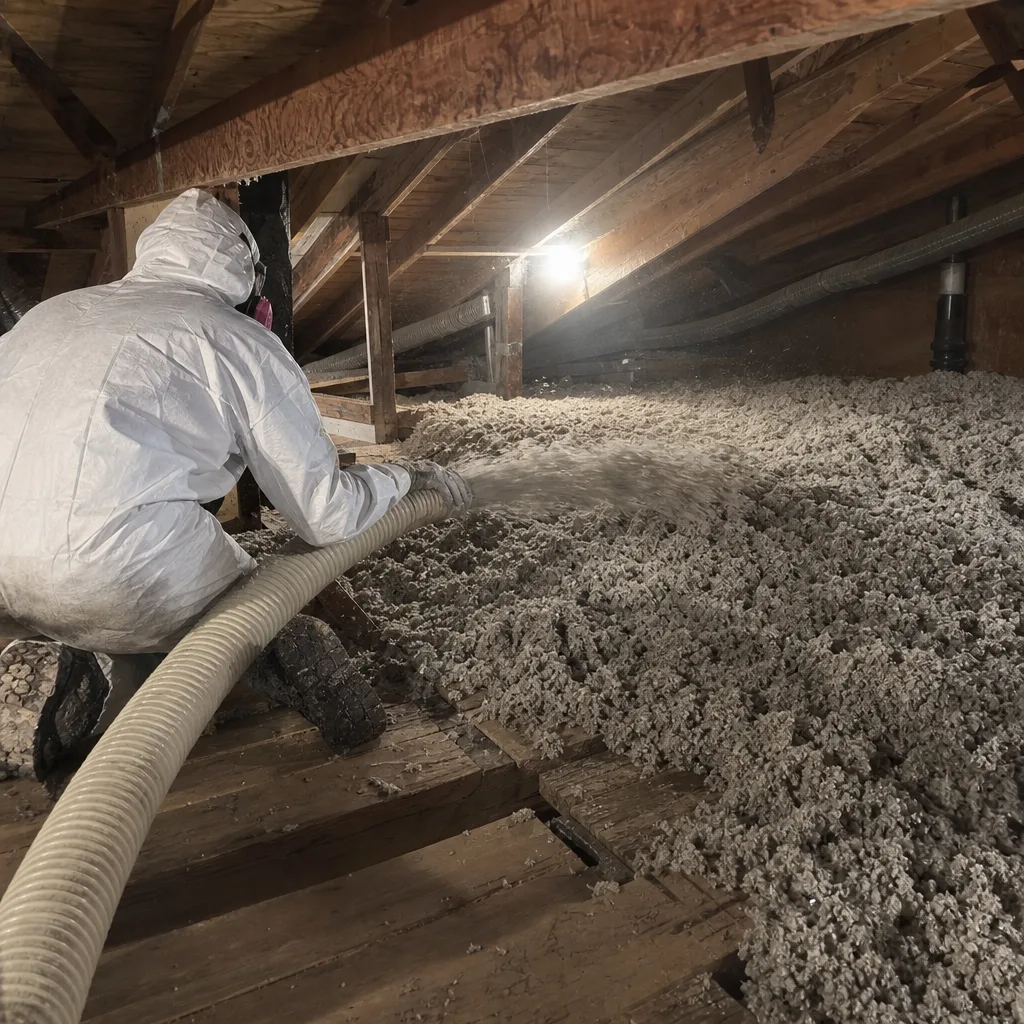
- Uneven temperature rooms. The master bedroom runs 8 degrees hotter than the hallway in July. This usually means the insulation has settled below the joist tops in that bay, or the original installer missed a kneewall cavity entirely. We find this constantly in the 1980s ranch homes west of Avenue K.
- Ice damming or heavy frost on roof sheathing in winter. Warm, moist interior air hits the cold plywood and condenses. In Lancaster’s high desert climate this is less common than in Chicago, but it still happens when bathroom exhaust fans dump into the attic through a disconnected flex duct.
- Insulation depth below current Title 24 minimums. Pre-2005 homes in Lancaster often have R-19 or less. The 2019 code update requires R-38 minimum for re-roof or addition work; if you’re touching the ceiling, you’re required to bring the attic up to code.
- Visible compression or water staining. Fiberglass loses R-value when compressed - walking on it, storing boxes, or a one-time roof leak that matted the fibers. Water-stained batts should be removed; they won’t dry properly in Lancaster’s low humidity, and they harbor dust and rodent evidence.
- High summer ceiling surface temperatures. We measure this with an infrared gun during assessments. A properly insulated ceiling in Lancaster should read within 5 degrees of indoor air temperature. Readings above 95°F on a 105°F day mean the insulation layer is compromised or missing in spots.
Replacement Cost & What’s Included
Most Owens Corning attic insulation jobs in Lancaster fall between $1.80 and $3.20 per square foot for blown-in, and $2.40 to $4.10 per square foot for batt removal and replacement. The range depends on four factors: whether we remove old material (adds $0.60-$1.20/sq ft), whether the attic needs air sealing first, joist height limiting our settled depth, and attic accessibility - some Lancaster tract homes have hatches too small for a person, requiring us to cut temporary access.
Every job includes: removal of old insulation if specified, air sealing of top plates and penetrations with caulk and foam, installation to labeled R-value, baffles at eaves for ventilation continuity, and a Documented Photo Record delivered by email. On applicable jobs, we run a blower-door test - a pressurization reading that shows, in one number, how much air your building envelope was losing before and after the work. The 365-Day Done Right Promise applies; if the R-value doesn’t match what we wrote, we make it right.
DIY or Call Us?
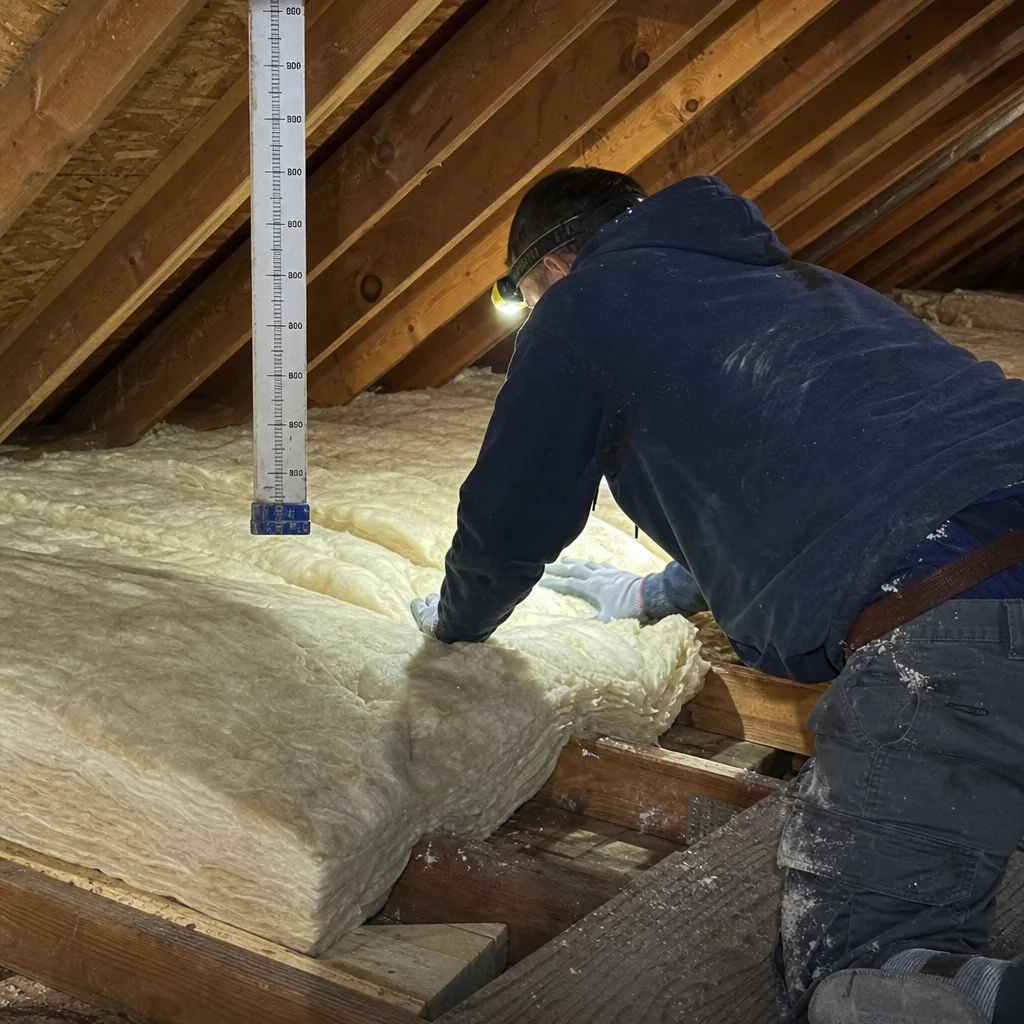
Homeowners can safely check three things: measure existing insulation depth with a ruler against the joist, verify bathroom and kitchen exhaust ducts terminate outside (not into the attic), and look for daylight through the eaves indicating missing baffles or blocked soffit vents. Do not disturb vermiculite insulation - if you see pebbly, silver-gold granules, stop and call us; it may contain asbestos and requires licensed abatement.
Where DIY goes wrong: blowing fiberglass to uneven depth, compressing batts into cavities narrower than the labeled width, or adding insulation over unsealed air leaks. We’ve pulled out plenty of well-intentioned AttiCat jobs where the homeowner got 6 inches in the middle and bare drywall at the eaves. The R-value you paid for is only as good as the air barrier behind it. Seal the gaps first. Then insulate. Wes Okafor learned this running attic assessments across Lancaster, including retrofit work in the established neighborhoods around Avenue K near the BLVD, and we still find top plates leaking 200 CFM50 on houses that were “insulated” two years ago.
For a Written Price Before Any Work Starts - Haven Standard Clause 1 - call us at (661) 526-2890. We’ll read your existing estimate with you if you have one; our Free Second Opinion applies to any written quote.
FAQs
Fiberglass itself doesn’t degrade chemically, but its effective lifespan is 15-25 years in practice because compression, moisture events, and rodent activity reduce performance. Lancaster’s 280+ days of sun and temperature swings from 20°F winter nights to 115°F summer days accelerate settling in poorly installed loose-fill. Call (661) 526-2890 and we’ll measure your current depth against the labeled bag count - estimates are free.
Spot repair works only if the existing material is dry, uncompressed, and uniformly deep. In most Lancaster homes we assess, the original installation was thin to begin with, and adding new over old creates thermal layering issues. We typically recommend removal when the existing is below R-19, water-stained, or contains rodent debris. Call (661) 526-2890 for an exact recommendation - estimates are free.
A typical 1,200-square-foot attic takes one day for removal and replacement, or a half-day if we’re blowing over clean existing insulation. Air sealing adds 2-4 hours. We arrive with a named technician, text when we’re on the way, and leave you with a written scope, blower-door numbers if applicable, and your Documented Photo Record. Call (661) 526-2890 to schedule.
We carry ProPink L77 loose-fill and PINK Next Gen batts on our Lancaster trucks, sourced through authorized distribution. For R-60 or specialized applications, we order to arrive the day before your scheduled install. We do not start work without the material on-site - Haven Standard Clause 1. Call (661) 526-2890 to confirm availability for your R-value and timeline.
Written by Wes Okafor, Owner & Lead Insulation Technician, Topside Attic Insulation Lancaster at Topside Attic Insulation Lancaster, serving Lancaster and nearby areas.