
Knauf Blown-In Insulation in Lancaster: What to Know First
We provide independent Knauf blown-in insulation service in Lancaster, typically scheduling within 48 hours and completing most attic jobs in a single day. Most homes in the 93534 to 93635 zip range run between $1,800 and $3,400 for a full Knauf blown-in fiberglass or cellulose install with pre-work air sealing included. We publish the written price before any work starts, and we don’t start until you’ve signed it.
This page is for Lancaster homeowners who already have Knauf insulation in their attic or walls and need more of it, different of it, or better of it. Maybe you’re topping up after a rodent cleanup, dense-packing a 1980s wall system, or replacing settling batts with blown-in after a roof tear-off. Call (661) 526-2890 - a live person answers, even at 10 PM on a Sunday.
How Knauf Products Fail - and How We Fix Them
- Knauf EcoFill WX settles below labeled R-value in Lancaster’s high-delta attics. The 130-degree summer peak in Lancaster attics accelerates fiberglass compression where ceiling joists create void channels. We find this most in the older ranch homes west of Avenue K, where 12-inch joist bays were filled to R-38 in 2019 and now meter at R-28. Our fix: pull the settled material, seal top plates and electrical penetrations with acrylic latex or fire-rated foam, then re-blow to density with a conditioned-air test after.
- Knauf Jet Stream Ultra cellulose bridges over irregular framing, leaving thermal shorts. This high-performance stabilized cellulose needs consistent sidewall pressure to achieve its R-3.7 per inch. In Lancaster’s post-2005 stucco tract homes with raised-heel trusses, we see installers skip the wind baffles and blow until the soffit dams, creating a hard crust with loose pockets behind. We remove the bridged material, install proper cardboard or foam baffles, and re-blow with a hose angle that maintains sidewall contact - verified with thermal imaging before we leave.
- Knauf Insulation Atmosphere duct wrap delaminates in dry desert cycling. The foil-scrim-kraft facing on this product shrinks and tears where Lancaster’s 30-degree winter nights swing to 80-degree January afternoons. We find delamination at every flex-duct saddle in unconditioned attics. Our fix: remove the failed wrap, seal the duct seams with mastic (not tape), then re-wrap with Knauf MWK-35 or a compatible aftermarket facing - we document the permeance rating on your written scope so you know what you’re getting.
- Knauf EcoBatt with ECOSE Technology absorbs moisture where roof leaks go undetected. The plant-based binder is hydrophilic compared to phenolic formaldehyde batts. In Lancaster’s brief but intense February rain events, we find EcoBatts in west-facing slopes wick water laterally and compress against drywall. We remove the affected batts, run moisture-meter readings on the deck sheathing, replace only after readings drop below 15 percent, and switch to blown-in fiberglass in the repair zone to eliminate future wicking paths.
- Knafs dense-pack wall systems lose contact with lath-and-plaster in 1950s Lancaster homes. The net-and-blow method common in retrofit work doesn’t achieve the 3.5 pounds per cubic foot density needed when horsehair plaster bows away from studs. We see this in the established neighborhoods near the BLVD, where walls feel cold in January despite “insulated” labels. Our fix: drill-and-fill with a pressure-controlled hose, using a tactile back-pressure gauge to confirm cavity fill, then patch with matching texture - we photo-document every drill hole location for your record.
Our Knauf Blown-In Insulation Process
- 1
Call and schedule. A live person answers. We book a 2-hour arrival window, text you when the technician is en route, and send Wes Okafor or a named crew lead - never a rotating subcontractor.
- 2
Attic assessment with blower-door baseline. We run a pressurization test - a blower-door reading that shows, in one number, how much conditioned air your building envelope is losing. Most Lancaster homes built 1985-2005 test between 3,500 and 6,000 CFM50. We photo-document the attic floor, top plates, can lights, and any Knauf product labels we find.
- 3
Written scope and price. You get a flat price, a written scope, and a written warranty before anyone lifts a tool. Haven Standard Clause 1. If you have a competing estimate, we’ll read it with you - free second opinion, no obligation.
- 4
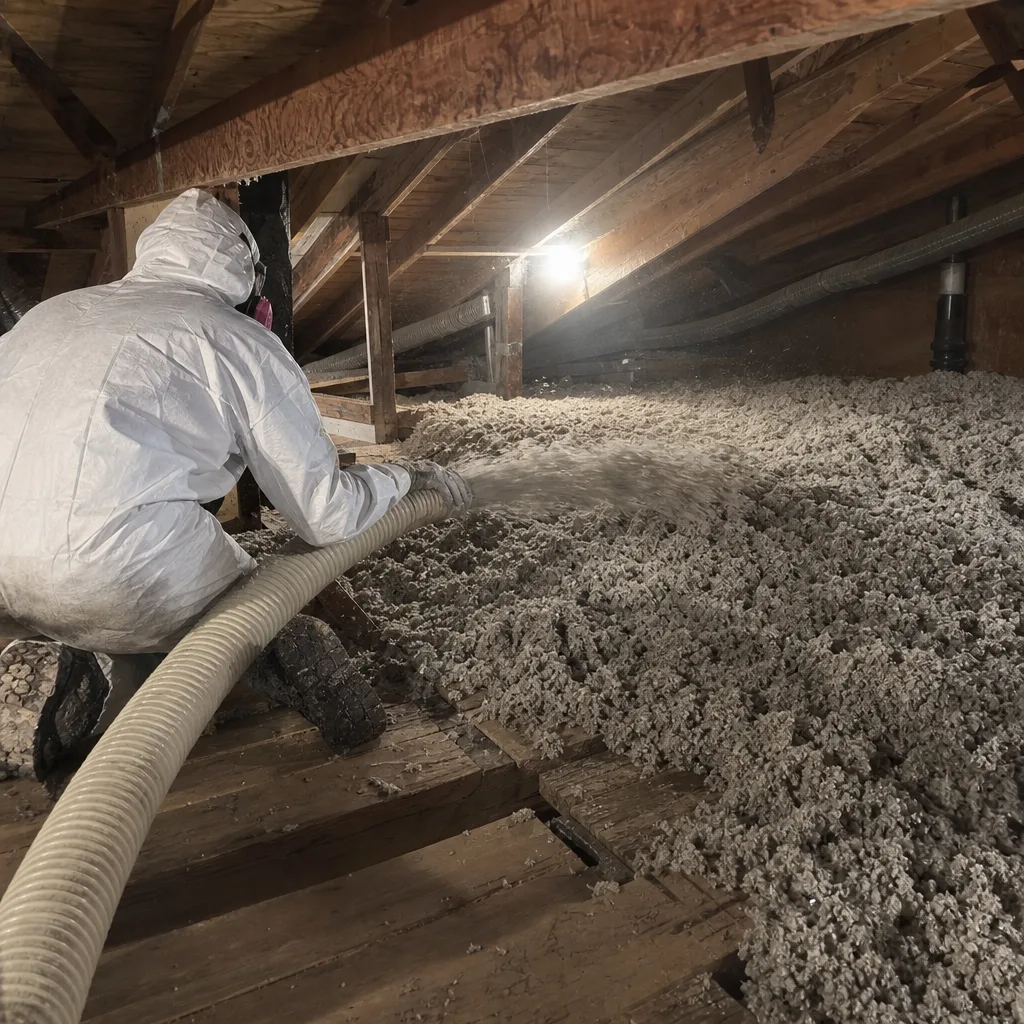
Air sealing first, then insulation. Seal the gaps first. Then insulate. The R-value you paid for is only as good as the air barrier behind it. We seal top plates with acoustic sealant, can lights with fire-rated covers and foam, and wire penetrations with expanding foam. Then we blow Knauf product to spec density.
- 5
Post-work blower-door test and thermal imaging. We run the pressurization test again and give you both numbers. Typical reduction in a Lancaster retrofit: 25 to 40 percent. Thermal images go in your Documented Photo Record, delivered by email before the crew leaves.
- 6
Cleanup and 365-Day Done Right Promise activation. We vacuum, replace attic decking if removed, and leave the written record. If it’s not done right, we make it right - backed by the scope you already signed.
What Knauf Blown-In Insulation Costs in Lancaster
| Job Type | Typical Range | What Moves the Price |
|---|---|---|
| Attic top-up (existing Knauf, add R-19 to R-30) | $1,200 - $2,100 | Attic square footage, joist accessibility, whether we need to extend damming around HVAC platforms |
| Full attic replacement (remove settled Knauf, seal, re-blow to R-38) | $2,800 - $4,500 | Volume of removal, presence of rodent contamination, number of can lights to box and seal |
| Dense-pack wall insulation (Knauf cellulose, drill-and-fill) | $2.80 - $4.20 per square foot of wall | Exterior cladding type (stucco costs more to patch than vinyl), cavity depth, lath-and-plaster vs. drywall |
| Crawl space subfloor blow (Knauf fiberglass, netted) | $1,900 - $3,200 | Crawl clearance height, vapor barrier condition, number of duct crossings to work around |
These are real numbers for Lancaster’s market - the 93534, 93535, 93536, and 93635 zip codes - based on jobs we’ve written scopes for in the last 18 months. Every home is different. Call (661) 526-2890 for an exact quote. Estimates are free, written, and valid for 30 days.
Why Lancaster Homeowners Call Topside Attic Insulation Lancaster for Knauf Work
We’re not a Knauf dealer. We’re an independent Knauf service provider - we source materials from Knauf, Owens Corning, Johns Manville, Rockwool, and others, including Reflectix for radiant barrier work where it fits. No proprietary lock-in means we specify what’s right for your assembly, not what’s moving in the warehouse.
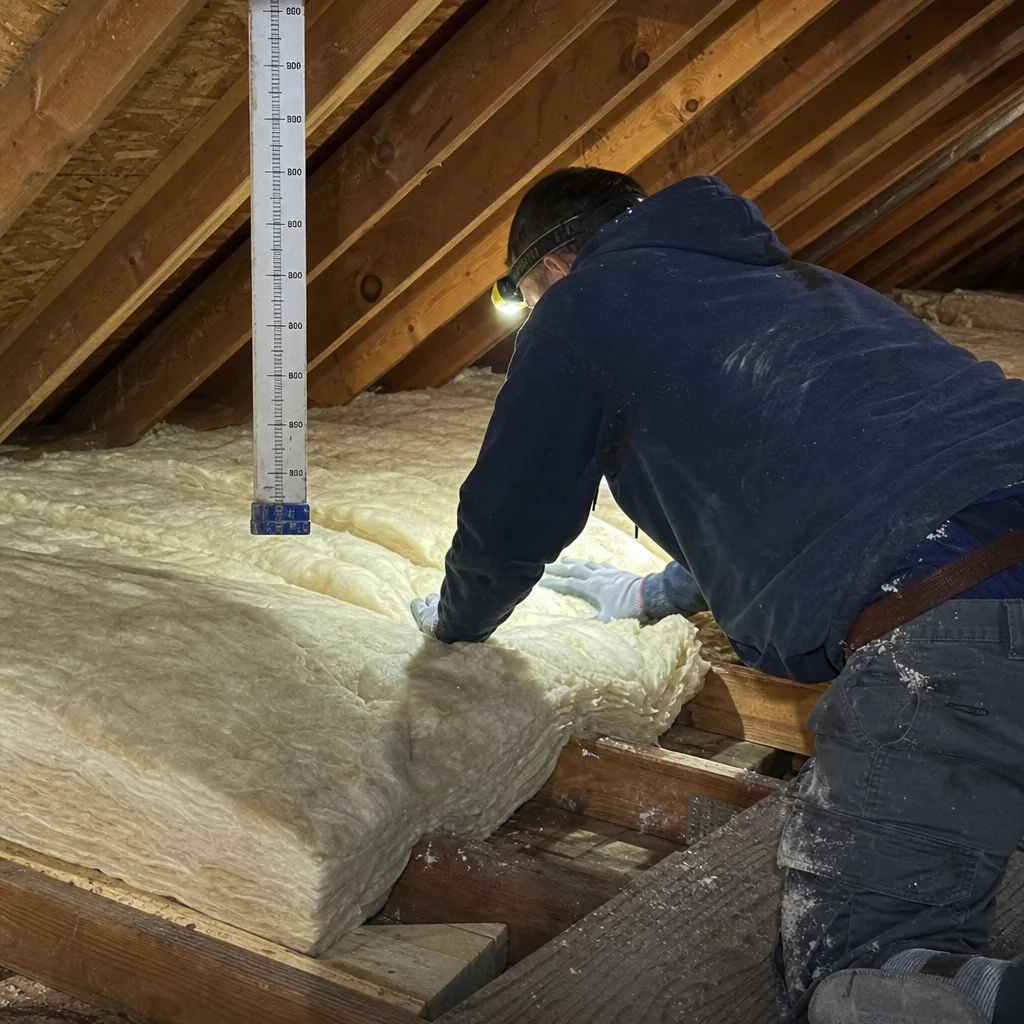
Wes Okafor runs every job with a pre-install air-leak audit. His background at Dawson Technical Institute was heavy on blower-door diagnostics - he was reading CFM50 numbers before most of his peers knew what the abbreviation meant. That shows up in your attic: we don’t guess at R-value achievement, we measure the air barrier and photo-document the insulation depth at 10-foot intervals.
The 365-Day Done Right Promise applies to all completed work. Calls are answered by a live person 24/7. Background-checked, uniformed technicians. A written price before any work starts, always.
FAQs
No - Knauf’s product warranty covers manufacturing defects regardless of who installs it, provided the product was stored and installed per Knauf’s published guidelines. We follow those guidelines and note the lot numbers on your written scope. If a defect appears, we document it and facilitate the manufacturer claim. Call (661) 526-2890 if you have a specific concern about your existing coverage.
Fiberglass products like EcoFill WX maintain their R-value for 80 to 100 years if protected from moisture and compression. Cellulose products like Jet Stream Ultra settle 5 to 10 percent in the first two years, which is why we over-blow by that margin during install. Lancaster’s dry climate is actually favorable - the failure mode we see most is rodent disturbance or roof-leak saturation, not age degradation. We inspect for both during our assessment.
Topping up costs 40 to 60 percent less than full removal and replacement, but only makes sense if the existing material is dry, uncompressed, and the attic floor is already sealed. If your existing Knauf has settled below the joist tops, or if we find unsealed top plates and can lights, removal plus air sealing plus re-blow gives you the performance you’re paying for. We quote both paths on every assessment so you can see the numbers.
We can match the material type - fiberglass to fiberglass, cellulose to cellulose - and we can often source the same Knauf product line. Exact color match varies by production lot; Knauf’s ECOSE binder tints can shift between runs. For warranty or resale documentation, we photograph the existing product label and note the replacement lot number on your written scope. If exact match is critical, we source from the same regional distributor and verify before install.
Most Lancaster homeowners get an assessment within 48 hours of calling, and we schedule the work within 3 to 7 days depending on material availability. Knauf products typically arrive from the Ontario distribution center in 2 business days. Emergency situations - active roof leaks, post-rodent cleanup with exposed insulation - we prioritize same-week. Call (661) 526-2890 to check current availability.
Written by Wes Okafor, Owner & Lead Insulation Technician, Topside Attic Insulation Lancaster at Topside Attic Insulation Lancaster, serving Lancaster and nearby areas.