
Rockwool Crawl Space Encapsulation: The Lancaster Owner’s Guide
Rockwool crawl space encapsulation in Lancaster typically runs $2,800-$5,400 installed depending on square footage, existing moisture damage, and whether the foundation walls need full rigid-board coverage. We stock Rockwool Comfortboard 80 and Comfortboard 110 rigid mineral wool boards for crawl space applications, and most Lancaster jobs we price in the morning are underway that same afternoon. Homeowners usually figure out something’s wrong when the floor above the crawl space turns cold in January despite the heater running, or when they notice a musty smell that the HVAC system is pulling straight up through the subfloor gaps.
Which Rockwool Models This Applies To
Rockwool doesn’t sell a branded “crawl space encapsulation kit” the way some manufacturers do. What we work with are their Comfortboard rigid mineral wool insulation boards, rated for below-grade and damp applications where fiberglass would sag and mold. The two grades you’ll see in Lancaster homes are Comfortboard 80 (8 pcf density, R-4.2 per inch) and Comfortboard 110 (11 pcf density, R-4.3 per inch). The 110 is the heavier board; we use it on foundation walls where mechanical damage is a risk, and the 80 on rim joists and band boards where space is tight.
To identify what you have, look for the foil-faced label on the board edge. It’ll read “ROCKWOOL COMFORTBOARD” followed by the density number and the production lot. If the label’s gone, measure thickness and weight: a 2-inch thick Comfortboard 80 sheet weighs roughly 1.3 pounds per square foot, while the 110 runs closer to 1.8. Don’t guess by color alone; both are the same brown-gold mineral wool.
Topside Attic Insulation Lancaster is an independent service provider, not affiliated with Rockwool. We source Comfortboard through standard distribution, same as any contractor, and we also stock Reflectix radiant barrier products for crawl spaces where the primary problem is summer heat gain rather than winter heat loss.
Signs Your Rockwool Crawl Space Encapsulation Is Failing
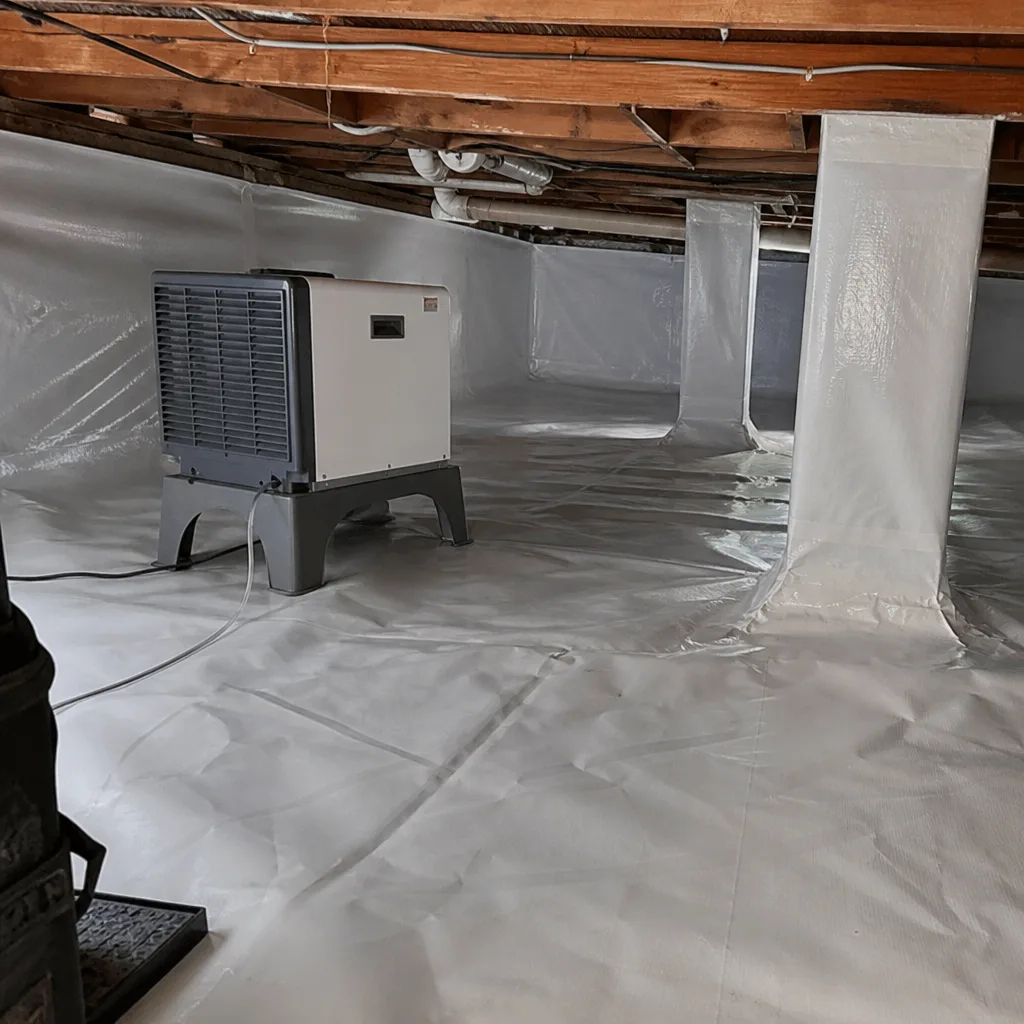
- Cold floors in winter despite adequate attic insulation. The Rockwool boards may have pulled away from the rim joists, or the original installer left gaps at the sill plate that have widened as the wood cycled through Lancaster’s 40-degree seasonal temperature swings. Air moves through those gaps faster than the remaining insulation can slow it.
- Musty or earthy smell that intensifies when the HVAC runs. This usually means the vapor barrier beneath or over the Rockwool has torn, or the boards themselves have absorbed moisture through an unsealed crawl space vent. Rockwool is hydrophobic and won’t mold like fiberglass, but it can wick water to wood contact points.
- Visible sagging or compression of rigid boards. Comfortboard shouldn’t compress under its own weight, but if it was installed against a dirt floor without proper support, or if a rodent has burrowed through, you’ll see depressions or holes. The R-value collapses where the board is crushed.
- White mineral staining on the board surface. This is efflorescence from concrete or block walls, and it signals that moisture is moving through the foundation and drying at the insulation face. The board may still be functional, but the air sealing detail behind it has failed.
- Inconsistent temperatures room-to-room above the crawl space. When we see this in Lancaster’s older homes near Avenue K, it’s often because the original Rockwool installation was partial; some rim joists were covered, others weren’t, and the uncovered ones act as thermal bypasses.
Replacement Cost & What’s Included
Most full Rockwool crawl space encapsulations in Lancaster fall between $2,800 and $5,400. A 1,200-square-foot crawl space with straightforward access, no water damage, and standard 2-inch Comfortboard 80 on the walls runs toward the lower end. Push toward $5,000 and above when we’re dealing with: restricted access requiring hand-carrying every board; active moisture problems needing a new polyethylene ground vapor barrier; or removal of degraded fiberglass that was incorrectly installed before the Rockwool.
Our price includes the Rockwool boards, mechanical fasteners and termination bars, new vapor barrier if the existing one is compromised, and all labor. We also air-seal the rim joist perimeter with closed-cell spray foam or acoustical sealant before the Rockwool goes back in. Seal the gaps first. Then insulate. The R-value you paid for is only as good as the air barrier behind it. Every job closes with a Documented Photo Record and, where applicable, before-and-after blower-door numbers showing the actual reduction in envelope leakage.
DIY or Call Us?
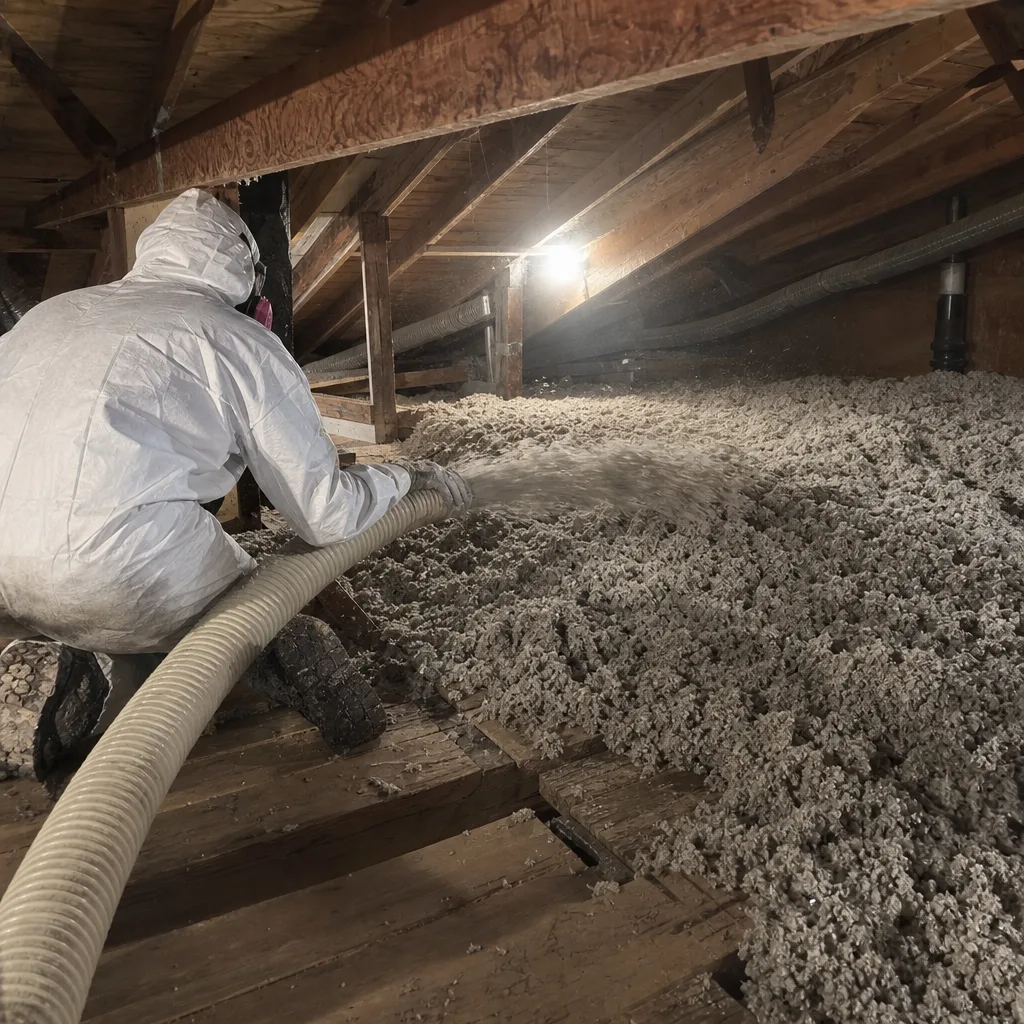
There’s a safe middle ground here, and then there’s where DIY stops making sense. You can safely: inspect your crawl space with a bright flashlight for the symptoms above; photograph any labels or damage for reference; and check that your crawl space vents are actually closed if you have a conditioned crawl. What you shouldn’t attempt: cutting and fitting rigid mineral wool in tight, dark quarters with exposed wiring or plumbing; handling old insulation that may contain rodent droppings; or installing a new ground vapor barrier, which requires precise overlap and sealing to work.
The real risk in DIY isn’t injury; it’s spending a weekend on your back in 18 inches of space and ending up with gaps you can’t see that render the new Rockwool half as effective. Wes Okafor has assessed enough Lancaster crawl spaces to know that the mistakes are nearly always in the details: a missed sill plate junction, a board cut 3/8 inch short that leaves a thermal bridge, a vapor barrier seam that wasn’t taped. We carry Comfortboard 80 and 110 on the truck, and we can price the job on-site with a written scope before any work starts. Call (661) 526-2890 to schedule.
FAQs
Properly installed Rockwool Comfortboard will last 25-40 years, but the air sealing details behind it typically need inspection at 10-15 years in Lancaster’s climate. Our high desert temperature swings, with summer crawl space temperatures exceeding 110°F and winter lows near freezing, stress caulks and foam sealants more than the mineral wool itself. Call (661) 526-2890 for a free inspection if you’re past the decade mark.
Individual boards can be patched if they’re intact but dislodged, but we rarely recommend partial repair. The original failure almost always involves the air barrier or moisture control layer, and patching boards without addressing that underlying condition means repeating the same repair in two to four years. We provide a free second opinion on any written estimate if you want to compare approaches.
A typical Lancaster crawl space, 1,000-1,500 square feet with standard access, takes one to two days. Day one is removal, air sealing, and ground vapor barrier work; day two is Rockwool board installation and final detailing. Restricted access or active moisture remediation can add a day. We arrive with a written schedule, and you’ll get a text when the crew is en route.
We stock both Comfortboard 80 and 110 on our Lancaster service truck, along with fasteners, termination bars, and vapor barrier material. For most jobs priced in the morning, we’re installing that same afternoon. Unusual thicknesses or large commercial quantities may require a next-day pull from distribution, but we never start work without confirming material availability in writing as part of your fixed price.
Written by Wes Okafor, Owner & Lead Insulation Technician, Topside Attic Insulation Lancaster at Topside Attic Insulation Lancaster, serving Lancaster and nearby areas.