
CertainTeed Attic Insulation: The Lancaster Owner’s Guide
Most homeowners in Lancaster calling us about CertainTeed attic insulation need blown-in fiberglass or batt replacement in a home built between 1985 and 2010, where original CertainTeed InsulSafe SP, TrueComfort, or Optima products have settled, compressed, or been compromised by rodent activity. A typical reinsulation job in a Lancaster single-story runs $2,800-$4,600 installed, including removal of degraded material, air sealing of top plates and penetrations, and new insulation to current Title 24 standards. We stock CertainTeed-compatible blown-in fiberglass and can usually schedule within 48 hours, same-day for urgent heat-loss cases.
You’ll usually discover the problem through a spike in summer cooling bills, hot ceilings in July, or a home energy audit flagging attic R-values below R-30 in a climate zone that now calls for R-38 to R-49. In the older neighborhoods around Avenue K near the BLVD, we regularly find original CertainTeed batts compressed to half their labeled thickness from decades of storage traffic and summer heat cycling.
Which CertainTeed Models This Applies To
CertainTeed has sold attic insulation under several product lines over the past four decades, and identifying what you have matters for matching thermal performance and avoiding compatibility issues with new material.
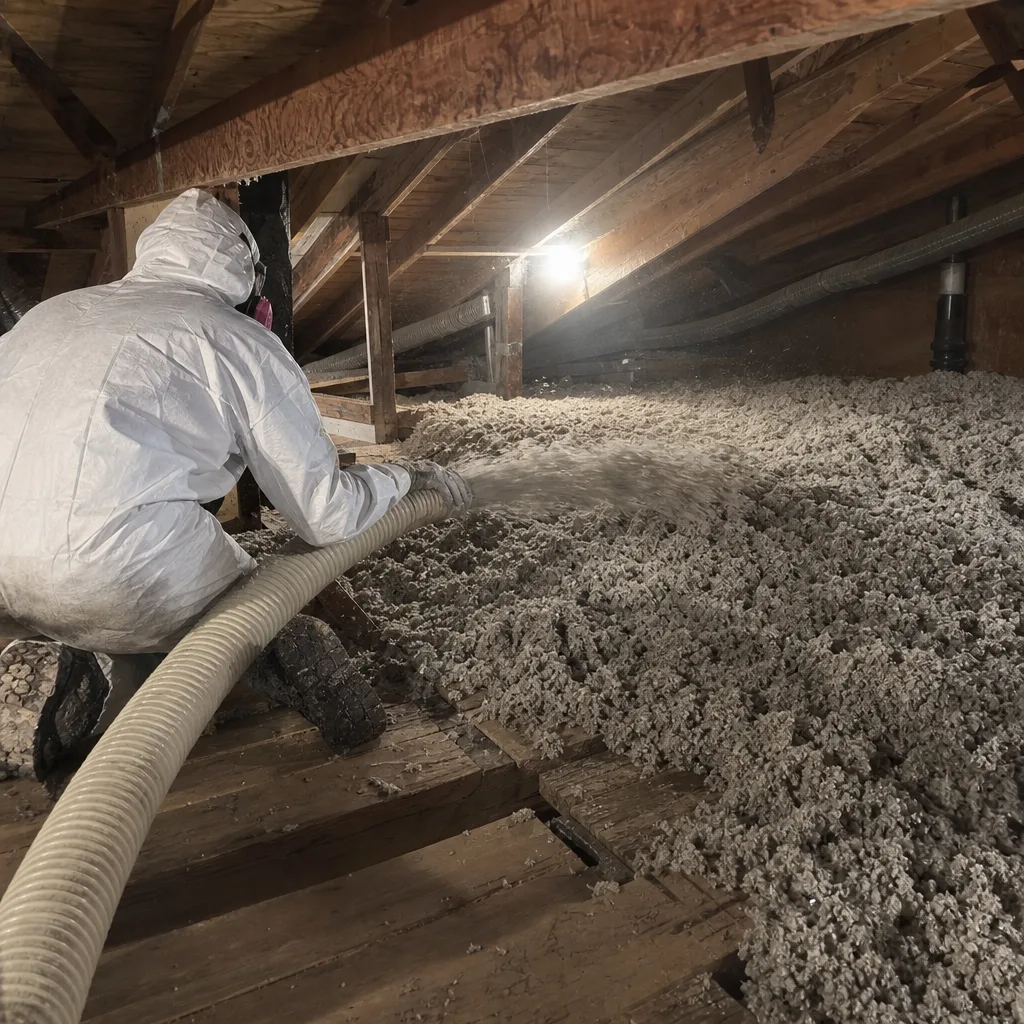
- InsulSafe SP - blown-in fiberglass, common in tract homes from the late 1990s through mid-2000s. Look for loose, pink-gray fibers with a coarse, almost wool-like texture. The SP designation indicates a specific fiber diameter and bonding treatment; mixing new generic blown-in over settled InsulSafe SP can create thermal irregularities if densities don’t match.
- TrueComfort - blown-in fiberglass with a softer hand, often found in custom builds from the 2000s. The fibers are finer and more uniform. TrueComfort was marketed for reduced itch and dust; if you’re adding to existing TrueComfort, we match the fiber specification rather than layering a coarser product on top.
- Optima - a higher-density blown-in system designed for full-coverage applications. Optima jobs are harder to spot visually because the material was designed to fill cavities completely without batt gaps. We verify by probing depth and checking for the telltale density: Optima resists compression more than standard blown-in, so settled Optima often still reads higher R-value per inch than degraded competitors.
- CertaPro / ComfortTherm batts - faced and unfaced fiberglass batts, common in walls and attics from the 1980s through early 2000s. The facing, if present, is usually kraft paper or foil; in Lancaster’s dry climate, kraft facing often becomes brittle and tears during inspection. We document facing condition in every photo record because torn facing compromises the vapor retarder assembly.
OEM CertainTeed insulation is still manufactured, but we also source equivalent-specification material from Johns Manville, Knauf, and Owens Corning when the original product line has been discontinued or when matching density matters more than brand continuity. We’re an independent service provider with no affiliation to CertainTeed, so our recommendation is based on what performs, not what brand we’re tied to.
The critical compatibility gotcha in Lancaster: homes built before 2005 often have 2×6 ceiling joists with original R-19 batts. Adding new R-30 or R-38 batts over those without addressing compression at the eaves creates a thermal bridge. We measure joist depth, existing insulation height, and clearance at soffit baffles before specifying any product.
Signs Your CertainTeed Attic Insulation Is Failing
- Uneven temperatures room-to-room. Heat finds the path of least resistance. When CertainTeed blown-in settles or batts shift, you get thin spots, usually above hallways or near attic hatches where traffic compressed the material. The master bedroom ends up 8 degrees warmer than the guest room because the insulation map no longer matches the floor plan.
- Ice damming or excessive icicles in winter. Even in Lancaster’s mild winters, heat escaping through compromised attic insulation melts rooftop snow; the water refreezes at the eaves. We see this most in the older ranch-style homes west of the Sierra Highway, where original R-19 batts have compressed to R-12 or lower effective value.
- Dusty or stale air indoors. Failed insulation rarely fails alone. When batts sag or blown-in settles, the attic floor becomes a leaky pressure boundary, pulling attic air, rodent debris, and fiberglass particles into living spaces through can lights and ceiling penetrations. The insulation is the symptom; the air barrier failure is the disease.
- Visible compression or displacement. If you can see joist tops, the insulation is too thin. If you find batts stuffed into eaves blocking soffit vents, or blown-in drifted away from the center of the attic, the original installation has been disturbed by wind, workers, or animals. In Lancaster, roof rats are common; they tunnel through fiberglass and compress it with nesting debris.
- Energy bills climbing year-over-year without rate changes. A 15% jump in summer cooling costs often traces to insulation that no longer performs at its labeled R-value. We verify with a thermal camera and probe measurements, but the bill history tells the story before we arrive.
Replacement Cost & What’s Included
| Scope | Price Range (Lancaster) | Typical Home |
|---|---|---|
| Batt removal + replacement, air sealing included | $2,800 - $4,200 | Single-story, 1,200-1,800 sq ft |
| Blown-in removal + new blown-in, full air seal | $3,400 - $5,200 | Single-story, 1,200-1,800 sq ft |
| Blown-in over existing (if salvageable), air seal | $2,200 - $3,600 | Good existing depth, needs topping |
| Insulation removal only (rodent damage, water) | $1,800 - $2,800 | Varies by contamination level |
What drives the range: attic square footage, accessibility (steep roof pitch, limited hatch size), existing material condition, and whether we find air leaks that need sealing before new insulation goes in. Every quote under Haven Standard Clause 1 is a flat price with a written scope and written warranty before anyone lifts a tool. No hourly surprises. We also offer a Free Second Opinion on any written estimate from another contractor; bring us their scope and we’ll read it with you.
What’s included: removal and responsible disposal of degraded material, air sealing of top plates, wire and pipe penetrations, can light covers where accessible, baffle installation at soffits, new insulation to specified depth, and a Documented Photo Record of before, during, and after. On applicable jobs, we provide before-and-after blower-door numbers so you can verify the air-sealing result in a single figure.
DIY or Call Us?
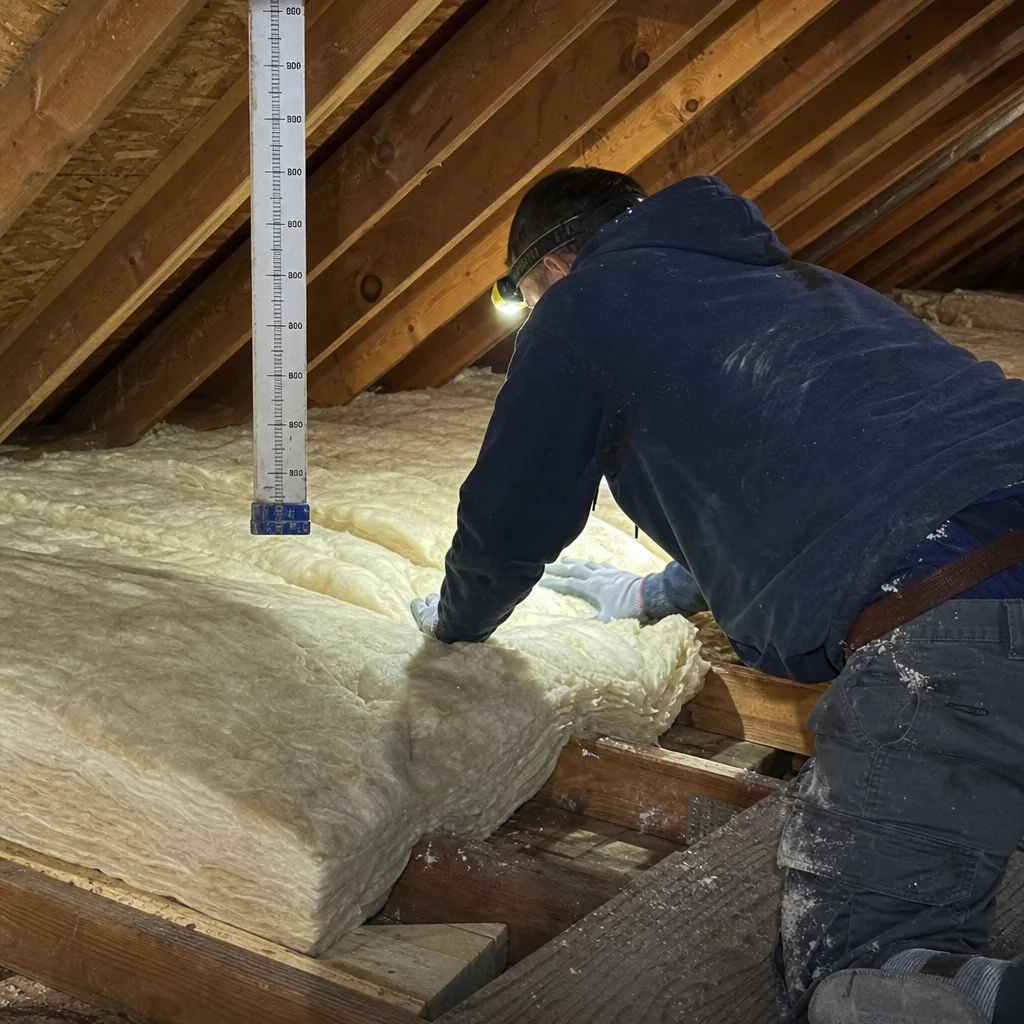
Here’s what you can safely check yourself: measure insulation depth with a ruler at multiple attic locations, photograph any visible gaps or compressed areas, and verify your attic hatch has weatherstripping. If you have a basic understanding of your home’s floor plan, you can also map which rooms feel hottest in July, information that saves us time on arrival.
Where DIY goes wrong: attic work in Lancaster summer means 130-degree temperatures and limited oxygen. Disturbing old fiberglass without proper respirators and skin coverage creates exposure risk. More critically, blowing new insulation over unsealed air leaks is the most common mistake we correct; the insulation looks full but performs poorly because conditioned air still escapes. And if your attic has active rodent issues, disturbed droppings create health hazards without proper PPE and remediation protocol.
Seal the gaps first. Then insulate. The R-value you paid for is only as good as the air barrier behind it.
Call (661) 526-2890 for a written price before any work starts. Estimates are free, and a live person answers 24/7.
FAQs
Fiberglass insulation itself doesn’t degrade chemically, but its installed performance lasts 15-25 years before settling, compression, or contamination reduce effective R-value. In Lancaster’s high-desert climate, thermal cycling between 30°F winter nights and 130°F attic summers accelerates compression in trafficked areas. Rodent activity, common in the Antelope Valley, can cut functional lifespan to under 10 years. Call (661) 526-2890 and we’ll measure what you actually have left.
Spot repairs work only when the existing material is dry, uncompressed, and uncontaminated. We can add blown-in over intact batts if we verify consistent depth and no air leaks beneath. But once fiberglass is water-stained, rodent-soiled, or compressed below 50% of original thickness, removal and replacement is the only code-compliant path. We document the condition with photos so you can see the same thing we see. Call (661) 526-2890 for an assessment.
Most Lancaster single-story homes take one full day for removal and replacement, or a half-day if we’re topping existing material after air sealing. Two-story homes with complex rooflines, or jobs requiring extensive rodent proofing before insulation, may run into a second day. We give you a specific day and arrival window in writing under Haven Standard; no callback windows measured in business days. Call (661) 526-2890 to schedule.
We stock CertainTeed-compatible blown-in fiberglass and batt products on our trucks, along with equivalent-specification material from Johns Manville, Knauf, and Owens Corning. For most Lancaster jobs, we can schedule within 48 hours of your call; same-day availability exists for urgent heat-loss situations, especially in summer when attic temperatures create immediate comfort and safety concerns. Call (661) 526-2890 to confirm current stock and scheduling.
Written by Wes Okafor, Owner & Lead Insulation Technician, Topside Attic Insulation Lancaster at Topside Attic Insulation Lancaster, serving Lancaster and nearby areas.