
CertainTeed Attic Air Sealing: The Lancaster Owner’s Guide
CertainTeed-compatible attic air sealing in Lancaster typically runs $380-$780 installed for a standard single-family attic, and we stock the common CertainTeed sealants, tapes, and gasket systems on our trucks for same-day starts. Most Lancaster homeowners discover the problem when their upstairs rooms won’t stay cool through a July afternoon despite the AC running nonstop, or when they spot dusty insulation around can lights and top plates where conditioned air is escaping into the attic. That last symptom is the tell: if your insulation looks like it’s been vacuumed from below, you’ve got a pressure-driven leak, not just missing R-value.
Which CertainTeed Models This Applies To
CertainTeed doesn’t sell attic air sealing as a single branded “system” the way they sell shingles or siding. What we’re matching is the CertainTeed building envelope product line: MemBrain smart vapor retarder used in conditioned attic assemblies, CertainTeed IntelliBreeze attic ventilation components, and the sealants and tapes specified in CertainTeed’s Proper Vantage whole-home insulation documentation. The part you actually need depends on what failed.
Check your original insulation paperwork for a CertainTeed spec sheet - look for the “Air Sealing Details” page, usually page 4 or 5. If your home was built 2015-2022 in Lancaster’s west-side developments near 60th Street West or the neighborhoods around Avenue K near the BLVD, there’s a good chance the builder used CertainTeed-specified acoustic sealant (the black, non-hardening caulk) at top plates and fire-rated foam around chimney and flue penetrations. That acoustic sealant dries out in 130-degree Lancaster attics in about 6-8 years, faster than the 10-year rating you’d see in a milder climate. We’ve pulled plenty of it that cracked clean through.
OEM CertainTeed sealant is available through their distribution chain, but for most repairs we use equivalent ASTM C834-compliant acoustic sealant and UL-rated intumescent foam that meets the same spec without the brand markup. The exception: if your home is still under CertainTeed’s system warranty, we can source OEM to keep coverage intact. We’ll tell you before we order.
Signs Your CertainTeed Attic Air Sealing Is Failing
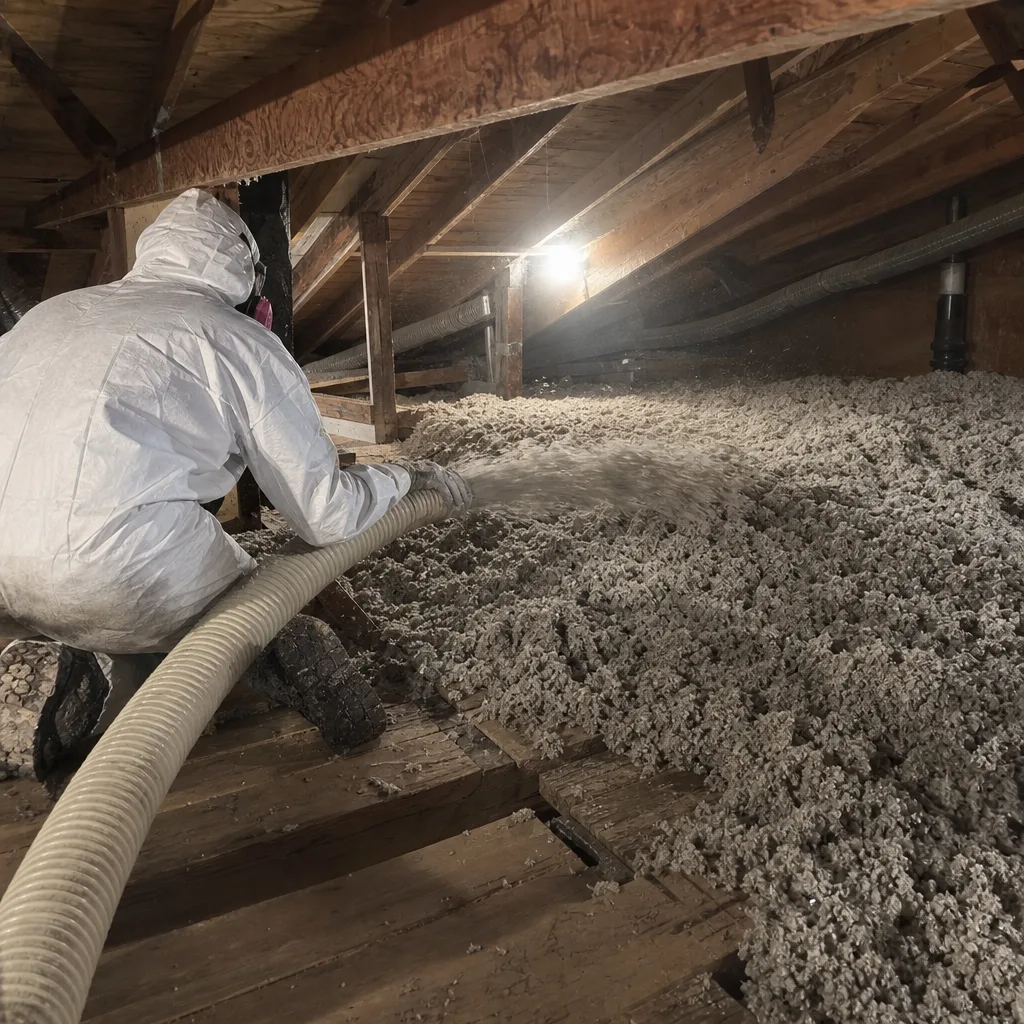
- Hot second floor by 3 PM, even with good insulation depth. Conditioned air is leaking out faster than your AC can replace it. In Lancaster, we see this most in homes where the original builder blew fiberglass over unsealed top plates - the R-value reads fine on paper, but the air barrier is gone.
- Dust trails or dark streaks on insulation near can lights, outlets, or the attic hatch. These are filtration tracks - indoor air, carrying dust and moisture, is being pulled through gaps by the stack effect. The darker the streak, the bigger the leak.
- Ice damming or water staining at eaves in winter. Warm, moist air escapes through ceiling penetrations, melts snow on the roof deck, and refreezes at the cold edge. Lancaster doesn’t get heavy snow often, but when it does, unsealed attics show this first.
- Spikes in your summer electric bill that don’t match temperature records. A blower-door test - a pressurization reading that shows, in one number, how much air your building envelope is losing - will typically read 3,500+ CFM50 in a failing attic. After proper sealing, we expect to cut that by 30-50%.
- Drafty rooms below, especially near interior walls. Top plates (the horizontal framing member where wall studs meet the ceiling) are rarely sealed in production-built Lancaster homes from the 2015-2020 boom. Air races through these cavities like a highway.
Replacement Cost & What’s Included
| Scope | Typical Range in Lancaster |
|---|---|
| Attic floor air sealing (top plates, penetrations, can light covers, attic hatch) | $380-$620 |
| Full envelope seal including chimney chase, duct boots, and exhaust fan housings | $580-$780 |
| Added: blower-door test with documented before/after report | $150-$200 (included on most jobs) |
What drives the range: attic square footage, accessibility (some Lancaster tract homes have 18-inch truss bays; others have 30-inch clearances that let us move fast), and how many recessed can lights need pre-fabricated airtight covers versus simple gasket seals. We don’t guess at this - every quote follows a visual audit, and we give you a written price before any work starts, always. Haven Standard Clause 1.
The price includes materials, labor, cleanup, and our Documented Photo Record showing every sealed penetration. On applicable jobs, you’ll also get before-and-after blower-door numbers so you can verify the performance change. The 365-Day Done Right Promise covers all completed sealing work.
DIY or Call Us?
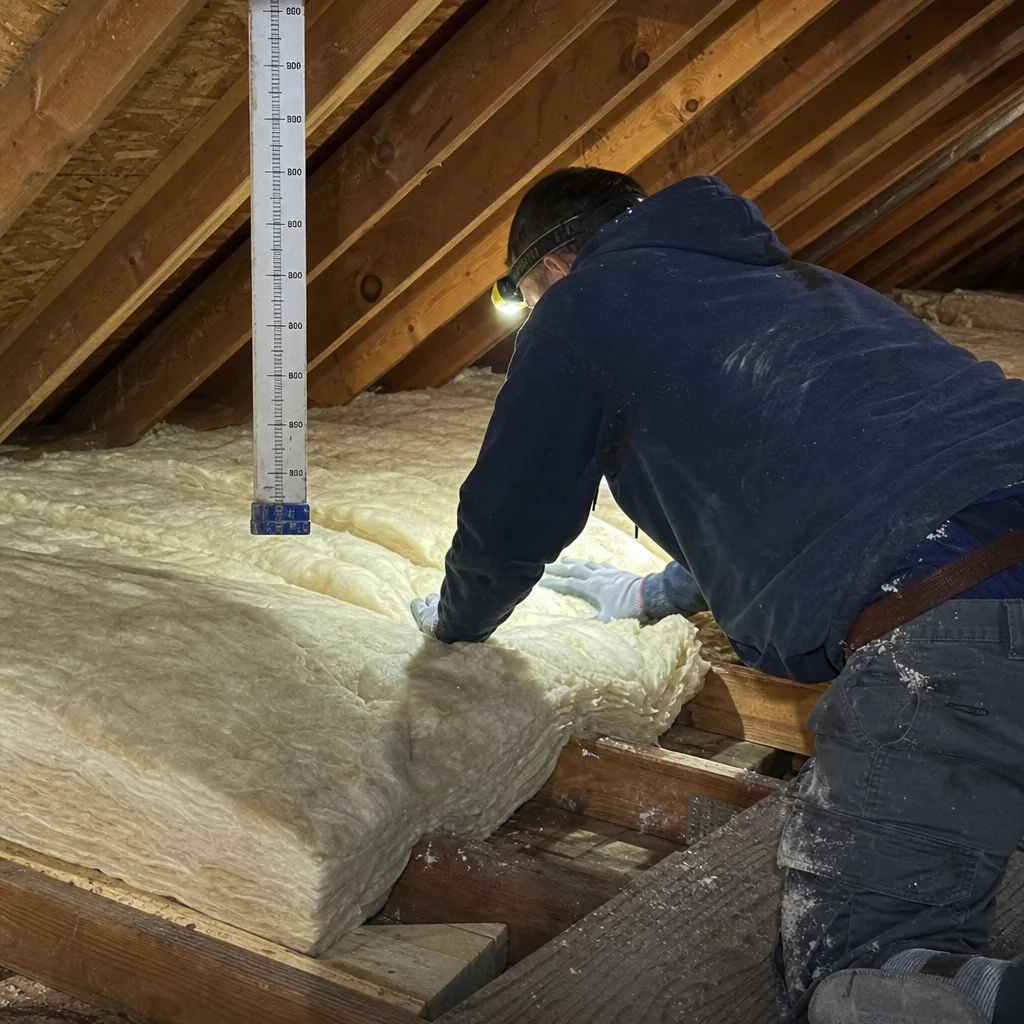
Here’s what you can safely check yourself: shine a flashlight around your attic hatch during daylight. If you see light streaming through gaps at the top of interior walls, you’ve found unsealed top plates. Mark them with tape and note the locations. You can also check for missing damming around your attic access - the insulated barrier that keeps blown insulation from falling through the hatch.
Where DIY goes wrong: recessed can lights in contact with insulation require fire-rated airtight covers, not just spray foam stuffed around the housing. Get this wrong and you’ve created a combustion hazard. Chimney and flue penetrations need intumescent sealant rated to 1,000°F, not standard caulk. And without a blower-door test, you’re sealing blind - you won’t know if you got the leaks that matter or just the ones that were easy to reach. We’ve found plenty of Lancaster attics where the homeowner sealed every visible gap but missed the plumbing stack chase that was dumping 400 CFM50 into the attic.
Seal the gaps first. Then insulate. The R-value you paid for is only as good as the air barrier behind it.
If you’re not sure what you’re looking at, call us at (661) 526-2890. We’ll read your situation with you, and if you’ve got a competing quote, bring it - we offer a Free Second Opinion on any written estimate.
FAQs
Properly installed acoustic sealant and fire-rated foam should last 15-20 years in a ventilated attic, but Lancaster’s 130-degree summer peak temperatures and freeze-thaw winter cycles stress materials harder than coastal California. We typically see the first callbacks at 8-12 years in homes west of the Sierra Highway corridor where attic ventilation is marginal. Call (661) 526-2890 if you’re in that window and want a free look.
Partial re-caulking over old acoustic sealant rarely holds; the new material won’t bond to the oxidized surface underneath. We remove the failed sealant back to sound substrate, then reapply. For intumescent foam that’s pulled away from a chimney chase, we cut back to solid material and rebuild the seal. A patch job usually fails within two years in Lancaster heat. Call (661) 526-2890 for an exact scope and price - estimates are free.
A standard attic floor seal on a 1,500-2,200 square foot Lancaster home takes one crew day, including the blower-door test. Full envelope work with chimney chase and multiple duct boots runs into a second day. We don’t rush; we document. You’ll get the photo record and written report before we leave.
We stock ASTM C834 acoustic sealant, UL-rated intumescent foam, pre-fabricated can light covers, and gasket kits for attic hatches and pull-down stairs - all CertainTeed-compatible and spec-matching. For OEM CertainTeed-branded material specifically, we order overnight if your warranty requires it. Most repairs don’t need the brand name on the tube; they need the right ASTM rating and a technician who knows where to put it. Wes Okafor trains every crew on this distinction.
Written by Wes Okafor, Owner & Lead Insulation Technician, Topside Attic Insulation Lancaster at Topside Attic Insulation Lancaster, serving Lancaster and nearby areas.