
CertainTeed Crawl Space Encapsulation: The Lancaster Owner’s Guide
Most CertainTeed crawl space encapsulation systems we install in Lancaster run between $3,800 and $7,200 for a complete vapor barrier, seam sealing, and foundation wall insulation, depending on crawl space square footage and whether the existing poly needs removal. We stock CertainTeed-compatible 10-mil and 15-mil reinforced polyethylene on every truck, and we can typically start work within 48 hours of your call. Homeowners usually figure out something’s wrong when they notice musty air pulling up through floor registers, hardwood cupping above the crawl space, or a sharp spike in summer cooling bills, often after Lancaster’s spring wind season drives dust and allergens through unsealed foundation vents.
Which CertainTeed Models This Applies To
CertainTeed doesn’t sell crawl space encapsulation as a named appliance line like they do roofing or siding. What we’re talking about here is CertainTeed’s building envelope product family: their MemBrain smart vapor retarder, FortiCel mold-resistant framing protection, and the CertaSpray closed-cell foam systems that contractors pair with poly sheeting for full encapsulation. If your home was built between 2005 and 2020 in Lancaster’s west-side developments near Avenue K or the neighborhoods north of the BLVD, there’s a decent chance your builder used CertainTeed poly sheeting as the original vapor barrier, often 6-mil black polyethylene that degrades faster than the reinforced grades we install now.
To identify what you have, crawl down with a flashlight and look for printed labeling along the poly edge. CertainTeed sheeting usually carries a lot number and “CertainTeed” or “Buffalo, NY” printed in white ink. If you see unlabeled black poly, thin enough to tear with a fingernail, that’s generic builder-grade material, not CertainTeed. We don’t push OEM-only replacement. For crawl space encapsulation, a quality 15-mil woven reinforced poly from the same mill supply chain performs identically to CertainTeed-branded sheeting at a lower material cost, and we warranty the installation the same either way. The exception: if your home has CertainTeed MemBrain installed on foundation walls as a variable-permeance vapor retarder, that product has specific humidity-activated properties that generic polyethylene can’t replicate. Mixing standard poly with MemBrain creates a mismatched vapor profile that can trap moisture in wall cavities.
Signs Your CertainTeed Crawl Space Encapsulation Is Failing
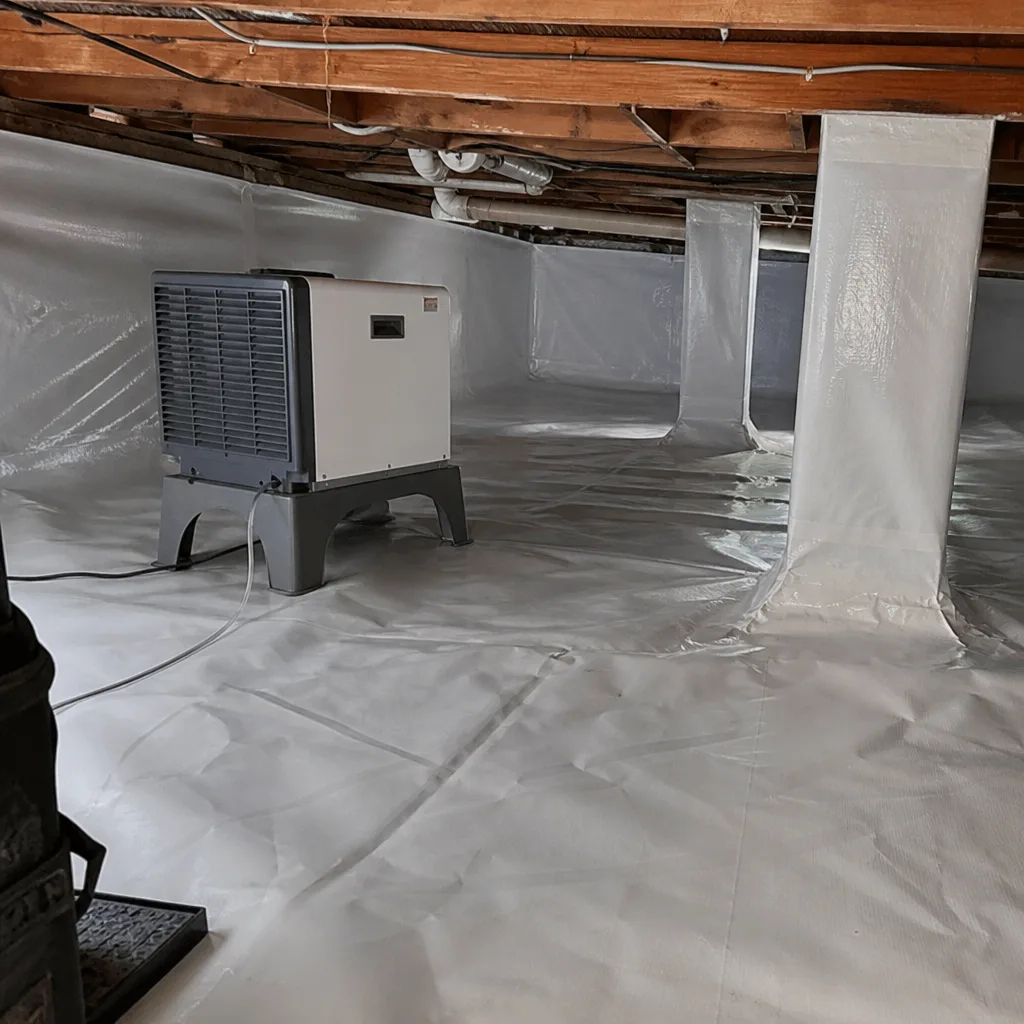
- Musty odors rising through floor gaps. When the poly vapor barrier tears at seams or pulls away from foundation walls, soil moisture and organic decay gases migrate upward through subfloor penetrations. In Lancaster’s high-desert climate, summer afternoon temperatures above 105°F in an unvented crawl space accelerate this off-gassing.
- Hardwood flooring cupping or buckling above the crawl space. Wood absorbs moisture from below when the vapor barrier fails, expanding across the grain. We’ve measured crawl space relative humidity above 70% in Lancaster homes where the original 6-mil poly had degraded, even with outdoor humidity in the teens.
- Insulation sagging or falling from floor joists. Fiberglass batts lose their grip when humidity cycles cause condensation on the paper facing. Once they drop, they become a mold substrate and an air filter that doesn’t filter anything useful.
- Increased pest activity, particularly springtails and silverfish. These moisture-seeking insects follow humidity gradients. A properly encapsulated crawl space should read below 60% RH year-round; anything higher invites colonization.
- Summer cooling bills climbing without thermostat changes. Ductwork in a hot, humid crawl space loses capacity through conduction and leaks. Your AC works harder to deliver the same sensible cooling. We’ve seen blower-door readings improve by 800 CFM50 after encapsulation and duct sealing together in Lancaster ranch homes.
Replacement Cost & What’s Included
Complete crawl space encapsulation in Lancaster typically breaks down as follows:
| Component | Typical Range |
|---|---|
| 6-mil poly removal and disposal | $400 - $800 |
| 15-mil reinforced vapor barrier (per sq ft) | $2.80 - $4.20 |
| Foundation wall insulation (EPS foam board or closed-cell spray) | $1,800 - $3,500 |
| Seam sealing and pier wrapping | $600 - $1,200 |
| Dehumidifier installation (if needed) | $1,200 - $2,400 |
| Typical total, 1,200 sq ft crawl space | $4,500 - $6,800 |
What drives the range: crawl space height (anything below 18 inches requires different access), number of piers to wrap, whether the existing poly is embedded in soil (harder removal), and if we find standing water that needs a sump basin first. Every job gets a written price before any work starts, under Haven Standard Clause 1. The 15-mil poly carries a 20-year material warranty; our installation workmanship is covered by the 365-Day Done Right Promise. You’ll receive a Documented Photo Record of the completed encapsulation and, on jobs where we perform attic air sealing simultaneously, before-and-after blower-door numbers showing the full envelope improvement.
DIY or Call Us?
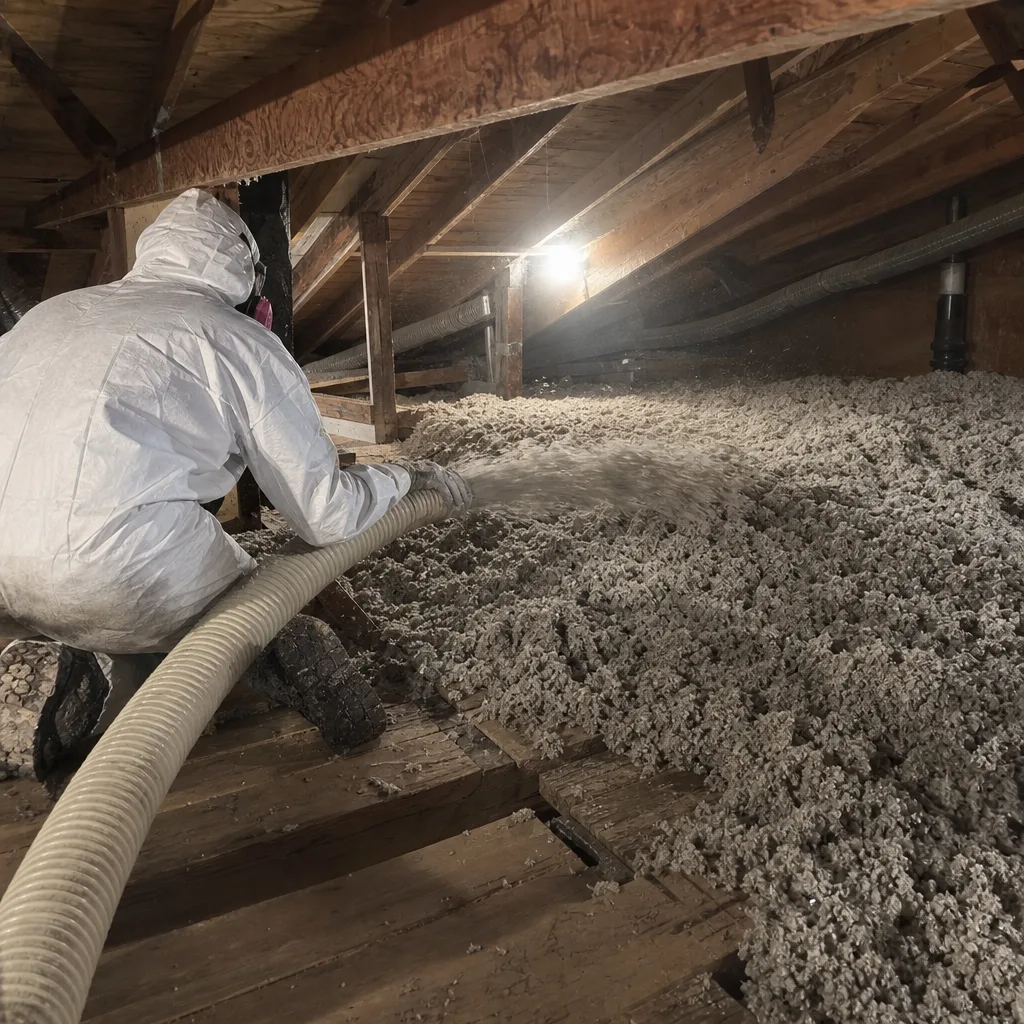
There’s a safe middle ground here. A homeowner can check the crawl space humidity with a $15 digital hygrometer, look for obvious poly tears, and verify whether foundation vents are open or sealed. What you can’t safely assess yourself: whether the existing vapor barrier was properly lapped and sealed at seams (most DIY and builder installs aren’t), whether the rim joist has hidden air leaks that bypass the poly entirely, or whether your crawl space has a negative pressure problem that’s pulling garage or soil gases into the living space.
We don’t recommend DIY encapsulation for anything beyond spot-taping a small tear with vapor-barrier tape. Cutting and seaming 15-mil poly in a confined space requires a heat seamer and experience with overlap patterns; getting it wrong traps moisture against framing. For a proper assessment and written price, call us at (661) 526-2890. Estimates are free, and we’ll walk the crawl space with you if you want to see what we see.
FAQs
Quality 15-mil reinforced poly properly installed should last 20 to 25 years in Lancaster’s climate. The original 6-mil builder-grade poly we remove often shows degradation in 8 to 12 years, accelerated by UV exposure through foundation vents and the thermal cycling of our 40-degree winter lows against 105-degree summer crawl space temperatures. Call (661) 526-2890 if you’re unsure what grade you have; we can identify it during a free estimate.
Small punctures or tears under 6 inches can be patched with vapor-barrier tape if the surrounding poly is still supple. If the material is brittle, discolored, or pulling away from walls, patching is a short-term fix that leaves the underlying failure unaddressed. We see this often in Lancaster homes where the original poly was stapled to wood sills without mechanical fastening; the staples rust, the poly sags, and tape patches can’t restore tension. Call (661) 526-2890 and we’ll tell you honestly whether your situation warrants repair or full replacement.
Most residential crawl spaces in Lancaster take two to three days: one day for removal and prep, one day for poly installation and wall insulation, and a partial third day if we’re adding a dehumidifier or sealing ductwork. Tight crawl spaces below 24 inches, or those with more than six piers, add a day. We don’t rush the seam-sealing phase; that’s where most failures start. You’ll get a written schedule with your price before work begins.
We stock 10-mil and 15-mil reinforced polyethylene, vapor-barrier tape, mechanical fasteners, and closed-cell spray foam equipment on every truck. CertainTeed-branded MemBrain is ordered per job with a three-day lead time, since it’s humidity-activated and shelf-life sensitive. For standard encapsulation, we use mill-direct reinforced poly that matches CertainTeed specifications without the brand markup, and we warranty the installation identically. Topside Attic Insulation Lancaster is an independent service provider, not affiliated with CertainTeed. Call (661) 526-2890 to confirm material availability for your specific job.
Seal the gaps first. Then insulate. The R-value you paid for is only as good as the air barrier behind it. That’s how Wes Okafor runs every job, whether it’s a full encapsulation or a targeted air-sealing pass in a Lancaster crawl space that’s been bleeding conditioned air for years.
Ready to stop losing conditioned air through your crawl space? Call (661) 526-2890 for a free written estimate. We’ll walk the space, measure the losses, and give you a flat price before any work starts. Haven Standard: Have it in writing.
Written by Wes Okafor, Owner & Lead Insulation Technician, Topside Attic Insulation Lancaster at Topside Attic Insulation Lancaster, serving Lancaster and nearby areas.