
Icynene Attic Air Sealing: The Lancaster Owner’s Guide
Most Icynene attic air sealing jobs in Lancaster run between $1,800 and $3,400 installed, depending on attic square footage and how many top plates, can lights, and duct chases need sealing. We stock Icynene-compatible open-cell foam, backer rod, and acrylic sealant on every truck, and we can usually start the work same day you approve the written scope. Homeowners typically notice the problem when their summer AC runs constantly but the house never reaches setpoint, or when they find fiberglass batting blackened with dust trails near ceiling penetrations - signs that conditioned air is escaping through gaps the original sealant never closed.
Which Icynene Models This Applies To
Icynene’s LD-C-50 open-cell foam is the most common product we encounter in Lancaster attics, especially in homes built between 2010 and 2020 in neighborhoods like the ones around Avenue K near the BLVD, where builders used it for top-plate and penetration sealing during original construction. The LD-C-50 cures to a soft, flexible foam - good for thermal movement, bad for long-term durability if it was applied too thin or over dusty surfaces. Newer Icynene H2Foam Lite installations (post-2018) use a higher-density formulation that holds up better to our 130-degree attic summers, though we’ve still found shrinkage gaps where installers rushed the pass.
To identify what you have, look for the Icynene lot label on any exposed foam surface - a small printed tag with the series code and install date. If the foam is crumbling, yellowed, or pulling away from framing, the label may be gone. In that case, we measure the cured density (LD-C-50 runs roughly 0.5 lb/ft³, H2Foam Lite closer to 2.0 lb/ft³) and check the substrate: open-cell on OSB or drywall behaves differently than on bare lumber. Topside Attic Insulation Lancaster is an independent service provider - not affiliated with Icynene - so we source both OEM Icynene foam and compatible aftermarket sealants from Demilec and Johns Manville depending on what the attic conditions actually require. The aftermarket acrylics often outperform original foam in high-heat, low-humidity desert conditions like ours.
Signs Your Icynene Attic Air Sealing Is Failing
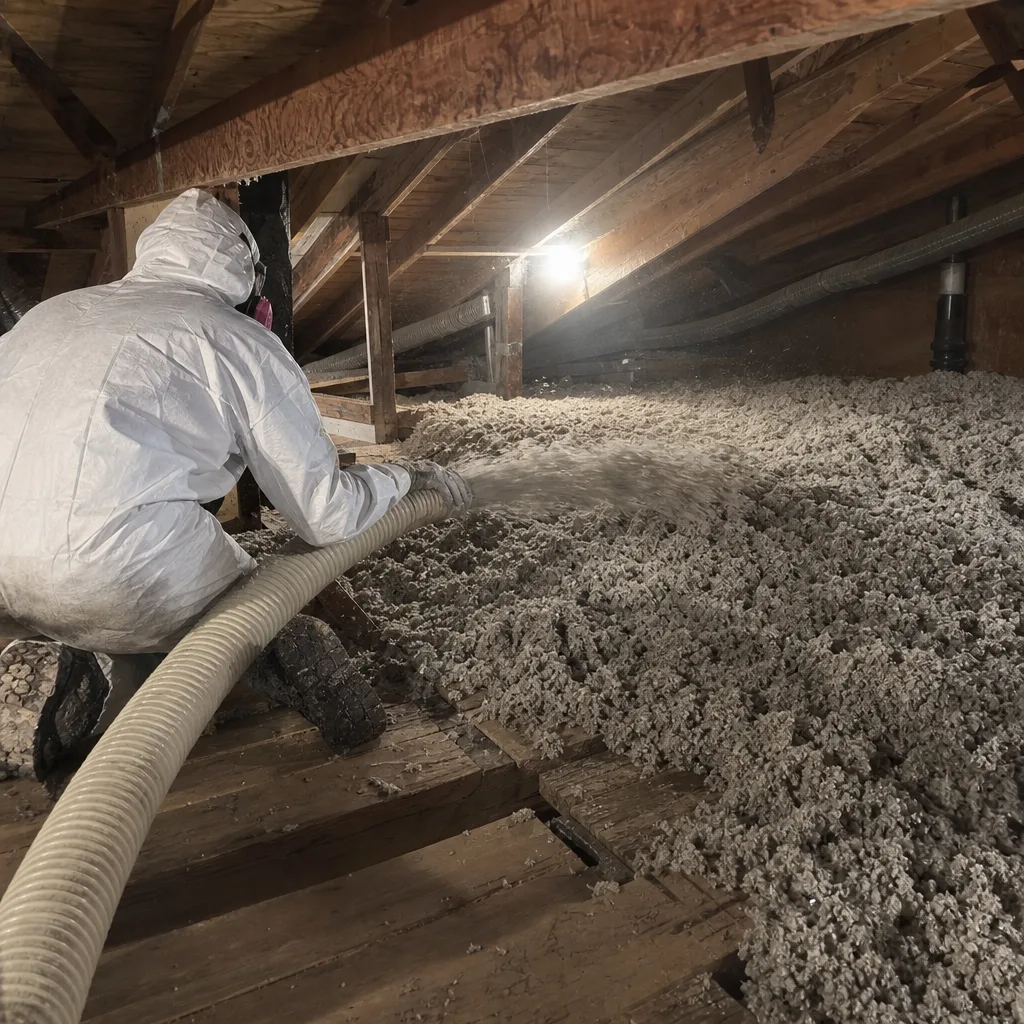
- Dust-blackened insulation near ceiling fixtures. This is the tell we look for first. Air moving through an unsealed gap carries dust that deposits on fiberglass batting like a smoke trail, pointing right to the leak. The Icynene foam may look intact from below, but if it missed the gap between top plate and drywall, or shrank away over time, the insulation does the detective work.
- Hot rooms in summer despite new AC equipment. We see this constantly in Lancaster’s west-side ranch homes. The unit is sized correctly, the ducts are sealed, but conditioned air is dumping into the attic through gaps around recessed can lights or plumbing vent stacks. The Icynene seal was either never applied there or failed from thermal cycling.
- Ice damming or moisture staining on ceiling drywall in winter. Even in our dry climate, warm moist air hitting cold attic sheathing condenses. When Icynene shrinks or pulls away from rafter bays, humid interior air finds a path. The staining usually appears first in bathrooms and kitchens, where interior humidity is highest.
- Blower-door test showing minimal improvement after “air sealing” by another contractor. We get these calls every spring. A crew blew in new insulation over old, failed Icynene without removing it or testing after. The blower-door number - a pressurization reading that shows, in one figure, how much air your building envelope is losing - barely moved. The R-value on paper looks fine. The actual performance doesn’t.
- Visible crumbling or powdering of foam surfaces. Icynene’s open-cell chemistry degrades with prolonged UV and heat exposure. In Lancaster attics that hit 140°F in July, foam applied to roof decking or near gable vents can break down in 8-12 years instead of the 20-year rating. It turns from cream-colored and resilient to chalky and friable.
Replacement Cost & What’s Included
| Scope | Price Range (Lancaster) |
|---|---|
| Partial re-seal: top plates + select penetrations (up to 800 sq ft attic) | $1,800 - $2,400 |
| Full attic re-seal: all plates, chases, can lights, vent stacks (800-1,500 sq ft) | $2,400 - $3,400 |
| Additional: can light covers (fire-rated, IC-rated fixtures) | $45 - $85 each |
| Additional: duct chase sealing with mastic + mesh | $180 - $320 per chase |
What drives the range: attic accessibility (truss height, existing insulation depth that must be moved and replaced), number of penetrations, and whether we’re working around active knob-and-tube wiring that requires an electrician’s clearance. Every job starts with a written price before any work starts - Haven Standard Clause 1 - and includes a Documented Photo Record of every sealed gap. On applicable jobs, we run a blower-door test before and after so you can verify the air-sealing result in CFM50. The 365-Day Done Right Promise covers all completed work.
DIY or Call Us?
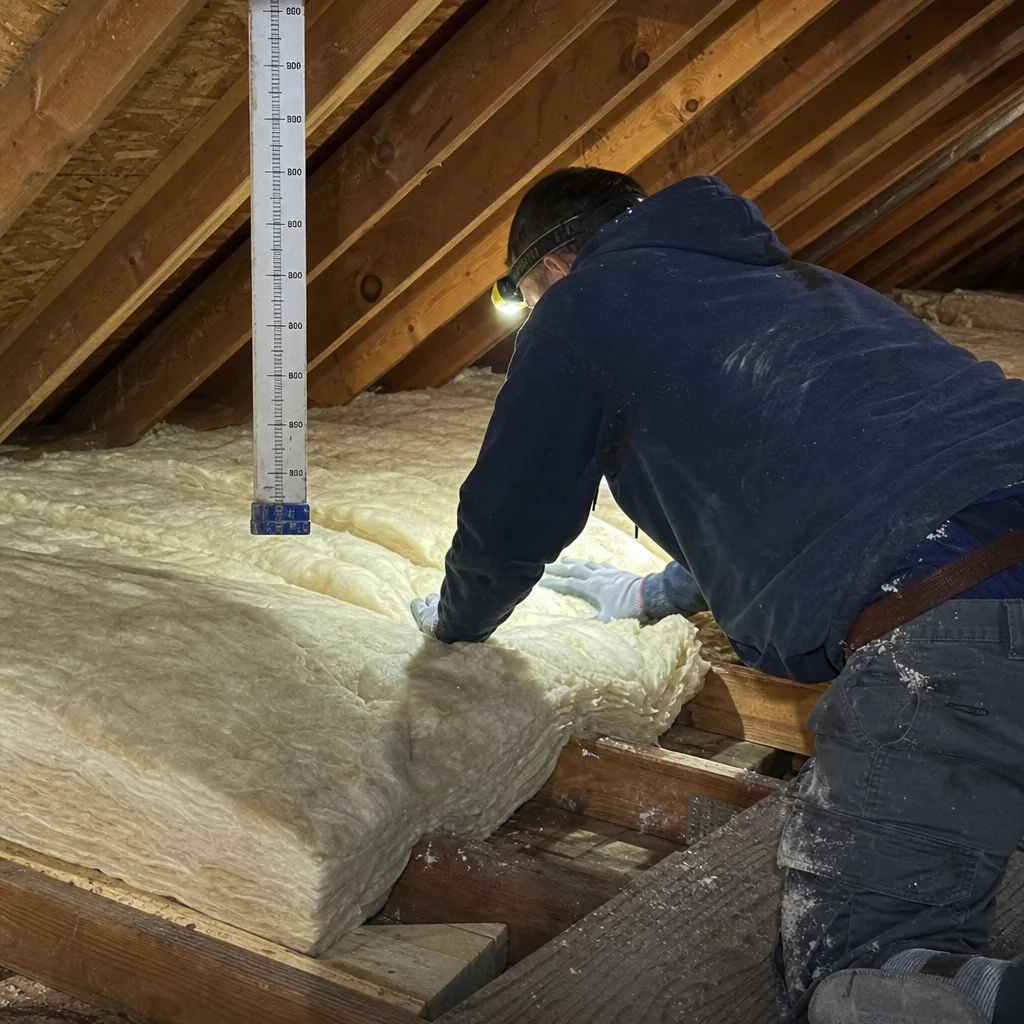
Here’s what you can safely check yourself: turn off your attic light, close the hatch, and look up from the living space with a bright flashlight during daylight. Gaps around can lights, bathroom fans, and the top plate where interior walls meet ceiling drywall will show as light leaks. Mark them with tape. That’s the extent of safe homeowner diagnosis.
Here’s where DIY goes wrong: removing old Icynene foam requires scraping and solvent work that releases isocyanates and amine catalysts - respiratory hazards without proper PPE and ventilation. Applying new open-cell foam demands controlled temperature, humidity, and substrate prep; in a 130-degree Lancaster attic, the stuff skins before it adheres. And without a blower-door test, you’re guessing whether you found the leaks that actually matter. We’ve redone too many homeowner foam jobs where the visible gaps got sealed and the hidden ones - behind soffits, at partition wall intersections - kept bleeding air. Call (661) 526-2890 and we’ll give you a written scope and price before anyone lifts a tool.
FAQs
In our high-heat, low-humidity desert climate, properly applied Icynene LD-C-50 lasts 12-18 years on vertical surfaces and 8-12 years on roof decking or near ventilation sources where summer attic temperatures exceed 130°F. H2Foam Lite formulations show less shrinkage and typically add 3-5 years. Call (661) 526-2890 for an attic condition assessment - estimates are free.
Spot repair works if the failure is isolated - a single pulled-away top plate, one shrunken can light seal. We cut back to sound foam and bridge with compatible acrylic. Widespread crumbling, powdering, or shrinkage across more than 30% of the attic means full removal and reapplication; patching over failing substrate just buries the problem. We stock both repair materials and full replacement foam on every truck. Call (661) 526-2890 for an exact quote - estimates are free.
Most partial re-seals finish in one day; full attic removals and reapplications run two days, plus a third day if we need to coordinate an electrician for active wiring. We never rush the cure time - foam that’s walked on or insulated over before it’s set loses adhesion and becomes tomorrow’s callback. Your written scope includes the schedule before work starts.
We stock Icynene-compatible open-cell foam, closed-cell formulations for specific applications, backer rod in common diameters, fire-rated acrylic sealants, and can light covers on every truck. For OEM Icynene product specifically, we source through our Demilec and Johns Manville supply chain with 24-48 hour turnaround if your job spec demands it. Most Lancaster homeowners don’t need to wait - we can assess today and start tomorrow. Call (661) 526-2890.
Seal the gaps first. Then insulate. The R-value you paid for is only as good as the air barrier behind it. Wes Okafor learned that running attic assessments across Lancaster, including retrofit work in the established neighborhoods around Avenue K near the BLVD, and it’s why every job we lead starts with a pre-install air-leak audit. No exceptions.
Written by Wes Okafor, Owner & Lead Insulation Technician, Topside Attic Insulation Lancaster at Topside Attic Insulation Lancaster, serving Lancaster and nearby areas.