
Demilec Attic Air Sealing: The Lancaster Owner’s Guide
Demilec attic air sealing repair in Lancaster typically runs $340-$780 installed, depending on attic square footage and how many top plates, can lights, and penetrations need resealing. We stock Demilec-compatible open-cell and closed-cell foam components, acrylic sealants, and rigid air barrier materials on every truck, and most Lancaster jobs are completed same-day. Homeowners usually notice the problem first as a spike in summer cooling bills, hot spots in rooms farthest from the HVAC unit, or dust trails around ceiling fixtures that weren’t there after the original install.
Which Demilec Models This Applies To
Demilec, now operating under Huntsman Building Solutions, produces several product lines that appear in Lancaster attics from retrofits done between 2010 and 2022. The most common is Heatlok HFO Pro, a closed-cell spray foam rated at R-7 per inch, originally specified for top plate sealing and kneewall junctions in local builds. Heatlok XT, the earlier HFC-blown version, is also prevalent in older Lancaster subdivisions west of the 14 freeway. Sealection 500, an open-cell water-blown foam, was used extensively for attic floor air sealing in the 2012-2018 period when builders were chasing LEED points.
Identifying your specific Demilec product requires reading the spray foam surface itself. Closed-cell Demilec products cure to an orange-peel texture with a faint yellow tint; open-cell Sealection cures softer, cream-colored, and will dent under thumbnail pressure. The original installer should have left a product label on the attic access hatch or a dated invoice in your disclosure packet. If neither exists, we take a core sample during our assessment and match density and cell structure to the manufacturer’s spec sheet.
We do not carry Demilec OEM part numbers in the traditional sense, spray foam is a field-applied material, not a bolt-on component. What we stock are Demilec-compatible replacement foams and sealants formulated to bond chemically with the original substrate without delamination. For Lancaster’s 130-degree summer attic peaks, we specify high-temperature acrylic sealants at can light and chimney penetrations rather than generic latex, which we’ve seen skin over and crack within two seasons.
Signs Your Demilec Attic Air Sealing Is Failing
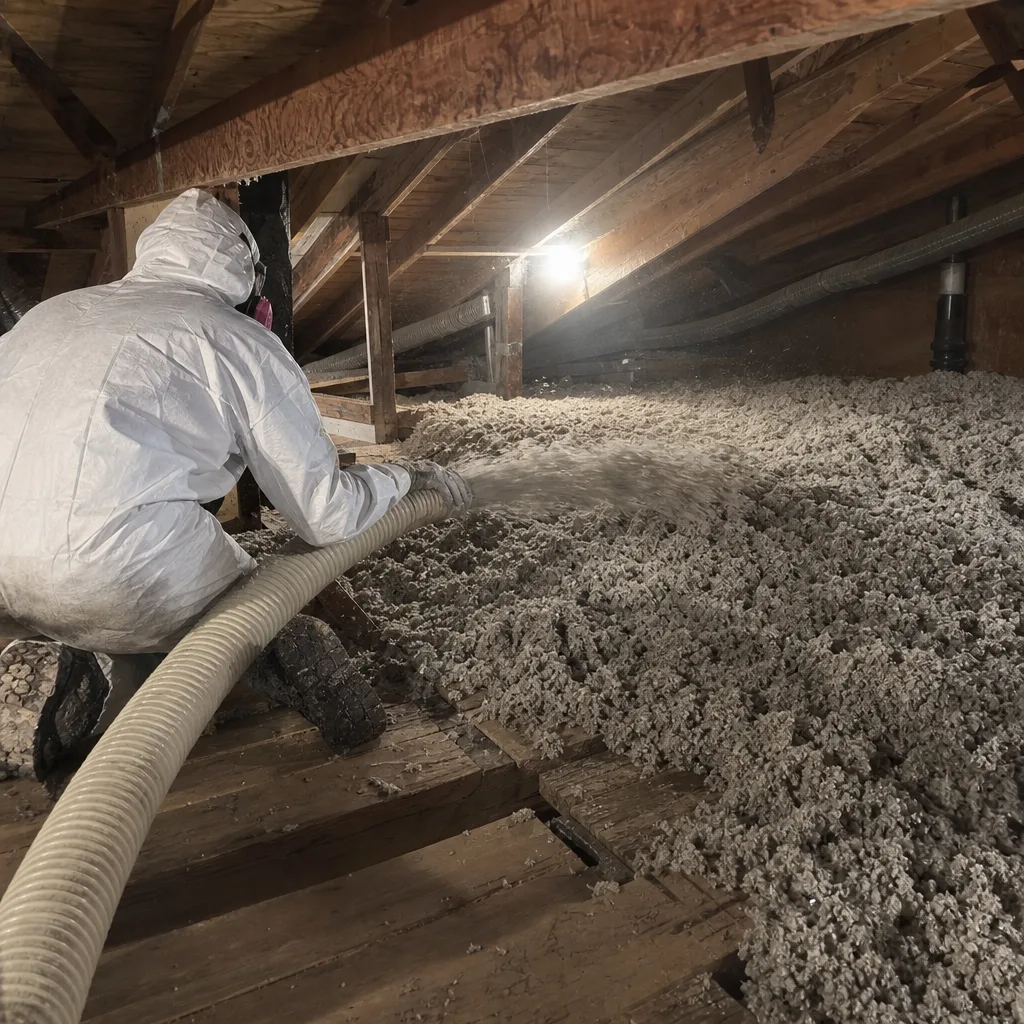
- Dust rings around ceiling fixtures. This means conditioned air is being pulled through gaps the Demilec foam was supposed to seal, carrying attic dust into your living space. The foam may have shrunk at the fixture perimeter or never fully sealed the electrical box.
- Hot rooms on the west side of the house by 3 PM. In Lancaster, afternoon solar load peaks hard. If your Demilec air sealing has failed at the top plates or kneewalls, that heat bypasses your insulation and radiates through the drywall. The HVAC runs longer but the room never catches up.
- Ice damming or condensation stains on roof sheathing. This happens when warm, moist interior air leaks through failed Demilec seals and condenses on the underside of cold roof decking. In Lancaster’s winter temperature swings, this cycle can rot sheathing in a single season if the leak is at a bathroom vent penetration.
- Blower-door score degradation. If you had air sealing done with documented CFM50 numbers, a retest showing 15% or higher leakage increase means something moved, cracked, or was disturbed. We see this after rodent activity in Lancaster’s west-side neighborhoods, where roof rats chew at foam edges near eave vents.
- Insulation settling away from the attic floor perimeter. Air movement from failed sealing blows loose-fill insulation inward, creating bare strips where the wall meets the ceiling. The Demilec bond at the top plate has likely failed, or the original install missed the plate entirely.
Replacement Cost & What’s Included
Most Demilec attic air sealing reworks in Lancaster fall between $340 and $780. A small single-story ranch near Jane Reynolds Park, roughly 1,200 square feet with straightforward attic access, typically lands at the lower end. Two-story homes in Quartz Hill with complex rooflines, multiple HVAC zones, and cathedral ceilings over living spaces push toward the higher range.
What drives the spread: linear feet of top plate to reseal, number of can lights and bath fan penetrations requiring fire-rated foam or intumescent sealant, whether the existing Demilec foam needs partial removal before reapplication, and attic access difficulty. Steep pitches above 8/12 add labor time in Lancaster’s summer heat.
Every job includes the Haven Standard written scope and flat price before work starts, plus a Documented Photo Record showing each penetration before and after sealing. On applicable jobs, we run a blower-door test, a pressurization reading that shows, in one number, how much air your building envelope was losing before and after the rework. The 365-Day Done Right Promise covers all completed sealing work.
DIY or Call Us?
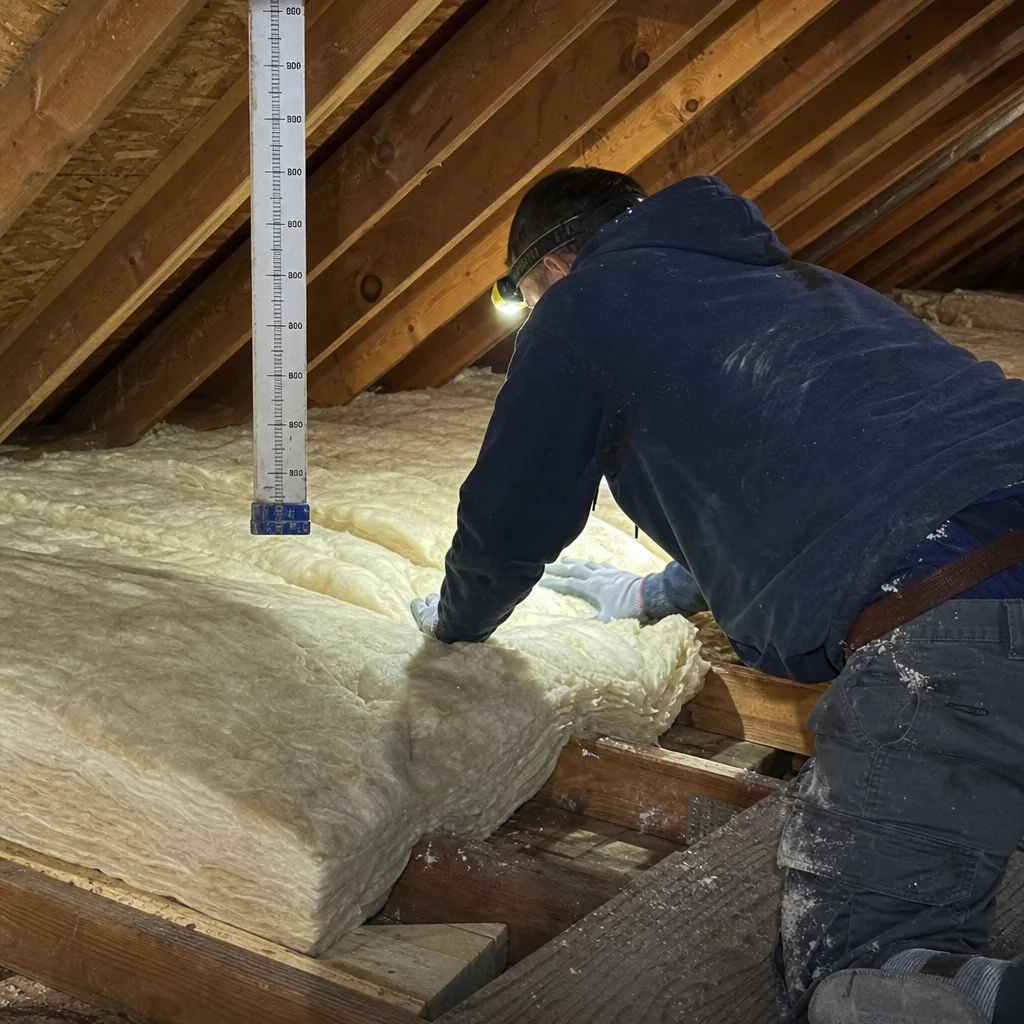
There’s a short list an owner can safely check. Verify your attic access is clear, confirm bathroom fans vent to the exterior and not into the attic space, and look for obvious gaps at the attic hatch perimeter where weatherstripping may have compressed. These observations help us but carry no safety risk.
Where DIY goes wrong: spray foam application requires respiratory protection, proper substrate temperature, and precise mixing ratios that vary by product. In a Lancaster attic in July, surface temperatures exceed 130 degrees, which causes off-ratio curing, brittle foam, and zero adhesion. We’ve been called to remove homeowner-applied foam that delaminated completely within six months. The chemical exposure risk is real, and the rework costs more than the original professional install.
Seal the gaps first. Then insulate. The R-value you paid for is only as good as the air barrier behind it. Call (661) 526-2890 for a written price before any work starts.
FAQs
Properly applied Demilec closed-cell foam lasts 25-30 years, but Lancaster’s extreme temperature cycling, 30-degree winter lows to 130-degree attic peaks, accelerates thermal movement at penetration points. We typically see first maintenance needs at can lights and chimney surrounds around year 12-15. Call (661) 526-2890 and we’ll assess whether you need spot repair or full rework.
Spot repair is often sufficient if the original foam is well-bonded and only penetrations have failed. We scarify the existing surface, apply a compatible bonding agent, and feather new foam into old. Full removal is only necessary when the original install was off-ratio or contaminated with dust, which we determine during assessment. Estimates are free.
Most Lancaster residential jobs finish in one working day, four to six hours for a single-story home, up to eight for complex rooflines with multiple zones. We need the HVAC off during blower-door testing, so we schedule around your comfort preferences. Same-day starts are available when you call (661) 526-2890.
We stock Demilec-compatible open-cell and closed-cell foams, high-temperature acrylic sealants, and fire-rated intumescent products on every truck. We are an independent service provider, not affiliated with Demilec, and we also carry Reflectix and other major brands so we’re not locked into a single supplier. Most Lancaster jobs start same-day with no material lead time.
Ready to stop losing conditioned air through your attic? Call (661) 526-2890. A live person answers 24/7. We’ll schedule a free assessment, deliver a written flat price before any work starts, and leave you with a Documented Photo Record and blower-door numbers that prove what changed.
Written by Wes Okafor, Owner & Lead Insulation Technician, Topside Attic Insulation Lancaster at Topside Attic Insulation Lancaster, serving Lancaster and nearby areas.