
GreenFiber Attic Air Sealing: The Lancaster Owner’s Guide
GreenFiber attic air sealing repair in Lancaster typically runs $340-$780 for a complete top-plate and penetration seal on an average 1,600-square-foot home, and we stock GreenFiber-compatible sealant, baffles, and fire-rated foam on every truck for same-day service. Most Lancaster homeowners discover the problem when their summer cooling bills spike 20-40% above the previous year, or when a home energy audit reveals conditioned air bleeding through the attic floor faster than the insulation can slow it. We see this pattern constantly in the older ranch homes west of the BLVD and in the 1990s-era subdivisions near Avenue K, where settling and thermal cycling have opened gaps the original builder never sealed.
Which GreenFiber Models This Applies To
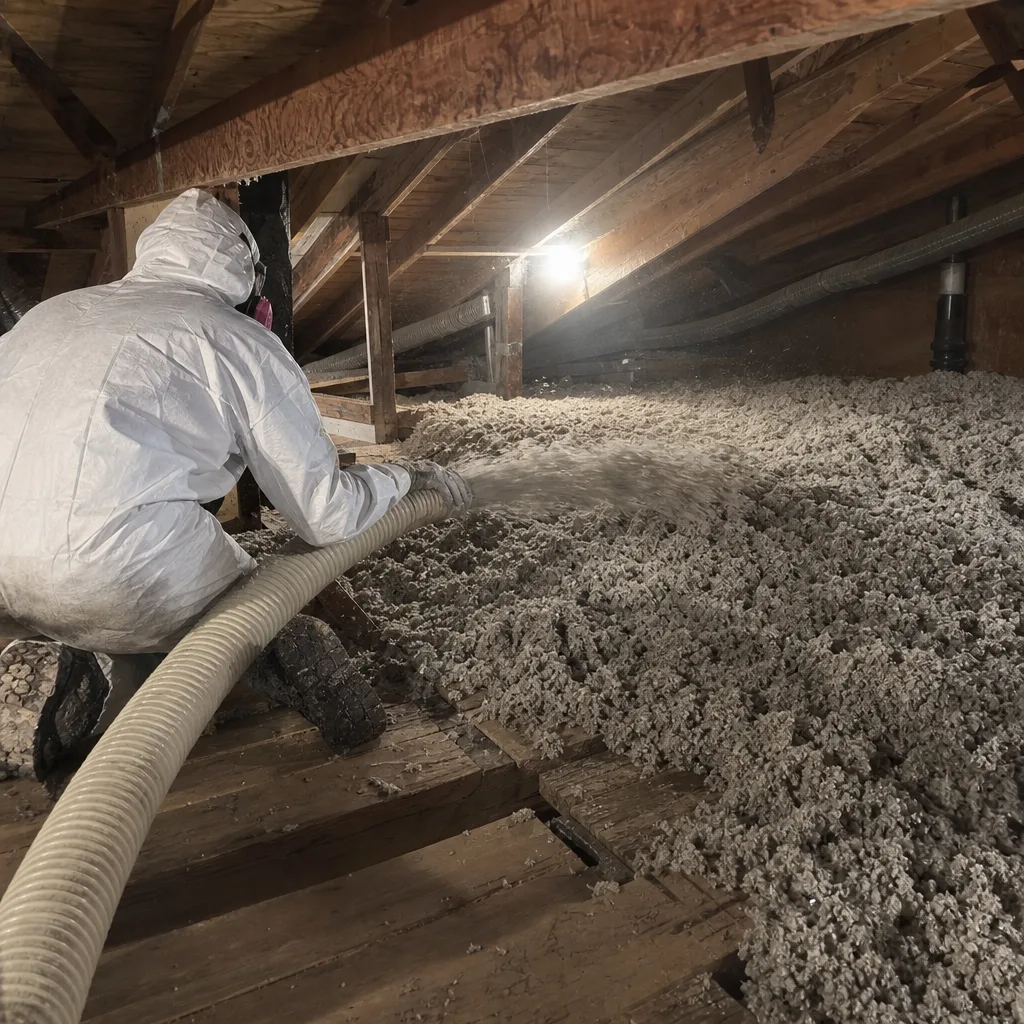
GreenFiber does not manufacture a dedicated “attic air sealing system” as a standalone product line. Instead, their cellulose insulation - sold in loose-fill and stabilized forms - depends on a properly sealed attic floor to perform to its labeled R-value. We work with homes that have GreenFiber cellulose installed, whether by a previous contractor or as part of a retrofit, and we seal the building envelope using compatible materials: fire-rated expanding foam for top plates and electrical penetrations, rigid foam baffles for vent chutes, and acrylic-latex sealant for drywall-to-framing gaps.
To identify what you’re working with, check the attic access hatch for a GreenFiber bag label or a contractor sticker dated after 2010. GreenFiber cellulose is typically gray-fiber, treated with borate for fire resistance, and blows to a settled density of about 1.5 lbs per cubic foot. The critical compatibility gotcha: GreenFiber’s stabilized cellulose contains a small percentage of adhesive binder. If your attic was sealed with standard latex caulk before that product went in, the binder can off-gas and degrade certain sealants over a 5-7 year span in Lancaster’s 110°F+ attic summers. We use sealants rated for cellulose contact and sustained high-temperature exposure.
OEM-spec versus quality aftermarket: GreenFiber does not sell proprietary air-sealing components direct to contractors. We source fire-rated foam from Owens Corning and Johns Manville, baffles from CertainTeed, and sealants from Knauf - all tested for compatibility with cellulose insulation. No proprietary lock-in means you get parts priced on open-market competition, not captive-brand markup.
Signs Your GreenFiber Attic Air Sealing Is Failing
- Dust streaking on ceiling drywall. Air moving through unsealed gaps carries insulation fines and attic dust into the living space, leaving dark lines at ceiling corners and around can lights. The underlying cause is a failed top-plate seal or missing gasket at the drywall penetration.
- Ice-cold ceiling patches in winter, hot spots in summer. These map directly to air leaks, not missing insulation. We find them most often above interior walls in Lancaster homes, where the top plate was never foamed during original construction.
- Can lights that drip condensation or show rust rings. Unsealed recessed housings act as chimneys, pumping conditioned air into the attic. In Lancaster’s dry climate this is less about moisture damage and more about the energy loss - but the rust tells you air is moving.
- Blower-door reading above 3,500 CFM50 on a home under 2,000 square feet. This is a pressurization measurement that shows, in one number, how much air your building envelope is losing. A well-sealed home this size in Lancaster should read closer to 2,000-2,500 CFM50 after air sealing.
- Insulation that looks disturbed or settled unevenly. Air moving across cellulose scours it away from leak paths, creating bare patches and drifts. The insulation isn’t failing; the air barrier behind it is.
Replacement Cost & What’s Included
| Scope | Typical Range in Lancaster |
|---|---|
| Top-plate seal (interior walls, standard ranch) | $340-$520 |
| Full attic floor seal (top plates, penetrations, can lights, vent chutes) | $620-$780 |
| Can-light enclosure and seal (per fixture, IC-rated) | $45-$85 |
| Blower-door verification test | Included with full seal |
What drives the range: attic accessibility (truss height, existing decking), quantity of penetrations, and whether we need to remove and reinstall existing GreenFiber to access the leaks. We never blow new insulation over an unsealed floor, so if your cellulose needs temporary relocation to reach the gaps, that labor is in the written scope from the start. Every job closes with a Documented Photo Record and, on full seals, before-and-after blower-door numbers so you can verify the performance change. The 365-Day Done Right Promise applies to all work.
DIY or Call Us?
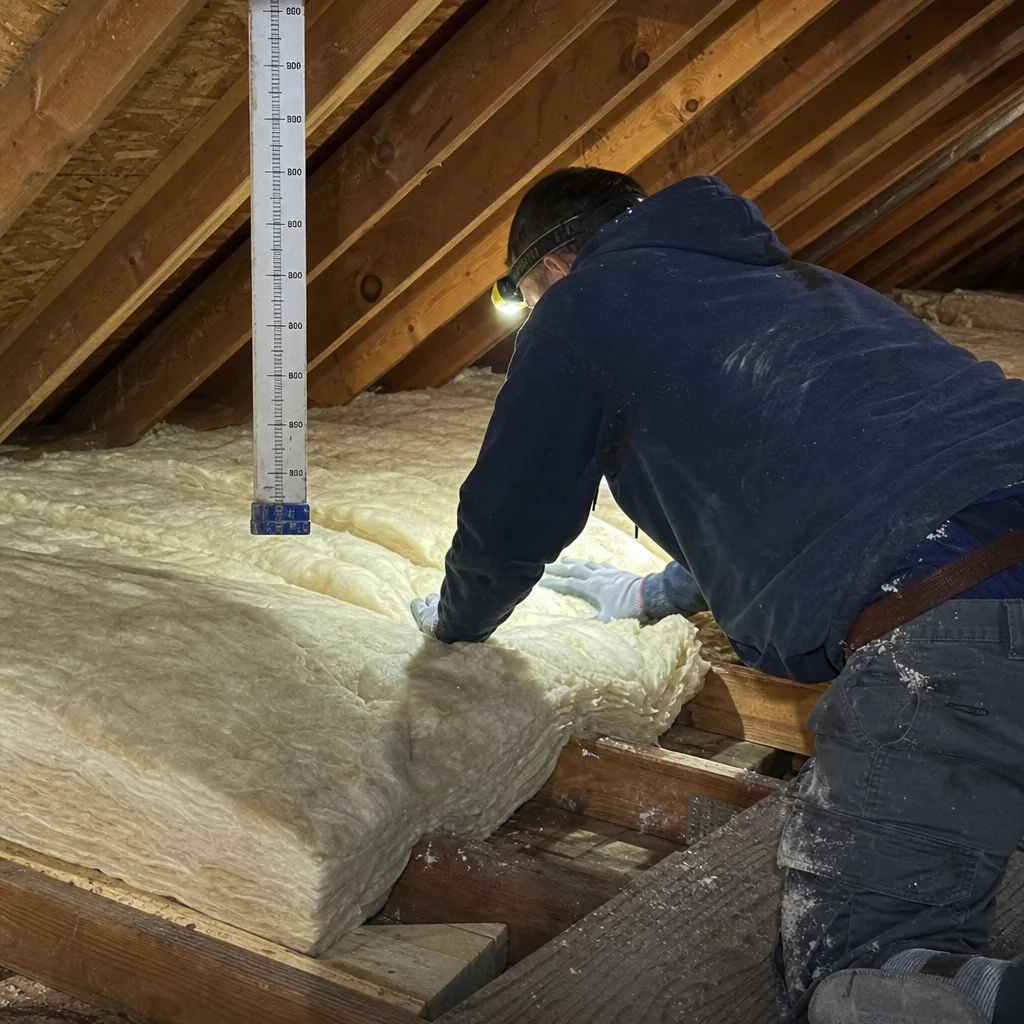
What you can safely check yourself: shine a flashlight into the attic during daylight hours and look for visible gaps at top plates, around chimney chases, and where wiring drops through the ceiling. Note any bare spots in the cellulose. Do not disturb the insulation - disturbing cellulose without respiratory protection risks inhaling borate-treated dust.
Where DIY goes wrong: attic air sealing requires working in 130°F+ heat on a surface you cannot see clearly, balancing on joists while handling fire-rated foam and sealants that must meet California Title 24 energy code. The real risk isn’t injury; it’s sealing the wrong gaps, missing the critical ones, and trapping moisture where it shouldn’t go. We find failed DIY seals regularly in Lancaster, especially where homeowners used standard hardware-store foam that degrades in sustained attic heat. Seal the gaps first. Then insulate. The R-value you paid for is only as good as the air barrier behind it.
Call (661) 526-2890 for a free estimate. We’ll give you a written price before any work starts, and a free second opinion on any competing quote you bring us.
FAQs
In Lancaster’s climate, properly installed fire-rated foam and acrylic-latex sealants last 15-25 years, though thermal cycling in 130°F attics can stress bond lines after year 10. We inspect seal integrity as part of any subsequent insulation service and re-hit failed spots under our 365-Day Done Right Promise if we did the original work. Call (661) 526-2890 to schedule a look - estimates are free.
Spot repairs work if the original seal was done correctly and only isolated areas have cracked or pulled away. We see this in Lancaster homes where the initial job missed 20% of the gaps - the 80% that was sealed is still fine, but the unsealed 20% is bleeding conditioned air. We assess with a blower-door test and thermal camera, then quote only what’s actually needed. Call (661) 526-2890 for an exact scope - estimates are free.
A standard top-plate seal on a Lancaster ranch takes 4-6 hours; a full attic floor seal with penetration work runs one to two days. We stock GreenFiber-compatible sealants and baffles on every truck, so there’s no supplier delay. You’ll get a text when your technician is en route, and a Documented Photo Record before we leave. Call (661) 526-2890 to check same-week availability.
We stock the sealants, baffles, foams, and fire-rated enclosures that make a GreenFiber cellulose installation perform to spec. GreenFiber itself does not sell proprietary air-sealing components, and Topside Attic Insulation Lancaster is an independent service provider, not affiliated with GreenFiber. We also stock Reflectix radiant barrier materials where those are part of the assembly. Call (661) 526-2890 and we’ll confirm compatibility with your specific setup before we arrive.
Written by Wes Okafor, Owner & Lead Insulation Technician, Topside Attic Insulation Lancaster at Topside Attic Insulation Lancaster, serving Lancaster and nearby areas.