
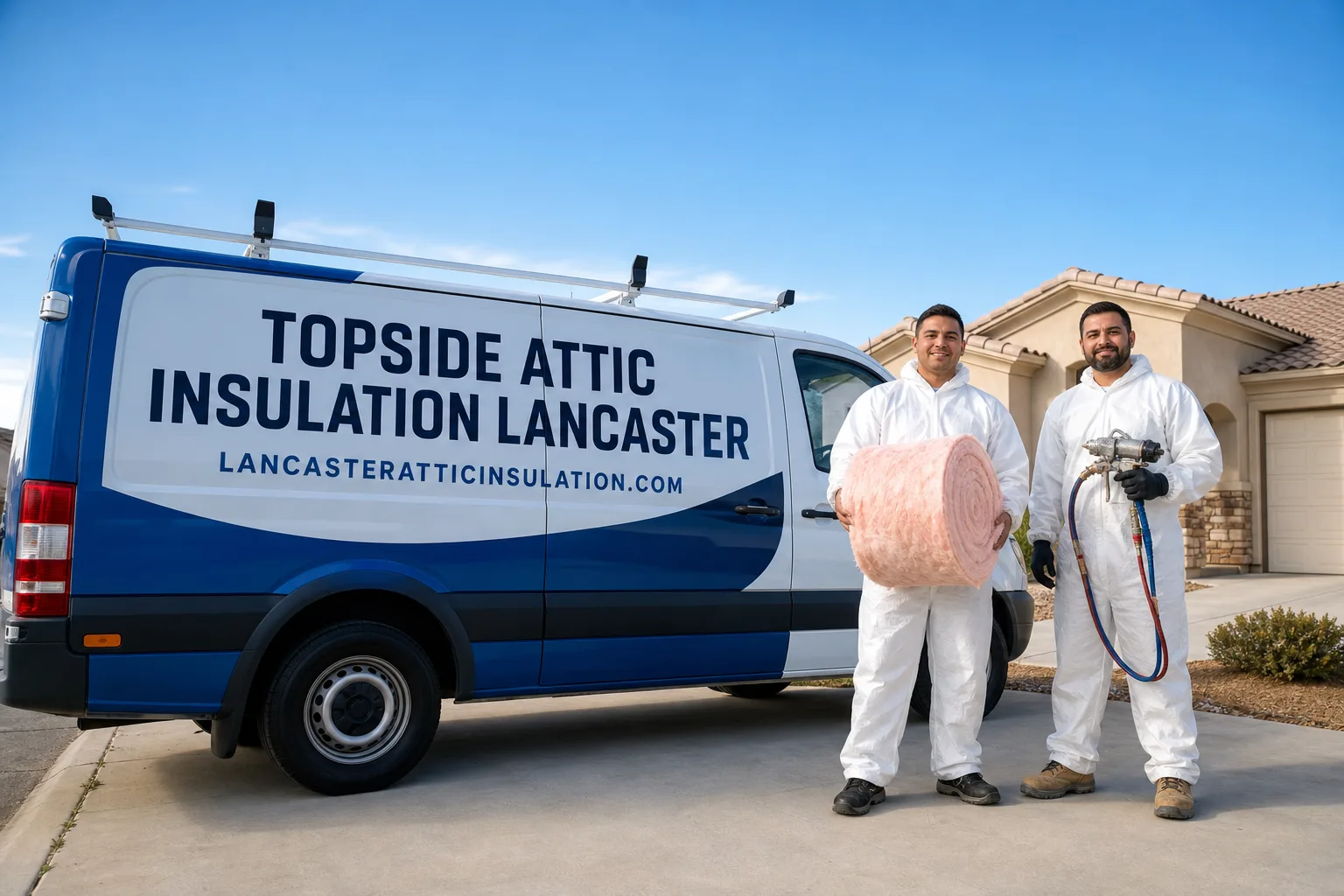
Trusted Spray Foam Insulation for Lancaster Homeowners
Spray Foam Insulation in Lancaster typically costs $1.80 to $3.50 per board foot for open-cell and $3.00 to $5.50 per board foot for closed-cell, with most whole-home attic jobs running $3,200 to $7,800 depending on square footage and access. We’re available same-day for assessments across Lancaster, and we answer calls live at (661) 526-2890 - no voicemail loops.
Since 2016, we’ve sealed and insulated more than 9,000 homes under The Haven Standard. In Lancaster’s high-desert climate - where summer days hit 110°F and winter nights drop below freezing - a building envelope that leaks conditioned air isn’t just inefficient, it’s expensive. We’ve measured blower-door readings as high as 5,800 CFM50 in 1980s Lancaster tract homes before air sealing, then cut that by half after sealing top plates, can lights, and duct chases. Every job starts with a written price and ends with a Documented Photo Record. Before-and-after blower-door numbers are published on every applicable job so you can verify what you paid for.
What Our Spray Foam Insulation Service Includes
Open-Cell Spray Foam
Open-cell spray foam is a half-pound density foam that expands to roughly 100 times its liquid volume, creating a soft, flexible insulation layer ideal for attic floors and wall cavities in Lancaster’s wood-framed homes. We use it where the primary goal is thermal resistance and sound dampening, not structural rigidity or moisture blocking. At Topside Attic Insulation Lancaster, we never spray open-cell against a roof deck in our climate - Lancaster’s temperature swings create condensation risk that open-cell can’t manage alone. We specify open-cell for interior partition walls and attic floors that have already been air-sealed, and we document the installed R-value and depth with photos in your record.
Closed-Cell Spray Foam
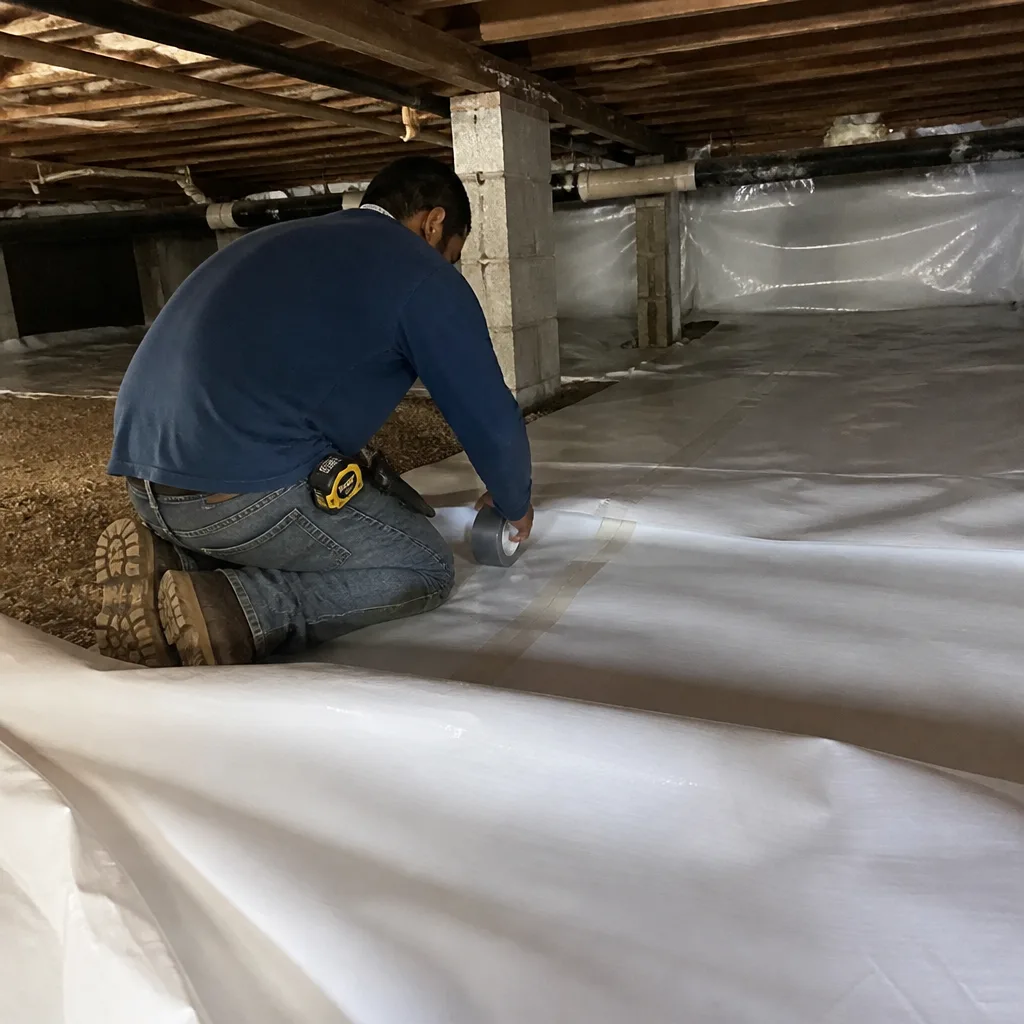
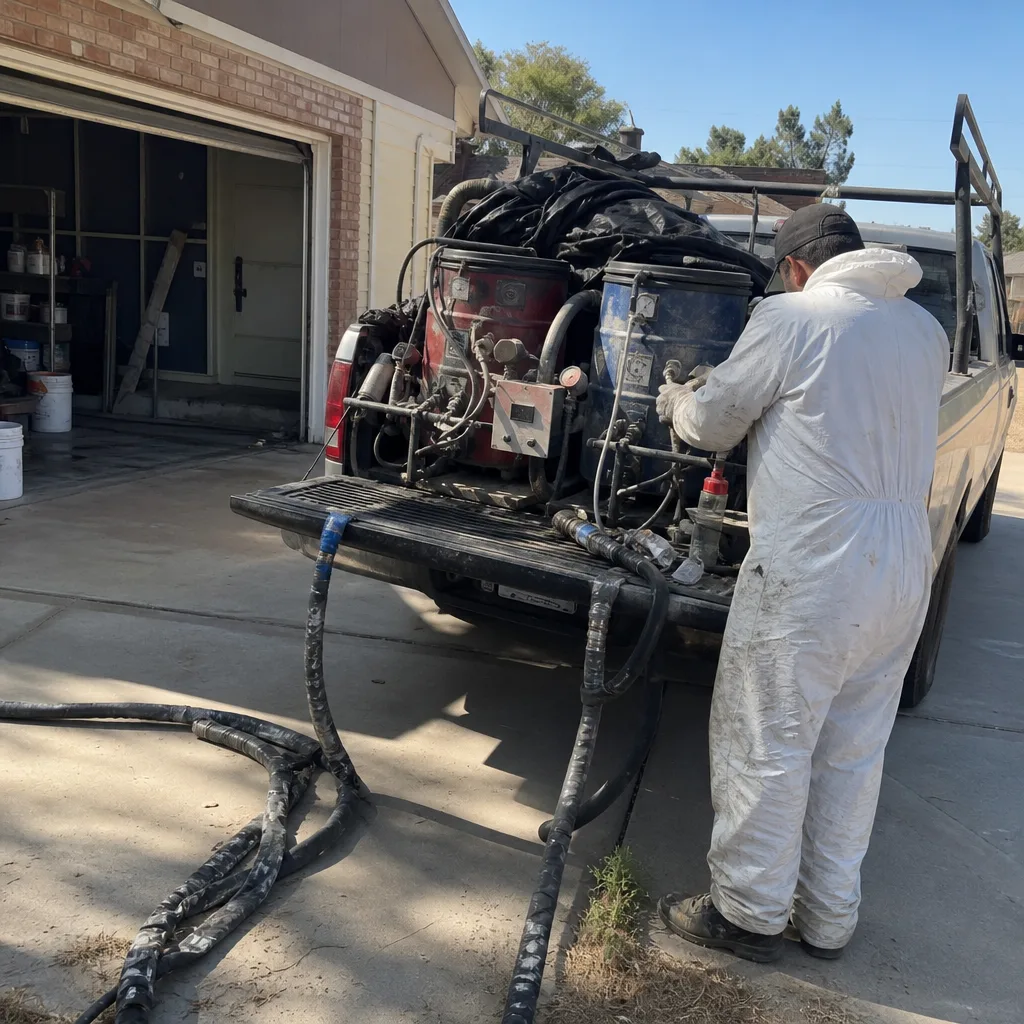
Closed-cell spray foam is a two-pound density material that cures rigid, adds structural strength, and acts as its own vapor barrier at thicknesses above 1.5 inches - critical in Lancaster, where the Mojave Desert’s dry heat meets occasional winter rain and the rare freeze-thaw cycle. We apply closed-cell to rim joists, crawl space walls, and roof decks where moisture management and air sealing must happen in a single pass. Our crews use Graco Reactor proportioning systems with real-time temperature monitoring; off-ratio foam is stripped and resprayed at our cost. The Haven Standard requires that closed-cell jobs include a written thickness verification, checked with a depth gauge every 100 square feet.
Rim Joist Spray Foam
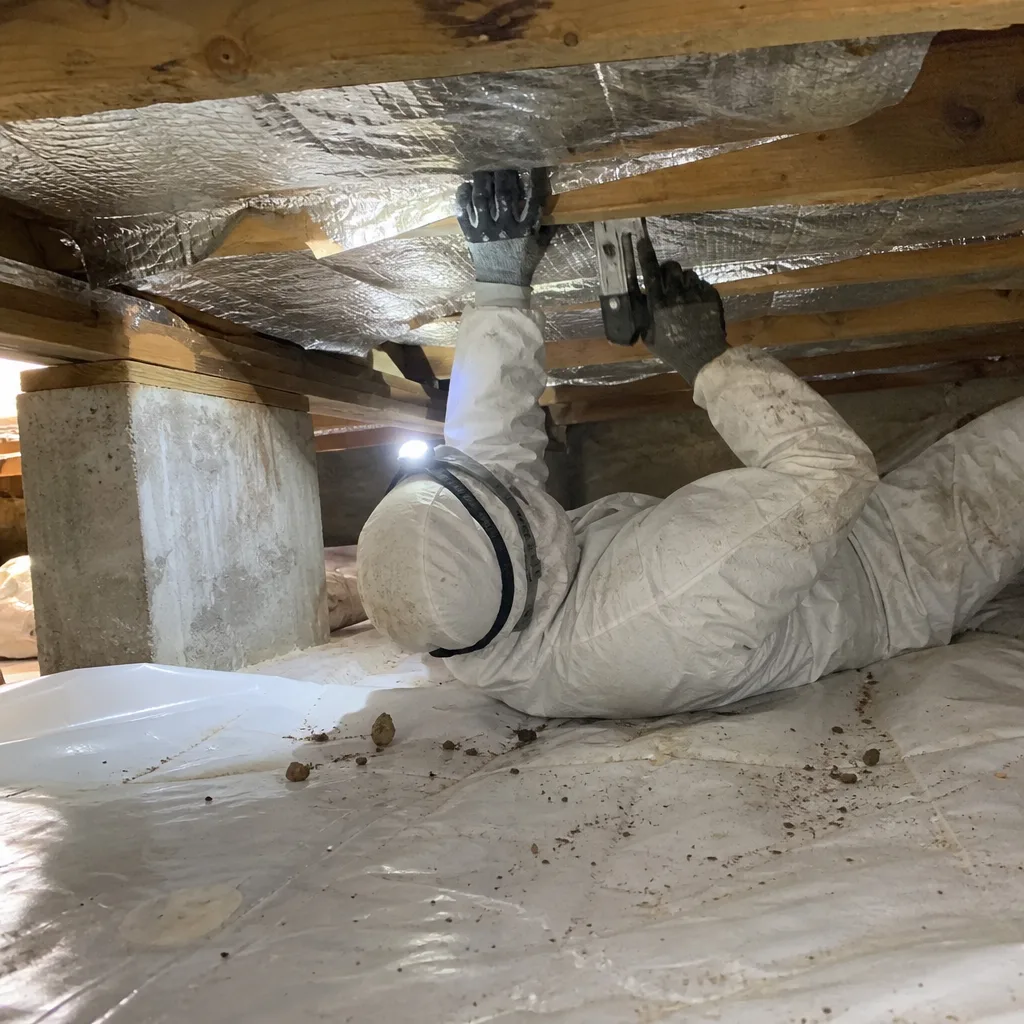
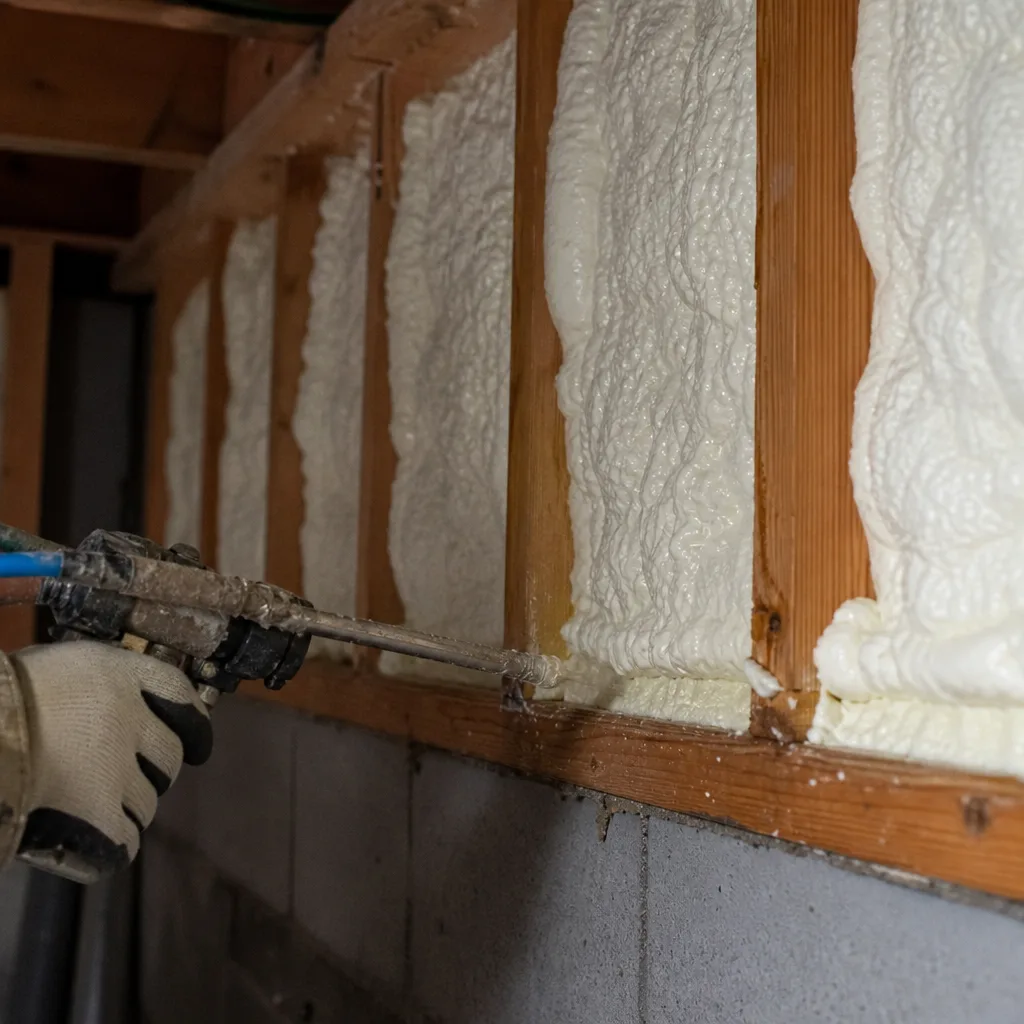
The rim joist - the perimeter band where your foundation meets your first floor - is the leakiest square foot in most Lancaster homes, especially 1990s and 2000s construction in neighborhoods like Quartz Hill and Desert View Highlands where builder-grade fiberglass was stuffed loosely and left unsealed. We remove that degraded material, apply closed-cell spray foam to the rim joist cavity, and seal the sill plate joint with acoustic sealant before spraying. In a typical 1,800-square-foot Lancaster home, this single detail can drop blower-door readings by 300 to 500 CFM50. We document the before-and-after with photos and, when accessible, include the rim joist in our blower-door test protocol.
Garage Ceiling Spray Foam
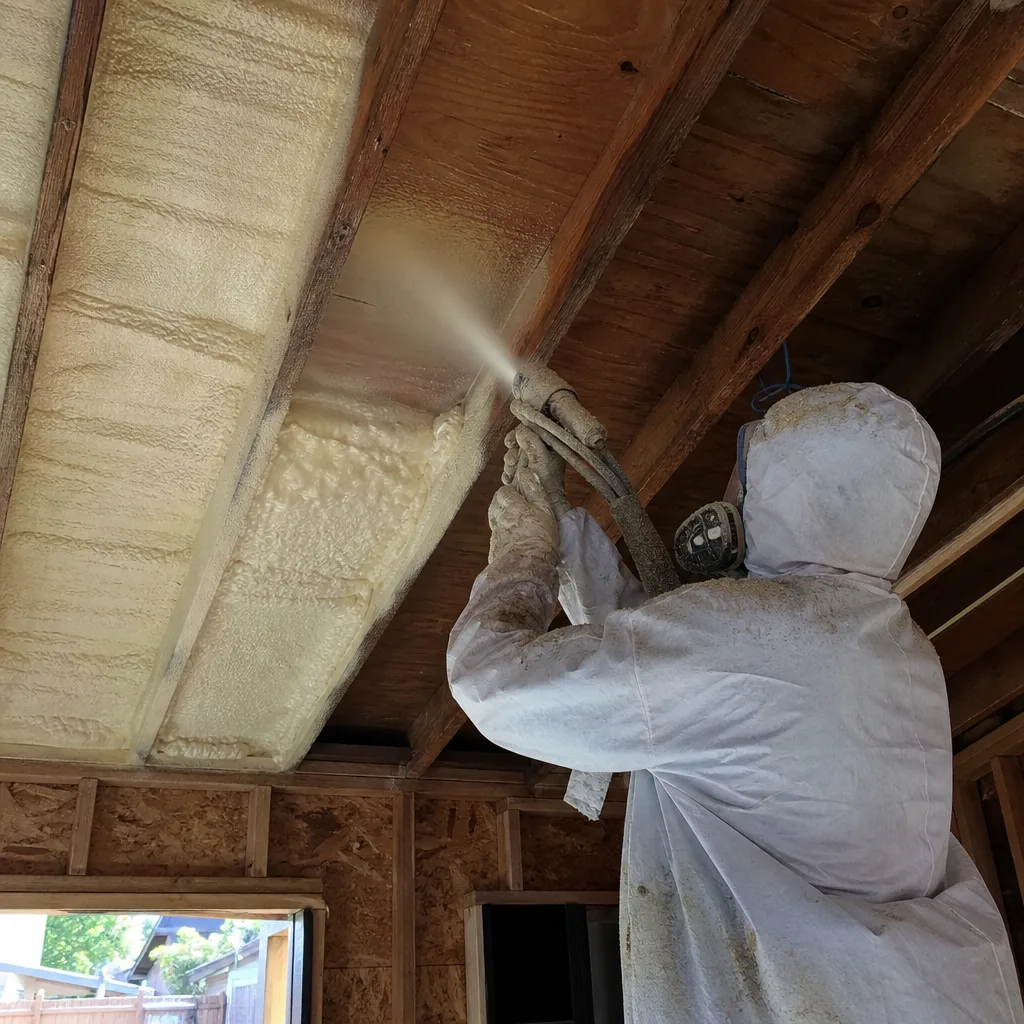
Garage ceiling spray foam addresses the thermal bridge created when a conditioned room sits above an unconditioned garage - common in Lancaster’s newer subdivisions near Avenue K and 50th Street West. We spray closed-cell foam to the garage ceiling underside, sealing all penetrations for wiring, plumbing vents, and HVAC runs before the foam goes in. In summer, this prevents the 120°F garage ceiling from radiating heat into the bedroom above; in winter, it stops the room from bleeding warmth into the garage. We coordinate with your schedule since the garage must be cleared for 24 hours during curing, and we provide a written re-entry time based on temperature and humidity readings taken on-site.
Spray Foam Roof Deck
Spray foam applied directly to the underside of a roof deck - creating an unvented, conditioned attic - is the most effective way to bring HVAC ducts inside the thermal envelope in Lancaster, where attic temperatures regularly exceed 140°F in July. We specify closed-cell foam for roof decks, applied at minimum 3 inches to achieve both the required R-38 and a Class II vapor retarder. Before spraying, we verify that the roof deck has no active leaks and that existing soffit vents are sealed; an unvented attic with unsealed vents is a moisture trap. We provide a written moisture management plan with every roof deck job, including the dew-point analysis that justifies the closed-cell specification for our climate zone.
What happens when you call
- 1
A real person answersNo phone trees - you reach a local pro.
- 2
You get an upfront price rangeHonest numbers before anyone is dispatched.
- 3
A background-checked tech heads outLicensed & insured, dispatched right away.
- 4
You approve before work beginsNothing starts until you say go.
Brands We Service for Spray Foam Insulation
We source and install materials from Owens Corning, Johns Manville, Knauf, and other leading manufacturers - never proprietary products that lock you into a single supplier. With Owens Corning, we’ve completed more than 400 open-cell attic jobs using their Foamular and Enverge product lines, and we maintain current applicator certifications for their specific substrate preparation requirements. Johns Manville’s Corbond III closed-cell formulation is our specification of choice for rim joist work in Lancaster’s older homes; we’ve found it adheres reliably to the irregular concrete and rough-sawn lumber common in 1970s construction around Sun Village and Lake Los Angeles.
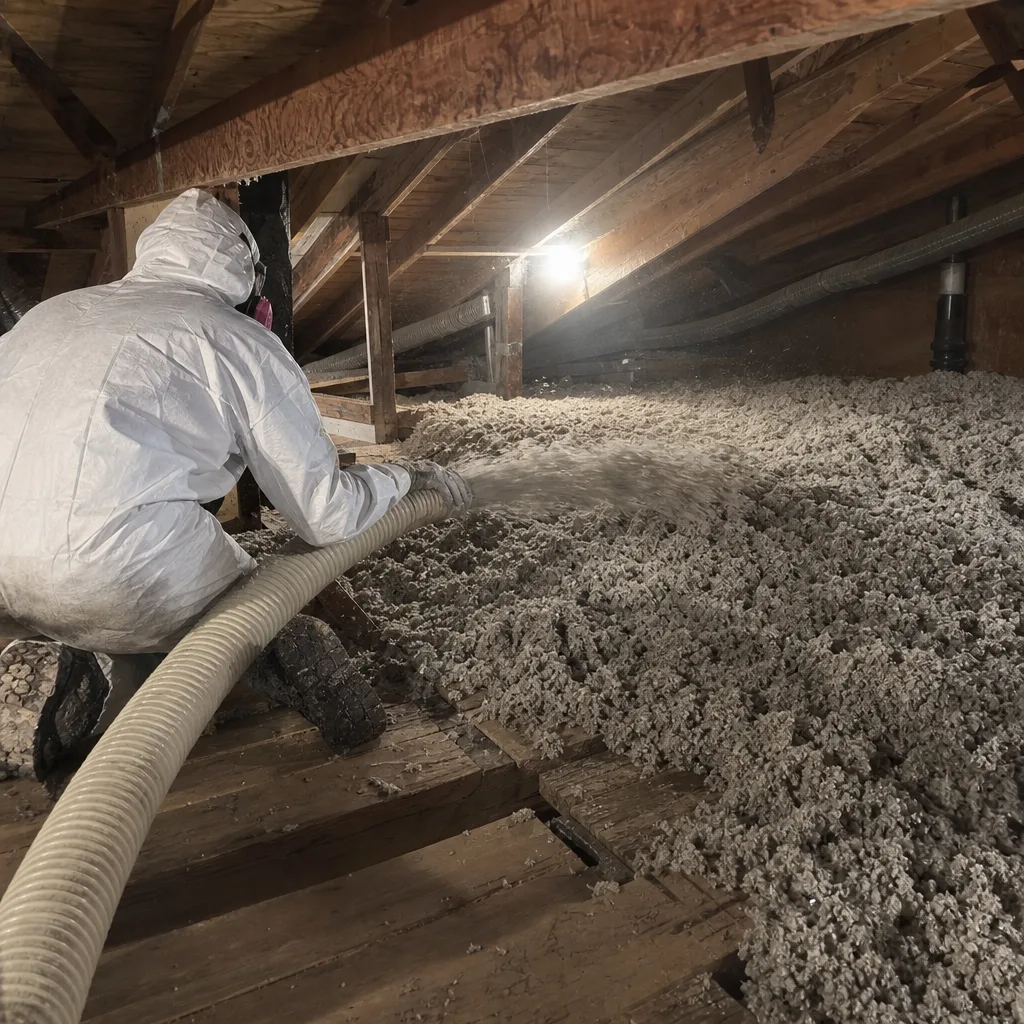
Knauf’s EcoSeal and Jet Stream systems factor into our hybrid approaches, where we combine spray foam air sealing with blown-in insulation topping for cost-sensitive retrofits. Whether your home currently has Owens Corning, Johns Manville, Knauf, or any other make of insulation, we can assess its condition, match or upgrade the specification, and document the change. We do not claim exclusive or preferred status with any manufacturer; we specify based on what the building science demands for your specific assembly.
Signs You Need Spray Foam Insulation Right Now
- Your second floor is 10 to 15 degrees hotter than your first floor in summer. This temperature stratification is the signature of an unsealed, under-insulated attic in Lancaster’s climate. Hot attic air radiates through the ceiling plane, overwhelming your HVAC’s capacity to maintain setpoint upstairs. We’ve measured ceiling surface temperatures above 95°F in homes with compressed or missing fiberglass; spray foam to the roof deck or a sealed, insulated attic floor eliminates this radiant load.
- Your energy bills spike every July and August despite unchanged thermostat settings. Lancaster’s summer cooling load is extreme; if your home’s envelope leaks, your air conditioner runs continuously without catching up. A blower-door test - the pressurization reading we perform on every assessment - quantifies exactly how much conditioned air you’re losing. Homes we assess in Palmdale and Lancaster typically show 25 to 40 percent of cooling energy wasted to envelope leakage.
- You feel drafts near outlets, baseboards, or attic hatches even when windows are closed. These are telltale paths of uncontrolled air movement: the top plate gap behind drywall, the unsealed attic hatch perimeter, the electrical box that was never foam-sealed during construction. Spray foam insulation, properly preceded by air sealing, stops this stack effect that pulls hot attic air down in summer and sends conditioned air up in winter.
- Your garage ceiling is sweating or showing water stains in winter. Warm, humid indoor air meeting a cold garage ceiling surface creates condensation - and eventually mold. This is especially common in Lancaster’s brief winter rainy season when interior humidity rises and garage temperatures stay low. Closed-cell spray foam to the garage ceiling raises the surface temperature above dew point and provides the vapor barrier that fiberglass cannot.
- Your existing insulation is blackened, compressed, or has rodent damage. In Lancaster’s rural-adjacent areas like Leona Valley and Agua Dulce, roof rats and ground squirrels frequently nest in attics, compressing fiberglass and rendering it ineffective. Blackened insulation near recessed can lights indicates air filtration - the insulation is acting as a filter, not a thermal barrier. We remove contaminated material, seal all entry points, and replace with spray foam or a hybrid system that rodents cannot tunnel through.
Our Spray Foam Insulation Process - Step by Step
- 1
Written assessment and blower-door test. We arrive on schedule, introduce your named technician, and perform a blower-door test - a pressurization reading that shows, in one number, how much air your building envelope is losing. In Lancaster’s climate, we target pre-sealing readings below 3,000 CFM50 for homes under 2,500 square feet; higher readings indicate significant leakage that must be addressed before insulation is added. You receive the written reading, a photo of the manometer display, and a scope of work with a flat price before any work starts. Haven Standard Clause 1: no exceptions.
- 2
Air sealing preparation. We seal top plates, electrical penetrations, can lights, duct chases, and attic hatches using acoustic sealant, fire-rated foam, and rigid baffles where required. In Lancaster, where wildfire ember intrusion is a real risk, we pay particular attention to eave and soffit vent sealing with corrosion-resistant mesh. This step typically takes 4 to 6 hours in a 2,000-square-foot home and is never skipped - we will not spray foam over an unsealed surface.
- 3
Substrate preparation and masking. We cover all surfaces not receiving foam with polyethylene sheeting, protect finished floors with ramboard, and verify that substrate temperatures are within manufacturer specifications. In summer, we may start early morning to avoid spraying onto surfaces exceeding 100°F, which can cause poor adhesion and off-gassing issues. Your technician documents substrate temperature and humidity in your record.
- 4
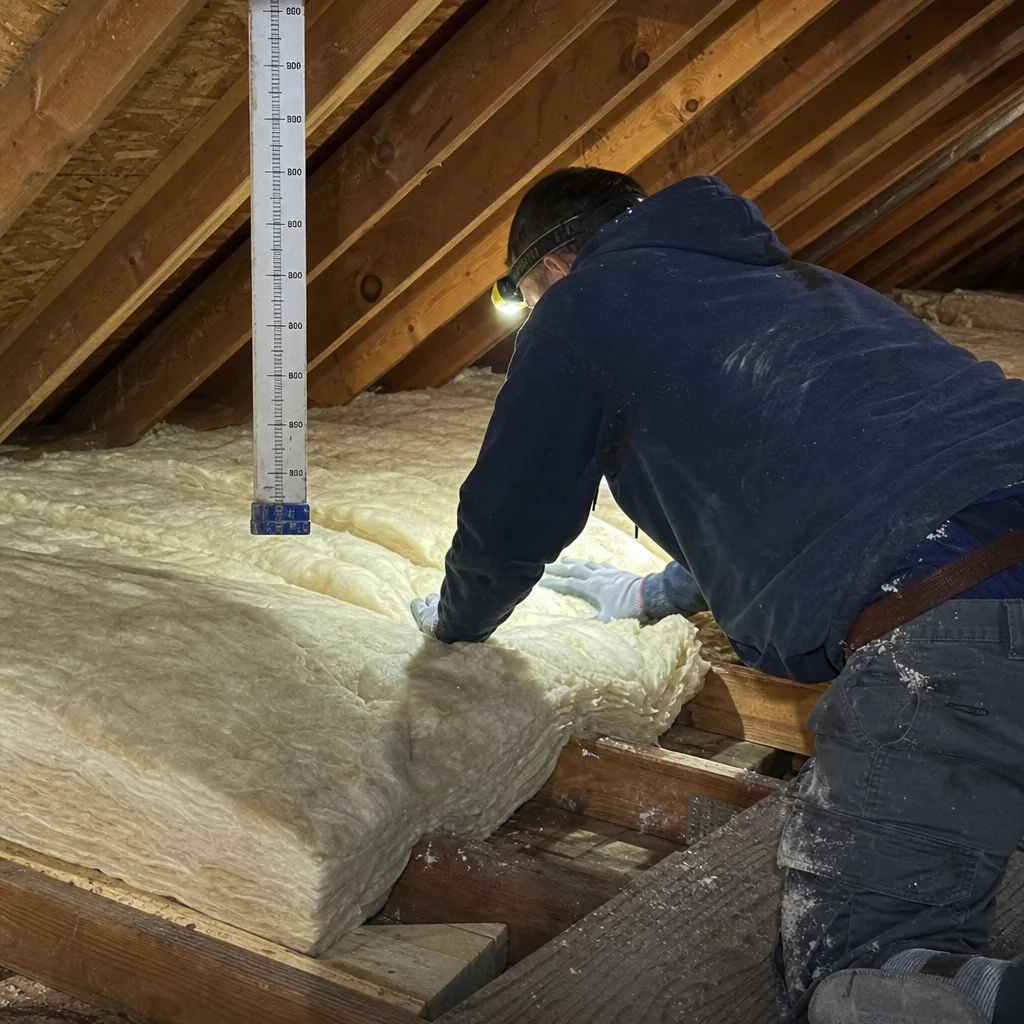
Spray foam application with real-time monitoring. Our Graco Reactor systems display mix ratio, hose temperature, and pressure continuously; the technician logs these readings every 30 minutes. Closed-cell foam is applied in lifts of 1 to 2 inches to prevent exotherm cracking, with a minimum 10-minute cooling period between passes. We measure thickness with a depth gauge every 100 square feet and photograph the gauge against the foam surface for your Documented Photo Record.
- 5
Cure verification, blower-door retest, and documentation. Closed-cell foam requires 24 hours minimum cure before re-occupancy in most conditions; we provide a written re-entry time based on on-site temperature and humidity. On applicable jobs, we perform a post-work blower-door test and publish the before-and-after numbers in your record. You receive the written scope, warranty, photo documentation, and blower-door results before we leave. The 365-Day Done Right Promise applies from this moment - if it’s not done right, we make it right.
How Much Does Spray Foam Insulation Cost in Lancaster?
A typical open-cell attic floor job in a 1,500-square-foot Lancaster home runs $3,200 to $4,800, while closed-cell rim joist sealing in the same home runs $1,800 to $2,800. See how much Spray Foam Insulation costs for more details. Full roof deck closed-cell application for a 2,000-square-foot home typically falls between $5,500 and $7,800, and garage ceiling closed-cell work ranges $1,200 to $2,400 depending on whether the space contains stored items requiring protection.
| Application | Typical Range | Key Cost Driver |
|---|---|---|
| Open-cell attic floor (1,500 sq ft home) | $3,200 - $4,800 | Depth/R-value specified |
| Closed-cell rim joist | $1,800 - $2,800 | Linear footage and access |
| Closed-cell roof deck (2,000 sq ft) | $5,500 - $7,800 | Deck condition, height |
| Closed-cell garage ceiling | $1,200 - $2,400 | Clearing/protection needed |
| Hybrid: spray seal + blown-in top | $2,800 - $4,200 | Blown-in material choice |
Several factors move these numbers. Access difficulty is significant in Lancaster’s two-story homes with tight attic hatches; we may need to cut and later repair a new access point. Existing insulation removal adds $0.75 to $1.50 per square foot depending on contamination level. Roof deck work requires verification that the deck is structurally sound and leak-free; we document this with photos but do not perform structural repairs ourselves.
To avoid overpaying, get any competing estimate in writing and bring it to us for a Free Second Opinion - we’ll read it with you line by line and identify where scope is missing or where materials are underspecified. Our written price includes all preparation, protection, application, cleanup, and documentation; we do not add trip charges or disposal fees after the fact. Call (661) 526-2890 for a free estimate with exact numbers for your home.
Spray Foam Insulation Near Lancaster - Our Service Area
We serve Lancaster directly with typical response times under 45 minutes for assessments, and we regularly travel to Spray Foam Insulation in Quartz Hill, Spray Foam Insulation in Desert View Highlands, Palmdale, Leona Valley, Elizabeth Lake, Acton, Green Valley, Sun Village, Agua Dulce, Littlerock, and Lake Los Angeles. Homes in the Antelope Valley’s higher elevations - Leona Valley and Elizabeth Lake especially - face more severe temperature swings and benefit significantly from the air-sealing performance that spray foam provides. We schedule route-efficient clusters to keep travel time minimal and arrival windows precise; under Haven Standard, you receive a text when your technician is en route with an accurate ETA.
Serving Lancaster, CA - Our Local Coverage Area
We’re based in the Lancaster area and know this community well. Use the map below to see our service coverage - if you’re nearby, we can almost certainly help.
Frequently Asked Questions - Spray Foam Insulation in Lancaster
Spray foam insulation is a two-component chemical mixture that expands on application to fill cavities, cracks, and irregular spaces, creating both thermal resistance and an air barrier in a single installation. Unlike fiberglass batts, which leave gaps and require separate air sealing, spray foam adheres to substrates and cures to a continuous layer that stops air movement. In Lancaster’s climate, this matters because air leakage accounts for 25 to 40 percent of cooling energy loss in typical homes we’ve tested.
Most residential spray foam jobs in Lancaster are completed in one to two days: air sealing and preparation on day one, foam application and initial cure on day two. Roof deck applications may extend to three days due to the multi-lift application required for closed-cell foam. You receive a written schedule with your price, including re-occupancy time based on cure conditions measured on-site.
Open-cell attic work typically runs $3,200 to $4,800 for a 1,500-square-foot home; closed-cell roof deck work runs $5,500 to $7,800 for 2,000 square feet; rim joist sealing runs $1,800 to $2,800. Exact cost depends on access difficulty, existing material removal needs, and the specific R-value and thickness required. Call (661) 526-2890 for a free estimate with a written price before any work starts.
Yes - we source and install materials from Owens Corning, Johns Manville, and Knauf, and we maintain current applicator training for their specific preparation and ratio requirements. We do not claim exclusive status with any manufacturer; we specify based on your building’s needs and publish the material brand in your written scope.
We answer calls live 24/7 and offer same-day availability for most Lancaster addresses when the situation involves active moisture intrusion, compromised building envelope integrity, or HVAC failure related to attic conditions. True spray foam emergencies are rare - foam cure cannot be rushed - but we can install temporary measures and schedule permanent work with a written timeline. Call (661) 526-2890 to discuss urgency.
All completed work is covered by our 365-Day Done Right Promise - if it’s not done right, we make it right. Additionally, the written scope you receive before work starts includes material-specific warranty terms from the manufacturer, typically 10 years for closed-cell and lifetime for open-cell when installed to specification. The Haven Standard requires that both warranties, plus our promise, are in writing before anyone lifts a tool.
Remove all stored items from the work area - attic, garage, or crawl space - and relocate vehicles from the garage for 48 hours to allow for cure time and ventilation. We provide polyethylene sheeting and ramboard protection for finished surfaces, but personal items are your responsibility to move. We send a preparation checklist with your written schedule confirmation so nothing is left to guesswork.
Schedule Your Spray Foam Insulation Service in Lancaster Today
Call (661) 526-2890 now for a free estimate with a written price before any work starts. We’re available 24/7 with live answer, and we serve Lancaster, Quartz Hill, Desert View Highlands, and surrounding Antelope Valley communities. Every job includes air sealing as a prerequisite, documented before-and-after blower-door numbers where applicable, and a 365-Day Done Right Promise backed by The Haven Standard.
Written by Wes Okafor, Owner at Topside Attic Insulation Lancaster, serving Lancaster since 2016.