
Crawl Space Vapor Barrier in Lancaster, CA
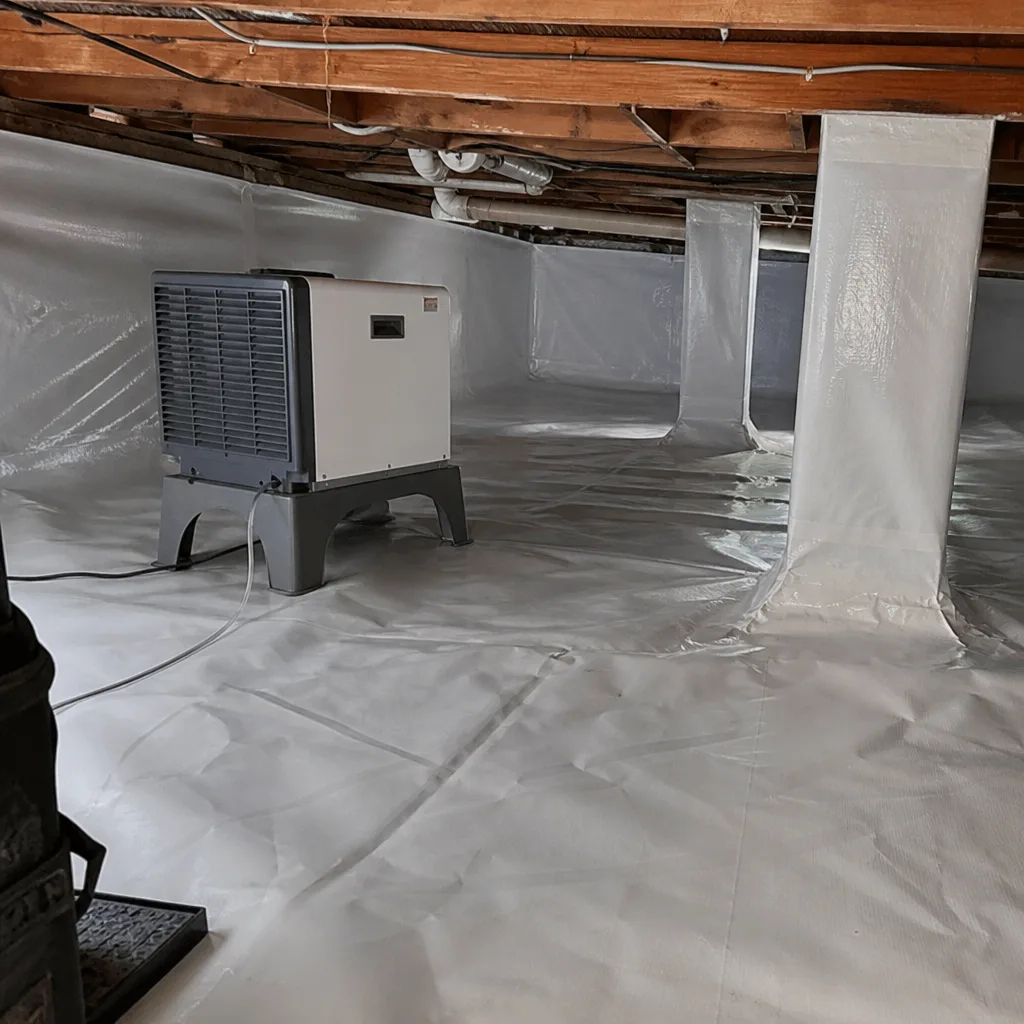
A crawl space vapor barrier is a polyethylene sheet – typically 6 to 20 mil thick – installed across the soil floor and up the foundation walls of your crawl space to block ground moisture from migrating into the framing, insulation, and living space above. Most Lancaster homes with vented crawl spaces need Crawl Space Encapsulation & Vapor Barrier services, and many that were built before 2000 either have no barrier at all or one that has torn, shifted, or been compromised by pest activity. If you’re seeing musty odors upstairs, soft subfloor spots, or unusually high cooling bills in summer, the crawl space is often where the problem starts.
Topside Attic Insulation Lancaster has been installing and replacing crawl space vapor barriers in the Antelope Valley since 2016 under The Haven Standard – which means a written price before any work starts, a documented photo record when we leave, and a 365-Day Done Right Promise on every job. We’re part of the full Crawl Space Encapsulation & Vapor Barrier in Lancaster service Wes Okafor and the crew provide, and this page focuses specifically on the vapor barrier component: what it does, what the installation looks like, and what it costs in this market. To reach us directly, call (661) 526-2890 – a live person answers, no voicemail loops.
Why Lancaster’s Climate Makes a Vapor Barrier More Important Than You Might Expect
Lancaster sits in the Mojave Desert at roughly 2,300 feet elevation, and the common assumption is that a desert climate means no moisture problem. That’s not quite right in a crawl space. Antelope Valley soil retains more moisture than its surface suggests, especially in areas like West Lancaster near the dry wash systems and in older neighborhoods around 10th Street West and Avenue K where original construction used minimal or no ground cover. Nighttime temperatures in winter regularly drop into the low 30s, which means condensation forms on cold framing members during the hours when the soil below is releasing stored daytime heat upward.
Then there are the wind events. When a Santa Ana or Tehachapi Pass wind system pushes through, it pulls air through every gap in the building envelope – including up through an unsealed crawl space. Without a barrier in place, that air movement carries soil particulates and moisture vapor directly into the floor assembly. We’ve pulled up subfloor panels in Quartz Hill that showed visible mold growth on the underside of the OSB, despite the homeowner never detecting standing water. Ground vapor doesn’t need to puddle to do structural damage; it just needs time.
This is also relevant to Lancaster’s agricultural history. Parts of west and north Lancaster sit on soil that was farmed for decades, and older irrigation infrastructure sometimes contributes to elevated soil moisture in specific parcels – something we’ve documented in crawl spaces along Avenue H and the surrounding blocks.
When You Need a Crawl Space Vapor Barrier
- Musty or earthy odors inside the home. Ground moisture evaporating into the crawl space carries organic compounds upward through gaps in the subfloor. If the smell is worse after rainfall or irrigation, the crawl space is almost certainly the source.
- Soft or springy spots in hardwood or laminate floors. Repeated moisture cycling causes subfloor OSB or plywood to swell and delaminate. We see this regularly in Lancaster homes built between 1985 and 2005 where the original 4-mil poly barrier has degraded.
- Elevated indoor humidity despite normal outdoor conditions. If your HVAC is running longer cycles than expected during Lancaster’s cooler months (October through March), ground vapor contributing to indoor load is a plausible culprit worth ruling out.
- Pest intrusion evidence in the crawl space. Rodents and insects routinely shred existing vapor barriers for nesting material. A torn or balled-up barrier offers almost no protection, and once the sheeting is compromised it needs to be replaced, not patched.
- Visible condensation on floor joists or HVAC ducts routed through the crawl space. Metal ductwork sweating in a crawl space is a clear sign that vapor pressure from the soil is elevated and the current ground cover – if any – isn’t doing the job.
- No existing barrier at all. A notable percentage of Lancaster homes built before 1985 have bare soil crawl spaces. Bare soil in any climate – desert or otherwise – continuously emits moisture vapor. The question is only how much, not whether.
Our Crawl Space Vapor Barrier Process
- Written scope and price before anyone enters the crawl space. Under Haven Standard Clause 1, you receive a flat written price and a documented scope before any work starts. That includes the barrier mil rating we’re recommending, the square footage being covered, how we’re handling seams, and how the material will be fastened to the foundation walls. No surprises on the invoice.
- Pre-installation inspection and photo documentation. We photograph the existing crawl space conditions before touching anything – current barrier condition (or absence of one), visible moisture evidence, joist condition, existing insulation, and pest evidence if present. This baseline photo record is yours; it travels with the job file.
- Debris removal and surface preparation. Old, torn, or degraded barrier material is removed entirely. Loose debris, accumulated soil displacement, and any contaminated material are cleared. We don’t install new sheeting over compromised old sheeting – that traps whatever is underneath and makes future inspections impossible.
- Barrier installation across the soil floor and up the foundation walls. We use a minimum 12-mil polyethylene sheet on most Lancaster installs – heavier gauge than the 6-mil builder-grade sheeting still found in many crawl spaces. Sheets are overlapped a minimum of 12 inches at seams and taped with approved crawl space seam tape. The barrier runs up the perimeter foundation walls and is secured mechanically or with construction adhesive rated for concrete contact. Penetrations for pipes and posts are cut carefully and sealed.
- Vent and access point review. If the crawl space has foundation vents, we note their condition and discuss with you whether the installation is a vented or conditioned crawl space approach – these require different treatment, and the difference affects whether the barrier alone is sufficient or whether the full home energy envelope strategy needs to involve closing the vents and insulating the foundation walls instead of the floor above.
- Post-installation photo record and written closeout. We photograph the completed installation from multiple angles before we close the access hatch. You receive a documented photo record of the finished work. The 365-Day Done Right Promise is active from the moment we leave: if something isn’t right, we come back and make it right.
Crawl Space Vapor Barrier Pricing in Lancaster
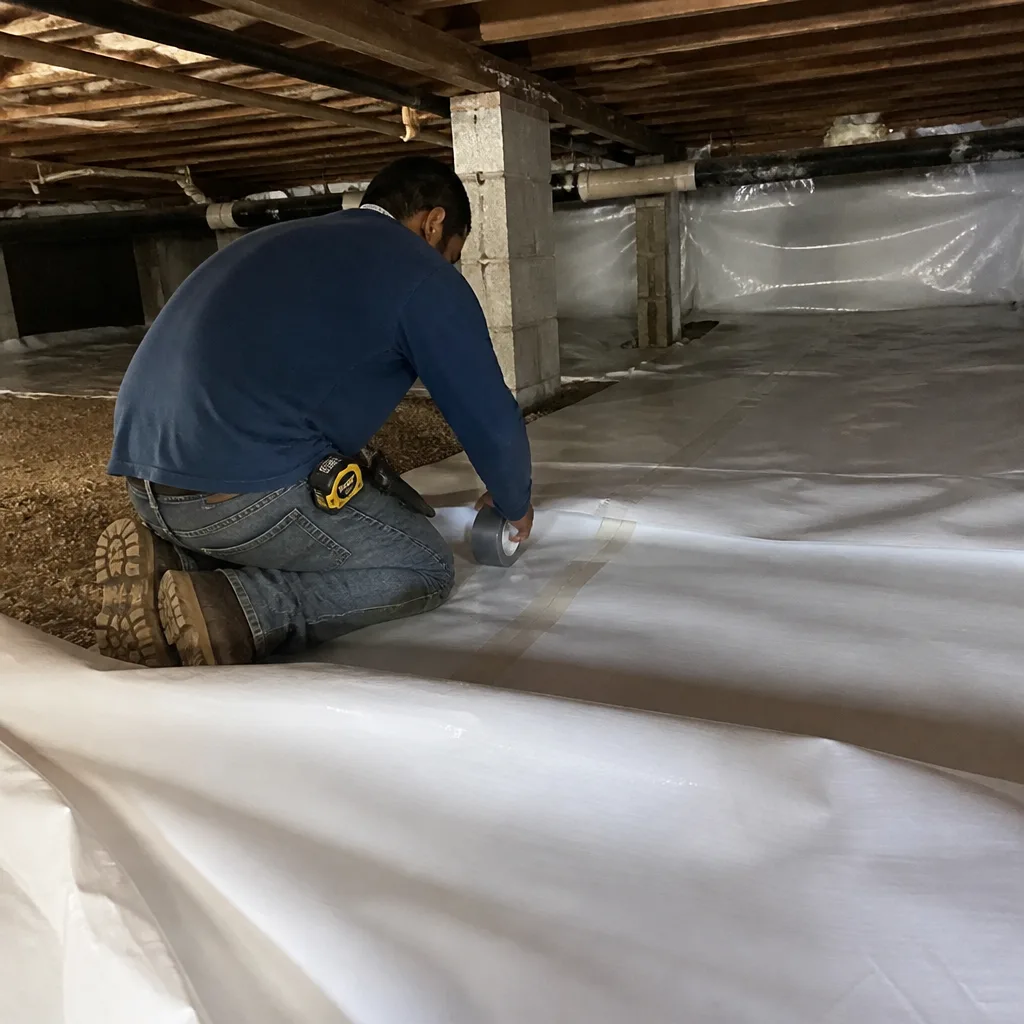
How Much Does Crawl Space Encapsulation & Vapor Barrier Cost? (2026 Price Guide) - Lancaster, CA typically runs between $1,200 and $3,800 for a residential crawl space, depending on several variables specific to each job. That range covers the most common scenarios – a single-story home with a reasonably accessible crawl space of 800 to 2,000 square feet. Larger homes, particularly in the newer developments near Lancaster Boulevard and the Avenue I corridor, can run higher if the crawl space footprint is over 2,500 square feet or if access is restricted to a single small hatch.
| Job Variable | Typical Cost Impact |
|---|---|
| Base vapor barrier installation (800-1,200 sq ft, clean crawl space) | $1,200 – $1,900 |
| Base installation (1,200-2,000 sq ft) | $1,800 – $2,800 |
| Removal and disposal of existing failed barrier | $200 – $500 added |
| Heavy debris clearing or pest remediation prep | $150 – $400 added |
| Upgrade from 12-mil to 20-mil barrier | $300 – $600 added |
| Perimeter wall coverage (full encapsulation prep) | Included in standard scope or quoted separately |
What affects the price most: crawl space height (low clearance means slower, harder work), existing barrier condition, whether debris removal is needed, and the linear footage of foundation wall being covered. Homes in older parts of Lancaster – particularly those east of Division Street or in the blocks surrounding the original 1950s-era residential grid – often have more debris and narrower access than newer construction does, and that affects labor time.
Every quote Wes Okafor provides comes with the mil rating of the material, the seam overlap specification, and the warranty terms written out. If you have a competing written estimate, bring it: we offer a free second opinion on any written quote and will go through it line by line with you. Pricing is flat, not time-and-materials, so the number on the scope is the number on the invoice.
FAQs – Crawl Space Vapor Barrier
What thickness vapor barrier do I need in my Lancaster crawl space?
For most Lancaster residential crawl spaces, Crawl Space Insulation with a 12-mil polyethylene barrier is the minimum we install – and in crawl spaces with heavy foot traffic from HVAC equipment or plumbing access needs, we recommend stepping up to 20-mil. The 6-mil sheeting that was standard in California residential construction through the 1990s is too thin to resist puncture from soil contact, foot traffic during service calls, or the kind of rodent activity that’s common in the Antelope Valley. A heavier barrier costs more upfront but avoids the cost of a redo in five years. Your written scope will name the exact mil rating so you know what’s going in. Call (661) 526-2890 for a free site assessment and written price.
Can a vapor barrier fix moisture problems in my Lancaster home?
A properly installed vapor barrier addresses ground-sourced moisture vapor, which is the most common crawl space moisture problem in Lancaster. It won’t address liquid water intrusion from a plumbing leak or a drainage failure at the foundation – those need to be diagnosed and corrected before any barrier goes in. During our pre-installation inspection, we document what we find and won’t install a barrier over conditions that would compromise the result; if we see something that needs to be addressed first, we’ll tell you in writing before any work starts.
How long does a crawl space vapor barrier last?
A 12-mil or heavier polyethylene barrier, properly installed with sealed seams and mechanical fastening to the foundation wall, typically lasts 15 to 25 years without degrading under normal conditions. The failure modes we see most often in older Lancaster homes are UV degradation from exposed sections near vents (which we address during installation), pest puncture, and seam separation from sheeting that was never taped. The 365-Day Done Right Promise covers our installation against workmanship issues, and the Documented Photo Record we leave with you gives you a clear baseline if you ever need to assess the crawl space condition years later.
Do I need a full crawl space encapsulation or just a vapor barrier?
A vapor barrier covers the ground floor of the crawl space and is the right starting point for most vented crawl spaces in Lancaster. Full encapsulation – which includes closing foundation vents, insulating the perimeter walls, and sometimes adding a dehumidifier – is appropriate when the goal is to convert the crawl space from a vented to a conditioned zone, or when moisture intrusion is severe enough that passive vapor control alone won’t be adequate. The broader Crawl Space Encapsulation & Vapor Barrier in Lancaster page covers the distinction in detail. We’ll tell you which scope your specific crawl space actually needs – not the larger one by default. Call (661) 526-2890 and we’ll put a written assessment in front of you.
Why Topside Attic Insulation Lancaster for This Work
Wes Okafor built this business around one principle that shapes every job: the homeowner should know exactly what they’re getting and exactly what they paid for before anyone starts. That’s Haven Standard Clause 1, and it applies to a $1,400 vapor barrier job the same way it applies to a full attic encapsulation. You get a written price, a written scope, a documented photo record when the job is done, and a 365-Day Done Right Promise that isn’t conditional on how you contacted us or when.
Since 2016, Topside Attic Insulation Lancaster has completed work on over 9,000 homes in the Antelope Valley, every one with a written price before work started. We use materials from manufacturers including Owens Corning and Johns Manville – not because we have any preferred arrangement with them, but because they’re the products that perform and that we can document. If a competing quote names a different material, we’ll compare them with you directly.
We’re not the right contractor for homeowners who want the lowest number on a verbal estimate. We’re the right contractor for homeowners who want to know what they got and have the documentation to prove it later – when the floor feels solid, when the HVAC runs shorter cycles, and when the inspector asks about the crawl space during a future sale.
Get a Written Price for Your Lancaster Crawl Space Vapor Barrier
If you’re dealing with a musty crawl space, a failed old barrier, or you just want to know what condition the underside of your home is actually in, call Topside Attic Insulation Lancaster at (661) 526-2890. A live person answers – no voicemail, no callback window. Wes Okafor will put a written price and written scope in front of you before anyone starts work. Estimates are free, and if you have a competing written estimate, bring it and we’ll review it with you.
Written by Wes Okafor, Owner at Topside Attic Insulation Lancaster, serving Lancaster.