
Attic Baffles & Ventilation Prep in Lancaster, CA
Attic baffles – foam or cardboard channels stapled between rafters at the eave line – keep soffit vents open so outside air can move through your attic continuously, preventing heat buildup and moisture accumulation. In Lancaster, where summer attic temps routinely exceed 150°F and the Mojave wind patterns push fine desert dust through any gap in the building envelope, baffles aren’t a nice-to-have detail. They’re what separates insulation that performs from insulation that smothers itself. Ventilation prep means the airflow path is clear and correct before a single bag of insulation goes in.
At Topside Attic Insulation Lancaster, we don’t schedule the insulation crew until the baffle and ventilation work is documented and photographed. That’s not a policy we wrote recently – it’s how we’ve operated under The Haven Standard since 2016. If you’re planning an attic project and want to understand what proper prep looks like before anyone touches your home, call us at (661) 526-2890. The estimate is written, the price is fixed, and nothing starts without your signature on a scope you’ve read.
This page is part of our broader Attic Insulation in Lancaster service, which covers everything from initial blower-door testing through final R-value documentation.
When You Need Attic Baffles & Ventilation Prep
- Your home was built between 1978 and 2002 and has never had an insulation upgrade. Most Lancaster tract homes from this era were built with fiberglass batts pushed tight to the roof deck at the eaves – no baffles, no clear airflow channel. The insulation itself blocks the soffit vents, meaning your attic runs hotter than it should all summer long.
- A previous contractor blew insulation straight over existing batts without mentioning baffles. This is common in the Antelope Valley, and it compounds the original problem. The blown-in material piles up at the eave line, compressing against the soffit and cutting off the last bit of airflow the attic had.
- Your energy bills spike sharply from June through September despite newer HVAC equipment. When attic ventilation is obstructed, the temperature differential between your attic and your conditioned space grows, and your air conditioner works against that heat load all day. If your system runs constantly but the upstairs rooms still feel warm, the attic is worth examining before the equipment is blamed.
- You can see daylight through your soffit vents from outside but the attic feels stagnant when you open the hatch. Visible soffit perforations don’t guarantee airflow. Debris, disturbed insulation, or absent baffles can block the channel between the soffit and the attic floor, even when the vent itself looks fine from the driveway.
- You’re planning to add insulation and want to bring the attic to current California Title 24 standards. California’s residential energy code sets minimum R-38 for most Lancaster homes and requires that ventilation meet the 1:150 ratio (or 1:300 with a vapor retarder) – baffles are the mechanism that preserves that ratio after insulation is added. Installing baffles now avoids a code deficiency later.
- Your ridge vent or gable vents are present but the soffit is unvented or partially blocked. Ridge vents work on a pressure differential – warm air exits at the ridge because cooler replacement air enters at the soffit. If the inlet is restricted, the outlet becomes ineffective. This is one of the more overlooked conditions we find in older Lancaster neighborhoods like Quartz Hill and West Lancaster.
Our Attic Baffles & Ventilation Prep Process
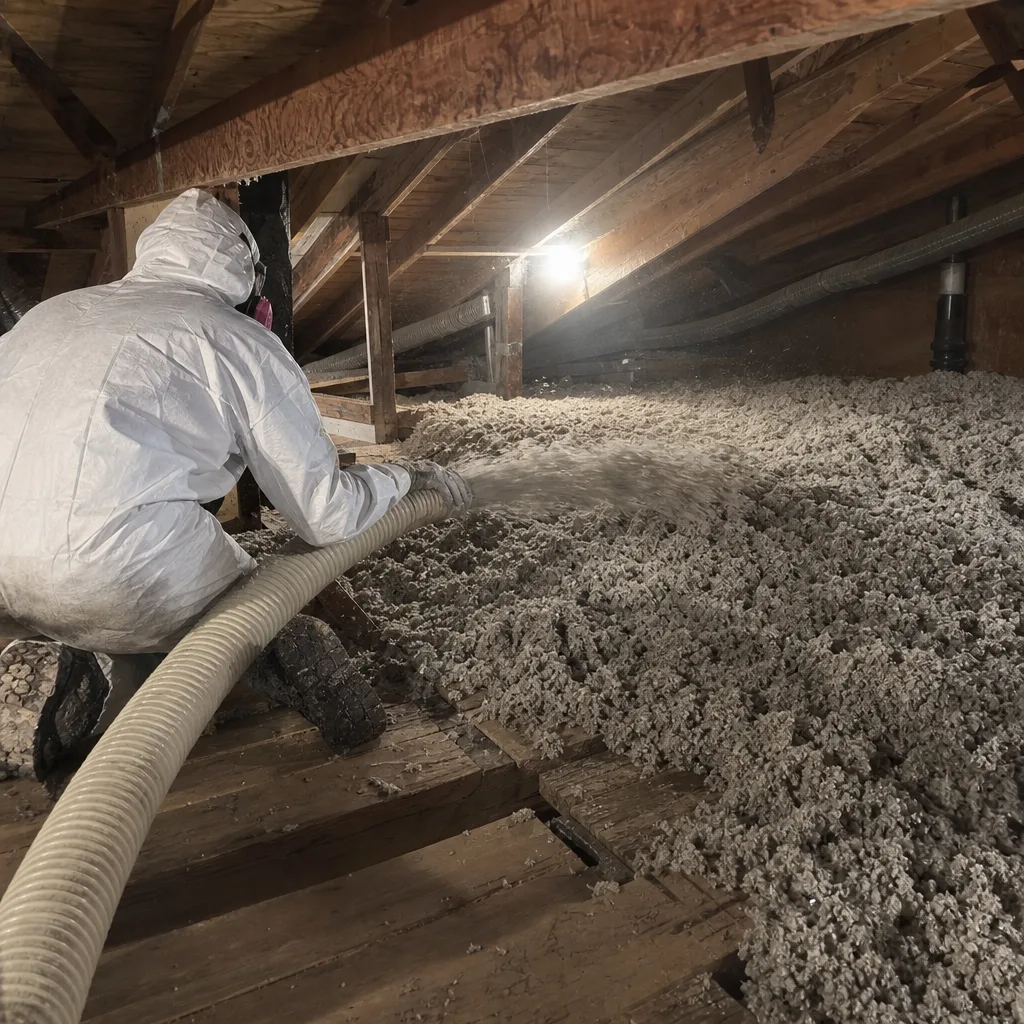
- Written scope and fixed price before entry. Under Haven Standard Clause 1, the written price and project scope are delivered before any technician enters the attic. You’ll see a line-itemized document that names the number of baffles, the ventilation configuration being corrected, and the total cost. No verbal estimates, no change orders unless the scope changes by documented mutual agreement.
- Full attic inspection with blower-door baseline where applicable. Before any material goes in, the technician walks the attic floor, photographs the eave condition at each rafter bay, and documents the existing insulation depth and type. On jobs that include air sealing – which, for us, precedes every insulation installation – a blower-door test (a pressurization measurement that gives a single CFM50 number showing how much conditioned air the building envelope is losing) is run before work begins so there’s a real baseline to compare against when we’re done.
- Air sealing of top plates, penetrations, and can lights. Baffles manage roof-deck ventilation; air sealing manages the thermal boundary between conditioned space and attic. Both happen before insulation. We seal top plates with two-part spray foam, close can-light penetrations with approved covers and foam, and address any ductwork boot gaps found at this stage. Insulation does not go in over an unsealed attic floor – that’s not a philosophy, it’s a written prerequisite on every Topside job scope.
- Baffle installation at each rafter bay. Baffles are cut and stapled at each rafter bay running from the soffit vent up toward the ridge, maintaining a minimum 1-inch clear channel (California code minimum, though we typically maintain 2 inches in Lancaster’s climate given dust accumulation rates). In homes where the existing rafter depth is shallow – a common condition in 1980s Lancaster ranches – we extend the baffle up the full rafter cavity so the channel isn’t choked by new insulation depth.
- Ventilation ratio verification and documentation. We calculate the net free area of the soffit and ridge (or gable) vents against the attic footprint and confirm the system meets the 1:150 ratio California Title 24 requires. If it doesn’t, we document the deficiency in writing and provide options – additional soffit vents, a powered attic ventilator, or ridge vent extension – before any insulation is installed. Nothing proceeds if the math doesn’t work.
- Documented photo record and post-job blower-door (where applicable). Every visit closes with a photo record delivered to you – not filed internally, delivered to you – showing before-and-after conditions at the eave line, the sealed penetrations, and the installed baffles. On full attic insulation jobs, the post-air-sealing blower-door reading is included so you have two numbers: what the house was losing before, and what it’s losing after. That’s the proof, in plain figures, that the work changed something measurable.
Attic Baffles & Ventilation Prep Pricing in Lancaster
Most baffle and ventilation prep jobs in Lancaster homes run between $350 and $950 when performed as a standalone service – meaning the attic has already been cleared and the insulation project is being phased. When baffle installation is part of a full attic insulation project, the prep work typically adds $200 to $600 to the total job cost because the crew is already mobilized and the attic is already accessible.
The variables that move the number up or down:
- Rafter bay count: A 1,200-square-foot Lancaster ranch with 24-inch rafter spacing has fewer bays to baffle than a 2,000-square-foot two-story in the Highlands area with 16-inch spacing. More bays, more material, more labor.
- Existing insulation condition: If insulation is already pushed into the eave channel, it has to be removed from those bays before baffles can be set correctly. That adds time. If the attic is clear, it doesn’t.
- Ventilation ratio deficiency: Homes that need additional soffit vents cut and installed – not just baffles set in existing vent openings – add $75 to $200 per vent location depending on soffit material and accessibility.
- Access and attic height: Some Lancaster homes, particularly 1970s builds with low-pitched roofs, have less than 30 inches of clearance at the ridge. Work in a low-clearance attic takes longer; that’s reflected in the written price.
- Combined air sealing scope: If top-plate sealing and penetration sealing are included in the same mobilization – which we recommend, because the labor overlap makes it more cost-effective – the blended job cost for baffle installation plus air sealing on a typical 1,400-square-foot Lancaster home runs $600 to $1,400 before insulation material is added.
Every price above is a range, and your specific number depends on what the attic inspection finds. Under Haven Standard Clause 1, the written price is fixed before any work begins – no estimates that balloon once the crew is on-site. If you’ve already received a written estimate from another contractor, bring it. We’ll read it with you at no charge under our Free Second Opinion offer and tell you exactly what it does and doesn’t include.
Call (661) 526-2890 to schedule an inspection. We’ll give you a written price the same day in most cases.
FAQs – Attic Baffles & Ventilation Prep
What exactly is an attic baffle and why does it matter in Lancaster specifically?
An attic baffle is a rigid channel – typically made from cardboard, foam board, or formed plastic – installed between rafters at the eave line to hold a clear airway between the soffit vent and the attic space above. Without one, insulation collapses into that gap and blocks airflow at the very point where replacement air is supposed to enter. In Lancaster, this matters more than in milder climates because attic air temperatures in July and August can exceed 150°F. When the ventilation path is blocked, that heat load doesn’t move – it sits against the ceiling plane of your living space and drives up your cooling costs. Baffles are also what prevents fine Mojave dust from packing directly into blown-in insulation at the eave, which degrades the material over time. If you’re not sure whether your attic has them, call (661) 526-2890 and we’ll confirm it during the inspection before any pricing conversation happens.
Can baffles be installed if the attic already has blown-in insulation?
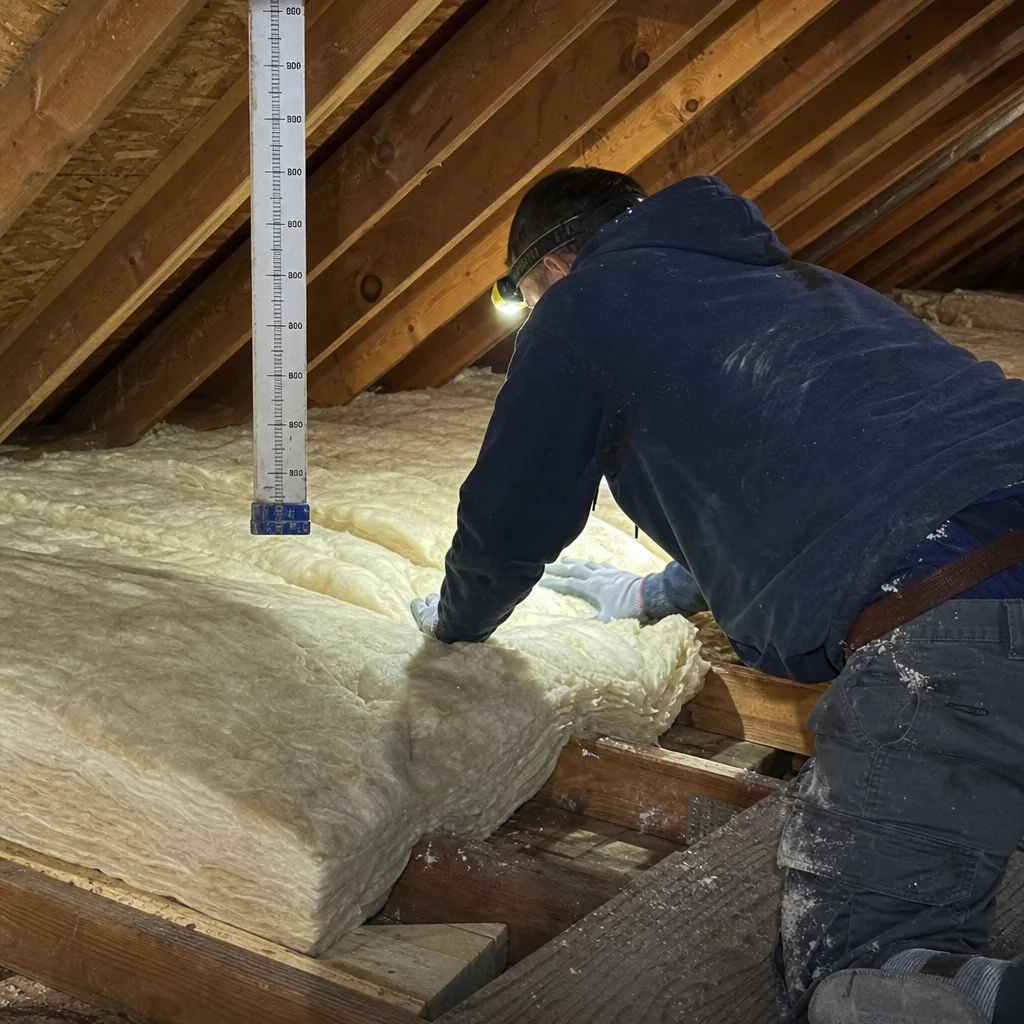
Yes, though it requires more work than installing them on a clear attic floor. The blown-in material at the eave line has to be carefully moved back from the rafter bay so the baffle can seat correctly against the roof deck and staple into the rafter. Once the baffle is secured, the insulation is redistributed around it. The cost is higher than on a fresh installation – typically $30 to $60 more per bay depending on depth – because of the material handling time. We document the before and after condition with photos so you can see where the insulation ended up relative to the baffles and the soffit vents. If the existing blown-in material is compressed, contaminated, or below current R-value targets, the inspection is a good time to assess whether Attic Batt Insulation or a partial removal and reinstall makes more financial sense than working around it.
Does California Title 24 require attic baffles?
California’s Title 24 residential energy code doesn’t use the word “baffle” as a mandatory item by name, but it does require that the ventilation ratio – typically 1 square foot of net free vent area per 150 square feet of attic floor area – be maintained after insulation is installed. In practice, baffles are the mechanism that makes that requirement achievable when blown-in or loose-fill insulation is used, because without them, insulation covers the soffit inlet and the ratio drops to near zero at the eaves. If the ratio can’t be documented after installation, the work doesn’t meet Title 24. We calculate the net free area and confirm compliance before we close out any job, and that calculation is included in the written documentation you receive when the crew leaves.
How much does improper attic ventilation actually cost a Lancaster homeowner?
The short answer: more than the fix. A Lancaster home with a blocked soffit and no baffles is running an attic that’s 30 to 50 degrees hotter than a properly vented one during summer peak hours. That temperature differential sits directly above your conditioned ceiling. A study from Lawrence Berkeley National Laboratory found that for every 10°F increase in attic temperature above outdoor ambient, cooling loads on the space below increase measurably – estimates in hot-dry climates put the added cooling cost between 10% and 25% annually for the affected rooms. For a Lancaster homeowner paying $200 to $350 a month in summer electric bills, that’s $240 to $1,050 per year in excess cooling cost attributable to poor attic ventilation. The baffle and prep work pays for itself within one to three cooling seasons in most cases we’ve seen, which helps explain How Much Does Attic Insulation Cost? (2026 Price Guide) - Lancaster, CA. We don’t manufacture urgency – these are numbers you can verify. If you’d like to see the before-and-after blower-door figures from jobs we’ve completed in Lancaster, ask when you call (661) 526-2890 and Wes Okafor can walk you through them directly.
Why Topside Attic Insulation Lancaster for This Work
Wes Okafor started Topside with one rule that still holds on every job: insulation goes in last, not first. Air sealing is complete. Baffles are set and photographed. Ventilation ratios are confirmed. Then and only then does the insulation crew mobilize. Since 2016, across more than 9,000 homes sealed and insulated, that sequence hasn’t changed.
The materials we source – Owens Corning, GreenFiber, Johns Manville, among others – are industry-standard products, not proprietary systems that lock you into our maintenance contracts. The documentation you receive – the written scope, the photo record, the blower-door before-and-after where applicable – is yours. The 365-Day Done Right Promise means that if something isn’t right after we leave, we come back and make it right. That’s written into the warranty you receive before we start, not something you have to argue about after the fact.
If you’re ready to schedule an inspection or you want to bring us a competing written estimate for a free second opinion, call (661) 526-2890 to reach Attic Insulation Near Me in Lancaster, CA. A live person answers. You’ll have a written price the same day in most cases, and no one touches your attic without it.
Written by Wes Okafor, Owner at Topside Attic Insulation Lancaster, serving Lancaster.