
Last updated September 23, 2026
How to Hire a Insulation Contractor in Lancaster: A Step-by-Step Guide
California’s CSLB license lookup takes 90 seconds and eliminates unlicensed operators, but it tells you nothing about whether a licensed contractor has ever operated a blower-door machine. That instrument, a blower-door test, is what separates insulation that performs from insulation that was merely installed. In Lancaster, where summer temperatures regularly push past 105°F and winter nights drop below freezing, a poorly sealed building envelope costs homeowners hundreds in wasted conditioning every month. This guide gives you a contractor interview framework built around verifiable documentation, not sales language. You’ll learn the five questions that predict job quality, how to read a blower-door report, and the specific red flags that surface in the Lancaster market.
Quick Answer
To hire a quality insulation contractor in Lancaster, verify their CSLB license independently, then interview them for documentation practices: written scope before work begins, blower-door testing before and after, and a complete job record with photos and readings at completion. The best predictor of a quality job is not the bid price or years in business, but whether the contractor measures air leakage and can prove the building envelope improved.
Table of Contents
- Why Documentation Beats Sales Language
- The Five Questions Before Any Bid
- How to Read a Blower-Door Report
- Lancaster-Specific Red Flags
- What a Written Job Record Should Contain
- Verifying Certifications the Right Way
- Understanding Lancaster’s Climate and Code Context
- Common Mistakes to Avoid
- When to Call a Professional
- Frequently Asked Questions
- The Bottom Line
Why Documentation Beats Sales Language
We’ve sealed and insulated over 9,000 homes since 2016, and the pattern is consistent: homeowners who ask about documentation get better outcomes than homeowners who ask about price alone. The reason is simple. A contractor who measures performance can be held accountable for performance. A contractor who only installs material cannot.
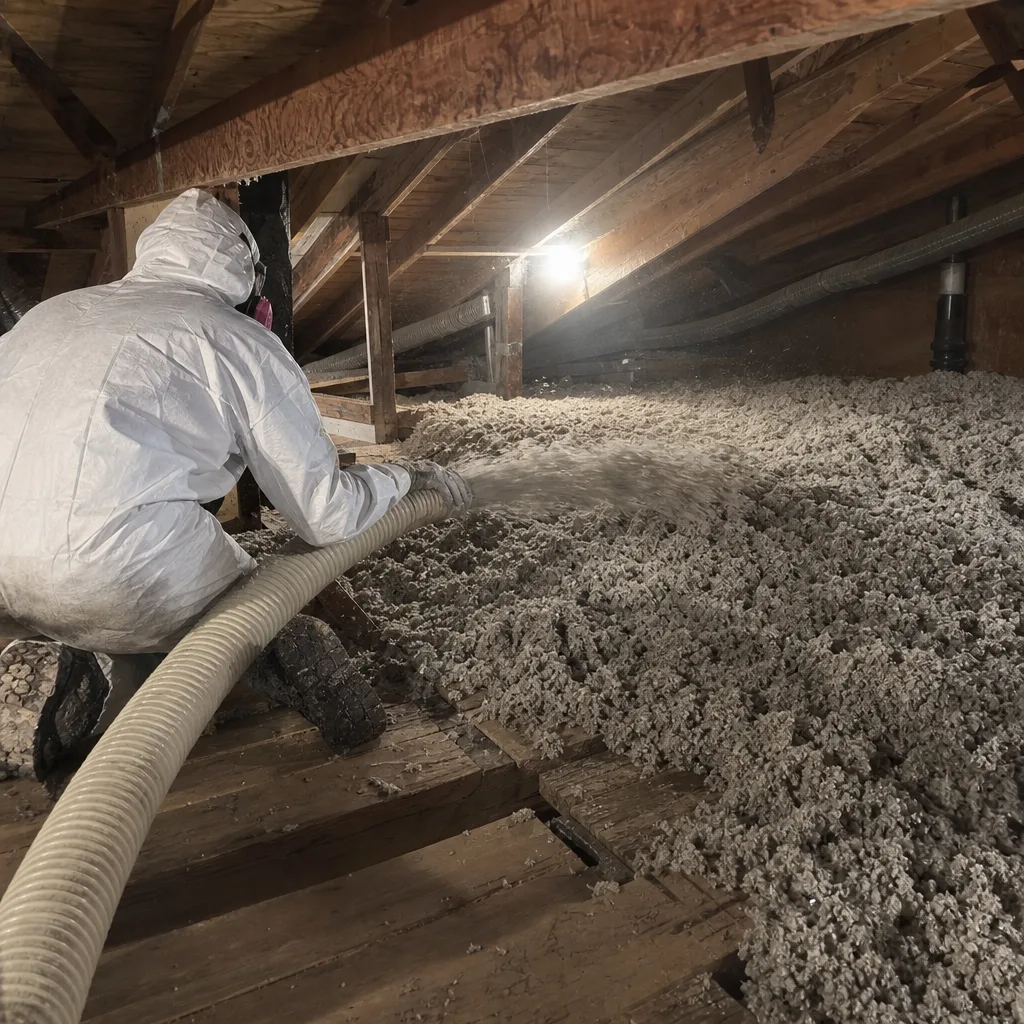
The insulation industry in Lancaster and across the Antelope Valley has a documentation problem. Most homeowners receive a verbal estimate, a one-line invoice, and no proof that the building envelope improved. We’ve audited attics in Lancaster’s Quartz Hill and Westside neighborhoods where new insulation was blown directly over unsealed top plates, can lights, and duct penetrations. The R-value on the receipt looked correct. The home still leaked conditioned air at rates exceeding 4,000 CFM50.
A blower-door test, a pressurization reading that shows in one number how much air your building envelope is losing, changes this dynamic. When a contractor provides a before-and-after CFM50 or ACH50 reading, you have an objective measure of whether the work performed. Not whether it was installed. Whether it performed.
Under Haven Standard Clause 1, every job we complete begins with a written price and ends with a documented record. This is not a marketing position. It is a workflow discipline that protects both parties. You know what you’re paying for before anyone lifts a tool. We know what we committed to deliver. The written scope, the blower-door numbers, the photo record, these documents are the contract’s real enforcement mechanism.
For Lancaster homeowners researching Topside Attic Insulation Lancaster home services, the documentation standard should be your primary filter. Everything else, license status, insurance, material brands, assumes a contractor who can prove their work.
The Five Questions Before Any Bid
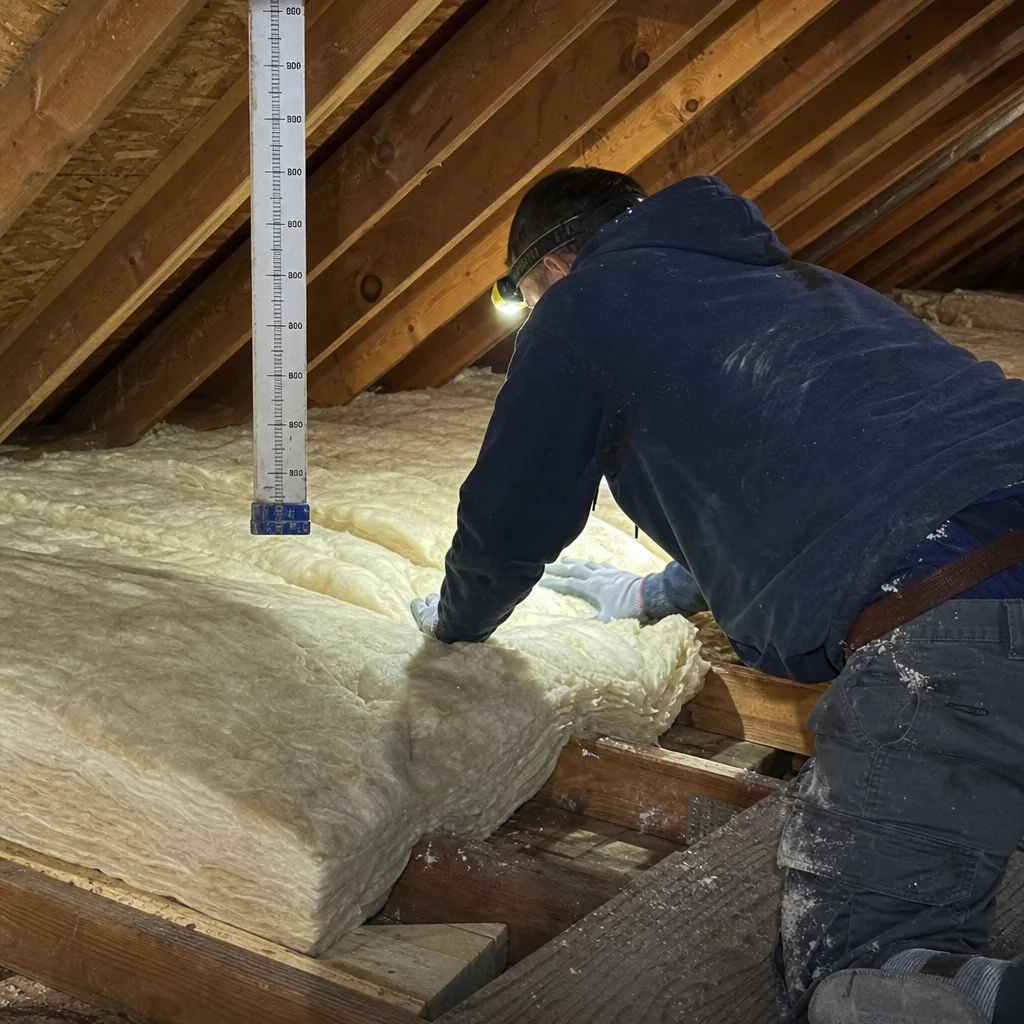
These five questions predict job quality more reliably than any online review or years-in-business claim. Ask them in sequence. A contractor who answers clearly and specifically is demonstrating the operational maturity that produces consistent results.
1. Do you provide a written scope before work begins?
The written scope defines what work will be performed, in what sequence, with what materials, to what standard. It is not an estimate. An estimate predicts cost. A scope defines deliverables. Under Haven Standard: Have it in writing, no work starts without a flat price, written scope, and written warranty delivered to the homeowner.
Ask to see a sample scope from a completed job. Red flags: scope descriptions that read “insulate attic to R-38” without specifying air-sealing steps, material type, or installation method. In Lancaster’s climate, where diurnal temperature swings exceed 40°F in shoulder seasons, air sealing must precede insulation installation. A scope that omits this sequence is incomplete.
2. Will you measure ACH50 or CFM50 before and after the work?
ACH50, air changes per hour at 50 Pascals of pressure, and CFM50, cubic feet per minute at 50 Pascals, are the two standard blower-door metrics. Ask which metric the contractor uses and what equipment they operate. Common systems include Retrotec and Minneapolis Blower Door. A contractor who cannot name their equipment or who describes blower-door testing as “optional” is not testing routinely.
For context: a typical unsealed Lancaster home from the 1980s or 1990s, common in neighborhoods like East Lancaster and the older sections of Palmdale-adjacent areas, often tests at 8-15 ACH50. After proper air sealing and insulation, that same home should achieve 3-5 ACH50. The contractor should be able to state these benchmarks without prompting.
3. What is your air-sealing protocol for attic penetrations?
This question separates insulation contractors from building envelope contractors. The protocol should include: top plates (the horizontal framing member where walls meet ceiling), electrical and plumbing penetrations, recessed can lights, chimney chases, and duct boots. In Lancaster, where many homes have slab-on-grade construction with HVAC ducts in the attic, duct sealing is equally critical.
Ask specifically about their treatment of can lights. Older non-IC (insulation contact) rated cans cannot be covered with insulation without fire risk. The correct protocol is replacement with IC-rated airtight housings or construction of sealed boxes. A contractor who says “we just blow around them” is creating a thermal bypass that undermines the entire job.
4. Are you a Title 24 HERS rater, or do you subcontract that function?
California’s Title 24 energy code requires HERS (Home Energy Rating System) verification for many insulation and air-sealing measures. In Lancaster, located in California Climate Zone 14, these requirements apply to new construction and substantial alterations. A contractor who is also a certified HERS rater can self-verify in some cases, streamlining the process. A contractor who subcontracts HERS verification should name the rater they use and confirm that rater’s independence.
Verify any claimed HERS rater status through the California Energy Commission’s public database.
5. What documentation do I receive at job completion?
The minimum acceptable documentation includes: pre-work conditions (photos, blower-door reading), materials installed with manufacturer and product identification, R-value achieved by zone, post-work blower-door reading, and permit number if applicable. At Envelope Insulation Co., we add a Documented Photo Record on every visit, included, not available on request. The homeowner receives this record within 48 hours of job completion.
A contractor who promises “you’ll get a receipt” or “we’ll email you the invoice” is not promising documentation. They are promising billing. The distinction matters.
How to Read a Blower-Door Report
Blower-door reports intimidate homeowners because the terminology is unfamiliar. The concepts are not complex. A blower door is a calibrated fan mounted in an exterior door frame that depressurizes or pressurizes the house to a standard 50 Pascals. The fan’s airflow at that pressure reveals the building envelope’s leakage rate.
CFM50: Cubic Feet per Minute at 50 Pascals
CFM50 measures the volume of air moving through the fan to maintain 50 Pascals of pressure difference. Lower is better. A CFM50 of 4,200 means the fan must move 4,200 cubic feet of air per minute to hold that pressure. After air sealing, that same home might test at 2,100 CFM50, a 50% reduction in leakage.
For Lancaster homes, useful benchmarks:
- Above 4,500 CFM50: Significant leakage, priority for air sealing
- 2,500-4,500 CFM50: Moderate leakage, typical of pre-2000 construction with some prior work
- 1,500-2,500 CFM50: Well-sealed, achievable with comprehensive air sealing and insulation
- Below 1,500 CFM50: Very tight envelope, may require mechanical ventilation
CFM50 scales with house size, so a 3,000-square-foot home will naturally have higher CFM50 than a 1,500-square-foot home with identical tightness. This is why ACH50 is often more useful for comparison.
ACH50: Air Changes per Hour at 50 Pascals
ACH50 normalizes CFM50 by house volume, giving a leakage rate independent of size. The calculation: CFM50 multiplied by 60 minutes, divided by house volume in cubic feet. A 2,000-square-foot home with 8-foot ceilings has 16,000 cubic feet of volume. At 2,667 CFM50, that’s exactly 10 ACH50.
Lancaster benchmarks by construction era:
- Pre-1990 homes: Often 10-20 ACH50, sometimes higher in original construction
- 1990-2005 homes: Typically 7-12 ACH50
- 2005-2019 homes: Usually 5-8 ACH50, depending on builder practices
- Post-2019 homes (Title 24 2019 and later): Must meet 3.0 ACH50 for new construction
A contractor promising “energy savings” without providing ACH50 or CFM50 before and after is promising an unmeasurable outcome. The numbers are what make it real.
ELA: Effective Leakage Area
ELA converts the blower-door reading into an equivalent hole size, as if all the home’s leaks were combined into one opening. An ELA of 200 square inches is a hole roughly 14 inches by 14 inches in your building envelope. Homeowners understand this intuitively. We’ve shown Lancaster homeowners their ELA and watched the realization: “You mean I have a window open all year?” Essentially, yes. A distributed window.
The report should also note test conditions: indoor and outdoor temperature, wind speed, which doors and windows were closed, which systems were shut down. These factors affect accuracy. A test conducted on a windy Lancaster afternoon with the attic access hatch ajar is not valid.
Lancaster-Specific Red Flags
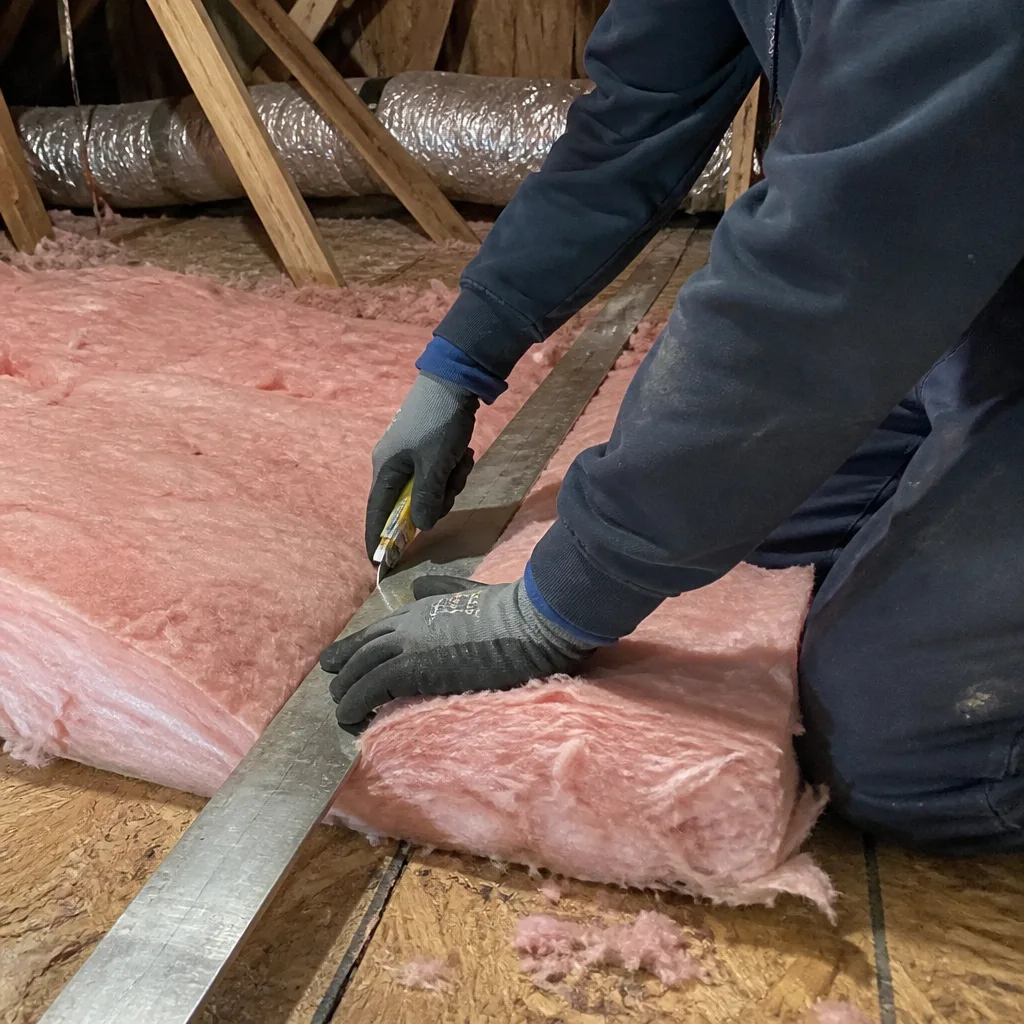
The Antelope Valley insulation market has characteristics that produce specific warning signs. These are not universal red flags. They are Lancaster-specific patterns we’ve observed across hundreds of local jobs.
Bids That Omit Air Sealing Entirely
Lancaster’s climate, hot dry summers with daily temperature swings exceeding 35°F, makes air sealing more critical than in mild coastal zones. Yet we regularly review competing bids from Lancaster-area contractors that specify “blow R-38 cellulose in attic” with no mention of top plate sealing, can light treatment, or penetration detail. This is not a complete scope. It is material installation without envelope improvement.
Materials we source from Owens Corning, Johns Manville, and GreenFiber perform as specified when installed correctly. “Correctly” includes a sealed substrate. Blown insulation over an unsealed attic floor is like pouring water into a cracked bucket.
Estimates Delivered Verbally Over the Phone
A contractor who provides a firm price without site visit, without attic inspection, without blower-door baseline, is guessing. In Lancaster’s varied housing stock, from 1950s tract homes near Lancaster Boulevard to 2000s developments in Quartz Hill, attic conditions vary enormously. Verbal estimates almost always exclude conditions that add cost: existing insulation removal, rodent damage, inadequate ventilation baffles, or electrical hazards.
Haven Standard Clause 1 requires a written price before any work starts. This is impossible to satisfy with a phone estimate. The practice of phone quoting is incompatible with accountable work.
“Energy Savings” as a Deliverable Without Measurable Unit
We see this frequently: “Save up to 40% on your energy bills!” with no basis stated. Percentage savings claims without modeling software (like REM/Rate or Ekotrope), without reference to baseline usage, without climate normalization, are unverifiable marketing. A legitimate contractor can discuss savings potential using recognized methods. They cannot guarantee a percentage.
Pressure to Decide Immediately
Lancaster homeowners report contractors who offer “today only” pricing or who request immediate contract signature. This is urgency theatre, and it has no legitimate place in building envelope work. A proper scope review takes time. The homeowner should compare documentation standards, not just prices, and should verify credentials independently. Any contractor who discourages this process is revealing their own insecurity.
No Discussion of Title 24 or Permit Requirements
Significant insulation work in Lancaster may trigger permit requirements through the City of Lancaster Building and Safety Division or Los Angeles County for unincorporated areas. A contractor who does not mention permits, or who suggests “we can skip it to save money,” is exposing the homeowner to liability and code violation. Permits exist to verify that work meets safety and performance standards. The documented permit record also protects resale value.
What a Written Job Record Should Contain
The job record is the homeowner’s proof of what was done and how it performed. It should be delivered at completion, not available on request, not sent “if you ask.” At minimum, the record contains seven elements:
- Pre-work conditions: Photos of attic or crawl space before work begins, with date stamps. These establish baseline state and protect both parties from dispute about pre-existing conditions.
- Materials installed with identification: Manufacturer, product line, and batch or lot number. This enables warranty claims if material defects emerge. We use products from Demilec, GreenFiber, and Owens Corning among others, and we record every batch.
- R-value achieved by zone: Not “R-38 blown” but “Attic floor: R-38 cellulose at settled depth per manufacturer specification.” The distinction matters because installation method affects achieved R-value.
- Air-sealing work performed: Specific locations sealed, materials used (caulk, foam, gasket), and photos of completed sealing. This is the work that blower-door numbers validate.
- Post-work blower-door reading: ACH50 and CFM50, with test conditions noted. The improvement should be calculable from pre-work numbers.
- Permit number and inspection status: If permits were required, the record includes permit number, inspection dates, and final approval status.
- Written warranty documentation: Scope of coverage, duration, and claim procedure. Our 365-Day Done Right Promise is backed by written terms delivered before work starts.
The Documented Photo Record on every visit is not an extra service. It is standard documentation that makes the job record verifiable. Homeowners in Lancaster’s newer developments near Avenue K and 50th Street West have used these records to document improvements for home sales, insurance claims, and tax credit applications.
Verifying Certifications the Right Way
Contractors display logos: BPI, RESNET, ENERGY STAR Partner, LEED AP. Logos are not credentials. Credentials exist in databases maintained by issuing organizations, and homeowners should verify directly.
BPI (Building Performance Institute)
BPI certifies individuals in building science disciplines, including Building Analyst and Envelope Professional. Verify at bpi.org using the technician’s name. Ask which specific certifications they hold. A company “BPI certified” means little if the person performing your work holds no individual certification.
RESNET (Residential Energy Services Network)
RESNET certifies HERS raters and oversees the HERS rating system. Verify rater status at resnet.us. In Lancaster, HERS verification is required for many Title 24 compliance paths. A contractor who claims HERS rater status but cannot be found in RESNET’s database is misrepresenting qualification.
ENERGY STAR Partner
EPA maintains a public partner directory. Partnership is at the organization level, not individual. It indicates participation in EPA programs, not necessarily technical competency in your specific job type.
CSLB License
The California State License Board lookup at cslb.ca.gov takes 90 seconds. Enter the license number, verify status is “Active,” check for disciplinary actions, and confirm the classification covers insulation work (typically C-2 Insulation and Acoustical, or B General Building for comprehensive envelope work). This is the minimum threshold, not the quality filter.
We’ve encountered Lancaster-area contractors displaying expired certifications, certifications held by former employees, or certifications from organizations with no public verification system. The 90 seconds of direct lookup prevents these misrepresentations.
Understanding Lancaster’s Climate and Code Context
Lancaster’s location in California’s High Desert, Climate Zone 14, creates specific insulation requirements that differ from Los Angeles Basin construction. Understanding these differences helps homeowners evaluate contractor competence.
Climate Zone 14 Requirements
California’s Title 24 specifies minimum insulation levels by climate zone. For Lancaster (Zone 14), attic insulation minimums are higher than coastal zones. As of the 2022 code cycle, wood-framed ceilings require minimum R-49 in new construction and significant alterations. Many existing Lancaster homes, particularly pre-2000 construction, have R-19 or R-30 original insulation that has settled or degraded.
However, R-value alone is incomplete. A home with R-49 insulation and unsealed air leaks performs worse than a home with R-38 and comprehensive air sealing. The blower-door number reveals this truth. We’ve tested Lancaster homes with new R-49 batts and ACH50 above 12. The insulation was installed. The envelope was not improved.
Wind and Dust Considerations
Lancaster’s prevailing westerly winds, particularly in spring, drive dust through building envelope leaks. We’ve found red desert dust accumulated inside wall cavities in homes near the Antelope Valley Freeway, evidence of sustained air leakage paths. Air sealing stops this infiltration, improving indoor air quality alongside thermal performance.
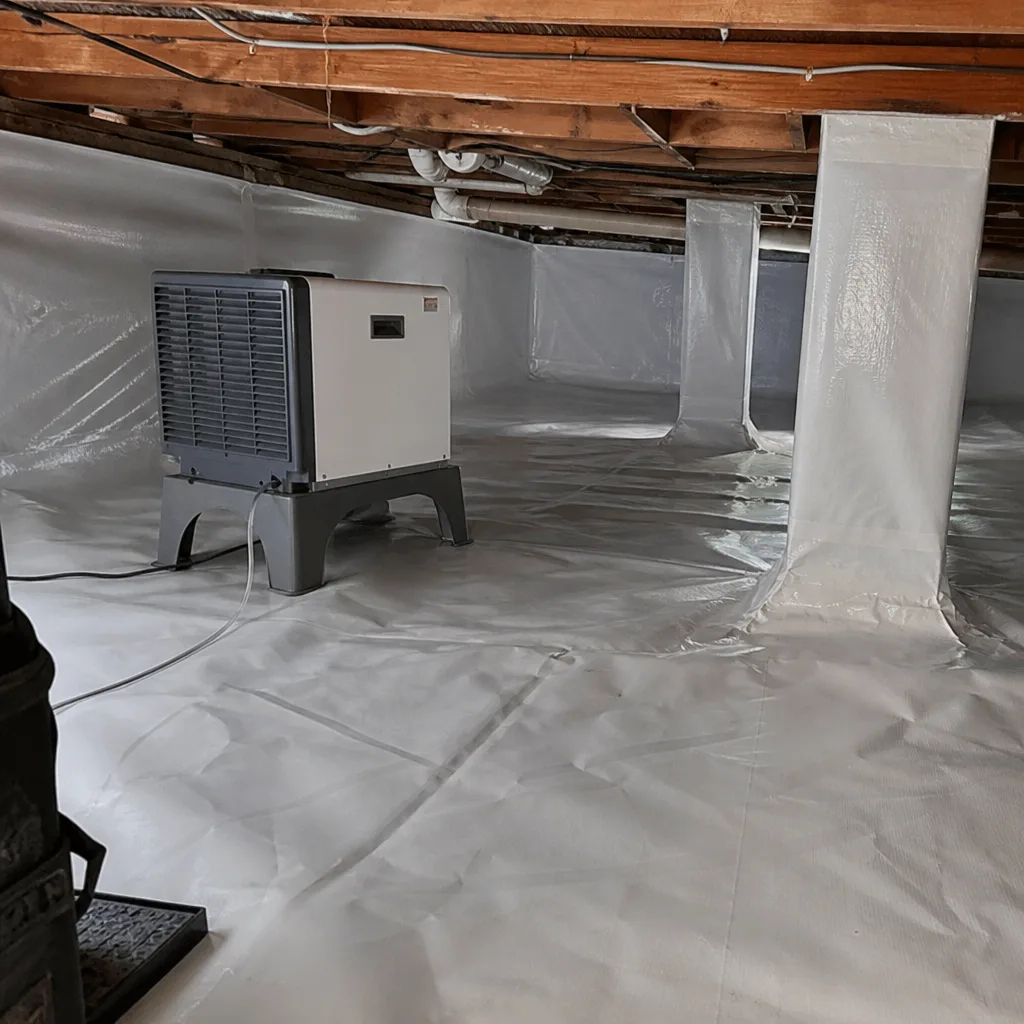
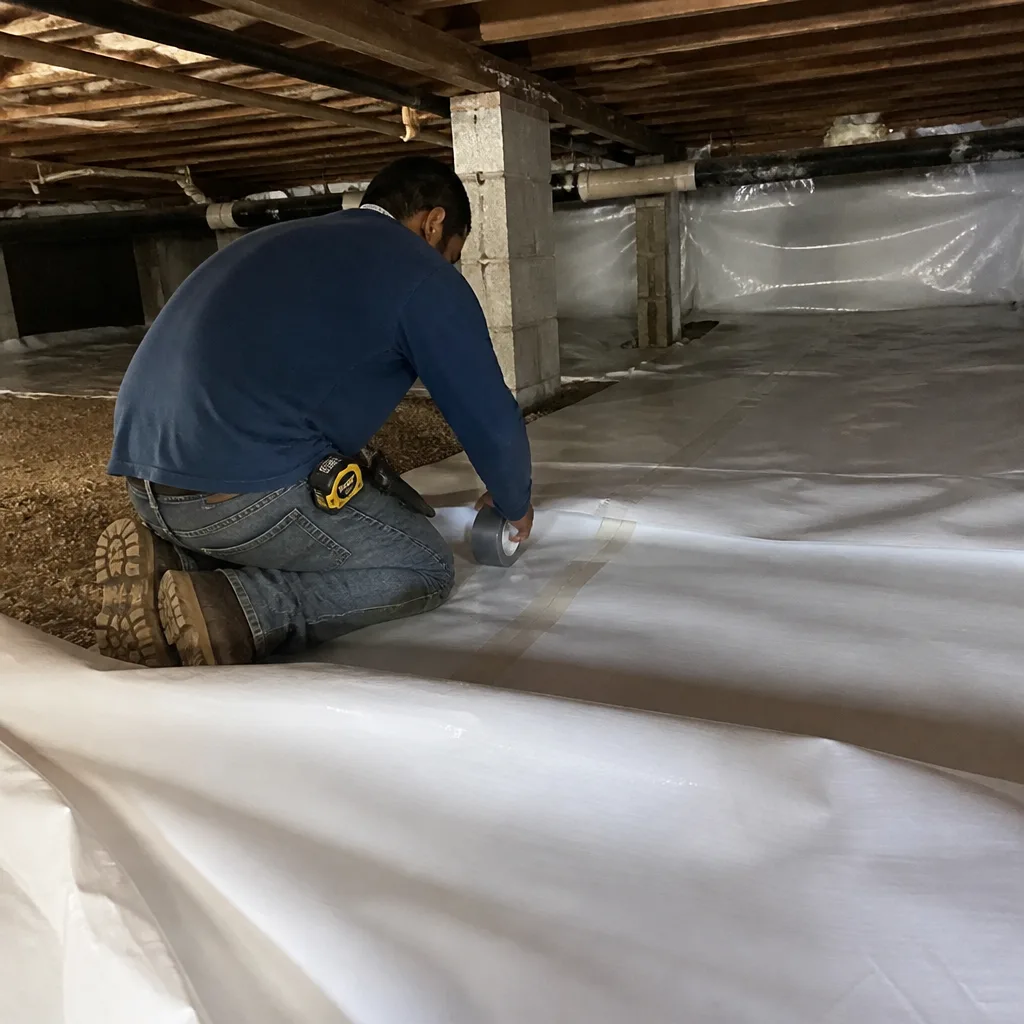
Crawl space conditions in Lancaster vary by neighborhood. Homes near the California Aqueduct or in areas with higher water tables may experience moisture issues that require Crawl Space Encapsulation & Vapor Barrier in Lancaster before insulation installation. A contractor who does not assess crawl space moisture conditions is not performing complete envelope evaluation.
Solar Gain and Radiant Barriers
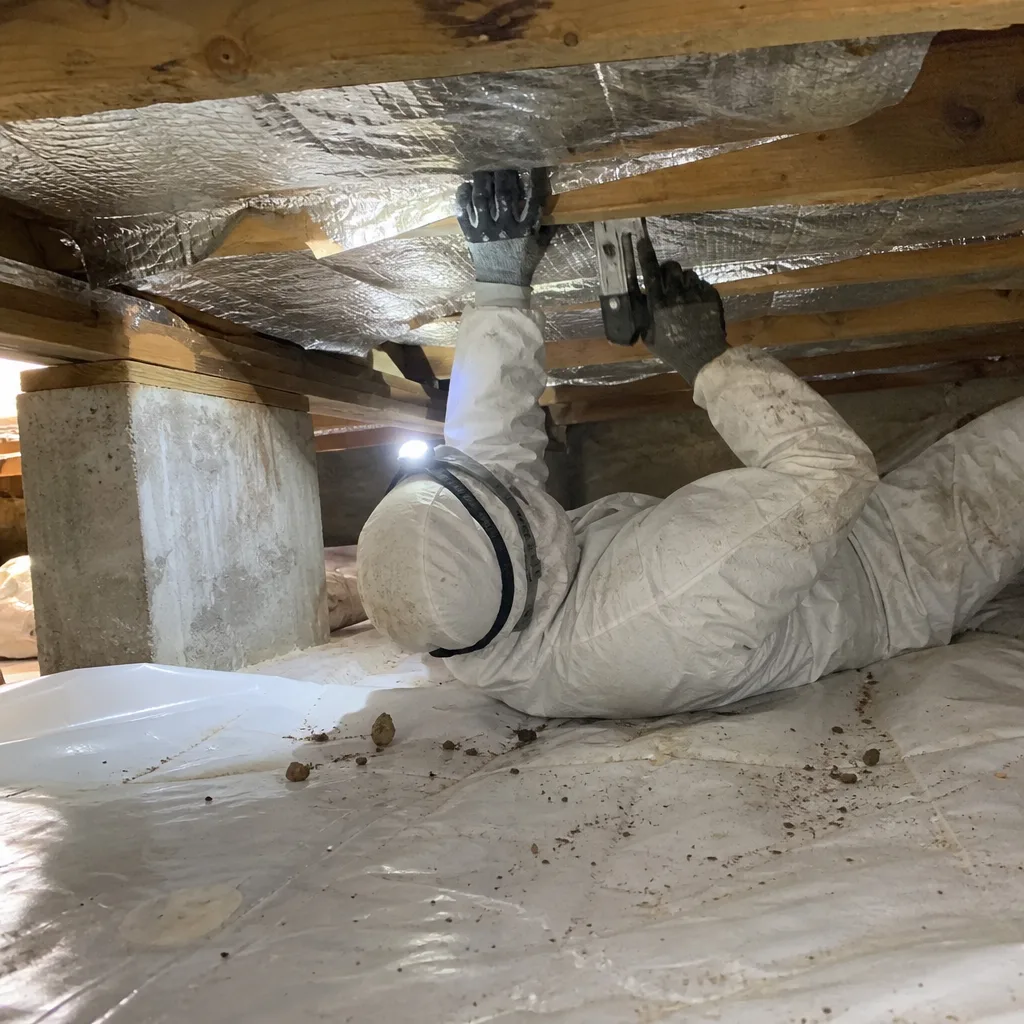
Lancaster’s intense solar exposure, over 280 days of sun annually, makes Attic Insulation in Lancaster particularly important. Radiant barrier installation, typically applied to roof decking or rafters, reduces radiant heat transfer from roof to attic space. This is distinct from conductive insulation (batts, blown, or Spray Foam Insulation in Lancaster). A complete attic strategy in Lancaster often combines radiant barrier with air sealing and conductive insulation.
Contractors unfamiliar with Lancaster’s solar load may specify insulation levels appropriate for milder climates. Ask specifically about their experience with radiant barrier and their assessment of your home’s solar gain exposure.
Common Mistakes to Avoid
- Comparing bids on price per square foot alone. A lower price per square foot often reflects omitted air sealing, lower-grade material, or excluded preparation work. The meaningful comparison is cost per point of ACH50 reduction, though few contractors calculate this. At minimum, compare scope completeness.
- Assuming new insulation replaces old without inspection. In Lancaster’s older neighborhoods, existing insulation may contain asbestos (pre-1980 vermiculite), rodent contamination, or moisture damage. Removal and remediation add cost but are essential for safe, effective installation. A bid that assumes simple overlay without inspection is speculative.
- Neglecting to verify the permit history. Unpermitted work discovered during sale can delay or derail transactions. Lancaster’s real estate market, with significant investor activity, is particularly sensitive to documentation gaps. Request permit documentation for any work performed.
- Accepting “R-value” claims without installation specification. R-value is a laboratory measurement at full thickness, no gaps, no compression. Field-installed R-value depends on installation quality. Ask how the contractor ensures consistent depth, complete coverage, and avoidance of compression at eaves and penetrations.
- Ignoring ventilation requirements. Added insulation can block soffit vents if baffles are not installed, creating moisture and ice dam risks even in Lancaster’s dry climate. Winter temperature inversions do occur, and blocked ventilation has caused condensation issues in Lancaster attics we’ve inspected.
- Failing to establish the baseline. Without a pre-work blower-door test, there is no proof of improvement. The post-work test alone is meaningless. Insist on before-and-after measurement.
- Choosing spray foam based on sales claims without understanding curing requirements. Spray foam insulation requires proper temperature, humidity, and curing time. Lancaster’s low humidity can affect open-cell foam curing. Closed-cell foam requires precise mixing ratios. Improperly installed spray foam can off-gas, shrink, or fail to adhere. Verify the installer’s spray foam-specific training and experience.
When to Call a Professional
Call a qualified insulation contractor when you observe temperature stratification between rooms, energy bills increasing without usage change, visible insulation degradation in attic or crawl space, or drafts from outlets and baseboards on exterior walls. These symptoms indicate envelope failure that DIY measures cannot address comprehensively.
In Lancaster’s climate, professional assessment is particularly important when considering attic upgrades, crawl space work, or whole-home energy improvements. The interaction of air sealing, insulation, and ventilation requires building science knowledge that exceeds typical homeowner expertise.
Topside Attic Insulation Lancaster offers free estimates in Lancaster. Call (661) 526-2890 to schedule an assessment that includes a written scope, upfront pricing, and documentation of existing conditions. Every estimate follows Haven Standard: Have it in writing, with no work starting before you have the complete picture.
Frequently Asked Questions
Most attic insulation jobs in Lancaster homes between 1,500 and 2,500 square feet run between $2,800 and $6,500, depending on preparation needs, air-sealing extent, and material selection. Spray foam applications range higher, typically $4,500 to $12,000 for complete attic treatment. These ranges include air sealing, which we perform before any insulation installation. Call (661) 526-2890 for an exact quote on your specific home. Estimates are free.
Repair is rarely cheaper when existing insulation is compressed, contaminated, or improperly installed. In our Lancaster experience, patching damaged areas while leaving compromised material in place produces inconsistent performance and often requires re-work within two to three years. Complete removal and replacement with proper air sealing typically costs 15-30% more upfront but delivers measurable, durable results. The blower-door numbers prove it.
A typical attic insulation job in Lancaster, including air sealing and blown-in installation, requires one to two days. Spray foam applications need additional curing time, often 24 hours before re-entry. Jobs requiring insulation removal, rodent remediation, or extensive electrical work before insulation may extend to three days. We provide a specific timeline in every written scope.
Same-day repair is possible for limited issues, such as localized air sealing or spot insulation in accessible attics. Comprehensive envelope improvement requires scheduled work with proper preparation. Our live-answered phones, 24/7, can assess urgency and schedule appropriately. For same-day needs, call (661) 526-2890 and we’ll determine if your situation qualifies.
Permits are required for insulation work that exceeds repair or replacement in kind, or that involves structural modification, electrical work, or changes to ventilation systems. The City of Lancaster Building and Safety Division or Los Angeles County handles permitting depending on your address. We pull permits when required and include permit numbers in every job record. A contractor who suggests skipping permits is not following code.
Lancaster’s High Desert climate produces greater temperature extremes, higher solar gain, and more significant diurnal swings than coastal Los Angeles. These conditions demand higher R-values, more attention to radiant heat transfer, and stricter air sealing to prevent both summer heat gain and winter heat loss. Additionally, Lancaster’s wind-driven dust infiltration makes air sealing critical for indoor air quality. Contractors experienced only with mild coastal climates may under-specify for these demands.
The Bottom Line
Hiring an insulation contractor in Lancaster begins with license verification, but license status is only the threshold. The quality filter is documentation: written scope before work, blower-door measurement before and after, and complete job record at completion. Ask the five questions. Verify certifications directly. Demand specific numbers, not percentage savings claims. In a market where insulation is often installed without envelope improvement, the contractor who measures and documents performance is the contractor who delivers performance.
The materials, Owens Corning, Johns Manville, GreenFiber, Demilec, perform as specified when installed correctly. Correct installation means sealed first, then insulated, with proof in numbers. Anything less is speculation dressed in fiberglass.
Written by Wes Okafor, Owner at Topside Attic Insulation Lancaster, serving Lancaster since 2016.