
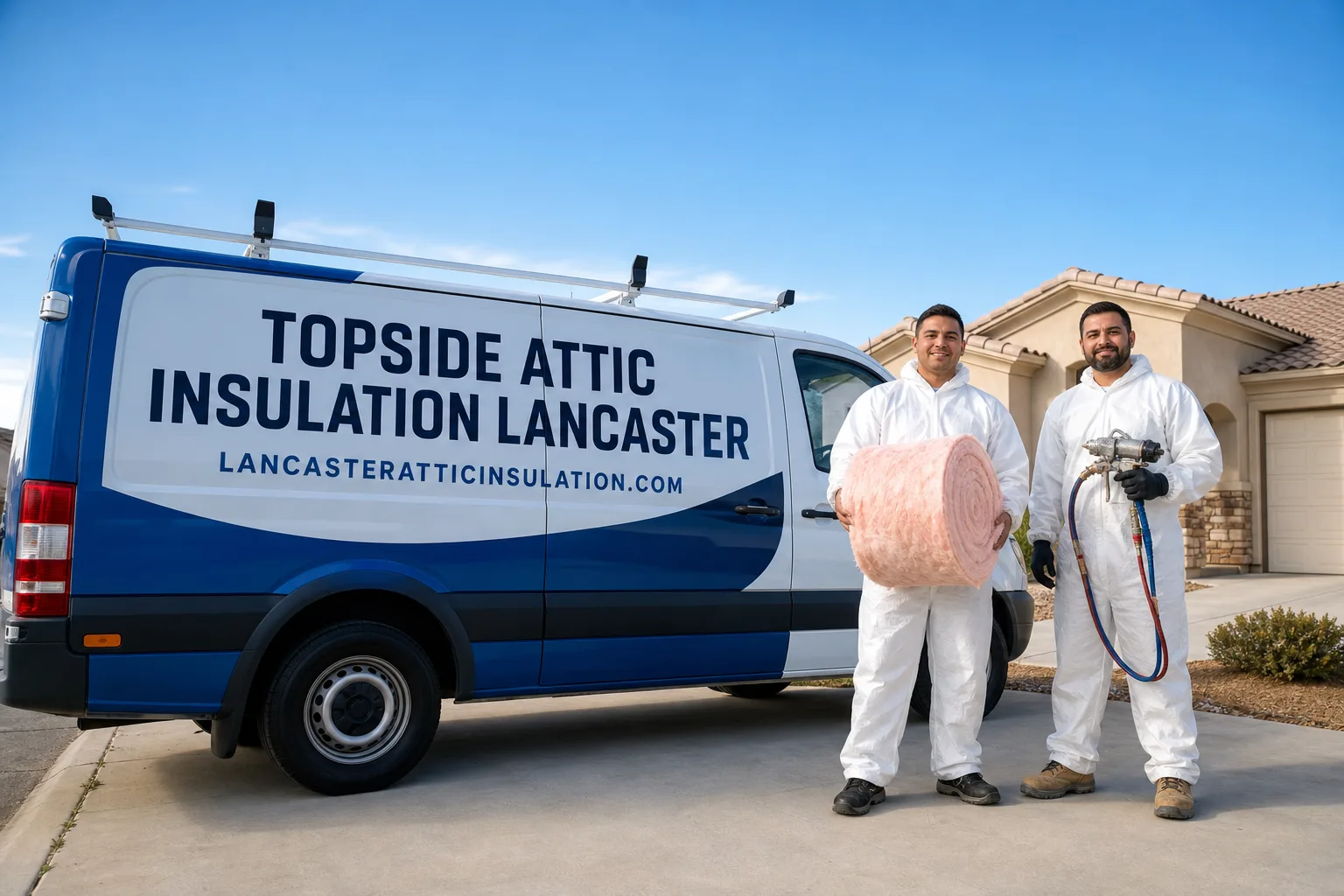
How Much Does Blown-In Insulation Cost in Lancaster?
Blown-In Insulation services in Lancaster, CA typically cost between $1,200 and $3,800 for a standard attic, with most single-story homes in the 1,400-2,200 sq ft range landing between $1,500 and $2,600 when insulation-only work is quoted. If air sealing is completed first - which it should be, and which we’ll address below - expect the total project to run $2,000-$4,500 depending on attic condition, current R-value, and access difficulty.
Blown-In Insulation Cost Breakdown (2026)
Blown-in insulation in Lancaster, CA typically costs $1.20-$2.40 per square foot for materials and labor combined, though that number shifts based on what’s already in the attic, how accessible the space is, and whether air sealing is included. The table below reflects current Lancaster market pricing as of 2026 - not national averages copied from a cost-aggregator site.
| Scope of Work | Typical Cost Range (Lancaster, CA) | Notes |
|---|---|---|
| Blown-in insulation only, 1,000-1,500 sq ft attic | $1,200-$1,900 | Existing insulation at or near R-19; topping off to R-38 |
| Blown-in insulation only, 1,500-2,200 sq ft attic | $1,600-$2,600 | Most common single-story footprint in Lancaster and Palmdale |
| Blown-in insulation only, 2,200-3,000 sq ft attic | $2,200-$3,400 | Larger homes in West Lancaster, Quartz Hill corridors |
| Attic air sealing + blown-in insulation, 1,500 sq ft | $2,000-$3,200 | Top plates, can lights, and penetrations sealed before insulation |
| Attic air sealing + blown-in insulation, 2,200 sq ft | $2,800-$4,200 | Required first step at Envelope; blower-door readings documented before and after |
| Old insulation removal + air sealing + blown-in, 1,500 sq ft | $2,600-$4,500 | Rodent-contaminated or fire-damaged attics; includes haul-away |
| Cellulose blown-in (per sq ft, installed) | $0.85-$1.40/sq ft | GreenFiber and similar; good thermal and modest sound performance |
| Fiberglass blown-in (per sq ft, installed) | $1.00-$1.60/sq ft | Owens Corning, Johns Manville, Knauf; lighter weight, fast install |
| Mineral wool blown-in (per sq ft, installed) | $1.60-$2.40/sq ft | Rockwool; higher R-value per inch, better fire resistance |
| Radiant barrier addition (foil, stapled or draped) | $400-$900 add-on | High value in Lancaster’s 100°F+ summers; often bundled |
A few things are worth spelling out about these numbers. First, Lancaster’s climate pushes the cost-benefit math toward higher R-values than coastal California requires. Title 24 in California currently mandates R-38 for attic insulation in Climate Zone 14, which covers most of Lancaster and the Antelope Valley. Many homes built in the 1980s and 1990s in areas like Fox Field Corridor and East Lancaster are still sitting at R-11 or R-19 - sometimes less after decades of settling. Getting from R-11 to R-38 means adding significantly more material than getting from R-19 to R-38, which directly affects your quote.
Second, the air-sealing line item is not optional in a well-done job. Blowing insulation over an unsealed attic floor is like adding a thicker blanket without closing the window. At Envelope Insulation Co., air sealing of top plates, recessed can lights, and all penetrations is completed before any insulation goes in - that’s not an upsell, it’s a hard prerequisite. Every applicable job includes a blower-door test – a pressurization measurement that shows, in one number, how much conditioned air the building envelope was losing – before and after the work, so you have a documented figure rather than a contractor’s word.
What Affects Blown-In Insulation Pricing in Lancaster
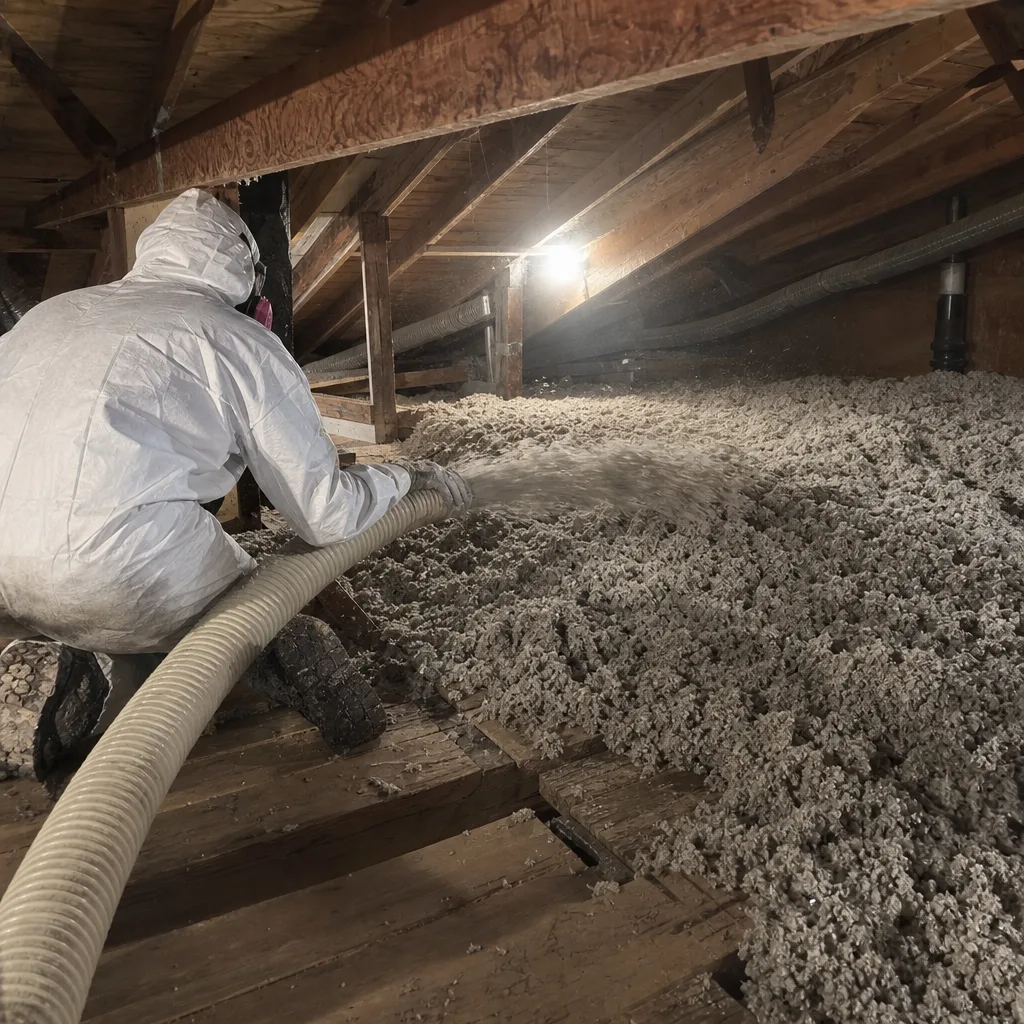
- Current R-value and depth of existing insulation. Homes in Lancaster built before 1990 – particularly in the blocks east of Sierra Highway and through the older tracts near Avenue J – commonly have 3 to 4 inches of original blown fiberglass that has compressed to nearly nothing. A full install from near-zero costs more than a top-off from R-19 because you’re purchasing significantly more material and more blower time.
- Attic access and hatch size. Older Lancaster homes frequently have a single 22×22-inch pull-down hatch that slows the job. Tight access means slower hose positioning, more time for the crew, and sometimes the need to cut a second access point. That adds $150-$350 to most jobs where it’s required.
- Attic geometry and obstacles. Low-slope rooflines - common in the ranch-style and tract homes throughout the Rancho Vista and Antelope Acres areas - compress the working height at the eaves to 12-18 inches. Work in those knee-wall zones takes longer and sometimes requires hand-packing rather than machine-blowing, which increases labor cost.
- Material choice. Cellulose runs roughly $0.85-$1.40 per square foot installed. Fiberglass blown-in comes in at $1.00-$1.60. Mineral wool (Rockwool) is $1.60-$2.40 because of its material cost, though it delivers the highest R-value per inch - a real advantage in Lancaster’s heat, where every inch of attic height you can reclaim translates to measurable cooling savings.
- Lancaster’s summer temperature load. Climate Zone 14 runs 100°F+ days from June through September. That sustained heat load means the attic floor sees significant thermal stress, and radiant heat gain through the roof deck compounds what insulation alone has to fight. Many Lancaster homeowners add a radiant barrier at the same time as blown-in insulation - the two work differently (one blocks radiant heat transmission, the other slows conductive and convective losses) and combining them during a single crew mobilization costs less than scheduling separately.
- Old insulation removal. If an attic contains rodent-contaminated insulation, fire-damaged material, or an old vermiculite product that may contain asbestos (still found in pre-1980 homes in central Lancaster), removal adds $800-$1,800 before new insulation goes in, depending on volume and contamination level. We document what we find in the photo record before removing anything, so you see it for yourself.
Lancaster’s Climate Zone 14 and Why It Changes the Math
Lancaster sits in Climate Zone 14 under California’s Title 24 building code. That classification exists specifically because the Antelope Valley runs hotter and drier than coastal cities by a meaningful margin – summer highs routinely reach 107°F near the Fox Field area, and the diurnal swing (the temperature difference between midnight and 2 PM) can exceed 35°F on a July day. That swing is actually useful: a well-insulated attic in Lancaster holds the cool air from the overnight low longer into the morning, reducing compressor runtime. But it only works if the air sealing is done first.
The Title 24 minimum for attic insulation in Climate Zone 14 is R-38. If your home was permitted before 2006, there’s a reasonable chance the attic was built to an older standard. We see R-11 batts regularly in the older Lancaster High School neighborhood corridor and in homes along 30th Street West. Getting to code-compliance and beyond is both a comfort upgrade and, in many cases, a condition of refinancing or resale.
For Lancaster homeowners thinking about resale, a documented R-38 attic with a before-and-after blower-door record is a line item you can put in front of a buyer’s inspector. A verbal “we had insulation added” is worth considerably less.
Cellulose vs. Fiberglass vs. Mineral Wool: Which Is Right for a Lancaster Attic?
Cellulose
Made primarily from recycled paper treated with borate for fire and pest resistance, cellulose is the most common blown-in material in Lancaster attics because it’s cost-effective and settles into irregular spaces well. GreenFiber cellulose is one of the brands we use. It performs at roughly R-3.7 per inch. One consideration in the Antelope Valley: cellulose can absorb moisture during rare heavy rain events if the attic has an air bypass that funnels humid interior air into the insulation layer – another reason air sealing matters before the material goes in.
Fiberglass
Blown fiberglass from Owens Corning, Johns Manville, or Knauf is lighter, doesn’t settle as much as cellulose over time, and is unaffected by moisture. It performs at R-2.5 to R-3.0 per inch, so you need more depth to reach R-38 than you would with cellulose or mineral wool. For attics with generous height clearance in newer Lancaster developments near the Avenue L corridor, fiberglass is a practical and well-priced choice.
Mineral Wool (Rockwool)
Rockwool blown-in delivers R-3.0 to R-3.3 per inch, is naturally fire-resistant, doesn’t absorb moisture, and adds meaningful sound attenuation – relevant for homes near the USAF Plant 42 flight corridor in Palmdale, where aircraft noise is a real daily factor. It costs more per square foot than cellulose or fiberglass, but the higher R-value per inch means you reach R-38 with less physical depth, which can matter in low-slope rooflines.
How to Save on Blown-In Insulation in Lancaster
There are practical ways to reduce what you spend without compromising the job. Most of them come down to timing, bundling, and knowing what to ask for.
- Bundle air sealing with insulation on the same day. Air sealing and blown-in insulation require the same crew mobilization. When they’re scheduled together, the crew setup cost is shared across both scopes. Homeowners who request air sealing as a separate visit later typically pay $300-$600 more in total than those who bundle it from the start.
- Check for SCE and SoCalGas rebates before signing anything. Southern California Edison and SoCalGas both run rebate programs for attic insulation upgrades in the Antelope Valley, and the amounts change quarterly. In early 2026, SCE’s residential insulation rebate ran up to $0.10-$0.25 per square foot for qualifying upgrades in Climate Zone 14. A knowledgeable contractor can confirm current program eligibility before work starts, not after.
- Add a radiant barrier at the same time. The marginal cost of adding a radiant barrier while the crew is already in the attic is significantly lower than scheduling it as a standalone job. In Lancaster’s climate, the cooling-season payback on a combined blown-in plus radiant barrier project is often 3-5 years based on typical SCE rate schedules.
- Get a second opinion on any written estimate. Under the Haven Standard, Envelope Insulation Co. offers a free second opinion on any written estimate – meaning we’ll read a competing quote with you, line by line, and show you what’s included, what’s missing, and what the real scope comparison looks like. Most homeowners who take us up on this find at least one line item that wasn’t what it appeared to be.
- Schedule in late fall or early spring. Contractor availability in Lancaster peaks in summer because everyone wants work done before the heat hits. Jobs scheduled in October through February often move faster and, in some cases, give you more scheduling flexibility. Pricing at Envelope doesn’t fluctuate by season, but your access to preferred scheduling dates does.
- Don’t skip the attic inspection before committing to a quote. A written price before any work starts – Haven Standard Clause 1 – requires that we see the attic first. Homeowners who try to get a phone quote based on square footage alone sometimes find the final invoice doesn’t match expectations because no one looked at the hatch size, the existing depth, or the rodent activity before the crew showed up. We look first. Then we write the number down.
For a written estimate on your Lancaster home, call (661) 526-2890. The estimate is free, the price is written before anyone starts, and you’ll have it in hand before we pick up a single tool.
The Air-Sealing Step Most Contractors Skip
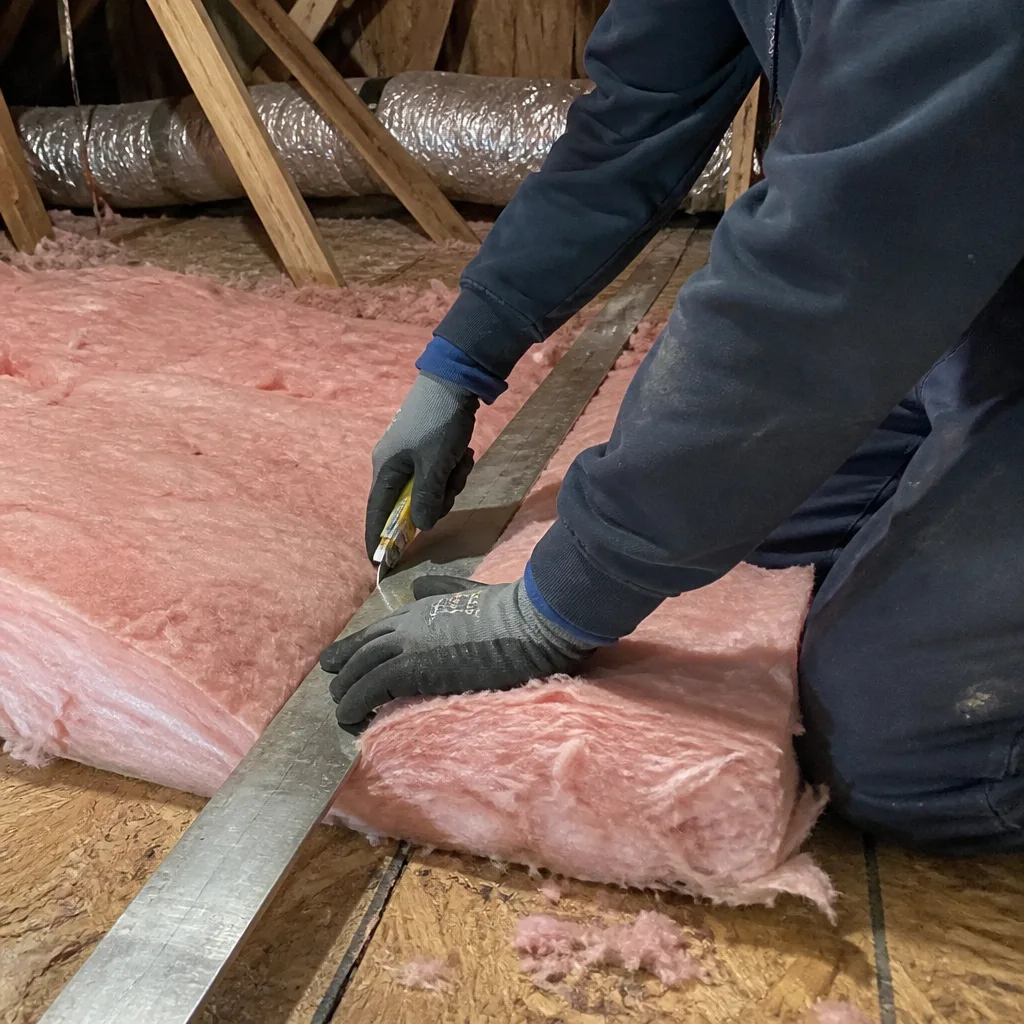
This section exists because it’s the most common mistake in Lancaster attic insulation jobs, and it costs homeowners real money.
A standard attic floor has dozens of air bypasses: top plates where interior walls meet the ceiling, recessed can lights that are essentially holes punched through the thermal boundary, plumbing and electrical penetrations, and HVAC chases. In a typical 1,800 sq ft Lancaster ranch home, these bypasses can account for more conditioned air loss than the insulation is compensating for. Blowing R-38 cellulose over an unsealed floor is like insulating a cooler with the lid off.
Every job at Envelope Insulation Co. starts with a blower-door test – a pressurization reading that shows, in one number, how much air your building envelope is losing – before any material goes in. The air sealing happens next: top plates foamed, can lights either sealed with an approved cover or spray-foamed, penetrations caulked and sealed. Then the blower-door runs again. The before-and-after numbers go into your documentation. Then, and only then, the insulation is blown in.
That sequence is the reason we publish blower-door numbers on applicable jobs. “We sealed your attic” is a claim any contractor can make. “Your home tested at 3,800 CFM50 before and 1,950 CFM50 after” is a documented measurement you can hand to a home inspector, a real estate agent, or a future buyer.
For a deeper look at what the full service includes, visit our Blown-In Insulation in Lancaster service page.
What the Job Looks Like From Estimate to Completion
For a homeowner who’s never had insulation work done, the process can feel opaque. Here’s what it actually looks like when Wes Okafor’s team handles a Lancaster attic job under the Haven Standard.
- Inspection and written estimate. A background-checked, uniformed technician inspects the attic – hatch size, current insulation depth, visible air bypasses, rodent activity, any moisture indicators. You get a written price, written scope, and written warranty before anyone starts. The estimate is free.
- Pre-work blower-door test. On applicable jobs, we run a blower-door test before touching the attic. The reading is recorded and included in your documentation.
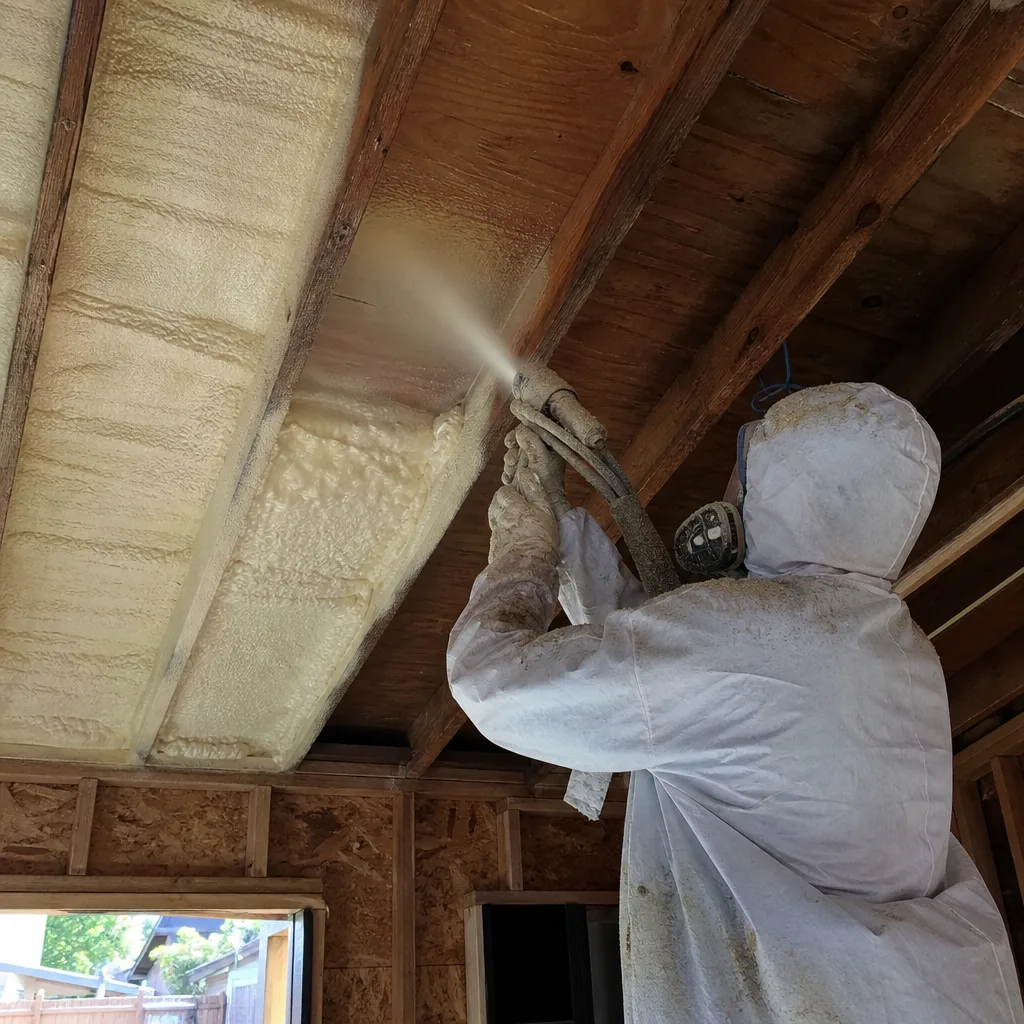
- Air sealing. Top plates, recessed can lights, and all penetrations are sealed with appropriate materials – spray foam, fire-rated caulk, or rigid covers depending on the specific penetration type. This is completed and inspected before insulation begins.
- Post-sealing blower-door test. We test again. The before-and-after delta is documented. In Lancaster homes we’ve worked in the College Heights area and near 10th Street West, we regularly see CFM50 readings drop by 40-60% after thorough top-plate and can-light sealing alone.
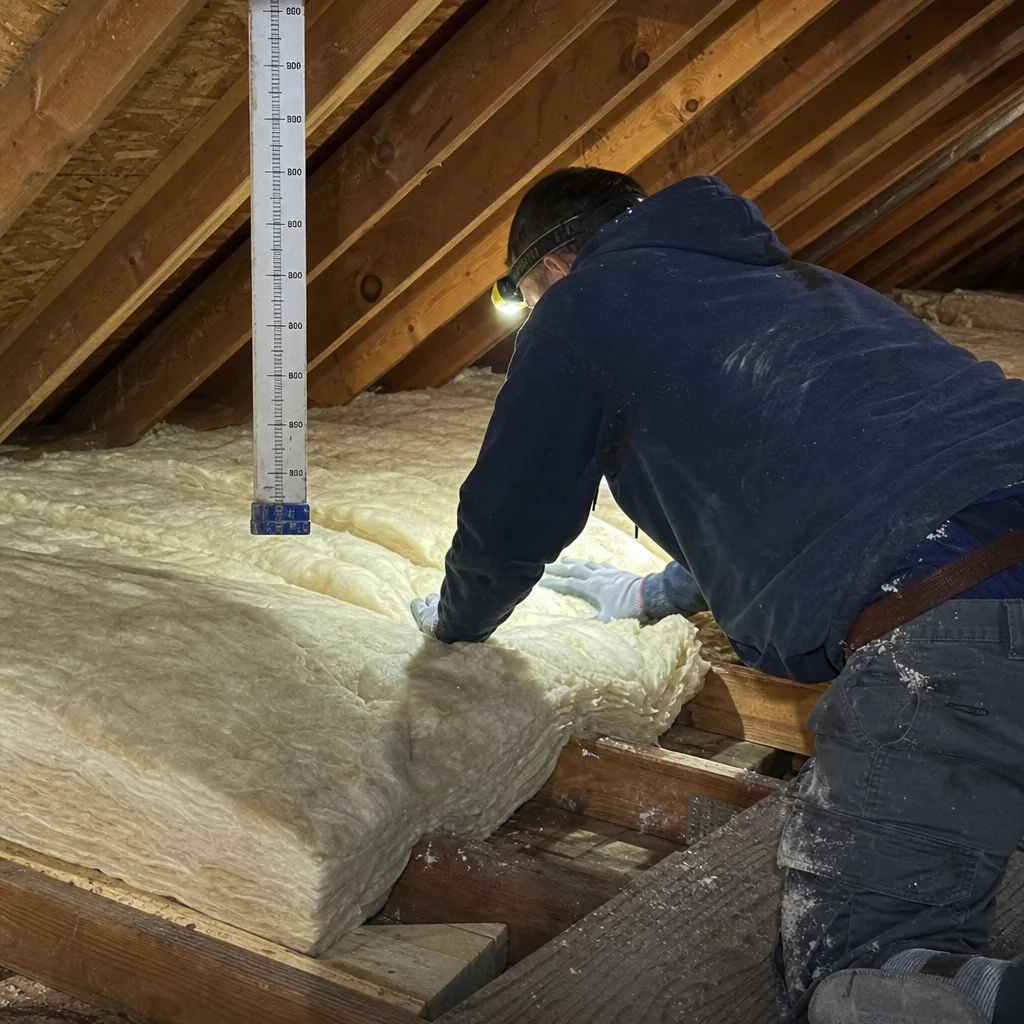
- Blown-in insulation installation. Material is blown to the specified depth for the target R-value. Depth gauges are placed in the attic and photographed. Every bay is checked before the crew leaves.
- Documented photo record. Photos of the before state, mid-job conditions, and completed work are included with every visit. This isn’t available on request – it’s a standard deliverable.
- 365-Day Done Right Promise. If anything isn’t right within the first year, we make it right. That’s in writing before we start.
FAQs – Blown-In Insulation Cost in Lancaster, CA
How much does blown-in insulation cost in Lancaster, CA in 2026?
Most Lancaster attic insulation jobs run between $1,200 and $3,800 for insulation alone, and $2,000-$4,500 when air sealing is included – which it should be. The price varies primarily by attic square footage, current R-value, and whether old insulation needs removal. A 1,600 sq ft attic being topped off from R-19 to R-38 with cellulose typically comes in around $1,400-$1,800. A full install from near-zero on a 2,000 sq ft attic with air sealing runs closer to $2,800-$3,600. For a written number specific to your home, call (661) 526-2890 – the estimate is free.
Is cellulose or fiberglass better for a Lancaster attic?
Both perform well at R-38, which is the Title 24 minimum for Climate Zone 14. Cellulose (GreenFiber and similar) costs slightly less per square foot and fills irregular spaces well. Fiberglass blown-in (Owens Corning, Johns Manville, Knauf) doesn’t settle over time and is less sensitive to moisture. In Lancaster’s dry climate, moisture sensitivity is rarely a deciding factor – the bigger variable is usually attic height. If you’re working with low clearance at the eaves, cellulose’s higher R-value per inch means you reach R-38 with less material depth. For most Lancaster homes, the difference in 10-year energy performance between the two is smaller than the difference between sealed and unsealed attic floors.
Does blown-in insulation in Lancaster qualify for rebates?
Yes, in most cases. Southern California Edison’s residential rebate program covers qualifying insulation upgrades in Climate Zone 14, and SoCalGas runs parallel programs. Rebate amounts in early 2026 ranged from $0.10-$0.25 per square foot for SCE customers meeting eligibility requirements – which, on a 1,800 sq ft attic, translates to $180-$450 back. Rebate programs change terms regularly, so confirm current amounts before work starts. A contractor who’s familiar with the programs will know the current eligibility requirements; one who isn’t may cost you real money by skipping the paperwork.
How long does blown-in insulation last in a Lancaster attic?
Fiberglass blown-in doesn’t degrade meaningfully over time and carries a long performance life – Owens Corning and Johns Manville product warranties typically run 25 years or more. Cellulose settles modestly in the first few years (typically 5-10% by depth) and then stabilizes. Neither material “expires” in a Lancaster climate the way it might in a humid environment. The more relevant question is whether the existing insulation has been contaminated by rodents, compromised by roof leaks, or simply compacted below functional R-value. We check all three during the attic inspection and document what we find in the photo record before recommending removal or top-off.
Can I just add blown-in insulation over what’s already there?
Usually yes – topping off is less expensive than full removal and reinstall, and it’s appropriate when the existing material is clean, dry, and rodent-free. But it’s only effective if the air sealing is done first. Adding R-20 of new insulation over an unsealed attic floor in a Lancaster home does less for your energy bills than adding R-10 over a properly sealed floor. We inspect and document the existing condition before recommending which path makes sense. If the existing material shows rodent contamination, mold, or moisture damage, removal is the right call regardless of cost – and we’ll show you photos so you’re not taking our word for it.
Key Takeaways
- Blown-in insulation in Lancaster, CA costs $1,200-$3,800 for most attic jobs; add $600-$1,000 for air sealing, which should always be done first.
- Lancaster sits in Climate Zone 14, where Title 24 requires R-38 minimum attic insulation – most pre-1990 homes don’t meet this standard.
- Cellulose runs $0.85-$1.40/sq ft installed; fiberglass $1.00-$1.60; mineral wool $1.60-$2.40. Material choice matters less than whether the attic floor is sealed before any material goes in.
- SCE and SoCalGas rebates for Climate Zone 14 insulation upgrades can reduce net cost by $180-$450 or more on a typical Lancaster attic – confirm current amounts before signing.
- Every Envelope Insulation Co. job includes a written price before work starts, a documented photo record, and before-and-after blower-door readings on applicable jobs – all covered under the 365-Day Done Right Promise.
- Under Haven Standard Clause 1, you get a written price, written scope, and written warranty before anyone lifts a tool. No exceptions.
Get a Written Estimate for Your Lancaster Home
Wes Okafor and the team at Envelope Insulation Co. have been sealing and insulating homes in Lancaster, CA since 2016 – more than 9,000 jobs, every one of them starting with a written price. If you have a competing quote in hand, bring it: we’ll read it with you line by line under our free second opinion offer and show you exactly what you’re comparing. We cover the full Antelope Valley, including Lancaster, Quartz Hill, Palmdale, and the surrounding communities.
The estimate is free. The price is written before anyone starts. A live person answers when you call – no voicemail loop, no callback window. Reach us at (661) 526-2890.
For more on how we approach the full job – from blower-door testing through final documentation – visit the Envelope Insulation Co. home page.
Pricing reflects the Lancaster market as of 2026. Topside Attic Insulation Lancaster offers free estimates – call (661) 526-2890.
Written by Wes Okafor, Owner at Envelope Insulation Co., serving Lancaster, CA since 2016.
What Our Customers Say
"They air-sealed the attic floor before insulating and showed me the blower-door number before and after. The upstairs is finally the same temperature as downstairs."
- Marisol D."They photographed rodent damage in the old insulation that we had no idea about, and priced the exclusion work separately so we could decide."
- Harriet N."Two other companies quoted to blow more insulation on top of what was there. These were the only ones who said the existing material had to come out first, and explained why."
- Clifford E.