
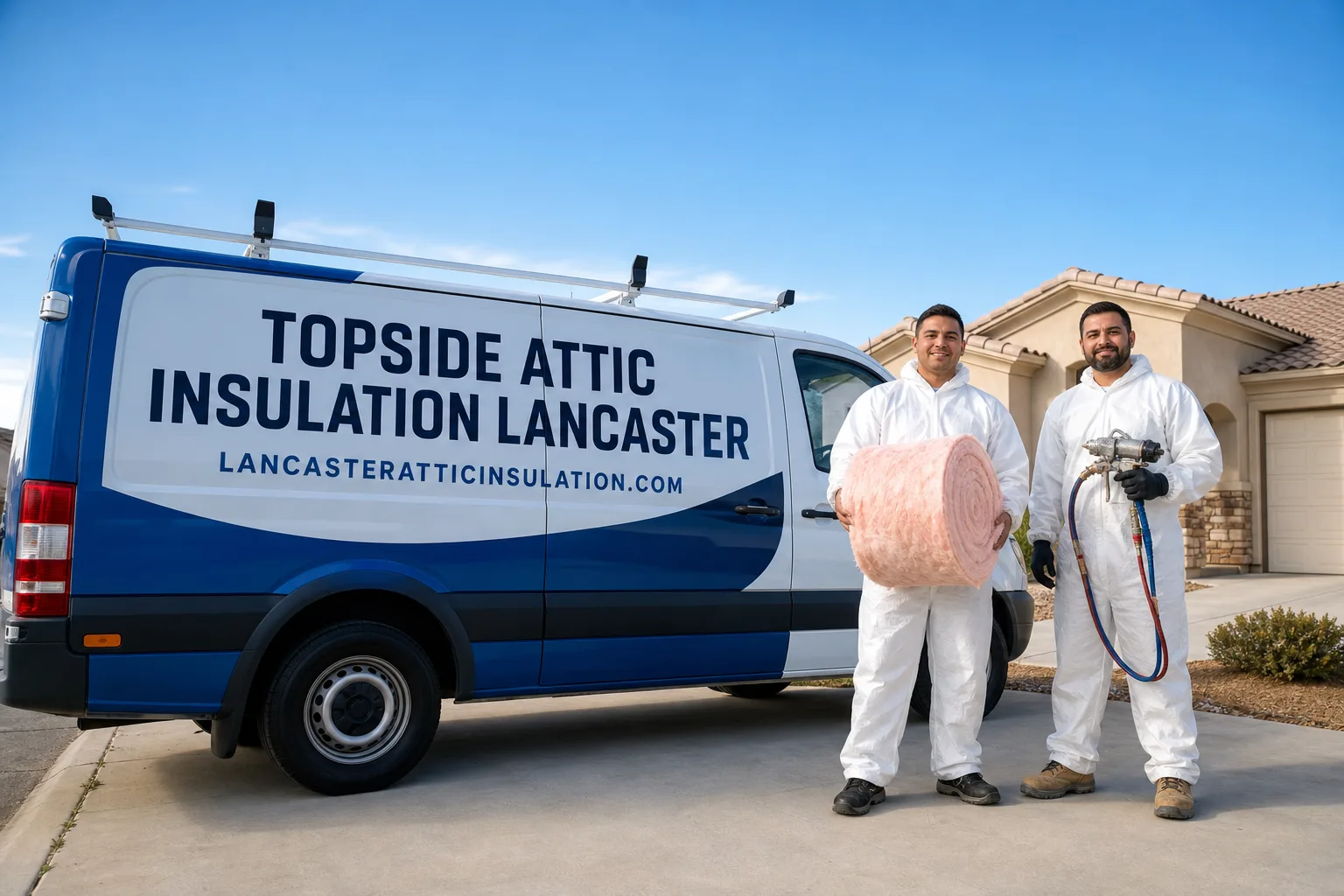
Fast, Reliable Blown-In Insulation Across Littlerock
Blown-in insulation in Littlerock typically runs $2.80-$4.50 per square foot for attic work and $4.50-$7.00 per square foot for dense-pack wall retrofits, with most ranch homes on the east side near the old apple orchard tracts falling in the $3,200-$5,800 range for a complete attic and wall package. We’re usually on-site within 24-48 hours of your call, and dispatch is coordinated from our Los Angeles office with crews who serve Littlerock directly. Call (661) 526-2890 for a written price before any work starts.
Littlerock’s not like Palmdale or Santa Clarita. The homes here - 1940s-60s ranch houses and manufactured homes built for a dry-farming economy - were constructed with minimal or no insulation, and the 130°F+ seasonal swing between summer attic heat and winter freeze cycles destroys the few batts that were installed. We’ve worked enough of these houses to know that a standard coastal LA spec fails here. The fiber type, the installed density, and the air-sealing sequence all change for this elevation and this housing stock.
Why Topside Attic Insulation Lancaster Is Littlerock’s Preferred Blown-In Insulation Company
We’ve sealed and insulated over 9,000 homes since 2016, and a growing share of them are in the Antelope Valley. Littlerock customers find us through referrals from Palmdale and Lancaster jobs, or after reading our three-star reviews alongside our five-star ones and seeing that we respond to the specifics. Our crew knows the difference between a 1952 ranch on the orchard tract and a 1980s manufactured home off the main roads - the construction era changes what we find in the walls and how we treat it.
Response time to Littlerock is typically next-day or the day after. We’re not guessing at drive time from Lancaster; we schedule Antelope Valley routes specifically. When you call (661) 526-2890, a live person answers, 24/7. No callback windows. No voicemail loops.
What builds trust here is documentation. Every job gets a written price before anyone lifts a tool - Haven Standard Clause 1 - and closes with a Documented Photo Record. On applicable jobs, we publish before-and-after blower-door numbers so you can see the actual air-leakage reduction, not just a promise of “improved efficiency.”
Our Blown-In Insulation Services in Littlerock
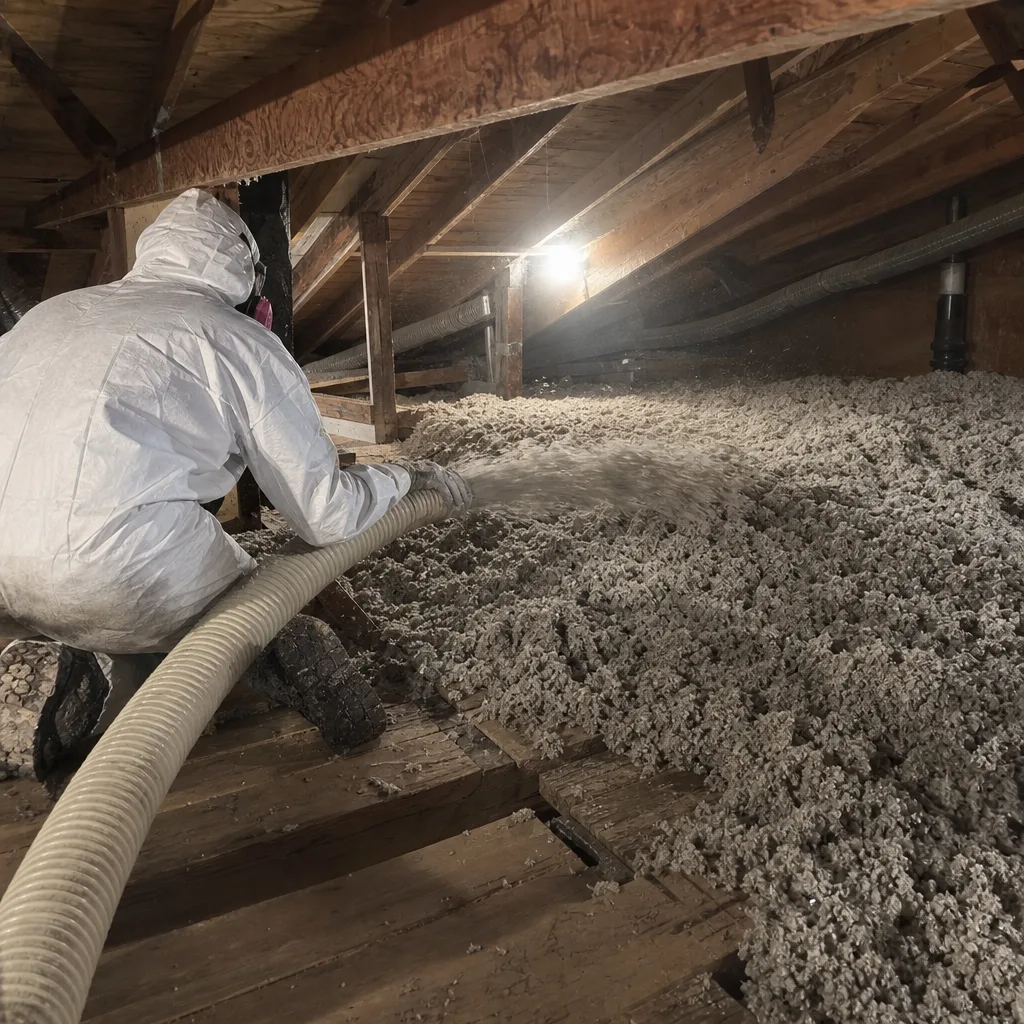
Blown-In Cellulose
We use GreenFiber cellulose for most Littlerock attic jobs because it handles the high-desert temperature swing better than fiberglass in walls and performs well in the dense-pack applications these homes need. Cellulose is treated with borate for fire and pest resistance, which matters in rural Antelope Valley where rodent pressure is real. For a typical 1,200-square-foot ranch attic in Littlerock, blown-in cellulose runs $2.80-$3.80 per square foot installed, including air sealing of top plates and penetrations.
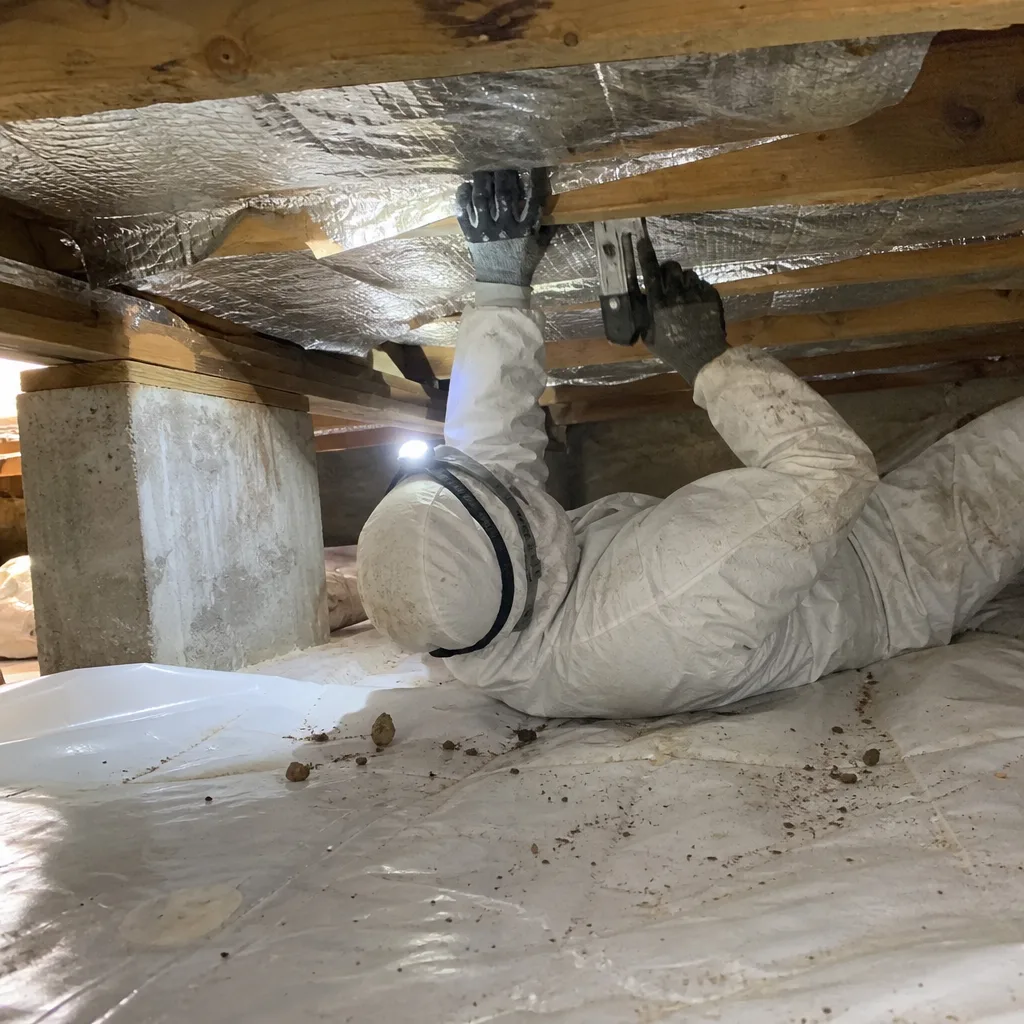
Blown-In Fiberglass
We spec blown-in fiberglass from Johns Manville or Knauf for attic top-ups where the existing insulation is salvageable and the customer wants the lowest dust option. In Littlerock, we often pair this with a radiant barrier because the 150°F July attic load overwhelms fiber alone. Fiberglass doesn’t degrade as fast as compressed rock-wool in this heat, but it won’t perform without air sealing first. Our Blown-In Insulation team never blows over an unsealed attic floor.
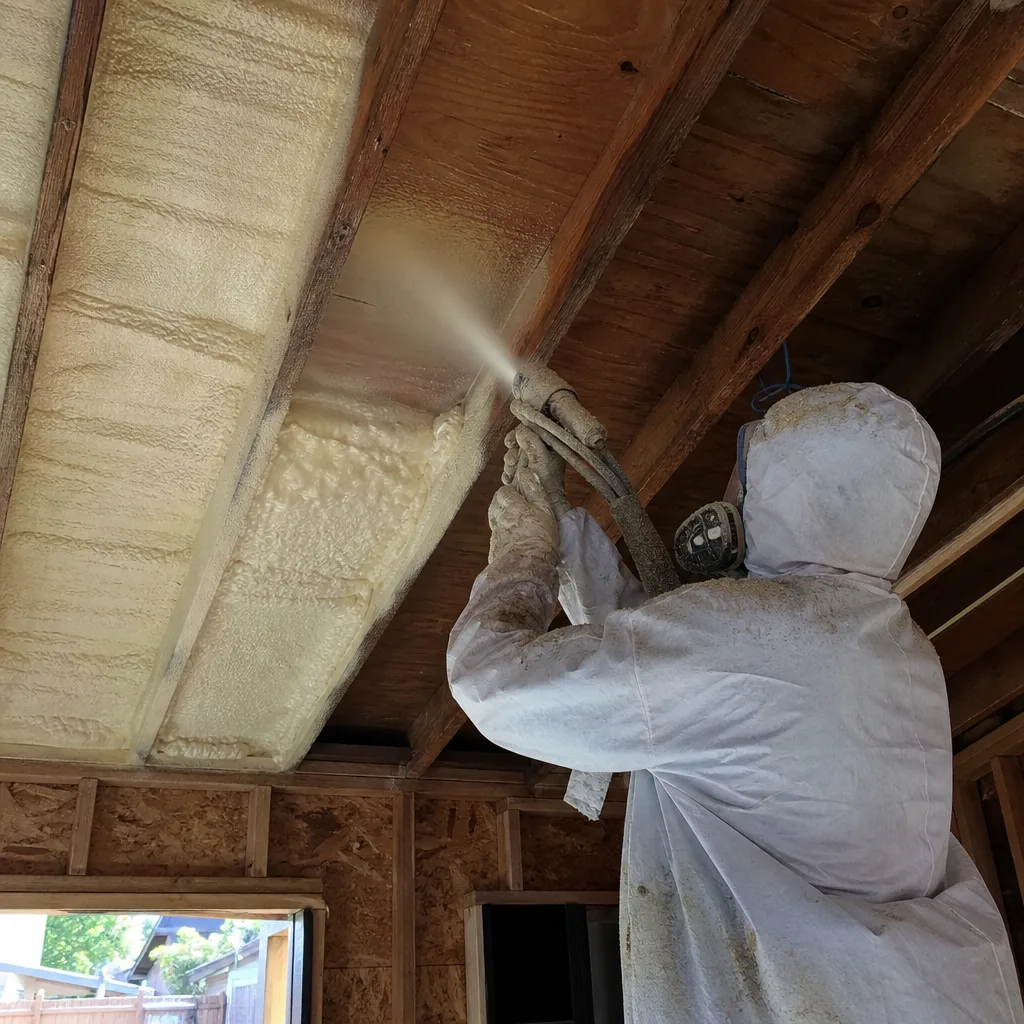
Dense-Pack Wall Insulation
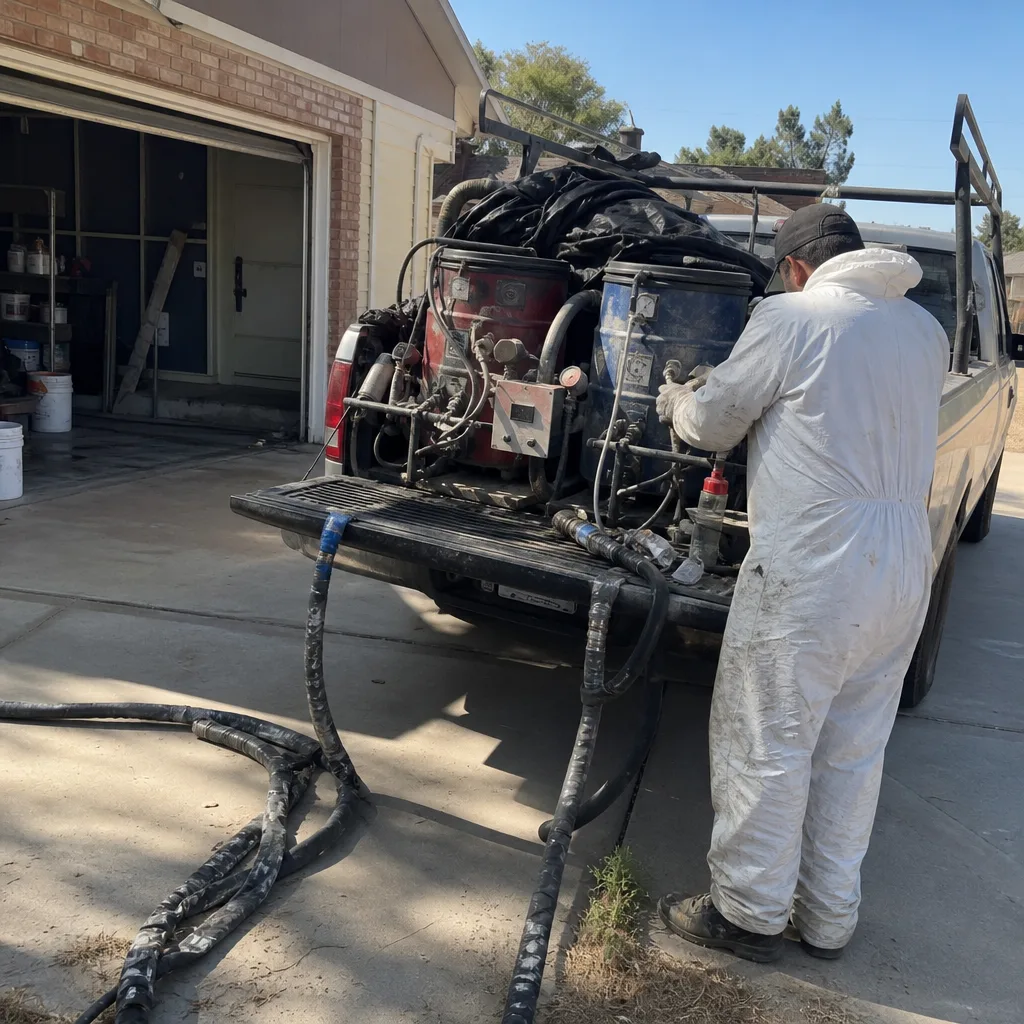
This is the service that separates Littlerock jobs from standard attic work. The 1940s-60s ranch homes and many manufactured homes here have empty wall cavities or original rock-wool batts that have collapsed and shed. Dense-packing - blowing cellulose at 3.0-3.5 pounds per cubic foot into closed cavities - fills those voids completely and slows the air infiltration that Antelope Valley wind drives through older framing. It’s $4.50-$7.00 per square foot of wall area, and it’s the only way to address the freeze-cycle heat loss that blows past uninsulated top plates.
Blown-In Top-Up
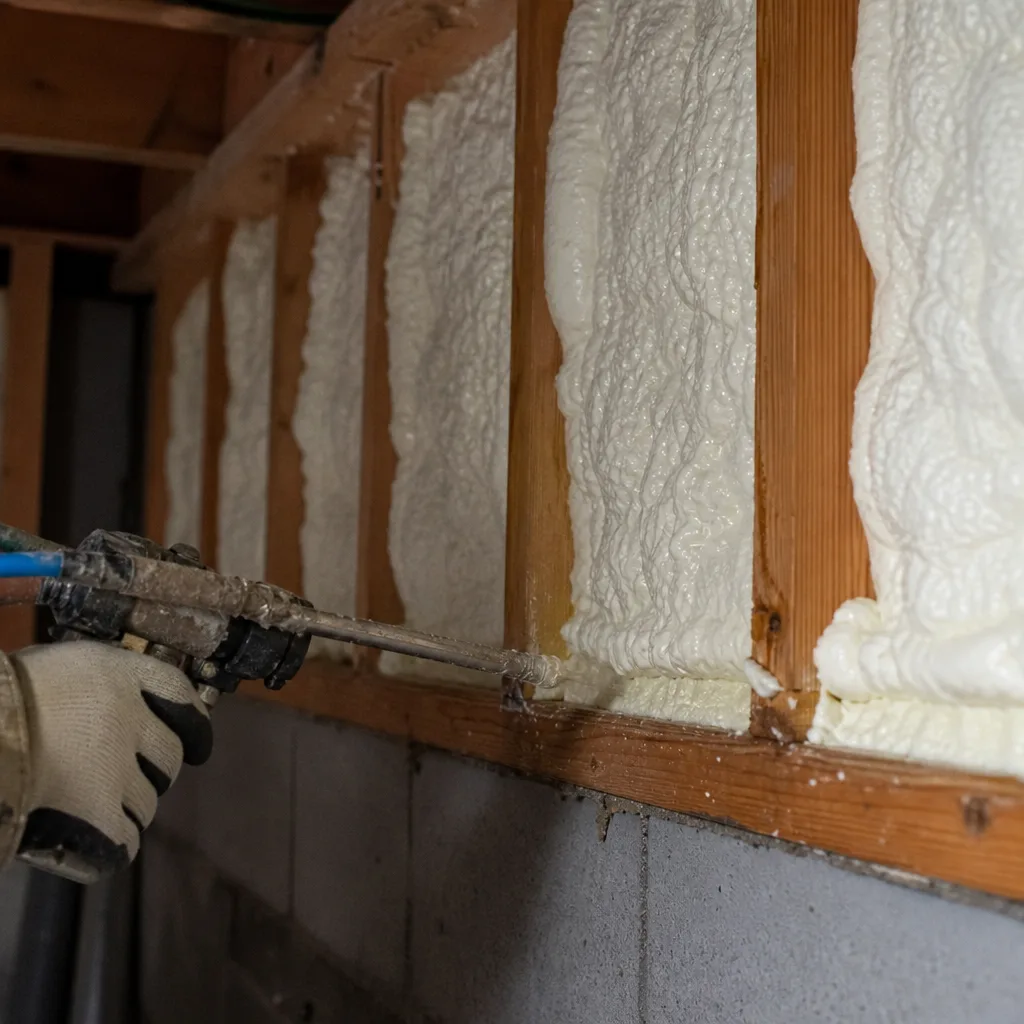
A top-up sounds simple. In Littlerock, it’s rarely simple. Original rock-wool batts in pre-Title 24 attics have compressed to half their labeled thickness or less. Blow new fiber over that and you leave thermal bridging at every joist. We remove or redistribute the degraded material, seal the attic floor, then install the top-up at the correct depth - typically R-38 to R-49 for this climate zone. The double-layer system that survives here is blown at lower installed density over a radiant barrier, not the coastal spec.
What happens when you call
- 1
A real person answersNo phone trees - you reach a local pro.
- 2
You get an upfront price rangeHonest numbers before anyone is dispatched.
- 3
A background-checked tech heads outLicensed & insured, dispatched right away.
- 4
You approve before work beginsNothing starts until you say go.
Trusted Brands We Service in Littlerock
We source materials from Johns Manville, Knauf, and Rockwool, among others - no proprietary lock-in, so we match the fiber to the house. For Littlerock’s high-desert conditions, that often means GreenFiber cellulose for dense-pack wall work and Knauf blown-in fiberglass for attic top-ups paired with radiant barrier. We stock standard products locally for fast turnaround on scheduled jobs, and we don’t push one brand because we have a volume deal. The Haven Standard requires us to spec what performs, not what moves inventory.
Common Blown-In Insulation Problems We See in Littlerock Homes
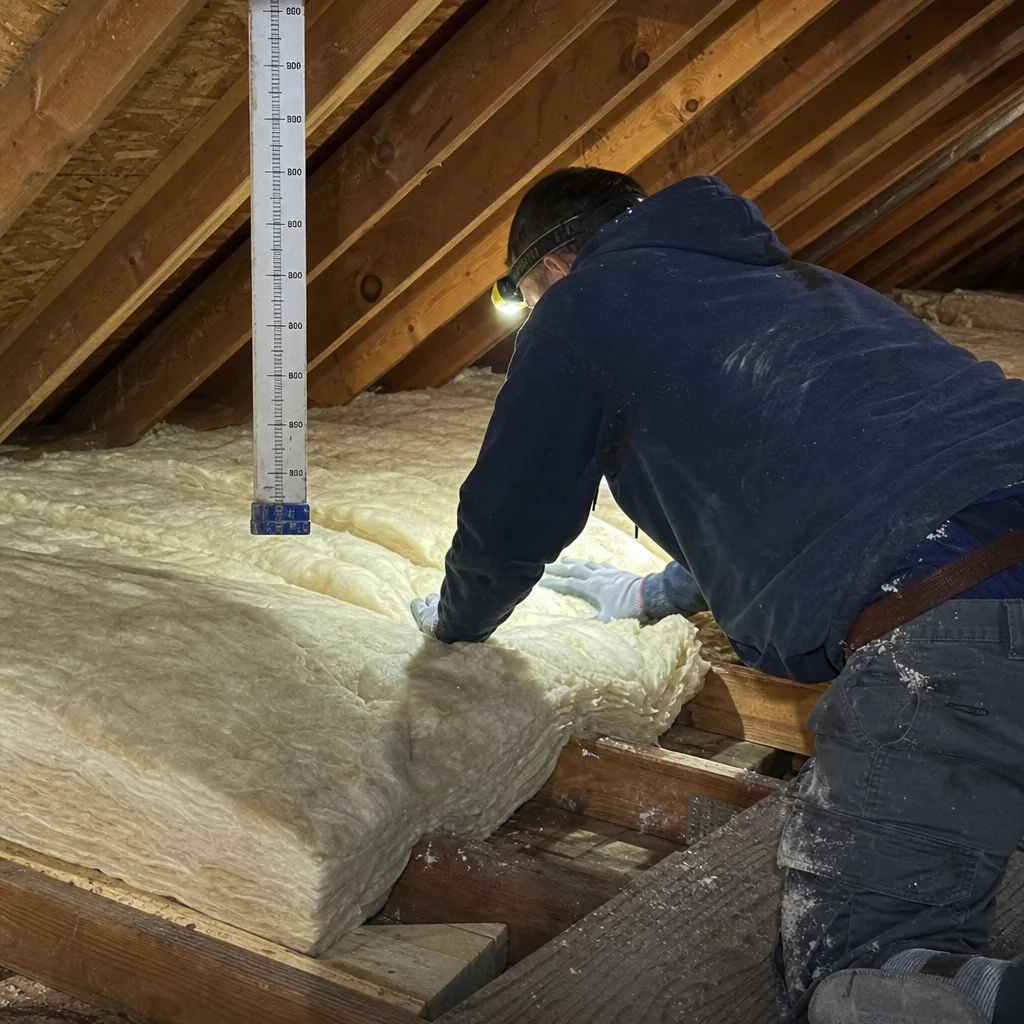
- Compressed rock-wool batts leaving thermal bridges. Original insulation in 1950s ranch homes near the apple orchard tracts has collapsed to 2-3 inches. A top-up over that junk leaves the joists exposed and the R-value on the label is fiction.
- Air infiltration overwhelming the insulation. Antelope Valley wind events drive unconditioned air through gaps in older ranch framing faster than loose-fill attic insulation can offset. Without sealing first, the blower-door number barely moves.
- Wrong cavity treatment in manufactured homes. Blowing loose fill into walls that need dense-pack, or missing unsealed belly boards and top plates, lets the 130°F seasonal swing pump right through. We’ve re-done jobs where coastal crews missed this.
- Frozen pipes in January despite “adequate” attic insulation. The freeze cycle here is real. Insulation that works in Santa Clarita doesn’t stop Littlerock’s 20°F nights when the wall cavities are empty and the foundation perimeter leaks.
Pricing for Blown-In Insulation in Littlerock, CA
| Service | Typical Range (Littlerock) | What Drives Cost |
|---|---|---|
| Attic blown-in cellulose or fiberglass (air seal + install) | $2.80-$4.50/sq ft | Attic accessibility, existing material removal, square footage |
| Dense-pack wall insulation (existing walls) | $4.50-$7.00/sq ft | Cavity depth, number of stories, interior or exterior access method |
| Blown-in top-up over sealed attic floor | $1.80-$2.80/sq ft | Depth needed, radiant barrier addition, debris removal |
| Complete attic + wall package (typical 1,200 sq ft ranch) | $3,200-$5,800 | Condition of existing insulation, extent of air sealing required |
| Manufactured home belly board and skirting insulation | $1,800-$3,400 | Access, vapor barrier condition, rodent damage repair |
Most Littlerock jobs fall in the middle of these ranges. A 1950s ranch with empty walls and a trashed attic runs higher. A 1980s manufactured home with partial insulation and good access runs lower. We give you a written price before any work starts - no exceptions - and a Free Second Opinion on any competing written estimate. Call (661) 526-2890.
We Also Serve Cities Near Littlerock
Our crews route regularly through Palmdale, Acton, Lancaster, and Santa Clarita from the same Antelope Valley dispatch. If you’re on the edge of Littlerock near the county line or in a outlying tract, we still cover it. Blown-In Insulation in Littlerock is our focus here, but the same crew and the same Haven Standard apply across the valley.
Serving Littlerock, CA - Our Local Coverage Area
We’re based in the Littlerock area and know this community well. Use the map below to see our service coverage - if you’re nearby, we can almost certainly help.
FAQs - Blown-In Insulation in Littlerock
Yes, and it’s often the most cost-effective improvement you can make. These homes were built for a dry-farming climate mindset with empty wall cavities and minimal attic insulation, so the thermal performance is essentially absent. We dense-pack the walls and blow attic insulation after air sealing, and the before-and-after blower-door numbers show the change in a single figure. Call (661) 526-2890 for a written price - estimates are free.
Wind drives infiltration through gaps in older framing, which makes unsealed insulation underperform - but the material itself isn’t the problem. We air-seal top plates, can lights, and all penetrations before blowing insulation, so the blower-door test shows actual improvement, not just added fiber. Skipping the sealing step is what wastes your money. Call (661) 526-2890 and we’ll show you the protocol.
Attic temperatures here exceed 150°F in July, and radiant heat transfer from the roof deck overwhelms conductive insulation alone. A radiant barrier reflects that heat back toward the roof deck, reducing the cooling load the blown-in fiber must handle. It’s the combination that works for this climate, not either one alone. We specify this on most Littlerock attic jobs and include it in the written scope.
Yes, where the wall cavities are accessible and structurally sound. Manufactured homes have specific challenges - belly boards, vapor barriers, and limited cavity depth - but we’ve done enough of them in the Antelope Valley to know which cavities take dense-pack and which need alternative treatment. We inspect before quoting, and the written scope specifies exactly what we’re doing where. Call (661) 526-2890 to schedule.
The 130°F+ seasonal swing degrades some materials faster than others and makes air sealing more critical than in milder climates. We favor cellulose for dense-pack wall work because it fills irregular cavities completely and handles the expansion-contraction cycle well, and we pair attic fiberglass with radiant barrier to address the summer extreme. The material choice is always in the written scope, with no proprietary lock-in. Call (661) 526-2890 for specifics on your house.
Written by Wes Okafor, Owner at Envelope Insulation Co., serving Littlerock under The Haven Standard since 2016.