
Demilec Radiant Barrier Installation: The Lancaster Owner’s Guide
Demilec radiant barrier installation in Lancaster typically runs $2,400-$4,800 for a complete attic application, depending on square footage and whether we’re retrofitting over existing insulation or starting fresh after air sealing. We stock Demilec-compatible radiant barrier rolls and keep them on the truck for same-day starts on most residential jobs in the Antelope Valley. Most Lancaster homeowners realize something’s off when their second-story bedrooms won’t cool below 78 degrees even after the AC runs all afternoon, or when they notice their ductwork sweating in a 140-degree attic come July.
Which Demilec Models This Applies To
Demilec doesn’t sell a standalone “radiant barrier” product line under that exact name. What Lancaster homeowners are usually referring to is Demilec’s Heatlok HFO or Heatlok XT spray foam systems, which are sometimes specified with a radiant barrier component as part of a hybrid attic assembly, or the Demilec open-cell and closed-cell foams installed in conjunction with a separate radiant barrier foil or paint. If you’re holding paperwork that says “Demilec” and your attic has a shiny foil layer or a reflective coating on the roof deck, you’re in the right place.
To identify what you’ve got, check the spray-foam surface for a Demilec lot number sticker, usually found on the rim joist or a scuttle frame. The lot format is a 10-digit code starting with HL for Heatlok products. The radiant barrier itself, if it’s foil, is typically either a perforated product (allows moisture passage, required in California attic code) or a solid product (traps moisture, common in botched installs we see in Quartz Hill and the older tracts near Avenue K). We don’t install solid radiant barriers in vented attics. They rot roof decks.
Topside Attic Insulation Lancaster is an independent service provider, not affiliated with Demilec. We source Demilec-compatible materials through our regular supply chain alongside Owens Corning, Johns Manville, and Reflectix. If your original installer used a proprietary Demilec spec, we can match it or explain why we’d deviate.
Signs Your Demilec Radiant Barrier Installation Is Failing
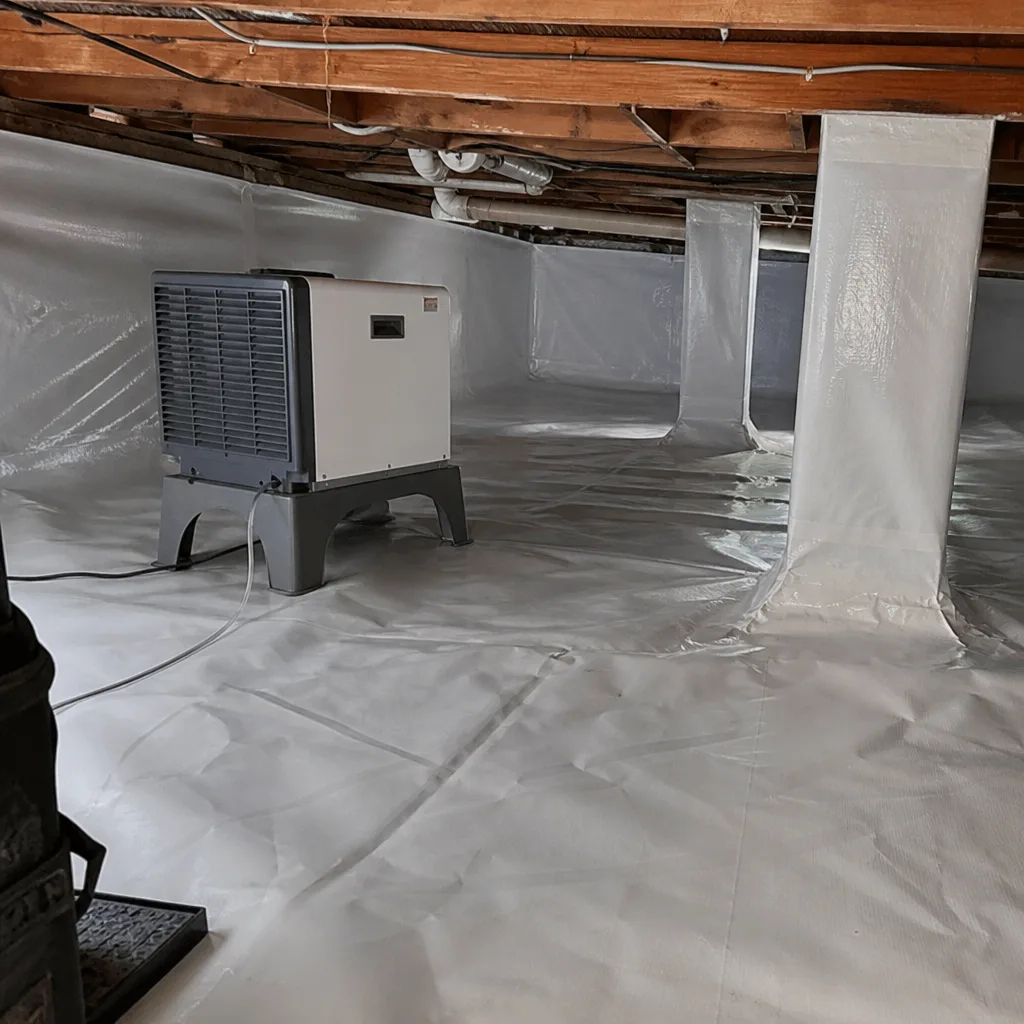
- Hot spots on the ceiling below the attic. Radiant barrier works by reflecting infrared heat; when it delaminates, oxidizes, or gets coated with dust, that reflectivity drops from 95% to 60% or lower. We see this most in Lancaster homes where the original installer skipped the air sealing and attic dust migrated upward through gaps in the top plates.
- AC runs constantly between 2 p.m. and 7 p.m. but catches up after dark. This pattern points to radiant heat gain overwhelming your barrier. The roof deck hits 160 degrees, the barrier isn’t reflecting it, and your ducts are soaking in a convection oven. In west Lancaster, where the afternoon sun pounds roof planes with no tree cover, this is almost diagnostic.
- Dusty or dull foil surface when you inspect the attic. A clean radiant barrier looks like a mirror. A failed one looks like gray construction paper. Dust accumulation is the silent killer, and it’s guaranteed if your attic ventilation is negative-pressure (more exhaust than intake), which pulls conditioned air and household dust through every ceiling penetration.
- Moisture staining on the roof deck or rafters. This means you have a solid (non-perforated) barrier or a vapor-impermeable assembly in a vented attic. California Title 24 allows radiant barriers in vented attics only if they’re perforated. We’ve replaced three of these in the last 18 months, all from the same 2019 tract near 50th Street West.
- Insulation compressed or displaced beneath the barrier. Some installers lay radiant barrier foil directly on top of loose-fill insulation, then walk on it during subsequent work. The foil tears, the insulation underneath compresses from R-38 to R-19 effective, and you’ve got two problems where there was one. We find this constantly in homes where the radiant barrier was a retrofit add-on.
Replacement Cost & What’s Included
Here’s how Demilec-compatible radiant barrier installation breaks down in the Lancaster market:
| Scope | Price Range |
|---|---|
| Attic radiant barrier retrofit, 1,200-1,800 sq ft, perforated foil over existing insulation (after air sealing) | $2,400-$3,400 |
| Attic radiant barrier retrofit, 1,800-2,500 sq ft, same spec | $3,200-$4,200 |
| Full assembly: air seal, radiant barrier, new blown-in insulation cap, blower-door verification | $4,800-$6,800 |
| Radiant barrier removal and replacement (failed solid barrier, moisture remediation included) | $3,600-$5,400 |
The range driver is access and what’s already there. A truss attic with a 30-inch scuttle and blown fiberglass takes longer than a rafter attic with a pull-down stair. If we have to remove a failed solid barrier and treat mold on the roof deck, that’s a different job than laying fresh perforated foil over a clean deck. Every price is written before work starts, under Haven Standard Clause 1. The 365-Day Done Right Promise covers the installation. Materials carry manufacturer warranty where applicable.
DIY or Call Us?
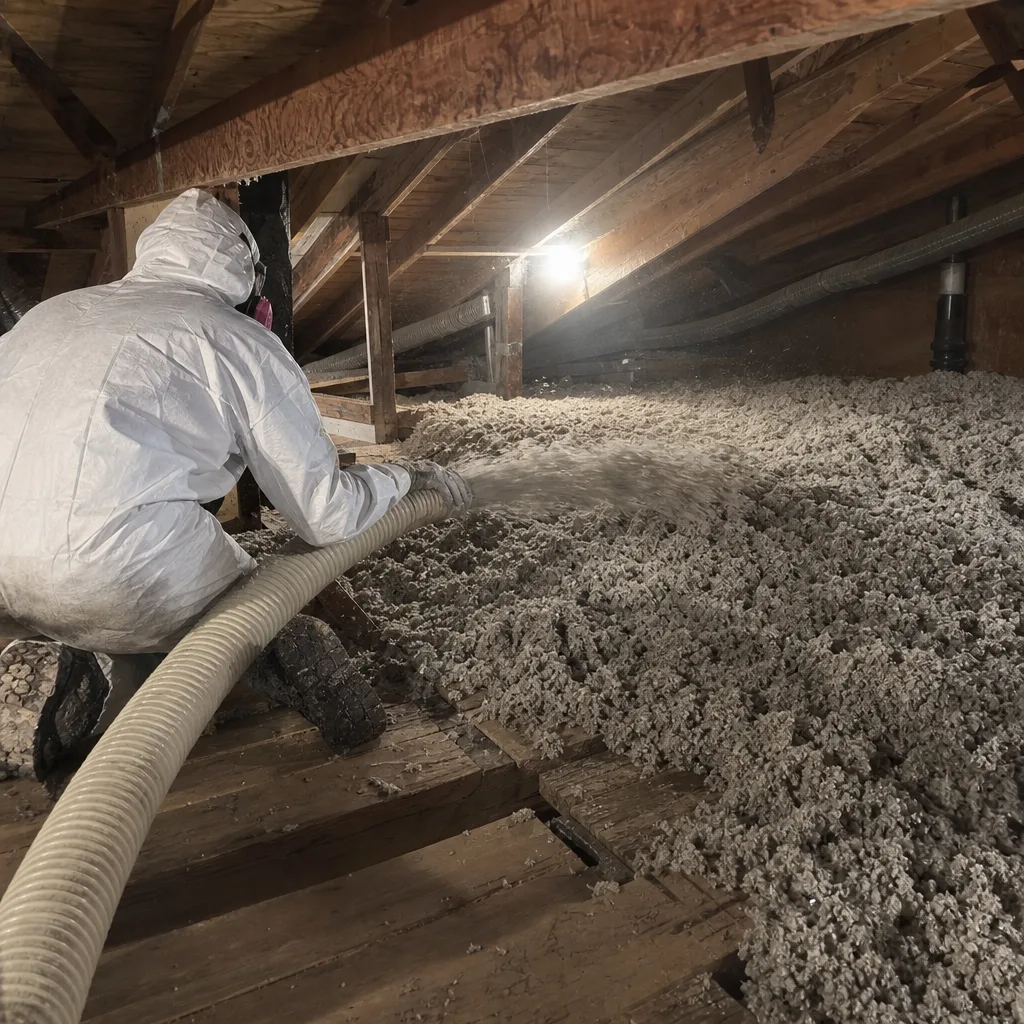
Here’s what you can safely check yourself: confirm whether your barrier is perforated (hold it up to light, look for tiny holes) and whether your attic ventilation is balanced (soffit vents clear, ridge vent unobstructed). You can also photograph the lot sticker and any discoloration for us to review.
Here’s where DIY goes wrong: radiant barrier in a vented attic is a moisture-management detail, not a sticker-and-go project. Install it wrong and you void your roof warranty, trap moisture, or create a fire hazard if it’s laid over recessed can lights without proper clearance. Lancaster’s 2022 fire code amendments tightened clearances around electrical penetrations. We measure those clearances with a thermal camera before we staple the first sheet.
Seal the gaps first. Then insulate. The R-value you paid for is only as good as the air barrier behind it. Call (661) 526-2890 and we’ll walk through what you’re seeing.
FAQs
A properly installed perforated radiant barrier lasts 15-25 years in the Antelope Valley, though dust accumulation can degrade performance after 8-10 years if the attic isn’t air-sealed first. Lancaster’s Santa Ana wind events pull fine desert dust through every gap, which is why we always lead with sealing. Call (661) 526-2890 for an exact assessment of your attic’s condition.
Small tears in foil can be taped with aluminum tape, but performance never fully recovers because the original install was likely a continuous plane. Once dust has bonded to the surface or moisture has degraded the substrate, replacement is the only fix that restores the advertised reflectivity. We don’t patch radiant barriers, we replace them, and we document the before-and-after with photos and blower-door numbers so you can verify the improvement.
Most residential radiant barrier retrofits in Lancaster take one day for a crew of two, assuming standard attic access and no remediation work. Jobs requiring solid barrier removal, mold treatment, or extensive air sealing of top plates and can lights run two days. We give you a written schedule with the price, not a guess.
Yes. We keep perforated radiant barrier rolls, aluminum tape, and compatible fasteners on the truck for Lancaster-area jobs, along with our full air-sealing kit. If your original assembly used a Demilec-specific foam-and-barrier combination, we verify compatibility against your lot number before ordering, which typically adds one business day. For standard perforated foil retrofits, we’re usually able to start same-week.
Ready to get your attic performance back? Call (661) 526-2890 for a free estimate. We’ll bring a written price, a camera, and a blower door. Wes Okafor and our team at Topside Attic Insulation Lancaster have been sealing and insulating homes across the Antelope Valley since 2016, and we publish the numbers to prove it.
Written by Wes Okafor, Owner & Lead Insulation Technician, Topside Attic Insulation Lancaster at Topside Attic Insulation Lancaster, serving Lancaster and nearby areas.