
Icynene Blown-In Insulation in Lancaster: What to Know First
We provide independent Icynene blown-in insulation service in Lancaster, typically completing attic and wall jobs in one day with a written price delivered before any work starts. Most Icynene systems we encounter in the Antelope Valley are open-cell formulations originally installed between 2008 and 2018, and they present specific degradation patterns that differ from closed-cell or fiberglass systems. Call (661) 526-2890 for a free estimate with upfront pricing, or text us if that’s easier. This page is for homeowners who know they have Icynene insulation and need to understand whether it can be repaired, supplemented, or fully replaced with blown-in material.
How Icynene Products Fail - and How We Fix Them
- Icynene MD-C-200 shrinkage at top plates. This open-cell formulation, common in Lancaster tract homes built during the 2010-2015 boom, shrinks 2-5% as it ages, pulling away from framing members at the attic perimeter. We find gaps at top plates in roughly 60% of MD-C-200 jobs we assess in neighborhoods west of the BLVD. Our fix: remove compromised sections, seal the gap with closed-cell foam at the critical junction, then blow in cellulose or fiberglass to restore the thermal barrier and prevent convection loops.
- Icynene LD-C-50 dusting and surface oxidation. The lighter density of this series makes it susceptible to UV and heat degradation when attic ventilation is marginal, which is frequent in Lancaster’s 110°F summer peaks. The surface develops a powdery oxidation layer that reduces R-value and circulates particulates through HVAC returns. We vacuum the degraded material, seal all penetrations, then dense-pack the cavity with blown-in cellulose treated with borate for fire and pest resistance.
- Icynene Classic Max moisture retention in south-facing roof assemblies. This formulation’s high vapor permeability becomes a liability when roof decking temperatures spike above 160°F on Lancaster’s south exposures, trapping condensation against sheathing during winter temperature swings. We see this pattern repeatedly in the older homes near Avenue K. Our approach: remove the saturated Icynene, install a vented baffle to create an air gap, then blow in fiberglass which handles intermittent moisture cycling without mold risk.
- Icynene Waterblown (WB) formulation off-gassing and odor recurrence. The early waterblown series installed in 2008-2012 can emit a faint ammonia-like odor when attic temperatures exceed 140°F, which happens 40-50 days per year in Lancaster. Homeowners often mistake this for rodent activity. We verify the source with a moisture meter and thermal camera, then extract the WB material and replace it with blown-in fiberglass, which has no off-gassing profile and performs predictably at temperature extremes.
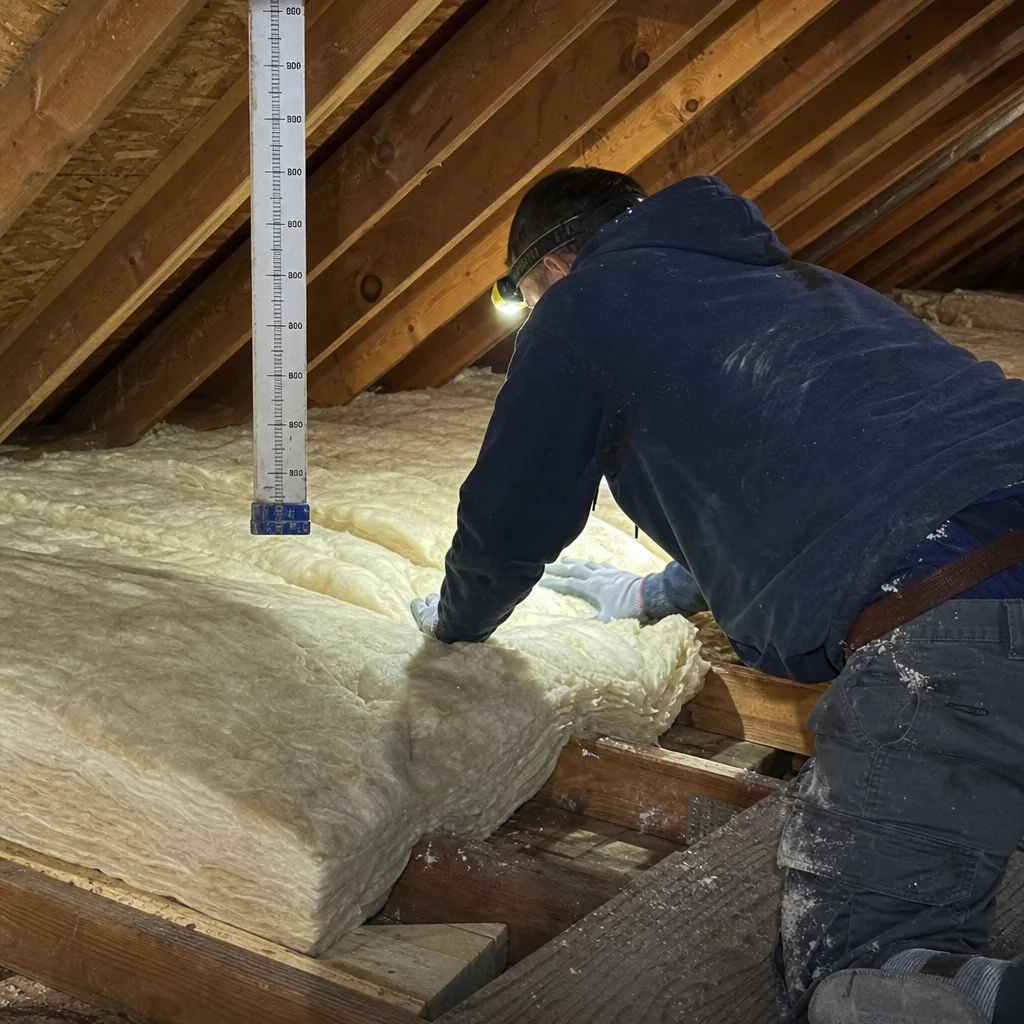
- Icynene Touch ‘n Seal (DIY variant) inadequate coverage and compression. This two-component kit product was sold at hardware stores and applied by homeowners or handymen with inconsistent depth and density. We find compressed pockets with effective R-values half the labeled rating, particularly around recessed can lights and duct boots. We remove the uneven material, complete proper air sealing of all electrical and mechanical penetrations, then blow in new insulation to a uniform depth with marked ruler strips visible for future verification.
Our Icynene Blown-In Insulation Process
- 1
Scheduled assessment with thermal imaging. Wes Okafor or a lead technician arrives with a FLIR camera and blower-door rig. We pressurize the house to 50 Pascals, record the CFM50 reading, and map thermal bypasses with the camera.
- 2
Written scope and price before any work. Under Haven Standard Clause 1, you receive a flat price, written scope, and written warranty before anyone lifts a tool. No exceptions.
- 3
Air sealing first, then insulation. Seal the gaps first. Then insulate. The R-value you paid for is only as good as the air barrier behind it. We seal top plates, can lights, chimney chases, and all penetrations with appropriate foam or gasket material.
- 4
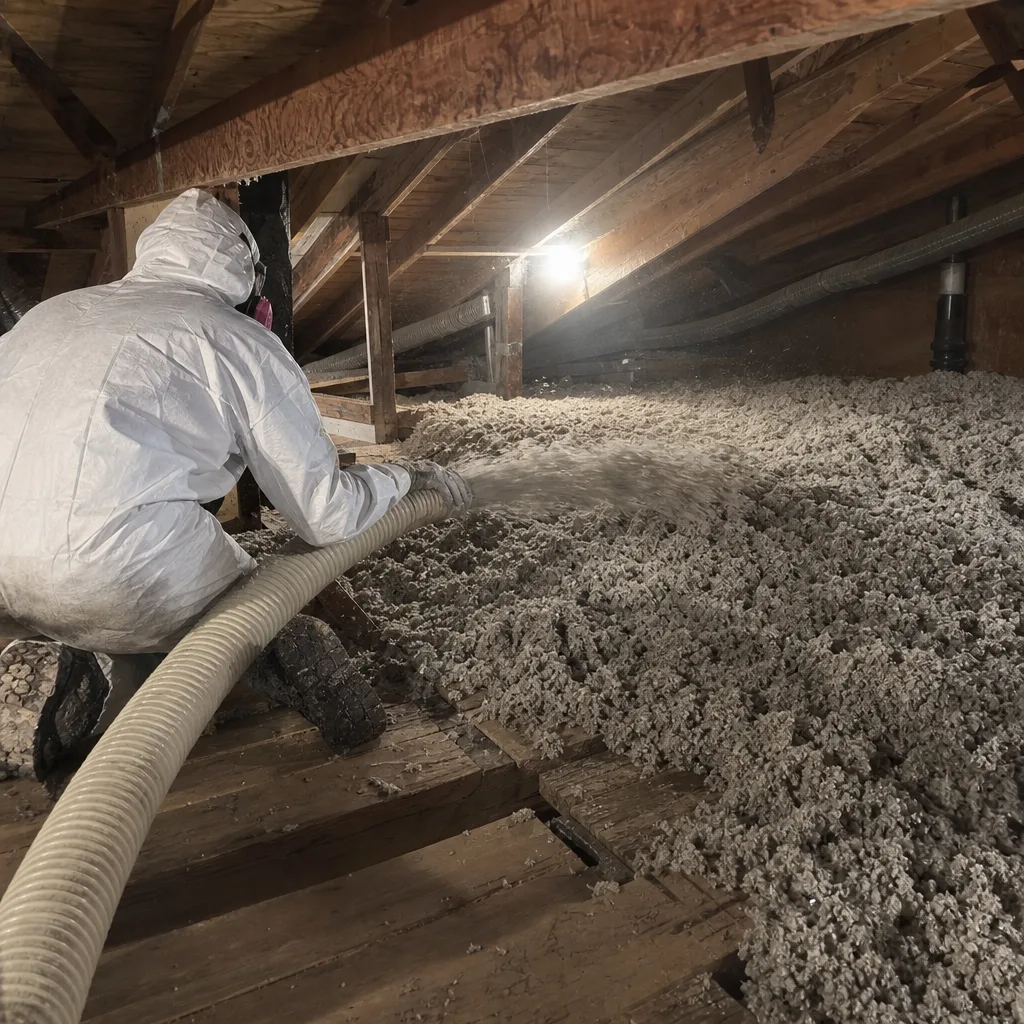
Material selection and installation. For Icynene replacement or supplement jobs, we typically specify Owens Corning AttiCat fiberglass or GreenFiber cellulose, depending on your attic’s moisture history and whether you need rodent resistance. We never install over unsealed surfaces.
- 5
Blower-door verification and documentation. We run the pressurization test again and publish the before-and-after numbers on your invoice. You also receive a Documented Photo Record of the completed work and a thermal summary showing the critical junctions.
- 6
365-Day Done Right Promise activation. Your written warranty takes effect immediately. If anything settles, shifts, or underperforms within a year, we return and make it right.
What Icynene Blown-In Insulation Costs in Lancaster
Most Icynene replacement or supplement jobs in a Lancaster home between 1,400 and 2,200 square feet run between $2,800 and $5,400, depending on what we find when we open the attic.
| Scenario | Typical Range |
|---|---|
| Icynene top-up over intact existing (air seal + blown-in) | $1,800 - $3,200 |
| Partial Icynene removal, seal, and blown-in replacement | $3,200 - $5,000 |
| Full Icynene extraction, complete air seal, new blown-in | $4,800 - $7,500 |
| Dense-pack wall cavity (per 1,000 sq ft of wall) | $2,400 - $3,800 |
What moves the price: accessibility of the attic (scuttle vs. pull-down stairs), presence of HVAC equipment that must be protected, extent of Icynene degradation, and whether we discover unsealed ductwork that needs addressing. We also service Reflectix radiant barrier systems when they’re part of the same assembly. Every estimate is free, and we offer a Free Second Opinion on any written estimate you’ve already received. Call (661) 526-2890 for your exact number.
Why Lancaster Homeowners Call Topside Attic Insulation Lancaster for Icynene Work
We’ve sealed and insulated over 9,000 homes since 2016, and the Icynene jobs we take in Lancaster follow the same protocol as every other: written price first, air sealing before insulation, documented results at the end. Our technicians are background-checked and uniformed, and when you call (661) 526-2890, a live person answers - no voicemail loops, no callback windows measured in business days. We carry Owens Corning, Johns Manville, Knauf, Rockwool, CertainTeed, Icynene, Demilec, and GreenFiber materials, so we’re not locked into a single product line that may not suit your specific failure mode. The 365-Day Done Right Promise applies to every completed job, backed by the written scope and warranty you receive before work begins.
FAQs
The original Icynene warranty was between you and your installer or Icynene directly; as an independent Icynene service provider, we don’t represent the manufacturer, and most original warranties have already expired or were tied to the original installation company. Our 365-Day Done Right Promise covers the work we perform with our own written warranty. Bring us your original paperwork and we’ll read it with you.
Yes, and in most Lancaster attics we exceed it. Open-cell Icynene achieves roughly R-3.7 per inch; we typically blow cellulose to R-38 to R-49 (12-15 inches) or fiberglass to equivalent depth, which outperforms the original Icynene layer once proper air sealing is completed. The blower-door numbers confirm it.
Most Icynene jobs in Lancaster are scheduled within 3-5 business days of estimate approval. Emergency situations, significant heat loss, or active moisture intrusion move to the front of the queue. Call (661) 526-2890 to confirm current availability.
Repair is rarely practical with Icynene. The material bonds to substrates and can’t be patched cleanly; partial removal usually damages surrounding areas, and the cost approaches full replacement without delivering a complete air barrier. We recommend removal and proper blown-in replacement in nearly all cases we assess. The exact price difference for your home is in the free estimate.
You get a written invoice with the before-and-after blower-door CFM50 readings, a Documented Photo Record of the completed work, your written warranty under the 365-Day Done Right Promise, and an attic access summary noting depths and locations. Wes Okafor initiated this documentation practice after years of finding homeowners had no record of prior work when he assessed their attics.
Written by Wes Okafor, Owner & Lead Insulation Technician, Topside Attic Insulation Lancaster at Topside Attic Insulation Lancaster, serving Lancaster and nearby areas.