
Icynene Vapor Barrier Installation: The Lancaster Owner’s Guide
We stock and install Icynene-compatible vapor barrier systems for Lancaster homes, with most attic and crawl space installations running between $1,800 and $3,400 depending on square footage and existing moisture damage. Same-day installation is available when we have your measurements and access type confirmed by 10 a.m. Most Lancaster homeowners discover their vapor barrier has failed when they notice musty odors returning after a rain, find condensation pooling on the barrier surface, or spot mold spotting on stored items in a previously dry crawl space or attic.
Which Icynene Models This Applies To
Icynene’s vapor barrier systems are not tied to a single spray foam model line; rather, they are specified by application type and mil thickness based on what was originally installed. The two most common in Lancaster retrofits are the 6-mil polyethylene sheet barrier used in crawl space encapsulations paired with Icynene Classic Max or Icynene ProSeal, and the 10-mil reinforced barrier used in full encapsulations where Icynene MD-R-200 or Icynene H2Foam Lite was applied to the rim joist. To identify what you have, look for the stamped mil rating on the barrier edge, usually visible at seams or access points, and check whether the barrier is taped to the foam or mechanically fastened with termination bars.
The OEM Icynene specification calls for cross-laminated polyethylene with a perm rating below 0.1, but we regularly install StegoCrawl or Tu-Tuf equivalents that meet the same ASTM E1745 Class A standard at lower material cost. One compatibility gotcha in Lancaster’s 2015-2022 build era: some tract homes in the neighborhoods west of the BLVD used a 4-mil builder-grade barrier that fails faster under our high desert UV exposure when attic access hatches are left open. We do not recommend matching that downgrade. We carry 6-mil and 10-mil stock on every truck, plus the butyl tape and termination bars that Icynene systems require for a sealed seam.
Signs Your Icynene Vapor Barrier Installation Is Failing
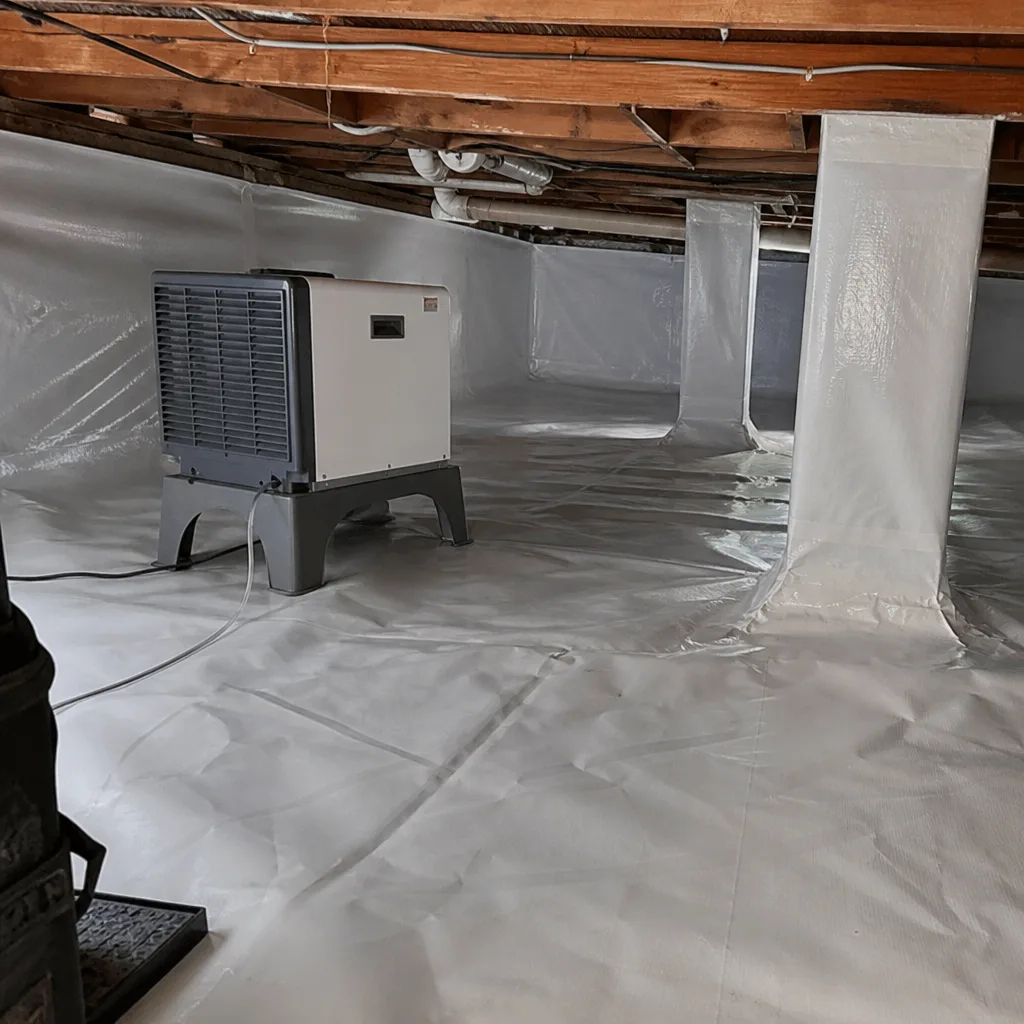
- Condensation beads on the barrier surface. This means warm, moist interior air is contacting the cool barrier face, usually because the seal to the Icynene foam has separated at the rim joist or a seam has opened. The barrier is now a cold plane, not a vapor stop.
- Musty smell returning after rain or irrigation. In Lancaster’s hard-packed soil, water wicks through foundation vents or stem wall cracks and pools on bare earth beneath a torn or displaced barrier. The Icynene foam above it stays dry, but the space below becomes a humidity reservoir.
- Mold spotting on stored items or floor joists. When the barrier’s perm rating effectively rises above 1.0 due to punctures or seam failure, moisture vapor drives through at rates the original design did not anticipate. We see this most often where homeowners have walked on the barrier repeatedly without a protective overlay.
- Barrier pulling away from walls or piling in the center. This is installation failure, not material failure: the termination bar was fastened to unprepared concrete, or the barrier was not cut to relieve tension around piers and columns. Icynene’s specified mechanical fastening every 12 inches was skipped or skimped.
- Increased energy bills with no other explanation. A compromised vapor barrier forces your HVAC to work harder dehumidifying air that should have stayed dry. In Lancaster’s summer, where attic temperatures hit 130 degrees, that load adds up fast. We regularly see blower-door readings shift by 200-400 CFM50 when encapsulation integrity is restored.
Replacement Cost & What’s Included
Most Icynene vapor barrier replacements in Lancaster run $1,800 to $3,400 for crawl spaces under 1,500 square feet, and $2,200 to $4,100 for full attic encapsulations with complex access. The range is driven by three factors: whether we need to remove and dispose of the failed barrier, the condition of the substrate (mold remediation adds $400-$800), and whether the original Icynene foam interface needs re-taping or re-foaming to restore the air seal.
Every installation includes the barrier material, butyl seam tape, termination bars with concrete anchors, and a protective mat pathway where storage access is needed. We also run a post-install blower-door test on applicable jobs so you have a pressurization reading that shows, in one number, how much air your building envelope is losing before and after the work. Under Haven Standard Clause 1, you get a written price before any work starts, a written scope, and a written warranty. Our 365-Day Done Right Promise covers all completed work. Call (661) 526-2890 for an exact quote on your space, estimates are free.
DIY or Call Us?
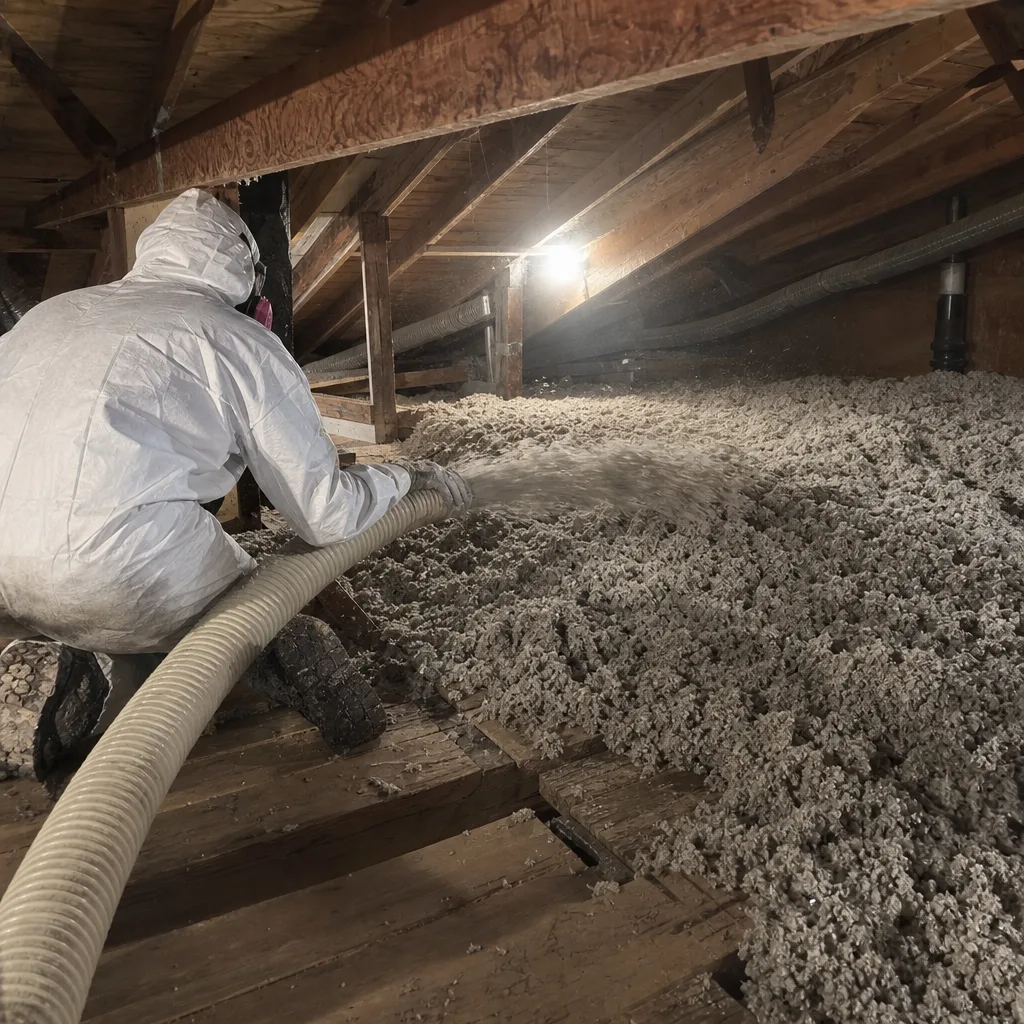
What you can safely check: verify the mil rating stamped on your existing barrier, photograph any seam separation or punctures from a standing position, and confirm whether your access hatch or vent is sealing properly. These observations help us size the job before we arrive.
Where DIY goes wrong: vapor barrier installation is not technically complex, but it is physically punishing and detail-critical in Lancaster’s conditions. The 130-degree attic in July, the tight crawl space with hard-packed soil, the need to maintain a continuous seal around every pier and penetration, these are where homeowner installations fail within a season. More importantly, if your Icynene foam interface is compromised, re-sealing it requires compatible materials and technique; mismatched tape or caulk will off-gas or delaminate. We carry the correct butyl and closed-cell interface products on every truck. For a documented, warrantied installation with before-and-after blower-door numbers, call (661) 526-2890.
FAQs
A properly installed 6-mil or 10-mil cross-laminated barrier should last 15 to 20 years in Lancaster’s dry climate, though UV exposure from unsealed attic hatches can degrade exposed edges in 5 to 7 years. The key failure mode we see is mechanical damage from foot traffic or rodent activity, not material breakdown. Call (661) 526-2890 if you want us to assess current condition, estimates are free.
Small punctures under 2 inches can be patched with compatible butyl tape if the surrounding material is still supple and the substrate is dry; anything larger, or any seam failure, indicates the installation tension was wrong and will recur. We do not patch over moldy or contaminated substrate, the source problem has to be addressed first. Call (661) 526-2890 and we will tell you honestly whether a patch makes sense.
Most crawl space vapor barrier replacements take 4 to 6 hours for a crew of two; full attic encapsulations with complex access or remediation needs can run a full day. We schedule a hard arrival window, not a callback day, and you get a text when the crew is en route. Under Haven Standard: Arrive on schedule, you get a named technician.
Yes, we carry 6-mil and 10-mil cross-laminated polyethylene, StegoCrawl and Tu-Tuf equivalents, plus all fastening and sealing materials. For same-day installation, we need your approximate square footage, access type, and confirmation that the space is cleared for entry. Call (661) 526-2890 by 10 a.m. and we will confirm truck stock and schedule.
Seal the gaps first. Then insulate. The R-value you paid for is only as good as the air barrier behind it. That’s the approach Wes Okafor built into every job since starting Topside Attic Insulation Lancaster, and it’s why we won’t blow insulation over an unsealed attic floor or install vapor barrier over wet substrate.
Topside Attic Insulation Lancaster is an independent service provider; we are not affiliated with Icynene or Demilec. We source materials from multiple manufacturers including Icynene, Owens Corning, Johns Manville, Knauf, Rockwool, CertainTeed, Demilec, and GreenFiber so we can match the right product to your existing system without proprietary lock-in.
Written by Wes Okafor, Owner & Lead Insulation Technician, Topside Attic Insulation Lancaster at Topside Attic Insulation Lancaster, serving Lancaster and nearby areas.