
Johns Manville Attic Air Sealing: The Lancaster Owner’s Guide
We stock and install Johns Manville-compatible attic air sealing components for Lancaster homes, with most completed jobs running between $1,800 and $3,400 depending on attic square footage and penetration count. Same-day service is available when we have your sealant type and backing material on the truck. Most Lancaster homeowners discover their Johns Manville air sealing has failed when they notice hot attic air pushing through recessed can lights in July, or when their new insulation isn’t delivering the temperature drop the R-value promised.
Which Johns Manville Models This Applies To
Johns Manville doesn’t sell attic air sealing as a discrete “system” with model numbers like a water heater. Instead, the compatibility question centers on which JM building-envelope products are already in your attic and what sealant chemistry bonds to them without degrading over time.
We regularly encounter three JM product families in Lancaster attics: Climate Pro blown-in fiberglass (the formaldehyde-free loose-fill common in 2018-2023 builds), Spider custom spray-applied fiberglass (used in production homes around Quartz Hill and the western AV), and Formaldehyde-free™ batt insulation in older retrofits. Each requires a different air-sealing approach. Climate Pro’s binder can off-gas slightly for 30 days; we use low-VOC acrylic sealants that won’t react with residual chemistry. Spider’s sprayed surface is rougher than batts, so we spec a thicker mastic application at top plates and use fiberglass mesh tape at sheathing joints. The batt product, being denser and older, often hides settled gaps at electrical penetrations that only show up under blower-door pressure.
Identification is straightforward: check the paper facing or bag remnants in your attic for the JM logo and product name. If you’re seeing bare pink or white fiberglass with no labeling, bring us a photo or call (661) 526-2890. We’ll match the sealant to the substrate. Topside Attic Insulation Lancaster is an independent service provider, not affiliated with Johns Manville.
Signs Your Johns Manville Attic Air Sealing Is Failing
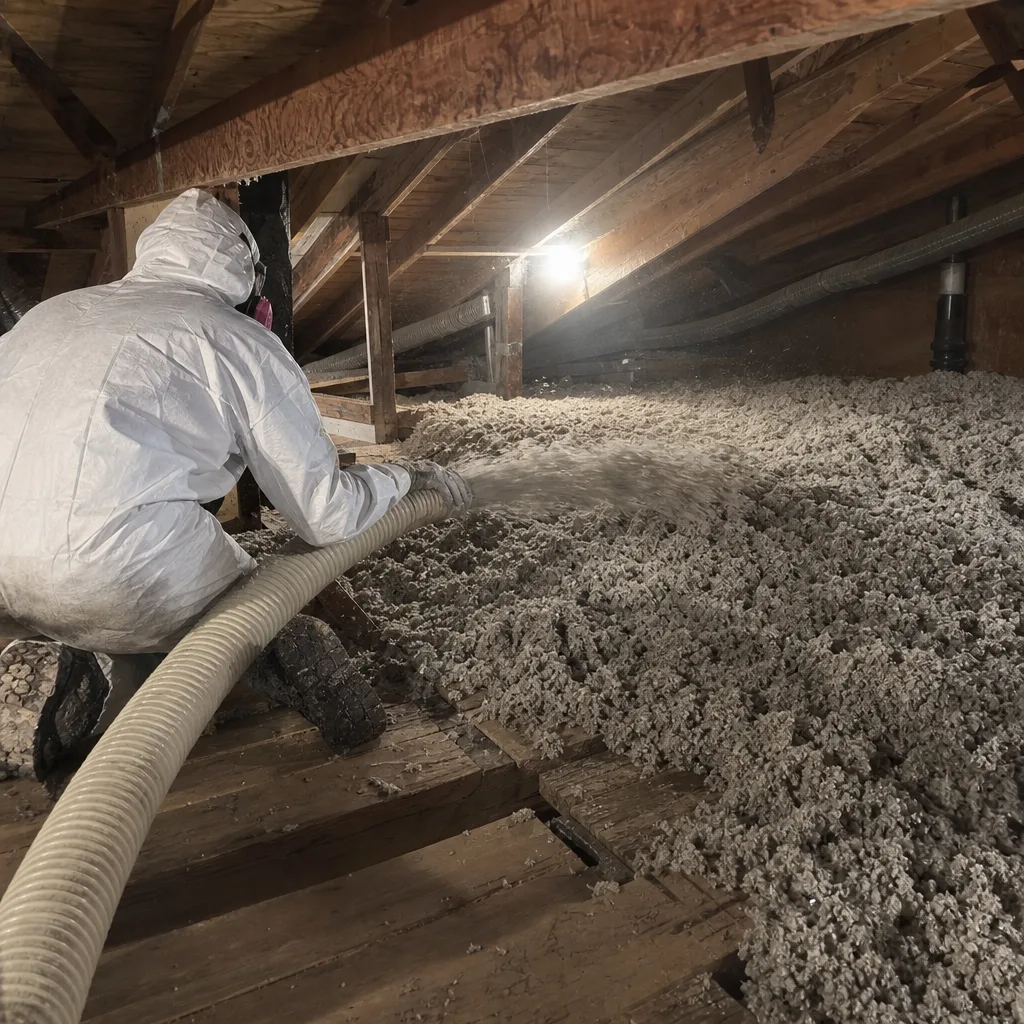
- Hot spots on your ceiling in summer afternoons. Unsealed top plates and wire penetrations let 140-degree attic air migrate through insulation gaps. In Lancaster, where attic temps regularly hit 130°F in July, even a 2% gap in your air barrier can drop effective R-value by 30%.
- Dust streaking around recessed can lights or HVAC registers. This is filtration, not a dirty house. Conditioned air is being pulled out through leaks, and attic dust rides back in on the pressure differential. We see this most in 2015-2019 builds near Avenue K where builders insulated fast and sealed later, if ever.
- Ice damming or uneven snow melt on your roof (if you head to the mountains). Warm attic air escaping through bypasses melts snow from underneath. The water refreezes at the eave, backs up under shingles, and the leak shows up in your bedroom ceiling. Lancaster’s desert climate masks this locally, but mountain cabin owners call us every February.
- Your blower-door number hasn’t moved after new insulation. We get these calls monthly. A contractor blew in R-38 over unsealed gaps; the CFM50 reading barely changed. The insulation is doing its job, but the air barrier underneath is Swiss cheese. Seal the gaps first. Then insulate. The R-value you paid for is only as good as the air barrier behind it.
- Rodent activity or moisture staining in the fiberglass. Gaps around plumbing stacks and chimney chases become highways. Johns Manville fiberglass doesn’t rot, but it compresses where animals nest, and the air leak that let them in is the same leak costing you on your electric bill every August.
Replacement Cost & What’s Included
Most Johns Manville attic air sealing jobs in Lancaster fall between $1,800 and $3,400 installed. The low end covers a 1,200-square-foot attic with standard penetrations: can lights, top plates, electrical and plumbing stacks, and a single HVAC chase. The high end addresses larger homes in West Lancaster or custom builds with multiple dormers, skylight shafts, or conditioned attic conversions that need complete envelope treatment.
What drives the range: attic accessibility (scissor truss vs. conventional), penetration density (a 1990s ranch with six can lights vs. a 2020 build with 18), and whether we’re working around existing JM insulation or removing and replacing it to access the deck. We also stock Reflectix radiant barrier components for homeowners who want to layer reflective performance after sealing.
Every job includes: written scope and flat price before work starts (Haven Standard Clause 1), mastic and foam sealant matched to your JM substrate, fiberglass mesh at structural joints, before-and-after blower-door test with published CFM50 readings, and a Documented Photo Record delivered by email. Our 365-Day Done Right Promise covers labor and materials. Call (661) 526-2890 for a written estimate - no charge, no pressure.
DIY or Call Us?
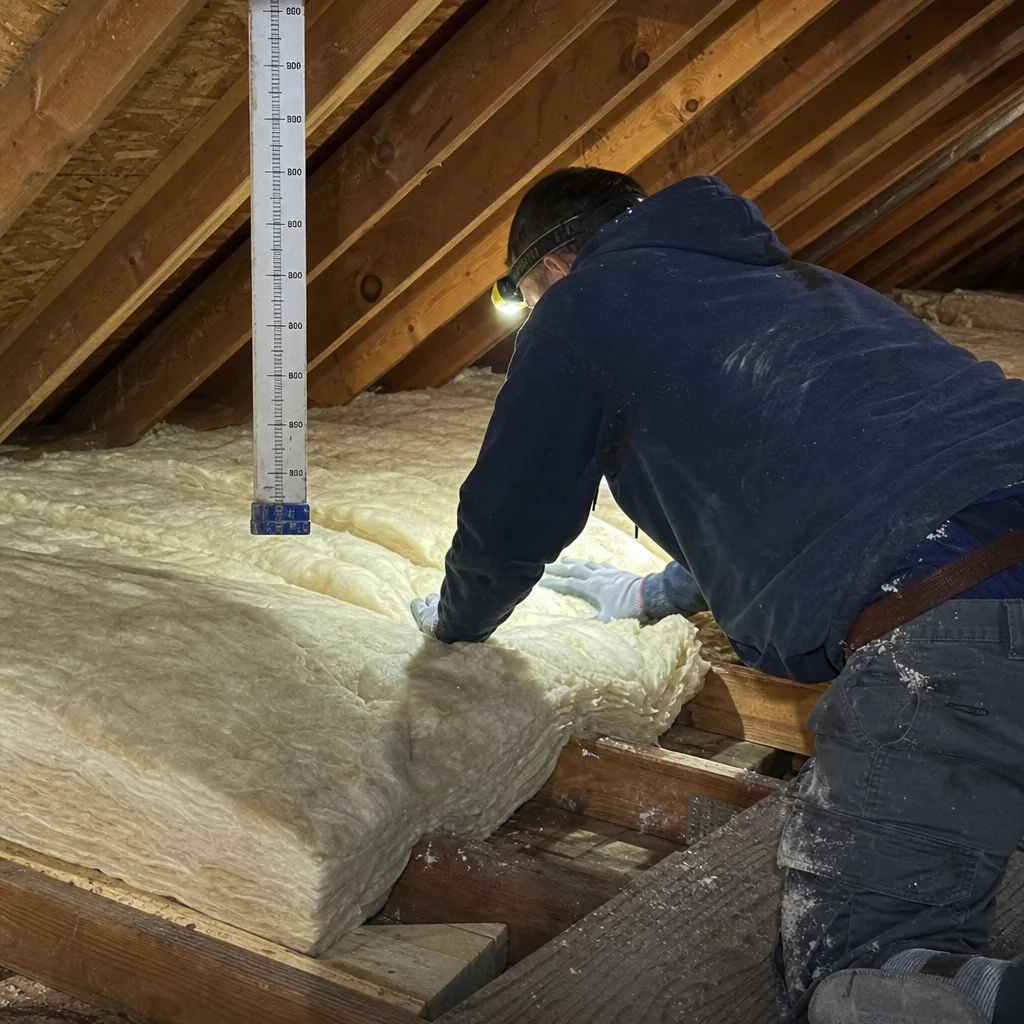
There’s a safe middle ground here. A homeowner can walk the attic with a flashlight and mark gaps at top plates, can lights, and chimney chases with painter’s tape. That saves us 20 minutes and shows you what you’re dealing with. What you can’t safely do: work near energized wiring in a 130-degree attic, judge whether a penetration is a combustion-air intake that must stay open, or apply fire-rated caulk where it belongs vs. standard latex where it doesn’t.
The real risk isn’t injury; it’s spending a Saturday sealing the wrong leaks and still failing a blower-door test. We’ve found homeowners in Lancaster who caulked every visible crack but missed the plumbing chase behind the master bath vanity - a 4-square-foot bypass that nullified everything else. We carry combustion analyzers and infrared cameras on every truck. The camera finds what your eyes can’t. If you want to verify your own work, call us for a blower-door test only; we’ll give you the number and show you the image. Otherwise, most JM air sealing jobs take one day with two technicians, and you’ll have the before-and-after documentation in hand before we leave.
FAQs
Properly installed mastic and fire-rated foam sealant lasts 20-30 years in Lancaster’s dry climate, though we recommend a visual inspection every 10 years because earthquake settling and roof work can open new gaps. The sealant itself doesn’t degrade; the structure moves around it. Call (661) 526-2890 and we’ll add you to our 10-year check-in list at no charge.
Partial sealing helps but rarely delivers the performance change that justifies the disruption. We target the top 20% of leaks by volume first, but stopping there leaves the remaining 80% still working against your insulation. Our written scope ranks every penetration by CFM loss so you can see what each tier costs and decide. Estimates are free.
Most residential jobs are completed in one day, with the blower-door test running before we arrive and again after cleanup. A 2,400-square-foot home with standard penetrations typically takes 6-8 hours with a two-person crew. We text when we’re 30 minutes out, and you get the photo record and readings by evening.
We carry JM-compatible low-VOC acrylic sealants, fire-rated intumescent foam, fiberglass mesh tape, and backer rod for every substrate type we encounter in Lancaster. For specialty applications - high-temperature chimney chases or commercial-grade vapor barriers - we source overnight from our supplier in Palmdale. Same-day service is available for 90% of residential calls.
Written by Wes Okafor, Owner & Lead Insulation Technician, Topside Attic Insulation Lancaster at Topside Attic Insulation Lancaster, serving Lancaster and nearby areas.