
Knauf Attic Insulation: The Lancaster Owner’s Guide
Most Knauf attic insulation retrofits in Lancaster run between $1.80 and $3.20 per square foot installed, depending on whether we’re topping existing material or stripping failed product down to the ceiling deck first. We stock Knauf Jet Stream, EcoFill, and InsulSafe blowing wools on every truck, and we can usually assess and begin work same-day for calls placed before noon. Homeowners typically discover their Knauf insulation has failed when upstairs rooms won’t hold temperature despite the AC running continuously, or when they find compressed, discolored batts in the attic that have settled well below their original labeled thickness.
Which Knauf Models This Applies To
Knauf’s residential attic line breaks into three families, and identifying which one is in your ceiling matters for matching both R-value and installation method.
- Jet Stream Ultra - fiberglass blowing wool, typically blown at R-38 to R-60 in Lancaster’s Climate Zone 15. Look for the silver-and-green bag with the “Ultra” band; the product code starts with JST. This is what we install most often in 1970s-1990s tract homes around Avenue K and the neighborhoods west of the BLVD, where attic floors are uneven and batts won’t seat properly.
- EcoFill Wx - formaldehyde-free blowing wool, tan in color, product code EFW. Common in newer construction and any home where indoor air quality is the primary concern. Settles less than competing cellulose, which matters in Lancaster’s dry climate where thermal cycling is aggressive.
- InsulSafe SP - premium blowing wool with higher recovered thickness, product code ISP. The spec sheet calls for 0.5 inches less depth than standard fiberglass to hit the same R-value, which affects how we calculate blower-machine settings and how much material we order.
We also find Knauf Ecobatt, the cotton-denim-faced batt product, in some 2010s builds around Quartz Hill. The facing matters: unfaced batts can be layered over, but kraft-faced or denim-faced batts trap moisture if buried. We verify facing type before quoting. Topside Attic Insulation Lancaster is an independent service provider with no affiliation to Knauf Insulation; we source through standard distribution channels and do not claim preferred or exclusive status with any manufacturer.
For the OEM-versus-aftermarket question with Knauf specifically: there is no generic equivalent that matches the density and fiber diameter spec. We use Knauf-bagged product or, on rare occasion, Owens Corning AttiCat with adjusted depth to compensate for the different recovered R-value per inch. We note the substitution in writing if we do it.
Signs Your Knauf Attic Insulation Is Failing
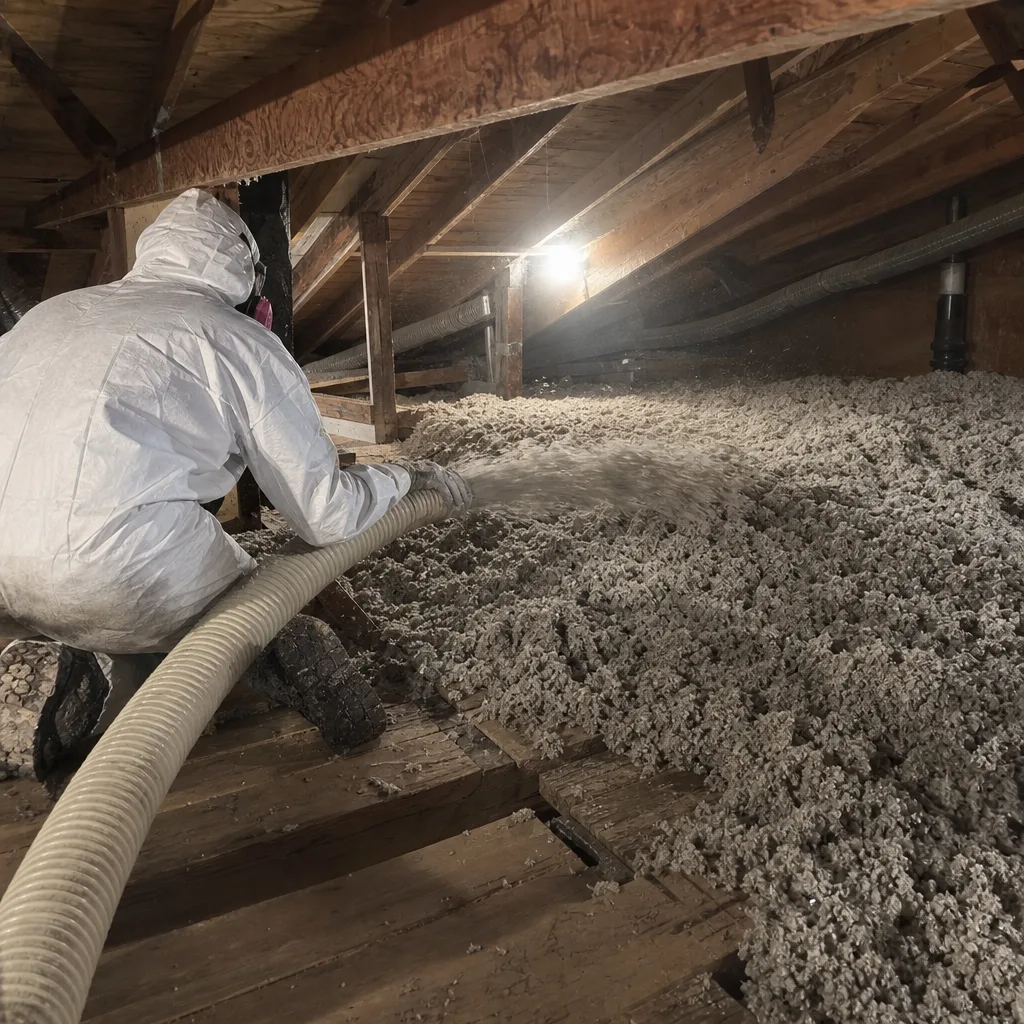
- Uneven temperature between rooms. In Lancaster’s summer, a south-facing bedroom that reads 8-12 degrees warmer than the hallway usually means insulation has shifted or settled away from the eaves, leaving thermal bypasses. We see this most in homes with Jet Stream installed before 2015, before Knauf adjusted the fiber lubricant formula to reduce settling in dry climates.
- Insulation thickness below the joist tops. Original R-38 Knauf batts or blown wool should sit at roughly 12 inches. If you’re measuring 6-8 inches, the material has compressed or the installer understated the original depth. Compressed fiberglass loses up to 50% of its labeled R-value.
- Water staining or rodent disturbance on the insulation surface. Lancaster’s occasional winter rains and rare summer monsoons find roof leaks fast when they hit fiberglass. Rodents tunnel through blown wool, creating bare spots. Both problems require removal of affected material before new product goes in; blowing over contamination is a code violation and a health issue.
- Dust accumulation around ceiling penetrations. Dark streaks on insulation near can lights, bath fans, or top plates mean conditioned air is leaking upward, carrying drywall dust and cooking particulates. The insulation isn’t failing; the air barrier is. But the symptom looks like insulation failure, and fixing it without sealing first wastes the R-value you paid for.
- Ice dam evidence in winter, or excessive AC runtime in summer. Lancaster’s high desert sees 30-40 degree daily swings. Poor attic insulation lets heat radiate downward at 4 PM in July and escape upward at 2 AM in January. Your HVAC runs longer, not harder. The utility bill is the last symptom; the insulation failure started months earlier.
Replacement Cost & What’s Included
For a typical 1,200-1,800 square foot Lancaster attic, stripping failed Knauf insulation to the deck and reinstalling new blown wool runs $2,200-$3,800. Topping existing material with additional Knauf Jet Stream or EcoFill, assuming the substrate is clean and level, runs $1,400-$2,400. The range depends on three factors: access difficulty (steep roof pitch or limited attic hatch size), whether we need to install baffles at the eaves for vented attics, and whether air sealing is required before insulation.
Every quote includes: material measured by the bag, labor, cleanup, and disposal of old product. We do not charge separately for the blower machine or travel within Lancaster city limits. Work is covered by our 365-Day Done Right Promise, and you receive a written scope, written warranty, and Documented Photo Record before the crew leaves. On applicable jobs, we provide before-and-after blower-door numbers so you can verify the air-sealing result in CFM50, the pressurization reading that shows, in one number, how much air your building envelope was losing.
DIY or Call Us?
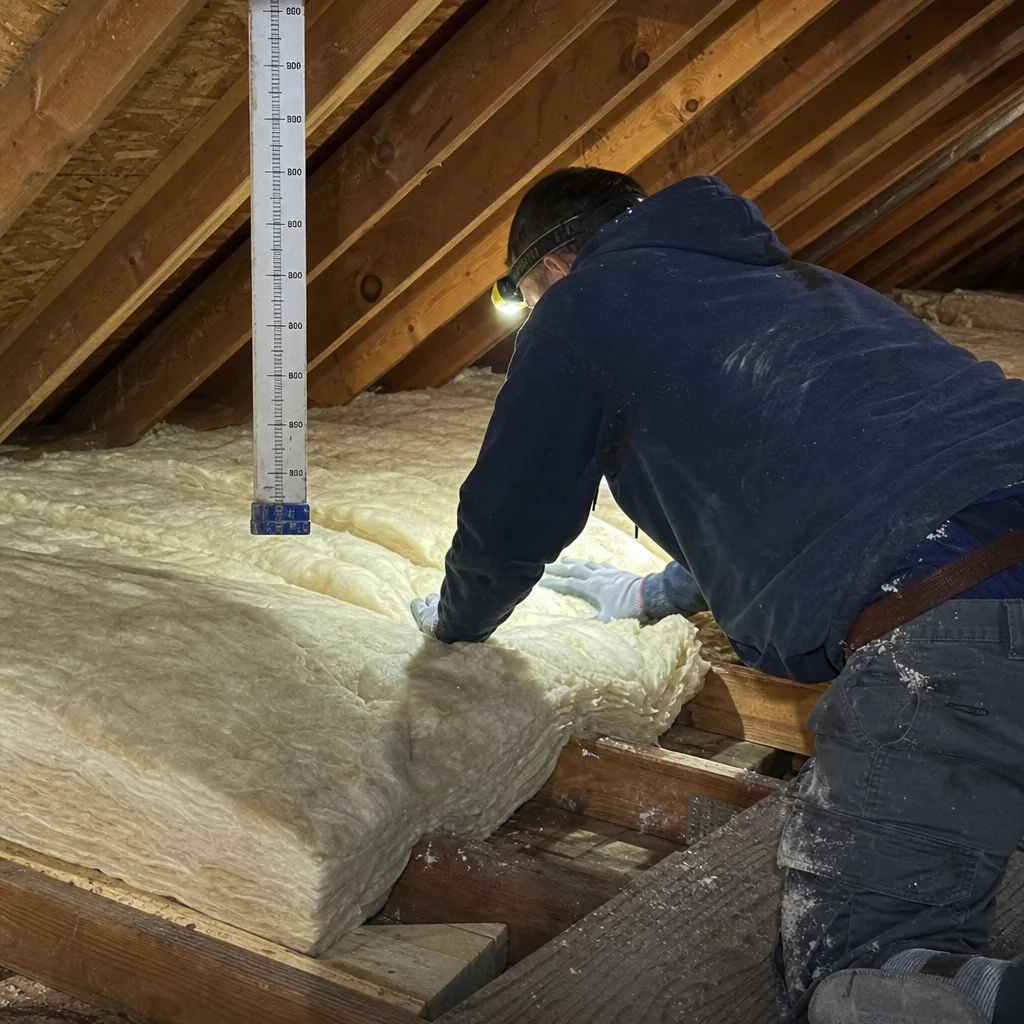
Homeowners can safely check three things: measure insulation depth with a yardstick, photograph any discoloration or compression for reference, and verify that attic vents aren’t blocked. Do not disturb vermiculite or pre-1990 loose-fill without testing; Lancaster has homes with this material, and it requires abatement protocol.
What goes wrong with DIY Knauf installation: the blowing machine settings. Residential rental units rarely achieve the 3.5-4.5 pounds-per-minute feed rate that Knauf specifies for proper density and recovered thickness. Under-blown insulation settles within two seasons and reads full depth on day one, half depth by year two. We also find homeowners skipping baffle installation at eaves, which blocks soffit ventilation and creates moisture problems in Lancaster’s dry-but-cold winters. And without a blower-door test, you cannot know whether your top plates and can lights are leaking conditioned air through the new insulation.
Seal the gaps first. Then insulate. The R-value you paid for is only as good as the air barrier behind it. Call (661) 526-2890 for a written price before any work starts.
FAQs
Properly installed Knauf fiberglass blowing wool lasts 20-30 years in Lancaster’s dry climate, though we see performance degradation starting around year 12-15 in homes with poor attic ventilation or significant air leakage. The material itself doesn’t decay; it compresses, shifts, or gets contaminated. Call (661) 526-2890 for an attic condition assessment - estimates are free.
Localized compression or thin spots can be topped with additional blown wool if the existing material is clean and dry. We do not recommend topping over rodent-contaminated, water-stained, or pre-1990 material. In those cases, full removal to the ceiling deck is required by both health code and our own standard. Call (661) 526-2890 and we’ll photograph what you have and tell you which category it falls into.
A standard Lancaster attic, 1,200-1,800 square feet, takes one full day for removal and reinstall, or a half-day for topping. Add four to six hours if we find air sealing is needed; we will not blow insulation over an unsealed attic floor. You’ll know the timeline before anyone starts - written scope, written price, always.
We stock Knauf Jet Stream, EcoFill Wx, and InsulSafe SP on every truck, along with Owens Corning, Johns Manville, and Rockwool alternatives. For Lancaster jobs, material is loaded morning-of; we do not ask homeowners to store bags or coordinate delivery. Same-day start is available for calls before noon.
Written by Wes Okafor, Owner & Lead Insulation Technician, Topside Attic Insulation Lancaster at Topside Attic Insulation Lancaster, serving Lancaster and nearby areas.