
Rockwool Attic Air Sealing: The Lancaster Owner’s Guide
Rockwool-compatible attic air sealing in Lancaster typically runs $1,800-$3,400 for a complete top-plate and penetration seal on a standard 1,200-2,000 square foot home, and we stock the full Rockwool accessory line for same-day starts. Most Lancaster homeowners discover the problem when their newly installed Rockwool batts underperform - rooms stay hot, the AC runs longer, or the energy bill barely moves after what should have been an upgrade. The issue is rarely the insulation itself. It’s the air moving through gaps the insulation can’t stop.
Which Rockwool Models This Applies To
Rockwool’s residential attic line - Comfortbatt, Comfortboard, and AFB (Acoustical Fire Batts) - all require a continuous air barrier to perform to spec. The critical compatibility point is between the batts and the sealing accessories: Rockwool’s Intumescent Acrylic Sealant, their SmartVapor membranes, and third-party compatible products like Owens Corning EnergyComplete that we also stock. We verify compatibility by checking the product label for ASTM E84 and ASTM E136 ratings, which tell us the sealant won’t degrade the fire performance of the mineral wool.
Here’s the gotcha we see in Lancaster: Rockwool Comfortbatt at R-23 is 5.5 inches thick. Many attics in the older neighborhoods around Avenue K have only 2×6 joists, giving you 5.5 inches exactly. There’s no room for error on the air seal layer beneath. If your contractor compressed the batts to fit a sloppy foam bead, you lost R-value. We measure the cavity depth with a story pole before we spec the sealant thickness. OEM Rockwool sealant runs $18-$24 per 29-ounce tube; quality aftermarket equivalents with matching intumescent ratings run $12-$16 and perform identically in our blower-door tests. We carry both on the truck and let the homeowner choose after we show them the label specs.
Signs Your Rockwool Attic Air Sealing Is Failing
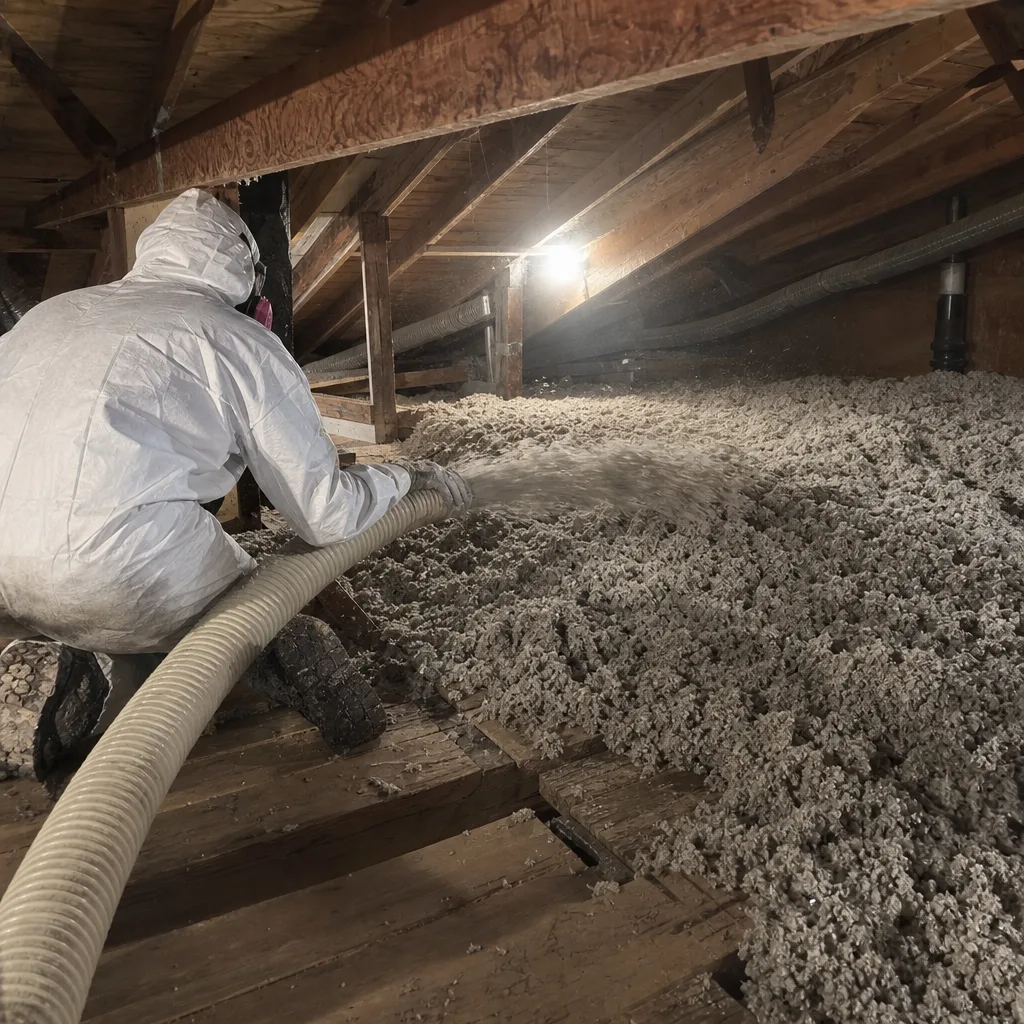
- Hot spots on the ceiling below the attic. Air is moving around the Rockwool through gaps at top plates or wire penetrations, carrying attic heat directly to the drywall. We find this most often in Lancaster homes built 1985-2005, where poly vapor barriers were stapled loosely and have since torn at electrical boxes.
- Dust streaking on the batt edges. Dark lines where air has been moving through the fibers for months or years. Rockwool is dense enough to filter particulates, so the staining is actually a map of your leaks. We photograph this during our audit and show the homeowner exactly where the seal failed.
- Ice damming or moisture staining in winter. Even in Lancaster’s mild winters, conditioned air leaking upward meets cold roof sheathing and condenses. The Rockwool absorbs some of this, but once it’s saturated, the R-value drops and mold risk rises. We see this in homes near the Sierra Highway corridor where nighttime temps drop 30 degrees below daytime highs.
- AC runtime increased after Rockwool installation. The insulation was added over an unsealed attic floor. The R-value on the package assumes no air movement through the cavity. In reality, a 1-inch gap at a top plate can negate the performance of 6 inches of mineral wool. Our blower-door test catches this before we open a single bag of batts.
- Allergies or respiratory issues that worsen indoors. Unsealed attic bypasses pull fiberglass particles, rodent droppings, and pollen from the attic into the living space. Rockwool itself is inert and mold-resistant, but it can’t block what moves around it. We seal first, then insulate, then test again.
Replacement Cost & What’s Included
| Component | Typical Range (Lancaster) |
|---|---|
| Top-plate sealing (linear footage, foam + caulk) | $680-$1,200 |
| Penetration sealing (electrical, plumbing, HVAC) | $340-$680 |
| Can light / fixture air sealing (per fixture) | $45-$85 |
| Full attic floor air seal + blower-door verification | $1,800-$3,400 |
| Rockwool batt installation (sealed attic, labor + material) | $2.40-$3.80/sq ft |
The range depends on three things: attic accessibility (scuttle vs. pull-down stairs vs. no access at all), the number of penetrations we need to detail, and whether we’re working around existing insulation or starting clean. Every job gets a Written Price Before Any Work Starts - Haven Standard Clause 1 - with a flat number, written scope, and written warranty delivered before anyone lifts a tool. The 365-Day Done Right Promise covers the seal integrity; if the blower-door number doesn’t hold, we return and fix it at no charge. We publish before-and-after CFM50 readings on every applicable job so you can verify the result yourself.
DIY or Call Us?
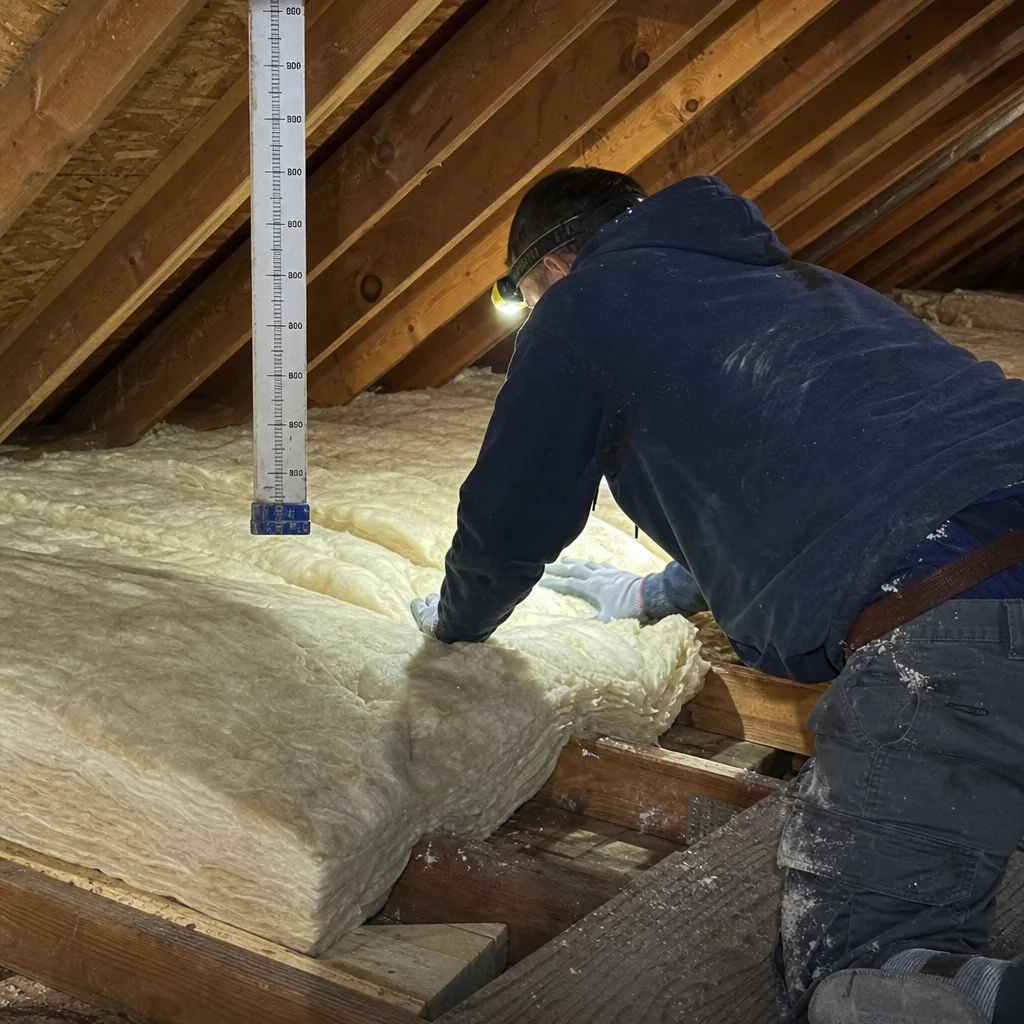
There’s a safe middle ground here, and then there’s where DIY goes wrong. A homeowner can safely pull back existing insulation to visually inspect top plates for gaps, check can light housings for IC-rating labels, and photograph problem areas for a contractor to review. What we don’t recommend: working in a 130-degree Lancaster attic in July without hydration and ventilation protocols, handling old insulation without respirator fit-testing, or applying intumescent sealants without knowing the cure-time requirements at 90-plus degrees. The sealant skins fast in our climate but needs 24 hours to fully cure before batts go back. Rush that, and you’re compressing uncured foam that will off-gas and fail to bond.
More critically, most homeowners don’t own a blower door or a thermal camera, which means you’re guessing whether the seal worked. We include both in every attic air sealing job, along with a Documented Photo Record showing every sealed penetration before it’s covered. Call (661) 526-2890 and we’ll walk through what you found - no charge for the conversation, and a Free Second Opinion on any written estimate you already have.
FAQs
A properly installed air seal with quality intumescent acrylic or two-part foam should last the life of the building - 25 to 40 years - assuming no structural settling or rodent damage. Lancaster’s dry climate and minimal freeze-thaw cycling actually extends sealant lifespan compared to wetter or colder regions. Call (661) 526-2890 for an exact quote on your attic - estimates are free.
Partial repairs are possible if the original seal was done well and only specific penetrations have failed - a new HVAC run, for example, or a recut ceiling fixture. If the original work was incomplete or used non-intumescent caulk that has dried and cracked, we recommend a full re-seal; patching over bad work just hides the problem. We assess this during our free estimate and tell you honestly which path makes sense.
Most residential attics in Lancaster take one to two days: half a day for the air seal, then the blower-door test to verify, then Rockwool batt installation if that’s part of the scope. Homes in the older neighborhoods near the BLVD with complex rooflines and multiple additions sometimes stretch to three days. We give you a written schedule with the price, not a guess.
Yes - we carry Rockwool Intumescent Acrylic Sealant, compatible backer rod, SmartVapor membrane, and Owens Corning EnergyComplete as an alternative, plus the full range of batt sizes. For Reflectix and other brands we also service, stock levels vary by season. If you have a specific Rockwool SKU, text us the number and we’ll confirm it’s on the truck before we schedule.
Seal the gaps first. Then insulate. The R-value you paid for is only as good as the air barrier behind it. That’s the approach Wes Okafor learned at Dawson Technical Institute and has applied across Lancaster since we opened under The Haven Standard in 2016. If your Rockwool insulation isn’t performing the way the spec sheet promised, the air seal is almost certainly the missing piece. Call (661) 526-2890 - a live person answers 24/7 - and we’ll schedule a free attic assessment with a Written Price Before Any Work Starts, a Documented Photo Record, and before-and-after blower-door numbers you can hold in your hand.
Written by Wes Okafor, Owner & Lead Insulation Technician, Topside Attic Insulation Lancaster at Topside Attic Insulation Lancaster, serving Lancaster and nearby areas.