
Rockwool Attic Insulation: The Lancaster Owner’s Guide
Rockwool attic insulation installation in Lancaster typically runs $2.80 to $4.20 per square foot for batt or blown-in applications, with most single-story homes falling between $2,400 and $5,800 for a complete attic. We stock Rockwool Comfortbatt, Comfortboard, and Safe’n’Sound on every truck, and we can usually assess and begin work same-day if you call before noon. Most Lancaster homeowners discover their Rockwool insulation is underperforming when summer cooling bills spike past $400 on a 1,500-square-foot home, or when a thermal camera reveals 140-degree attic air pouring through gaps the insulation was never designed to block.
Which Rockwool Models This Applies To
Rockwool’s residential attic line breaks into three families, and each behaves differently in a Lancaster attic where summer roof deck temperatures regularly hit 170°F and winter nights drop below freezing.
- Comfortbatt R-23 and R-30 - the standard batts for 2×6 and 2×8 joist bays. Look for the black-and-red label with the stone wool density rating, typically 0.5 to 2.5 pounds per cubic foot depending on R-value. These are what most tract homes around Lancaster’s west side received in original construction from 2005 onward.
- Comfortboard 80 and 110 - rigid boards used for thermal breaks over attic joists or in cathedral ceiling assemblies. The “80” and “110” refer to compressive strength in pounds per square foot, not R-value. A common gotcha: homeowners order 110 thinking it’s higher-R, then discover they’ve paid for structural capacity they don’t need in a vented attic.
- Safe’n’Sound - technically an interior wall/sound product, but we find it misinstalled in attics at least twice a month in Lancaster. It has no formal R-value rating for thermal applications. If your attic has white-faced batts that feel noticeably softer than standard insulation, that’s likely Safe’n’Sound and it’s doing almost nothing for your cooling bill.
OEM Rockwool carries the NAIMA certification mark and the lot number for warranty registration. We also install Johns Manville and Knauf mineral wool equivalents where the joist spacing or budget calls for it - same fire rating, similar density, sometimes faster availability. Topside Attic Insulation Lancaster is an independent service provider with no affiliation to Rockwool International.
Signs Your Rockwool Attic Insulation Is Failing
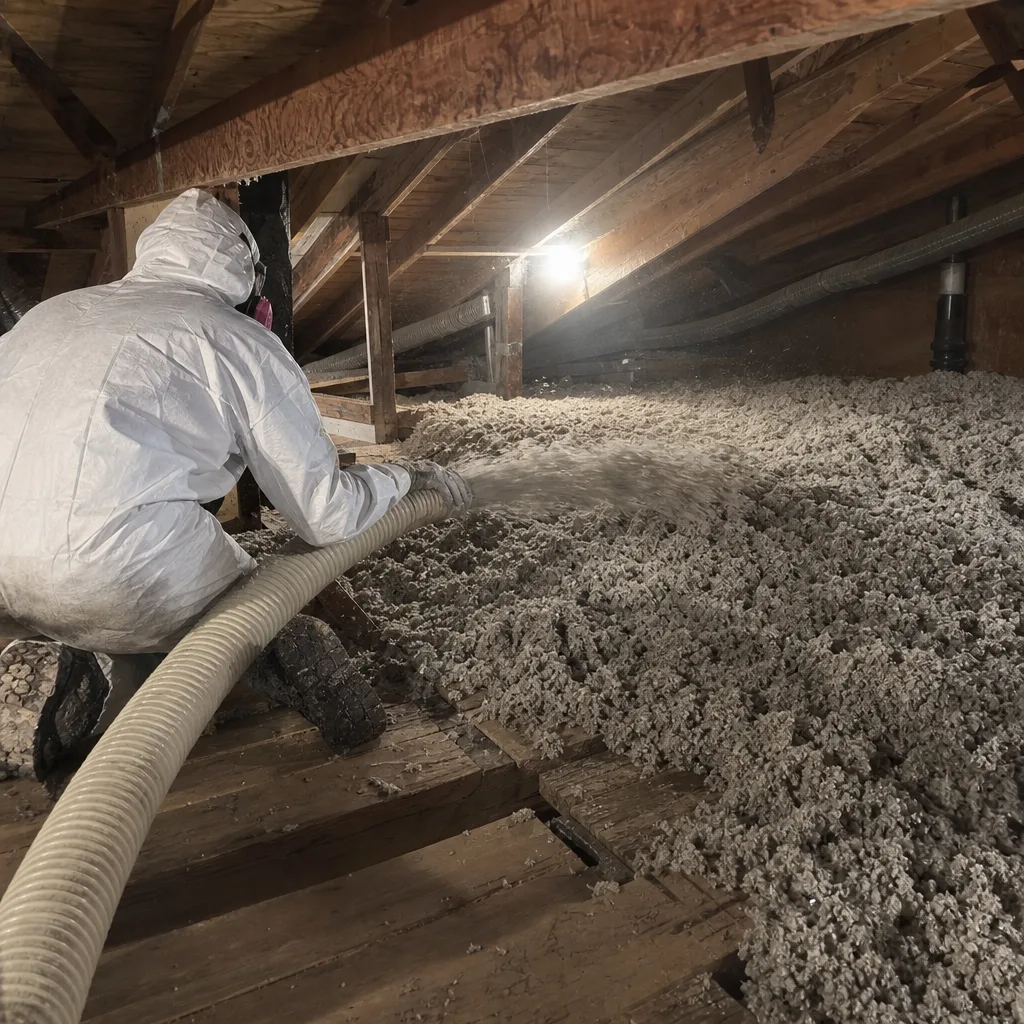
- Hot ceiling spots in July, even with the AC running flat out. Rockwool doesn’t degrade like fiberglass, but it can’t perform when air leaks bypass it entirely. In Lancaster’s 130-degree attics, a 200 CFM50 leak path through a top plate will overwhelm R-30 in a 4-foot radius.
- Ice damming at the eaves in January. This means warm, moist interior air is reaching the roof deck. Rockwool is hydrophobic - it won’t hold water like cellulose - but if it’s not touching an air-sealed surface, convection loops form and melt snow from underneath.
- Settled batts leaving 3-inch gaps at the top of joist bays. Rockwool is denser than fiberglass and settles less, but vibration from HVAC units in Lancaster attics can compress it over 10 to 15 years. The R-value doesn’t disappear, but the coverage does.
- Rodent tunnels visible when you lift a batt. Rockwool is mineral-based and unappealing to chew, but mice will burrow through any loose material for nesting. The damage isn’t to the wool itself; it’s the air gaps they leave behind.
- Your blower-door number hasn’t changed since pre-installation. We see this in homes where a previous contractor blew Rockwool loose-fill over an unsealed attic floor. The insulation looks full, but the house still leaks 3,500 CFM50. The R-value is theoretical until the air barrier is real.
Replacement Cost & What’s Included
| Scope | Typical Range (Lancaster) | What Drives It |
|---|---|---|
| Remove old + install new Rockwool batts, 1,000 sq ft | $2,400 - $3,800 | Access difficulty, joist spacing (16″ vs. 24″), old material disposal |
| Remove old + install Rockwool loose-fill, 1,000 sq ft | $2,800 - $4,400 | Attic height, machine access, depth to achieve R-38 or R-49 |
| Add air sealing + Rockwool batts, 1,500 sq ft | $4,200 - $6,500 | Number of top plates, can lights, duct penetrations to seal |
| Rockwool rigid board + thermal break, cathedral ceiling | $5,500 - $8,200 | Finish carpentry, baffle installation, vented vs. unvented design |
These prices include removal and disposal of existing material, installation of new Rockwool to current Title 24 standards, and our Documented Photo Record. Every job that involves air sealing also gets before-and-after blower-door numbers - a pressurization reading that shows, in one figure, how much conditioned air your building envelope was losing before and after the work. Under Haven Standard Clause 1, you get a written price before any work starts, a written scope, and a written warranty. The 365-Day Done Right Promise covers all completed work.
DIY or Call Us?
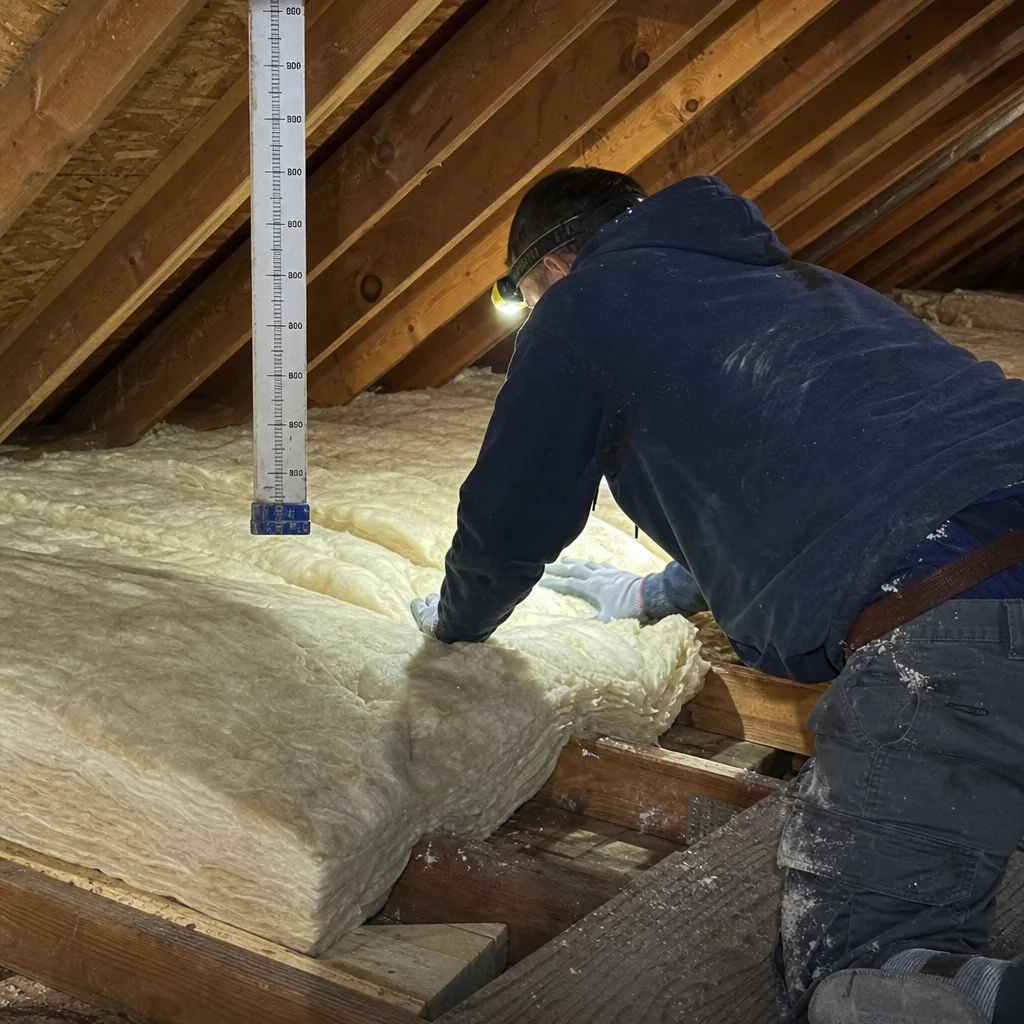
Here’s what you can safely check yourself: lift the attic hatch on a cool morning and look for gaps where batts don’t touch the drywall, signs of rodent activity, or discolored areas that indicate air bypass. A basic tape measure will tell you if your installed depth matches what the label promised.
Here’s where DIY goes wrong: Rockwool is safe to handle - no fiberglass itch, no respirator required for short exposure - but installing it without sealing first wastes the material. We’ve torn out $3,000 of homeowner-installed Rockwool in Lancaster homes where the top plates were never caulked and the can lights were never boxed. The R-value on the package means nothing if the air barrier behind it leaks. And in attics with active knob-and-tube wiring or vermiculite that may contain asbestos, disturbing anything without testing is a genuine hazard. We test before we touch.
Seal the gaps first. Then insulate. The R-value you paid for is only as good as the air barrier behind it. If you want the numbers before you spend anything, call (661) 526-2890 for a free estimate.
FAQs
Rockwool itself is essentially permanent - it’s spun basalt and steel slag, so it doesn’t rot, mold, or support combustion. In Lancaster’s climate, the real lifespan question is whether the air sealing behind it holds. We’ve found original Rockwool batts from 1998 still performing in homes where the envelope was properly sealed, and we’ve replaced 6-year-old installations where air leaks rendered them ineffective. Call (661) 526-2890 and we’ll check your blower-door number - estimates are free.
Spot repair works if the Rockwool is physically intact and the failure is isolated - a single disturbed bay, a small rodent nest, a section compressed by a previous service technician. We cut in new batts to match density and layer them without gaps. If the underlying problem is systemic air leakage or widespread settling, partial repair is false economy; you’re better off removing and re-installing with sealing first. We stock matching Rockwool density on every truck for either approach.
A standard 1,200-square-foot attic with removal, air sealing, and new Rockwool batts takes one full day for a two-person crew. Loose-fill jobs run faster on installation but slower on prep - we need to dam around hatches, lights, and HVAC platforms to maintain depth. Cathedral ceilings with Comfortboard add a second day for cutting, fitting, and finish work. Same-day starts are available if you call before noon and the attic is accessible.
We stock Comfortbatt in R-23 and R-30, Comfortboard 80 and 110, and loose-fill blowing wool on every truck. For less common densities or Safe’n’Sound replacements, we pull from our Lancaster warehouse same-day or next-morning. We also carry Johns Manville and Knauf mineral wool equivalents if your joist spacing or timeline calls for a substitute. No proprietary lock-in, no special orders that leave you waiting two weeks.
Written by Wes Okafor, Owner & Lead Insulation Technician, Topside Attic Insulation Lancaster at Topside Attic Insulation Lancaster, serving Lancaster and nearby areas.