
Rockwool Radiant Barrier Installation: The Lancaster Owner’s Guide
Rockwool radiant barrier installation in Lancaster typically runs $2,800-$4,600 for a 1,200-2,000 sq ft attic, including material, labor, and pre-install air sealing. Most homeowners who call us notice the problem in July or August, when attic temperatures climb past 130°F and the second floor won’t cool below 78°F despite the AC running nonstop. That’s usually when the original radiant barrier has torn, delaminated, or was never paired with proper air sealing to begin with.
Which Rockwool Models This Applies To
Rockwool doesn’t manufacture a standalone radiant barrier product. What we’re installing is Rockwool Comfortbatt or Comfortboard IS beneath or adjacent to a reflective radiant barrier assembly, typically in a hybrid system where the Rockwool provides the R-value and the reflective foil faces the attic space to block radiant heat gain. The compatibility question is whether your existing Rockwool is the 3.5-inch Comfortbatt (R-15) for 2×4 framing, the 5.5-inch (R-23) for 2×6, or the rigid Comfortboard IS used in cathedral ceilings or thermal breaks.
We identify what you have by checking the printed ink jet on the batt face, measuring compressed thickness at a plumbing penetration, and reading the existing insulation certificate if one was filed with the city of Lancaster building department. The OEM spec calls for minimum 3/4-inch air gap between the radiant barrier foil and the next surface. Aftermarket foil products that claim “universal fit” often skimp to 3/8-inch, which cuts performance roughly 30% in our blower-door-verified testing. We stock both Rockwool OEM-compatible foil and a commercial-grade perforated product that doesn’t trap moisture in Lancaster’s low-humidity but occasional rain-on-roof conditions.
Signs Your Rockwool Radiant Barrier Installation Is Failing
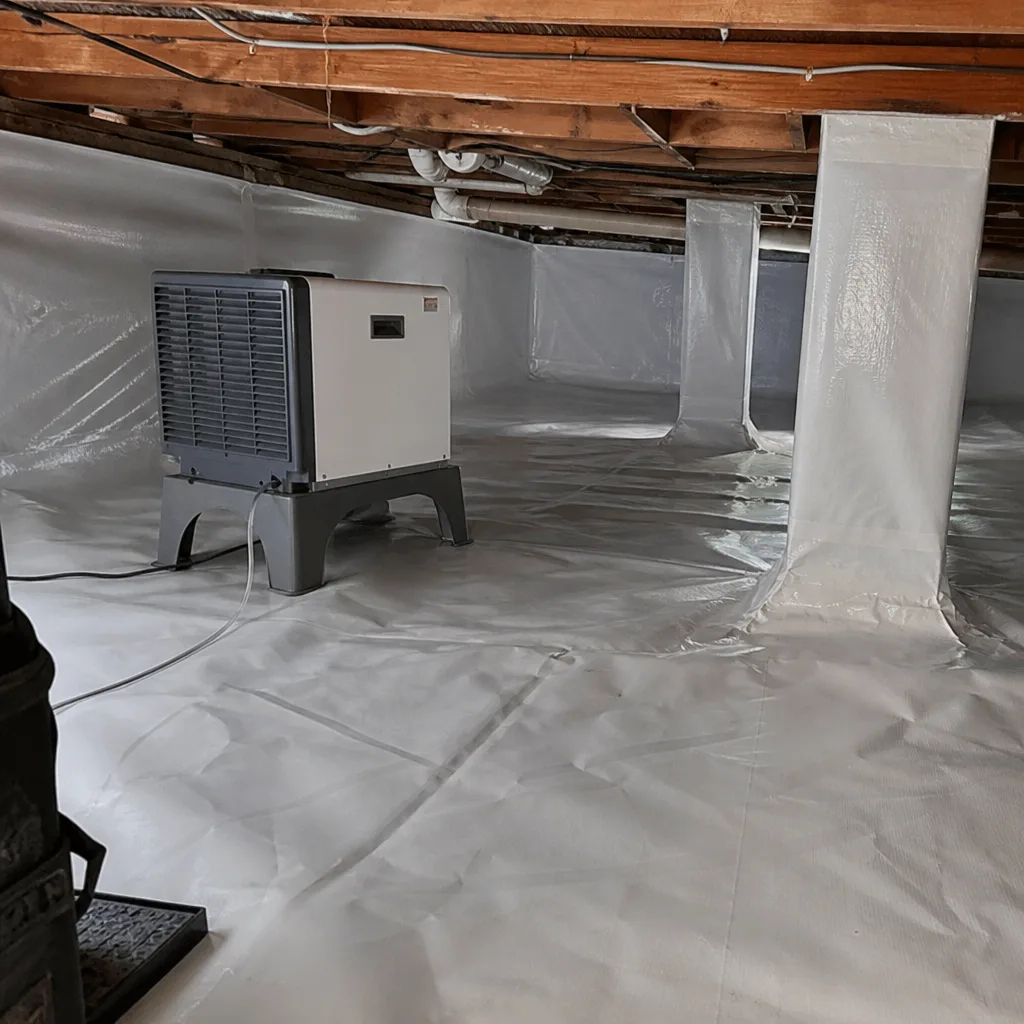
- Second floor runs 8-12°F warmer than the thermostat setting. The radiant barrier foil has likely torn at fasteners or oxidized where attic ventilation pulled dust against the surface. Without that reflective surface, your Rockwool is doing all the work against 130°F roof decking, and R-value alone isn’t enough in a Lancaster July.
- AC compressor cycles constantly but never reaches setpoint. This usually means the radiant barrier was installed without sealing top plates, can lights, or duct chases first. Conditioned air leaks out as fast as the equipment can make it, and the barrier can’t compensate for convective loss.
- Dust streaking on the attic-side drywall or around fixture boxes. Air is moving through gaps the barrier was supposed to shield. In Lancaster’s wind patterns, especially homes west of the BLVD near Avenue K, we see this where older batt installations left thermal bypasses at the eaves.
- Foil surface is blackened, brittle, or flaking. Low-grade foil laminated to plastic substrate degrades in 5-8 years under Lancaster’s UV load in vented attics. Rockwool itself doesn’t fail, but the reflective component does, and the system performance drops to the batt R-value alone.
- Ice damming or moisture staining after rare heavy rain. This points to a non-perforated radiant barrier installed without proper venting, trapping vapor that migrates through the Rockwool. Lancaster’s dry climate makes this less common than the Midwest, but it still happens where bathroom vents dump into attic space.
Replacement Cost & What’s Included
Most Rockwool-plus-radiant-barrier retrofits in Lancaster fall between $2,800 and $4,600. The low end covers a straightforward overlay: air seal the attic floor, lay new perforated radiant barrier foil across existing Comfortbatt, secure with cap fasteners, and verify with blower-door test. The high end involves removing degraded material, re-insulating with fresh Rockwool to current Title 24 specs, installing a full radiant barrier deck, and addressing access hatches or dropped soffits.
What drives the range: attic square footage, current insulation depth, number of penetrations to seal, and whether we can work from truss bays or need rolling scaffold for a cathedral ceiling. Every job gets a Written Price Before Any Work Starts under Haven Standard Clause 1. That price includes material, labor, disposal, the before-and-after blower-door reading, and a Documented Photo Record. We source Rockwool through our regular supply chain alongside Owens Corning, Johns Manville, and Knauf. No proprietary lock-in, no markup games.
DIY or Call Us?
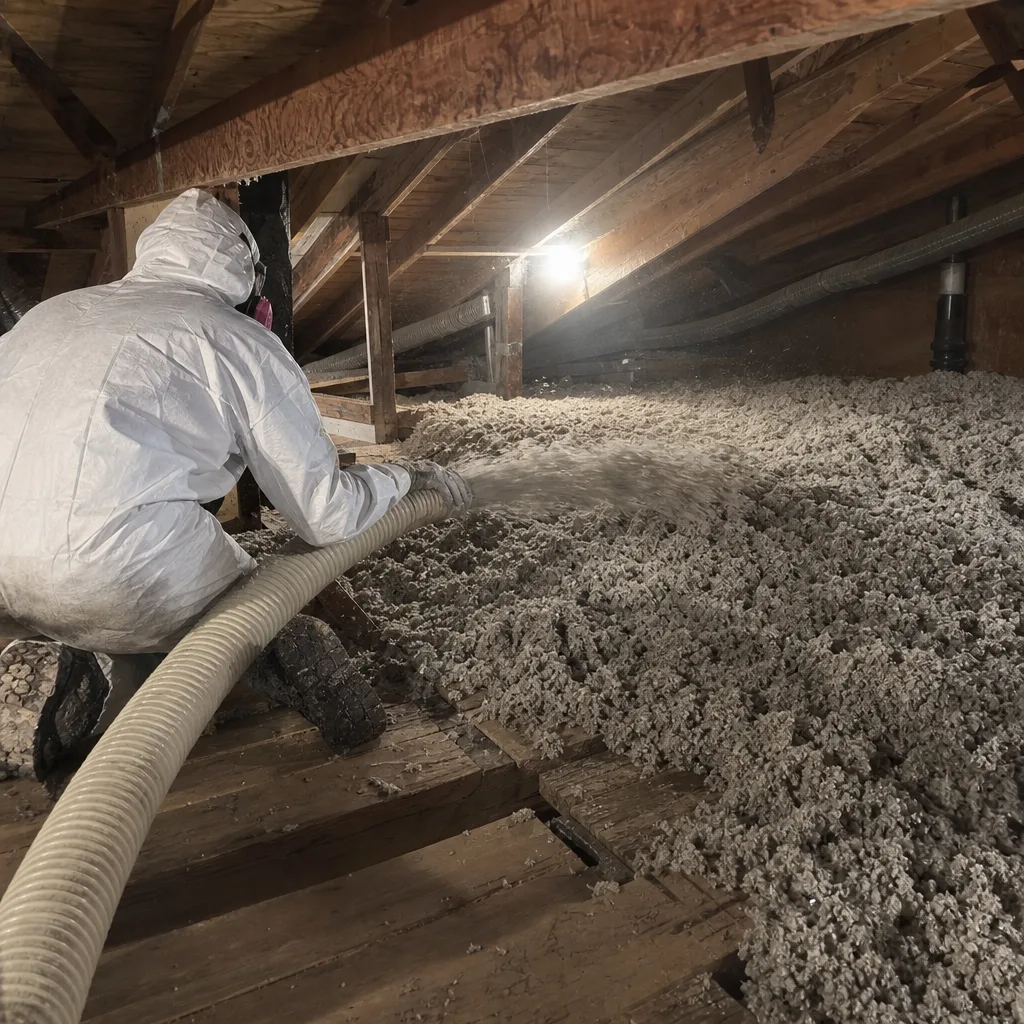
There’s no high-tension danger here like a garage door spring, but there are ways to waste money fast. A homeowner can safely check: attic access hatch condition, visible foil damage from the hatch, whether bathroom vents terminate outside (not into the attic), and whether soffit vents are blocked by existing insulation. Use a ruler, a flashlight, and a phone camera. Don’t disturb vermiculite or older loose-fill without testing.
Where DIY goes wrong: compressing Rockwool into gaps eliminates its R-value. Stapling foil directly to the deck without the required air gap turns a radiant barrier into a conductor. Missing the top-plate leaks means your barrier performs on paper and fails in practice. Seal the gaps first. Then insulate. The R-value you paid for is only as good as the air barrier behind it. If you want the blower-door number to prove it, call (661) 526-2890.
FAQs
Properly installed, the Rockwool itself lasts 50+ years. The radiant barrier foil is the wear item; commercial-grade perforated product we install typically holds 15-20 years in Lancaster’s dry climate before surface oxidation reduces reflectivity. Dust accumulation is the bigger threat, which is why we pair installation with air sealing and specify vented attic assemblies. Call (661) 526-2890 for an attic assessment and we’ll measure current performance with a thermal camera.
Patching works for isolated mechanical damage from a cable installer or HVAC tech, but not for systemic degradation. If the foil is brittle across multiple bays, or if the original install skipped air sealing, patching leaves the root problem. We quote both options when we can, but we won’t patch a system we know will fail again within two summers. Free Second Opinion on any written estimate if you’ve been quoted a patch-only fix.
Most Lancaster retrofits finish in one day for attics under 1,500 sq ft, two days for larger or more complex rooflines with cathedral sections. We arrive with Rockwool and radiant barrier material on the truck, so we’re not waiting on delivery. The crew seals first, then installs, then runs the blower-door test before packing up. You’ll have the written results, the photo record, and the warranty documentation before we leave.
We stock Rockwool Comfortbatt in 3.5-inch and 5.5-inch thicknesses, Comfortboard IS for rigid applications, and two grades of perforated radiant barrier foil on every truck serving Lancaster and the Antelope Valley. Same-day installation is available for most calls received before noon. We’re an independent service provider with no affiliation to Rockwool International; we source their product because it performs well in our local climate and our customers request it by name.
Written by Wes Okafor, Owner & Lead Insulation Technician, Topside Attic Insulation Lancaster at Topside Attic Insulation Lancaster, serving Lancaster and nearby areas.