
Rockwool Vapor Barrier Installation: The Lancaster Owner’s Guide
Rockwool vapor barrier installation in Lancaster typically runs $1,800-$3,400 for a full attic or crawl space application, depending on square footage and whether we’re retrofitting over existing insulation or starting from the subfloor. Most Lancaster homeowners with failed vapor barriers notice the problem during our dry summer months, when attic humidity spikes and the old polyethylene sheeting has torn at staple points or degraded from UV exposure through gable vents. We stock Rockwool-compatible 6-mil reinforced polyethylene and smart vapor retarder membranes on every truck, and we can usually inspect and quote same-day.
Most owners don’t set out looking for vapor barrier replacement. They call because their insulation contractor from five years ago stuffed R-30 batts against a failing poly sheet, and now they’re seeing condensation stains on the drywall, musty odors in the hallway near the attic hatch, or their energy bill climbing despite the “new” insulation. The vapor barrier failed first. The insulation just hid it longer.
Which Rockwool Models This Applies To
Rockwool doesn’t manufacture standalone vapor barriers, but their Comfortbatt, Comfortboard, and AFB (Acoustical Fire Batts) lines require specific vapor retarder pairings to maintain warranty coverage and published R-values. In Lancaster, we most often see Comfortbatt R-23 and R-30 installed in 2×6 and 2×8 framed walls and cathedral ceilings, where the vapor retarder must be installed on the warm-in-winter side, per California Title 24 requirements.
Here’s how to identify what you’re working with: Rockwool batts have a foil-faced or kraft-faced option, but the unfaced batts, common in retrofit work around Lancaster’s 1980s-2000s subdivisions near Avenue K and the BLVD, require a separate vapor retarder. Check the batt edge for a printed density rating, Comfortbatt runs 4.2-8.0 lbs/ft³ depending on the R-value. If your batts are unfaced and you see bare mineral wool against the drywall, you need a supplemental barrier. We install 6-mil reinforced poly for basic applications and CertainTeed’s MemBrain smart retarder for variable-climate zones like the Antelope Valley, where winter lows hit the 20s and summer attic temps exceed 130°F. MemBrain changes permeance with humidity, which matters in Lancaster’s swing-season months.
Topside Attic Insulation Lancaster is an independent service provider with no affiliation to Rockwool. We source Rockwool products through standard distribution channels alongside Owens Corning, Johns Manville, and Knauf, so we match the barrier to the batt rather than pushing a proprietary system.
Signs Your Rockwool Vapor Barrier Installation Is Failing
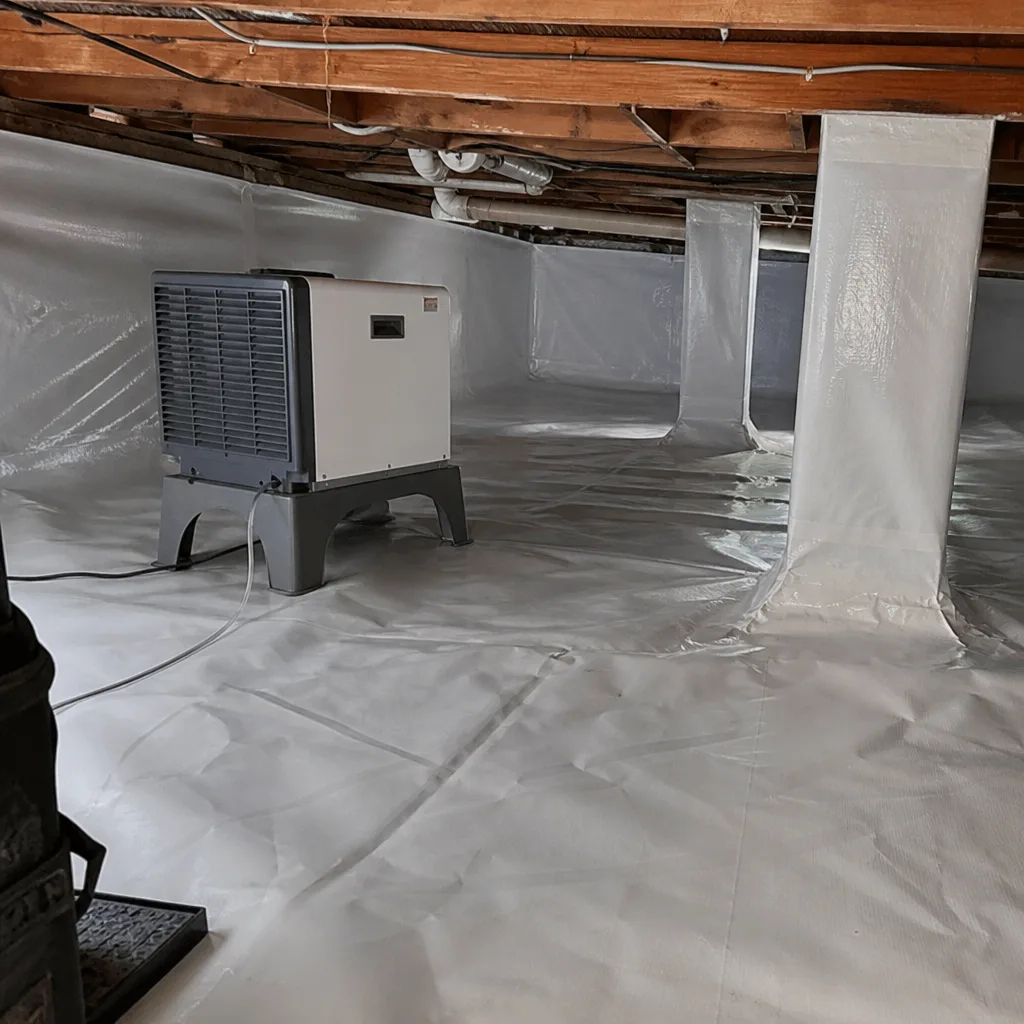
- Condensation on the attic-side drywall during temperature swings. This happens when warm, moist interior air hits a cold surface because the vapor barrier has torn at electrical penetrations or top plate joints. In Lancaster’s spring and fall, when days hit 75°F and nights drop to 40°F, the delta-T across your ceiling assembly exposes every gap.
- Discolored or compressed Rockwool batts near bathroom or kitchen vents. Moisture-laden air from exhaust fans that terminate in the attic, a common find in homes built 1985-2005 near Lancaster’s west side, saturates the batt from above. The vapor barrier below can’t protect against bulk water from a disconnected flex duct.
- Musty odor that worsens after rain but isn’t a roof leak. Wind-driven rain through soffit vents can wet the attic side of a failed barrier. Rockwool itself is hydrophobic and won’t mold, but the wood framing and drywall paper behind it will. The smell is your framing, not the insulation.
- Ice damming in winter at the eaves, even in Lancaster’s mild freezes. Warm air leaking through a compromised barrier melts roof snow; the water refreezes at the cold overhang. We’ve documented this on homes near the Sierra Highway corridor where attic air sealing was skipped during a prior insulation upgrade.
- Blower-door test showing minimal improvement after “air sealing” by a prior contractor. If they blew cellulose or fiberglass over an unsealed attic floor, the thermal bypasses remain. We find this constantly: the insulation looks full, but the pressure boundary is still the old drywall ceiling. The vapor barrier can’t function without a continuous air barrier behind it.
Replacement Cost & What’s Included
| Scope | Typical Range in Lancaster |
|---|---|
| Vapor barrier retrofit, attic, up to 1,000 sq ft (6-mil reinforced poly) | $1,800-$2,600 |
| Vapor barrier retrofit, attic, up to 1,000 sq ft (MemBrain smart retarder) | $2,400-$3,200 |
| Crawl space encapsulation with vapor barrier, up to 1,200 sq ft | $2,800-$4,200 |
| Air sealing + vapor barrier + Rockwool batt replacement (full assembly) | $4,500-$7,500 |
What drives the range: accessibility (truss height, ductwork density), existing insulation that must be removed or worked around, and whether we find disconnected bath fan ducts or open top plates that need sealing first. We don’t quote vapor barrier work without a pre-install air-leak audit. Seal the gaps first. Then insulate. The R-value you paid for is only as good as the air barrier behind it.
Every job closes with a Documented Photo Record, a written scope, and on applicable jobs, before-and-after blower-door numbers so you can verify the air-sealing result in CFM50. Our 365-Day Done Right Promise applies to all completed work.
DIY or Call Us?
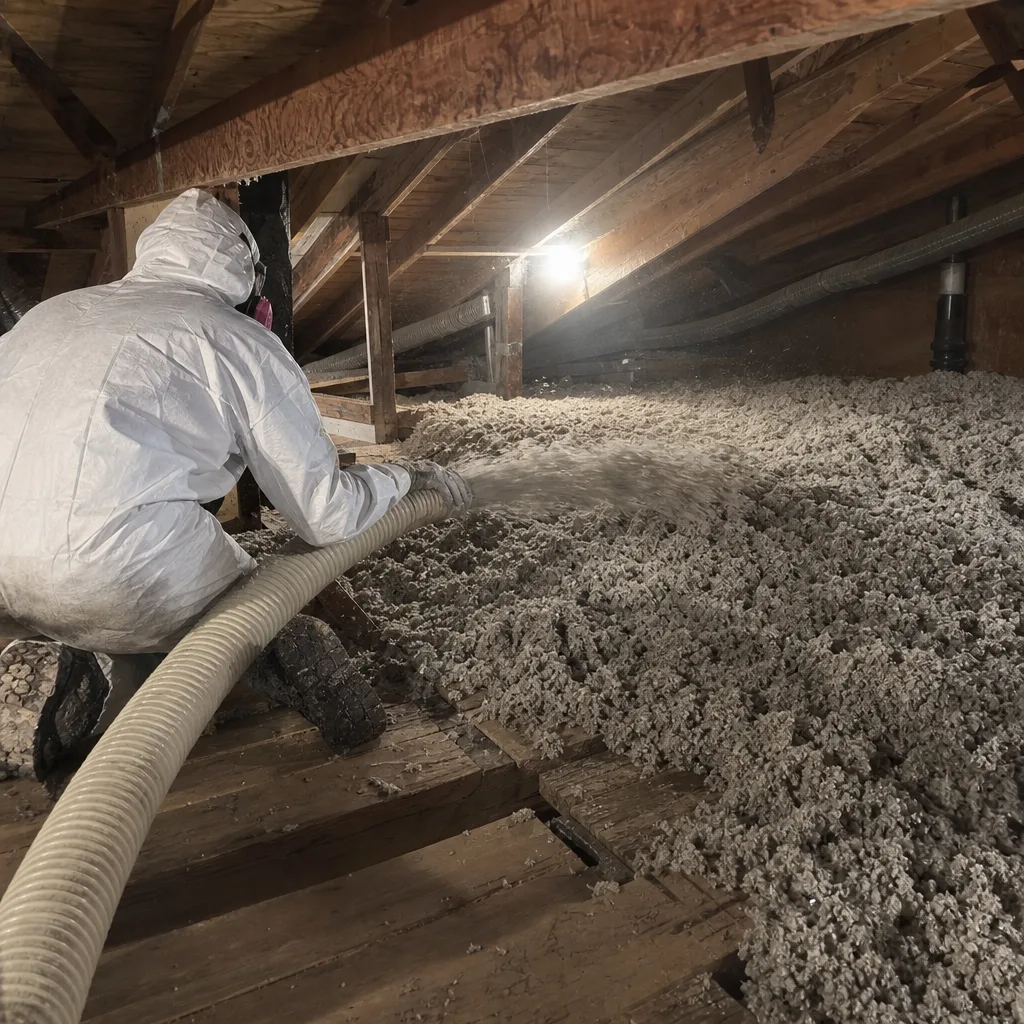
Here’s what you can safely check yourself: verify that your bath fans and dryer vent terminate outside, not in the attic. Look for daylight through the attic floor at top plates and wire penetrations. Check the existing vapor barrier for tears at staple points, especially near the attic hatch where foot traffic concentrates. These observations help us, and they cost you nothing.
Where DIY goes wrong: installing a vapor barrier without first establishing the air barrier. Stapling poly to the bottom of rafters instead of the attic floor creates a trapped moisture cavity. Using the wrong permeance rating for Lancaster’s climate, a Class I impermeable barrier where a Class II or smart retarder is appropriate, can cause summer condensation on the exterior side. Working in a 130-degree Lancaster attic in July is its own hazard. We carry hydration, harnesses for steep pitches, and respirators rated for mineral wool fibers. Most homeowners don’t.
Call (661) 526-2890 for a free estimate. We’ll inspect, photograph what we find, and give you a written price before any work starts.
FAQs
A properly installed 6-mil reinforced polyethylene vapor barrier typically lasts 15-25 years in Lancaster’s climate, though UV exposure through unscreened gable vents can degrade exposed edges in as little as 8-10 years. MemBrain smart retarders, not being UV-sensitive, often outlast the structure if protected from physical damage. Call (661) 526-2890 if you’re unsure of your current barrier’s age, estimates are free.
Small punctures or staple tears can be patched with compatible tape if the surrounding poly is still supple and the air barrier behind it is intact. If the poly is brittle, extensively torn, or was installed over an unsealed attic floor, patchwork wastes money. We replace the barrier and seal the leaks first, so the new material isn’t fighting the same air movement that tore the old one. Call (661) 526-2890 for an exact quote, estimates are free.
Most attic vapor barrier replacements in Lancaster homes under 2,000 square feet take one full day, assuming the attic is cleared and accessible. Jobs requiring insulation removal, air sealing of top plates and can lights, or coordination with electrical or HVAC trades run two days. We schedule with a named technician and text when they’re en route, under Haven Standard: Arrive on schedule.
Yes. We carry 6-mil reinforced polyethylene, MemBrain smart retarder rolls, and compatible tapes and acoustic sealants on every Lancaster service vehicle. For crawl space encapsulation, we stock 12-mil and 20-mil reinforced liners. We also stock parts for Reflectix radiant barrier systems. If your assembly requires a material we don’t have that day, we’ll source it and reschedule within 48 hours, never substituting without written approval.
Written by Wes Okafor, Owner & Lead Insulation Technician, Topside Attic Insulation Lancaster at Topside Attic Insulation Lancaster, serving Lancaster and nearby areas.