
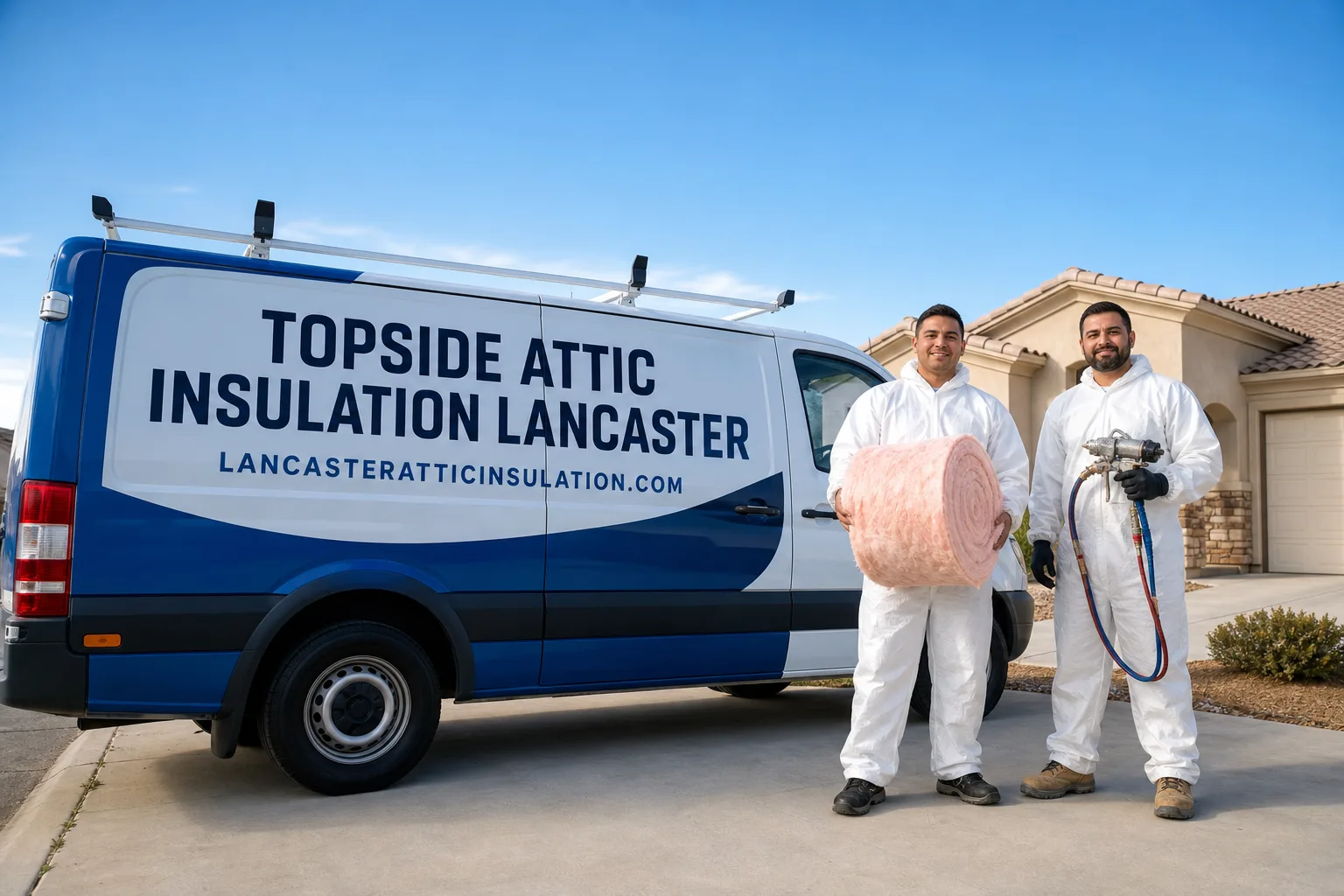
How Much Does Insulation Removal & Replacement Cost in Lancaster, CA?
Our Insulation Removal & Replacement services in Lancaster, CA typically run between $1,400 and $4,200 for a standard single-story home, with most attic jobs landing around $2,000 to $3,000 when you include old material removal, attic air sealing, and new blown-in insulation. The wide range comes down to attic square footage, existing insulation depth and type, and whether rodent contamination or moisture damage is involved – all of which are common in the high-desert Antelope Valley climate.
Insulation Removal & Replacement Cost Breakdown (2026)
These figures reflect what homeowners in Lancaster are paying in 2026 for full-service removal and replacement, from Palmdale Road corridors to the neighborhoods near Avenue K and out toward Quartz Hill. Pricing covers labor, vacuum removal, haul-away, and new insulation material. Air sealing – which we treat as a prerequisite, not an add-on – is listed separately because it genuinely changes the outcome of the finished job.
| Scope of Work | Typical Lancaster Price Range (2026) |
|---|---|
| Attic insulation removal only (per sq ft) | $0.85 – $1.50/sq ft |
| Blown-in fiberglass or cellulose removal + haul-away (1,000-1,500 sq ft attic) | $850 – $1,600 |
| Blown-in fiberglass or cellulose removal + haul-away (1,500-2,500 sq ft attic) | $1,400 – $2,800 |
| Attic air sealing (top plates, can lights, penetrations) | $400 – $900 |
| New blown-in insulation installation (R-38 to R-60, per sq ft) | $1.10 – $1.85/sq ft |
| Full removal + air seal + replacement (1,000-1,500 sq ft attic) | $1,400 – $2,600 |
| Full removal + air seal + replacement (1,500-2,500 sq ft attic) | $2,000 – $3,800 |
| Full removal + air seal + replacement (2,500-3,500 sq ft attic) | $2,800 – $4,200 |
| Rodent-contaminated insulation removal (biohazard handling, decontamination) | $1,200 – $2,500 (on top of standard removal) |
| Spray foam air sealing at penetrations (targeted application) | $300 – $650 |
| Radiant barrier installation (concurrent with replacement) | $650 – $1,400 |
A few things to understand about these numbers. Lancaster’s climate – desert heat that runs above 100°F from June through September, with overnight lows that can drop below freezing in January – means homes here legitimately need insulation to perform, not just exist. An R-19 attic in a Quartz Hill ranch house isn’t just uncomfortable; it’s doing active damage to your HVAC equipment by forcing it to run longer cycles. Most energy codes applied in Lancaster require attics to reach at least R-38, and we recommend R-49 to R-60 for homes with single-pass HVAC systems that struggle in the summer peak. That additional material depth is real cost, and it’s the right call for this climate.
Rodent remediation pricing is the single most variable line item in the Lancaster market. Ground squirrels, roof rats, and mice move into attics across the Antelope Valley at a rate we see consistently in the Desert View Highlands and East Lancaster neighborhoods. When an attic has active contamination, the insulation is classified as biohazard material and has to be bagged, removed under negative pressure, and disposed of separately. That process is slower and costs more – count on an added $1,200 to $2,500 depending on the severity and attic access conditions.
What Affects Insulation Removal & Replacement Pricing in Lancaster
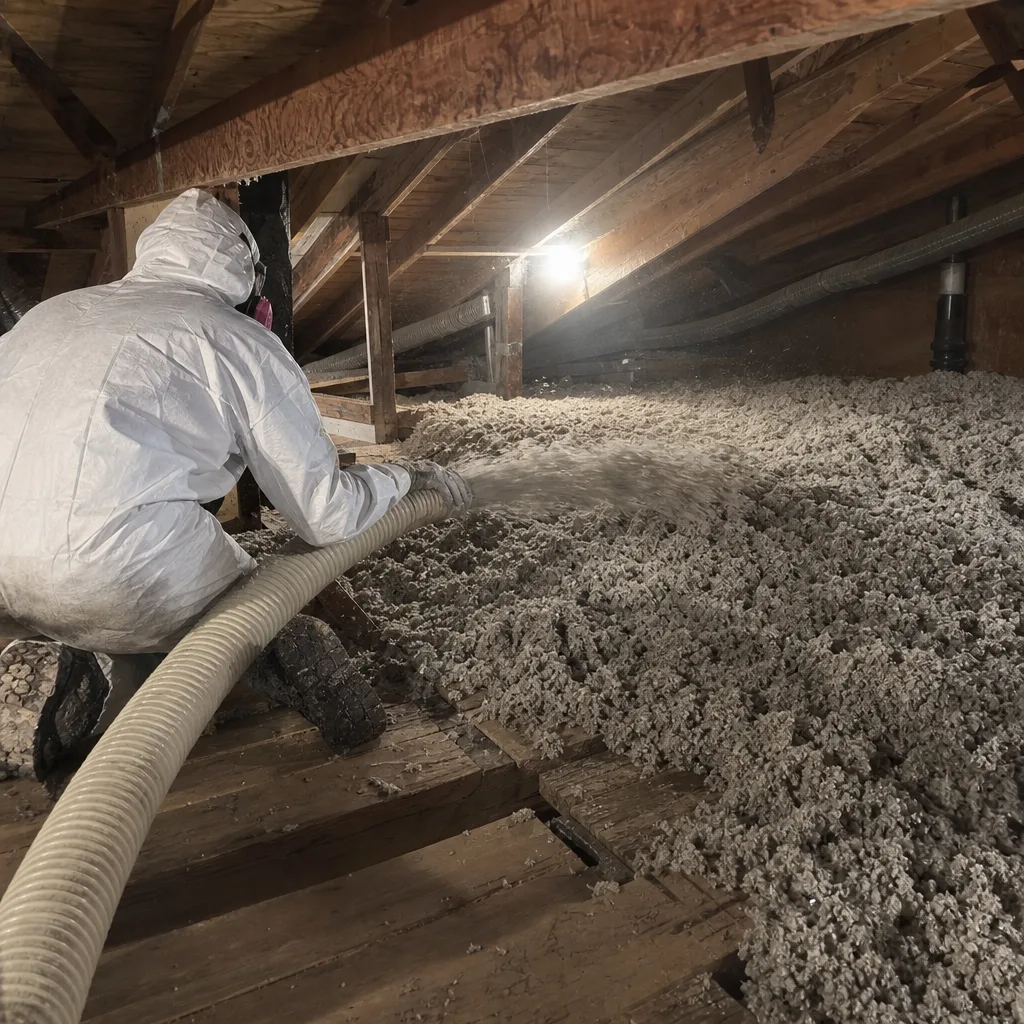
- Attic square footage and access: A 1,200-square-foot bungalow near 10th Street West will cost meaningfully less to clear out than a 2,800-square-foot two-story near Avenue J, even if both have the same depth of blown-in fiberglass. Tight access hatches, low roof pitches, and cross-braced trusses slow the crew down, and labor time drives the number.
- Existing insulation type: Loose-fill cellulose compresses over time and can mat into a dense layer that takes longer to vacuum out than loose fiberglass. Original vermiculite or older compressed batt insulation – found occasionally in Lancaster homes built before 1985 – may require special handling. We test before we touch anything if there’s any question about the material.
- Contamination level: Rodent activity, moisture intrusion from a past roof leak, or HVAC condensate drips all change the removal scope. In homes near Avenue I and the older Lancaster neighborhoods west of Sierra Highway, we regularly find attic decks where the old insulation absorbed years of roof leak cycles. That wet, compacted material has to come out in sections and takes extra time.
- Air sealing scope: We will not install new insulation over an unsealed attic floor – that’s not how we operate at Envelope Insulation Co. Air sealing of top plates, can lights, and all penetrations happens first, always. The number of penetrations in your attic floor directly affects the air-sealing cost. A 1990s Lancaster tract home with 30+ can lights in the ceiling takes longer to seal than a newer build designed with air-tight fixtures.
- R-value target and material selection: Going from a degraded R-13 up to R-49 takes more material than going from R-30 to R-49. Material costs vary too – Owens Corning and Johns Manville fiberglass runs slightly less per R-unit than Knauf EcoSeal or GreenFiber cellulose in current Lancaster supplier pricing, though both perform well in the desert heat. We don’t lock you into any one product line.
- Radiant barrier addition: Lancaster gets direct sun exposure that pushes attic temperatures above 150°F in summer. Adding a foil radiant barrier to the underside of the roof deck – either as a standalone upgrade or concurrent with a full replacement – adds $650 to $1,400 but measurably reduces the radiant heat load that your insulation has to absorb. We see attic temperature drops of 20-30°F on properly installed radiant barriers in this climate. It’s not required, but in Lancaster it’s rarely a bad investment.
Lancaster vs. Nearby Markets: Why Pricing Differs
Contractors working primarily in the San Fernando Valley or Santa Clarita sometimes quote Lancaster jobs using their LA Basin labor rates, then add a fuel surcharge for the drive over the Tejon Pass or up the 14 Freeway. That can inflate quotes by 8 to 15 percent compared to a crew based here in the Antelope Valley. When you’re comparing estimates, check where the crew is actually coming from – a Palmdale- or Lancaster-based crew doesn’t carry the same overhead on an Avenue K job.
The desert climate also creates a few Lancaster-specific cost factors that don’t show up in coastal or valley market guides. Attic temperatures here make personal protective equipment heavier and limits continuous crew time in the attic during summer months. That’s a real labor cost consideration that honest local contractors build into their pricing. It’s also why scheduling removal projects in late October through March gets slightly better crew productivity and, occasionally, slightly better pricing.
Blower-Door Testing and Why It Matters for Replacement Cost
A blower-door test – a pressurization reading that measures, in one number called CFM50, how much air your building envelope is leaking – is the only objective way to know how much of your energy bill is disappearing through gaps in the attic floor rather than through the insulation itself. We conduct before-and-after blower-door readings on every applicable job and publish both numbers in the documentation we leave with you.
This matters for replacement pricing because some Lancaster homes – particularly tract builds from the late 1990s near the Eastside neighborhoods and the newer streets off Avenue L – are losing more conditioned air through unsealed penetrations than through thin insulation. If your blower-door pre-test reads 4,800 CFM50 and the attic has adequate insulation depth, what you actually need is air sealing, not a full replacement. We will tell you that, and we will show you the number that proves it, even if it means a smaller job. That’s what Wes Okafor built this operation to do: give you the documented answer, not the upsell.
When the pre-test and the attic inspection both point to a full removal and replacement, the after-test typically shows a 25 to 45 percent reduction in air leakage for Lancaster homes where we complete full attic floor air sealing concurrent with the replacement. A home reading 5,200 CFM50 before the job might read 3,000 to 3,800 CFM50 after – a meaningful change in actual HVAC load that shows up in utility bills within the first billing cycle after work is done.
How to Save on Insulation Removal & Replacement in Lancaster
The biggest single way to avoid overpaying on an insulation removal and replacement project in Lancaster is to get a written price before any work starts and to understand exactly what that price includes. Under Haven Standard Clause 1, every Envelope Insulation Co. quote is a flat written price with a written scope – no “we’ll see what we find once we’re in the attic” adjustments after the crew arrives. You know the number before anyone touches a tool.
- Combine services when the attic is already open: If you’re pulling old insulation, the attic floor is exposed and accessible. That’s the lowest-cost moment to seal top plates, address can light penetrations, and install a radiant barrier. Doing those same tasks on a separate trip later costs more in labor setup time. Most Lancaster homeowners who bundle air sealing and radiant barrier installation with a full replacement save $300 to $700 compared to scheduling them separately.
- Schedule outside the summer peak: Crews work faster and more comfortably in a Lancaster attic in November than in August. This doesn’t always translate to a lower quote, but it often means faster scheduling and better crew availability – which means your project gets done rather than waitlisted.
- Get a second opinion on any written estimate: We offer a free second opinion on any written estimate you’ve already received. Bring us the quote and we will read it with you and tell you exactly what it includes, what it doesn’t, and whether the scope matches what your attic actually needs. This isn’t a sales tactic – it’s how we think the market should work.
- Check for utility rebates: Southern California Gas Company and Los Angeles Department of Water and Power both offer rebate programs for attic insulation upgrades that meet R-value thresholds. The programs change year to year, but a qualifying Lancaster homeowner can sometimes recover $100 to $500 on a full replacement project. We can tell you which rebates currently apply to your project when we provide your written price.
- Don’t delay on rodent contamination: This one costs people money. In Lancaster neighborhoods like Desert View Highlands and the streets north of Avenue H, waiting six months to address known rodent activity in an attic typically means the contamination spreads and the removal scope grows. A job that costs $2,400 today may cost $3,800 if the infestation advances to adjacent insulation zones. The attic cleaning and rodent-proofing scope is almost always larger when it’s been left to sit.
For an accurate, written price on your specific Lancaster home, call us at (661) 526-2890. We’ll schedule an attic inspection, run a blower-door pre-test where appropriate, and hand you a flat written price before we discuss anything else. No estimates that turn into surprises.
What the Job Looks Like, Start to Finish
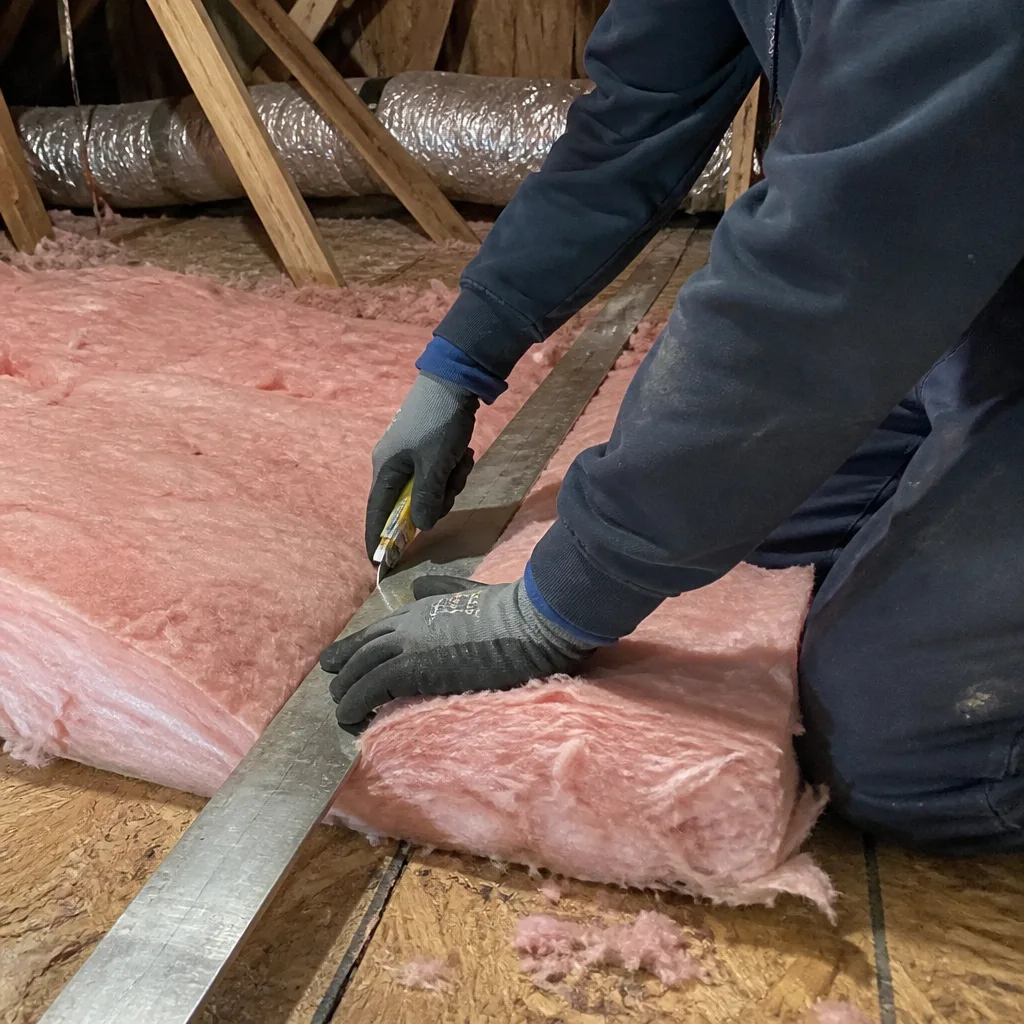
Understanding the process helps you evaluate any written price you receive – including ours. Here’s what a standard removal and replacement in Lancaster looks like from the day we arrive to the day we leave.
Day one: inspection and blower-door pre-test. A named Envelope Insulation Co. technician arrives – you’ll get a text when they’re on the way – and starts with a physical attic inspection and, on applicable jobs, a blower-door pre-test. The inspection documents existing insulation depth and R-value, identifies contamination, notes the number and type of penetrations in the attic floor, and checks for moisture or structural issues that need to be disclosed before the project begins. You receive a Documented Photo Record of the pre-work attic condition, always.
Written price before any work starts. This is Haven Standard Clause 1 and it doesn’t flex. The written scope details exactly what’s being removed, what air-sealing work will be performed, which penetrations will be addressed, what material will go in, and what R-value the finished attic will reach. The 365-Day Done Right Promise is attached to that written scope. You know what the crew is doing before they open the hatch.
Removal under negative pressure. Old insulation comes out by commercial vacuum equipment vented to a truck-mounted collection unit outside the home. In Lancaster homes with rodent contamination, the crew works in full PPE and the material is double-bagged for disposal. This is not a shop-vac operation.
Air sealing – before any new insulation goes in. Every top plate gap, can light penetration, electrical chase, plumbing stack, and attic hatch perimeter gets sealed before the first bag of new material is loaded. In a Lancaster home with older can lights, this step alone often adds 30 to 60 minutes of crew time – and it’s the step that separates a job that performs from one that just looks done.
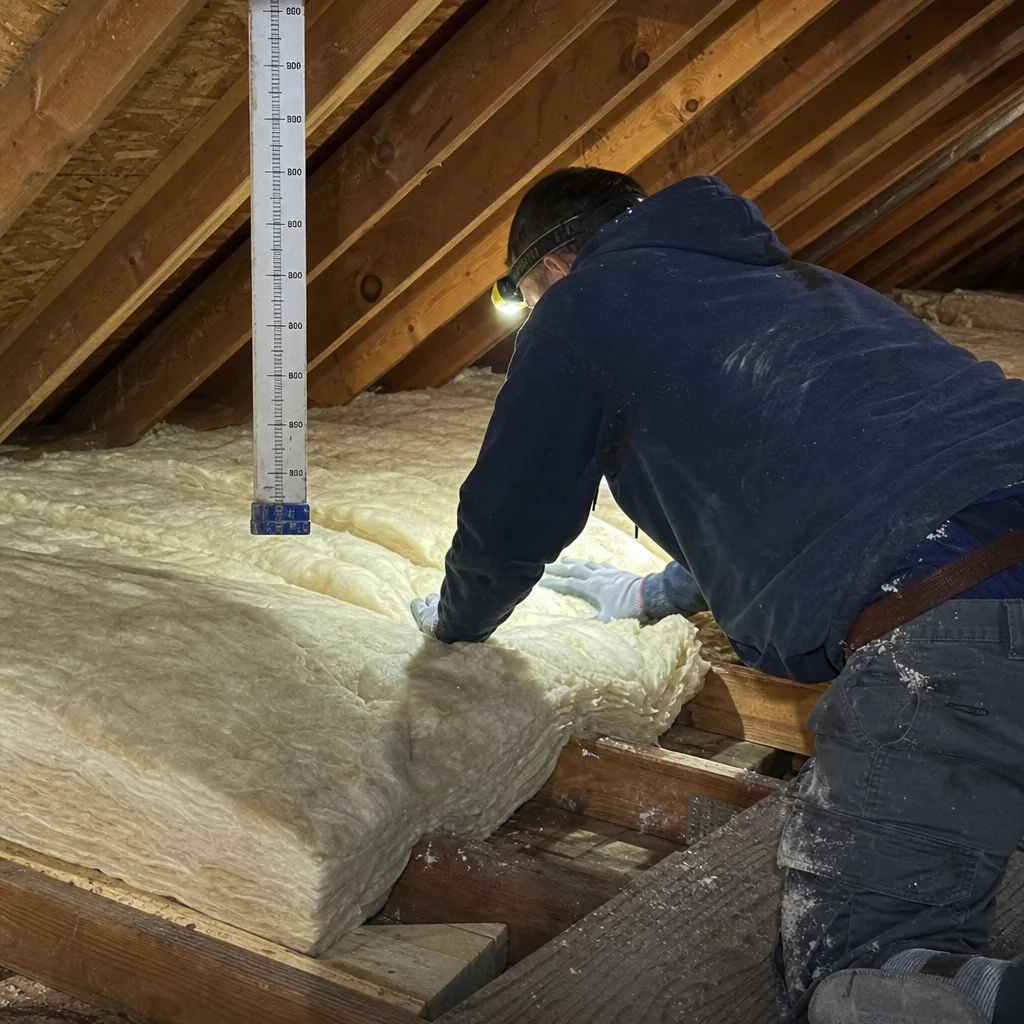
New insulation installation to specified R-value. Blown-in insulation from Owens Corning, Johns Manville, Knauf, or GreenFiber goes in to the depth specified in the written scope. Depth gauges are installed in the attic so the finished depth is measurable and documentable.
Blower-door post-test and close-out documentation. On applicable jobs, the after-test number goes into the same report as the before-test number. You see both figures. The Documented Photo Record of the finished work is included. The written warranty is handed over before the crew leaves.
Lancaster-Specific Details Worth Knowing
Lancaster sits at roughly 2,356 feet elevation in the Antelope Valley. The combination of high-desert sun exposure, low humidity, and large diurnal temperature swings – often 40 degrees between a July afternoon high and the same night’s low – creates an insulation load that differs from what you’d see in a coastal California market. Fiberglass and cellulose both perform well here, but they need to be installed at sufficient depth to handle the radiant heat load in summer, not just the conductive heat loss in winter.
Most Lancaster homes built between 1975 and 2000 were originally insulated to California Title 24 standards that are now well below current code requirements. A home built in 1988 near the Antelope Valley Freeway corridor very likely left the factory with R-19 in the attic. That same attic, with 35 years of settling and compression, may be performing closer to R-10 or R-12 by now. Blown-in insulation compresses at a rate of roughly 15 to 20 percent over its first decade; after 30 years, the depth you see with a flashlight overstates the actual R-value by a meaningful margin.
Lancaster also falls under Los Angeles County building permit requirements for certain insulation work. A full attic replacement that changes the existing R-value classification may require a permit depending on the scope – we will tell you when a permit applies to your project and what it costs before we write the scope. We do not skip permits to make a quote look smaller.
Removal-Only vs. Full Replacement: When Do You Need Both?
Not every Lancaster attic that needs attention needs a full removal. A home that has clean, uncontaminated insulation at R-25 may be a candidate for a top-off installation rather than a full pull-out – adding blown-in material over the existing layer to reach R-49 or R-60. That approach works when the attic floor penetrations can be air-sealed around the existing material or when the existing insulation is cleanly distributed and not interfering with access.
A full removal is the right call when:
- Rodent feces, urine staining, or nesting material is present in the existing insulation – contamination that can’t be left in contact with the attic floor.
- Moisture damage has compressed or matted the existing material into a layer that can’t be reliably added to.
- The existing insulation type or distribution blocks proper air sealing of the attic floor penetrations.
- The attic has vermiculite or another material that requires testing before any disturbance or addition.
- The existing insulation depth is so low and so compressed that topping off would not be cost-effective compared to starting clean.
We see a lot of Lancaster attics where the right answer is a top-off plus air sealing rather than a full removal, and we’ll tell you that when it applies. The full removal and replacement is the more expensive job and we’re not going to recommend it when it isn’t warranted.
FAQs: Insulation Removal & Replacement Cost in Lancaster
How much does full insulation removal and replacement cost in Lancaster, CA?
Most Lancaster homes pay between $2,000 and $3,800 for a complete attic insulation removal and replacement including air sealing, with smaller homes (under 1,500 sq ft attic) closer to $1,400 and larger homes above 2,500 sq ft approaching $4,200 or more when rodent remediation or radiant barrier work is included. The figure on your written quote from Envelope Insulation Co. is a flat price – not a starting range. Call (661) 526-2890 to schedule an attic inspection and get that number in writing.
Is it cheaper to replace insulation or just add more on top?
Adding on top – called a top-off installation – typically costs 40 to 60 percent less than a full removal and replacement, running roughly $800 to $1,800 for a Lancaster attic in the 1,200-2,000 sq ft range. The problem is that topping off is only appropriate when the existing insulation is clean, dry, and not contaminated. In Lancaster neighborhoods where rodent activity is common – which covers a significant portion of the Antelope Valley – removal is often the only correct option. We inspect first and give you both scenarios in writing before recommending either.
Can I get an insulation removal and replacement done in one day in Lancaster?
Most single-story Lancaster homes with attics up to 1,800 square feet can be completed – removal, air sealing, and new blown-in insulation – in a single 6-to-9-hour day. Larger two-story homes or jobs with significant contamination remediation may run into a second day. We give you the estimated timeline in the written scope before work starts, so you’re not guessing when your attic will be back in order.
Does insulation removal require a permit in Lancaster?
Los Angeles County requires a permit for certain insulation work depending on the scope and the R-value change involved. A simple removal-only job typically does not require a permit; a full replacement that changes the energy compliance classification of the attic may. We assess permit requirements for every Lancaster job and include any permit cost in the written price before work begins. We don’t leave permits as a post-contract surprise.
Why is insulation removal in Lancaster sometimes more expensive than in the Los Angeles area?
The main cost factors specific to Lancaster are the high rate of rodent contamination in Antelope Valley attics – which requires biohazard handling and adds $1,200 to $2,500 to a standard removal job – and the greater material depth needed to handle the desert climate’s radiant heat load, which runs higher than coastal California jobs of the same square footage. Some contractors also add a travel surcharge for the drive from LA Basin, which a locally based crew doesn’t carry. For an exact Lancaster-specific price, call (661) 526-2890 and we’ll write you a flat quote after an attic inspection.
Key Takeaways
- Most Lancaster insulation removal and replacement projects cost between $2,000 and $3,800, with smaller attics starting around $1,400 and large or contaminated attics reaching $4,200 or more.
- Rodent contamination – common across the Antelope Valley – is the single biggest variable in removal pricing, adding $1,200 to $2,500 to a standard job.
- Air sealing of top plates, can lights, and penetrations should be done before new insulation goes in; any quote that doesn’t include this step is not showing you the complete job.
- Lancaster’s desert climate requires R-38 minimum and R-49 to R-60 for best performance; older homes often have settling insulation performing well below its labeled R-value.
- Before-and-after blower-door readings tell you what the air sealing actually accomplished – in a single measurable number – rather than requiring you to take the contractor’s word for it.
- Every Envelope Insulation Co. quote is a flat written price with a written scope before any work starts. The 365-Day Done Right Promise is attached to every completed job.
- We offer a free second opinion on any written estimate you’ve already received from another contractor.
If you’re trying to understand what your specific Lancaster home’s insulation removal and replacement will cost, the right answer isn’t a price guide – it’s an attic inspection and a written price. You can read about our approach to Insulation Removal & Replacement in Lancaster or start from our home page to see the full range of services Envelope Insulation Co. offers across the Antelope Valley.
Call (661) 526-2890 to schedule your inspection. A live person answers – no voicemail loop, no callback window. We’ll get an attic inspection on the calendar, run a blower-door pre-test where it applies, and hand you a flat written price before we discuss starting any work. That’s Haven Standard Clause 1, and it applies to every Lancaster job we take.
Written by Wes Okafor, Owner at Envelope Insulation Co. (operating as Topside Attic Insulation Lancaster), serving Lancaster, CA and the greater Antelope Valley since 2016. Pricing reflects the Lancaster market as of 2026. Topside Attic Insulation Lancaster offers free estimates – call (661) 526-2890.
What Our Customers Say
"They air-sealed the attic floor before insulating and showed me the blower-door number before and after. The upstairs is finally the same temperature as downstairs."
- Marisol D."They photographed rodent damage in the old insulation that we had no idea about, and priced the exclusion work separately so we could decide."
- Harriet N."Two other companies quoted to blow more insulation on top of what was there. These were the only ones who said the existing material had to come out first, and explained why."
- Clifford E.