
Last updated September 23, 2026
DIY vs Professional Insulation: The Lancaster Homeowner’s Decision Guide
Home Depot rents attic insulation blowers in Lancaster for $30 a day, and the blown fiberglass bags are clearly labeled with coverage charts. The machine and the math are genuinely accessible to a careful homeowner, but the chart assumes a sealed attic. If the attic isn’t sealed first, you’re spending $400 on material to insulate outdoor air. In this guide, we’ll show you exactly which insulation tasks in Lancaster make sense to handle yourself, which require calibrated equipment you can’t rent, and how to use a professional diagnostic as a roadmap for smart DIY work. For how to hire a insulation contractor in Lancaster: a step-by-step guide, see our companion resource.
Quick Answer
Most Lancaster homeowners can safely add blown insulation to an attic that’s already been professionally air-sealed, but they cannot effectively identify or seal the air leaks that need to happen first without a blower-door test. The dividing line isn’t skill, it’s instrumentation: a blower door measures leakage you cannot see or feel, and without it, you’re guessing where 80% of your conditioned air is escaping.
Table of Contents
- Where DIY Insulation Makes Sense in Lancaster
- The Blower-Door Boundary: Why Some Tasks Require Professional Equipment
- Lancaster Climate Risks That Change the DIY Calculation
- Homeowner-Accessible Materials vs. Licensed-Only Applications
- The Hybrid Approach: Using a Pro Diagnostic as Your DIY Blueprint
- Cost Comparison: DIY, Professional, and Hybrid Scenarios
- Common Mistakes to Avoid
- When to Call a Professional
- Frequently Asked Questions
Where DIY Insulation Makes Sense in Lancaster
There are three insulation tasks a careful Lancaster homeowner can execute well with basic tools and patience. Each assumes the building envelope has already been professionally sealed, which we’ll address in the next section.
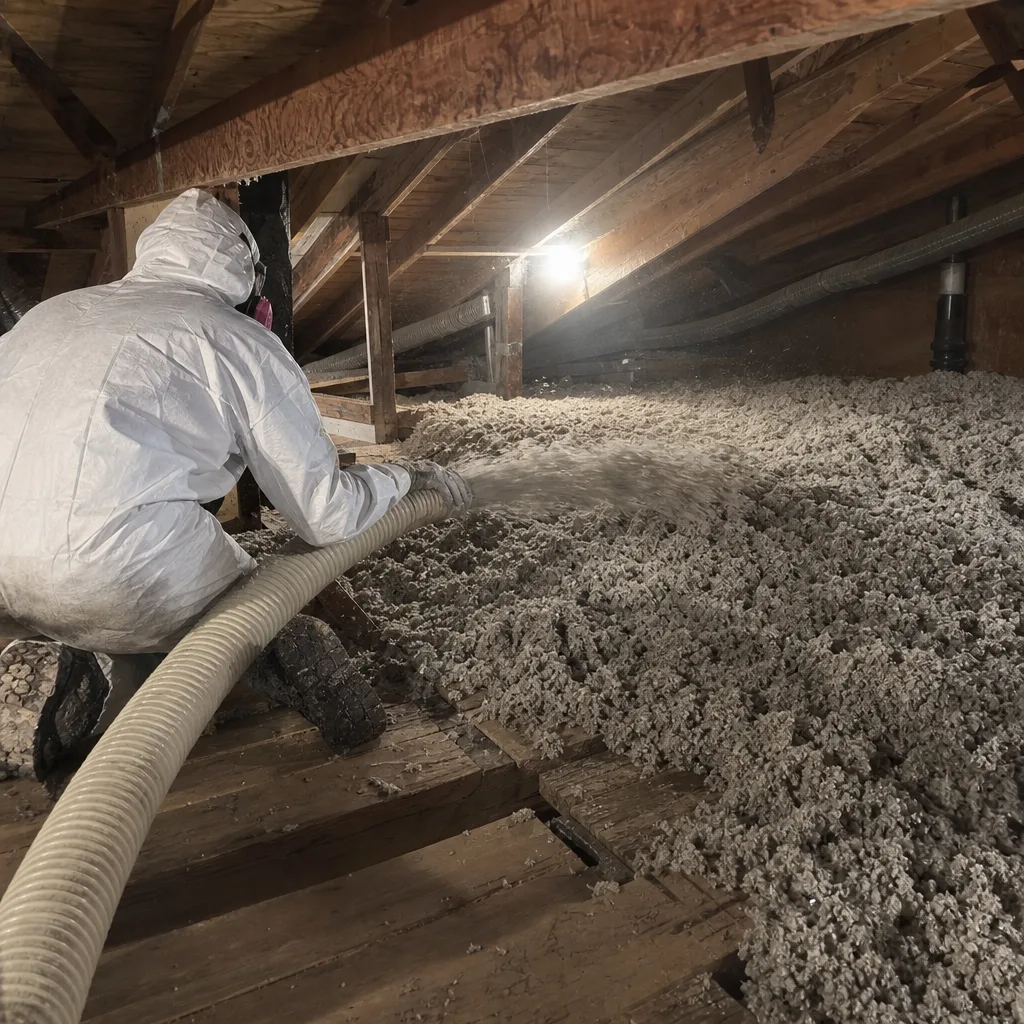
Adding Blown Insulation to an Already-Sealed Attic
This is the clearest DIY win. If a contractor has already air-sealed your attic and documented the work, adding blown fiberglass to reach the target depth is straightforward. The rental blower from Home Depot or Sunbelt Rentals in Palmdale handles Knauf Jet Stream or CertainTeed InsulSafe SP with no modification. The bags print coverage charts for settled depth, typically R-38 to R-49 for Lancaster’s climate zone, which is IECC Climate Zone 15 with 2,800+ cooling degree days.
The process is simple but physical: load the machine, keep the hose moving in a uniform pattern, and stop at the depth markers your contractor left. We recommend photographing the attic before you start, then again at completion. This creates your own documented record, which matters for resale and for your own reference if you ever need to locate a top plate or chase.
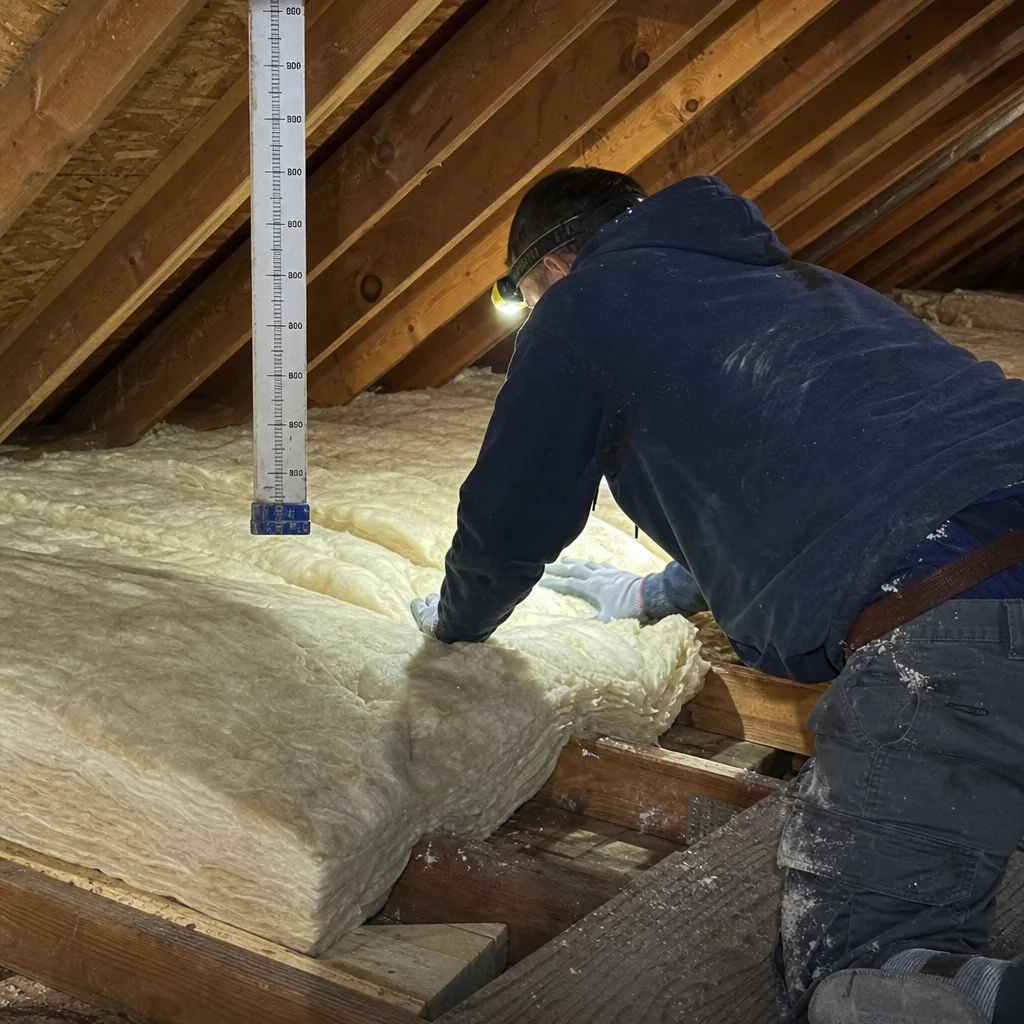
Batt Insulation in Open Joist Bays
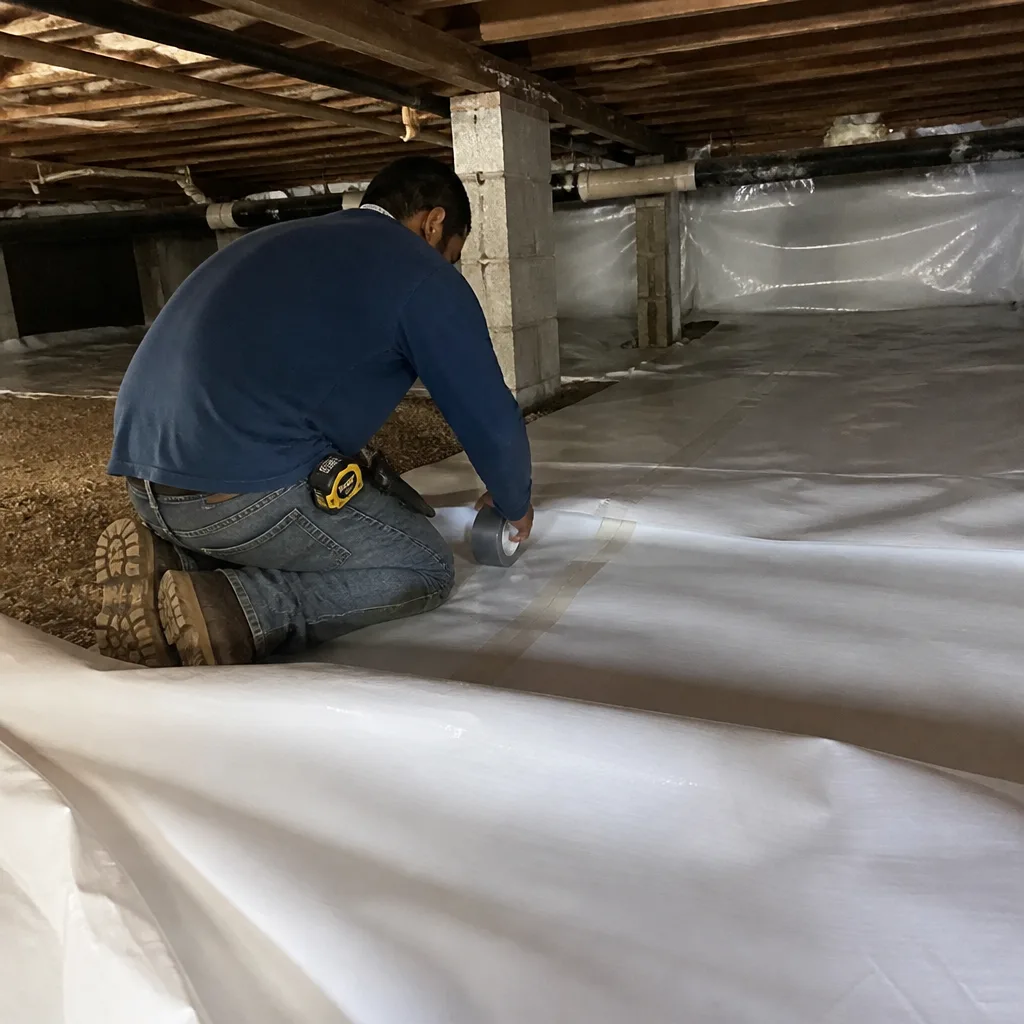
Finished basement ceilings, kneewalls in Lancaster’s older split-levels near the Antelope Valley Country Club, and accessible crawl spaces with open joist bays are reasonable DIY territory. Rockwool Comfortbatt cuts cleanly with a bread knife, doesn’t irritate skin like fiberglass, and fits snugly between joists without compression. The key detail most homeowners miss: the batt must contact all six sides of the cavity. A batt compressed at the edges or floating away from the subfloor above performs like a much lower R-value.
Small-Penetration Sealing with Foam Backer Rod and Acoustical Sealant
After a professional blower-door test identifies the major leaks, a homeowner can maintain the seal around plumbing stacks, electrical penetrations, and duct boots using foam backer rod and acoustical sealant. These materials cost under $30 total and don’t require special equipment. The work is tedious, not technical, and it prevents the slow degradation of the original air seal.
The Blower-Door Boundary: Why Some Tasks Require Professional Equipment
The blower door is a pressurization fan mounted in an exterior door frame, paired with a manometer that measures airflow in CFM50, cubic feet per minute at 50 Pascals of pressure. One number tells you how leaky the building envelope is. We have never met a homeowner who could guess this number within 30% of reality, and we’ve tested thousands of homes in Lancaster and the Antelope Valley.
Here’s why that matters. In a typical Lancaster home built between 1985 and 2005, the blower door reads 3,500 to 5,500 CFM50 before air sealing. After professional sealing of top plates, can lights, duct chases, and plumbing penetrations, that same home reads 1,800 to 2,800 CFM50. The homeowner feels nothing different during this process. The attic looks the same. The insulation depth hasn’t changed. But the rate of conditioned air loss has dropped by roughly half, which means the insulation you’re about to add will actually perform at its rated R-value instead of filtering air.
What the Blower Door Finds That You Cannot
Top-plate leaks at interior wall intersections are invisible from the attic side because drywall hides the gap. Recessed can lights leak through the housing and through the thermal bypass around the trim ring. Furnace chase openings, common in Lancaster’s tract homes near Quartz Hill, connect the attic directly to the wall cavity below. These leaks don’t show as drafts you can feel standing in the living room. They show as elevated CFM50 on the manometer, and they require targeted sealing with fire-rated foam, rigid foam board, or specialized tape depending on the penetration type.
A homeowner without a blower door can seal the obvious gaps around the attic hatch and visible duct boots. That’s roughly 20% of the total leakage in most homes. The remaining 80% requires diagnostic equipment to locate and verify.
The Cost of Guessing Wrong
We see this regularly in Lancaster: a homeowner spends a weekend blowing insulation, then calls us the following summer because the upstairs bedrooms are still uncomfortable. The blower door reveals that the new insulation is performing as a filter, not a thermal barrier, because air is moving through it from dozens of undetected leaks. The remediation costs more than doing it right the first time because we now have to remove or work around the homeowner’s insulation to access the leaks beneath it.
Attic Insulation in Lancaster from a contractor who starts with a blower-door test avoids this sequence entirely.
Lancaster Climate Risks That Change the DIY Calculation
Lancaster’s high desert climate creates specific hazards that don’t exist in milder coastal California markets. These aren’t abstract warnings. They’re conditions we’ve documented in homes across the city, from the older neighborhoods near Lancaster Boulevard to the newer construction west of the 14 freeway.
Attic Temperatures Above 140°F
From June through September, Lancaster attics routinely exceed 120°F and can spike past 140°F on 110°F days. Heat exhaustion happens faster than most homeowners expect, especially when wearing long sleeves and pants for fiberglass protection. We schedule attic work in Lancaster for early morning hours, and our crews carry hydration protocols. A homeowner working alone on a Saturday afternoon is at genuine risk.
Eave Ventilation and Wind-Driven Dust
Lancaster’s prevailing westerlies carry fine desert dust into attic spaces through improperly baffled eave vents. A homeowner installing baffles must maintain a clear air channel from soffit to ridge while preventing wind-washing of insulation at the eave edge. Get this wrong, and you’ve created a path for dust to accumulate on top of your new insulation, degrading its performance within two to three years. The baffle must be rigid, properly secured, and extend past the top of the insulation depth.
Knob-and-Tube Wiring in Pre-1960 Structures
Some homes in Lancaster’s original neighborhoods, particularly east of Sierra Highway and near the historic downtown corridor, still contain active knob-and-tube wiring. This wiring was never designed to be buried in insulation. The National Electrical Code and California amendments prohibit contact between insulation and active knob-and-tube. A homeowner adding insulation without identifying this condition creates a fire hazard and violates code. Professional identification requires knowledge of what to look for and where, plus documentation of which circuits are affected.
Ice Dam Risk Is Minimal, but Summer Heat Gain Is Severe
Unlike cold-climate insulation guides, Lancaster homeowners don’t worry about ice dams. The relevant failure mode is radiant heat gain through poorly insulated roof decks, which overloads air conditioning systems sized for the conditioned space below. A DIY insulation job that achieves target depth but misses the thermal bypass at the attic hatch or the unsealed duct chase can leave the homeowner with a higher electric bill and no comfort improvement. The blower door finds these bypasses; the homeowner’s hand cannot.
Homeowner-Accessible Materials vs. Licensed-Only Applications
Not all insulation materials carry the same regulatory or safety requirements. California separates materials that a homeowner can purchase and install from those requiring licensed applicator certification.
Materials You Can Buy and Install Today
- Blown fiberglass (Knauf Jet Stream, CertainTeed InsulSafe): Available at any home center, rental blower compatible, no certification required.
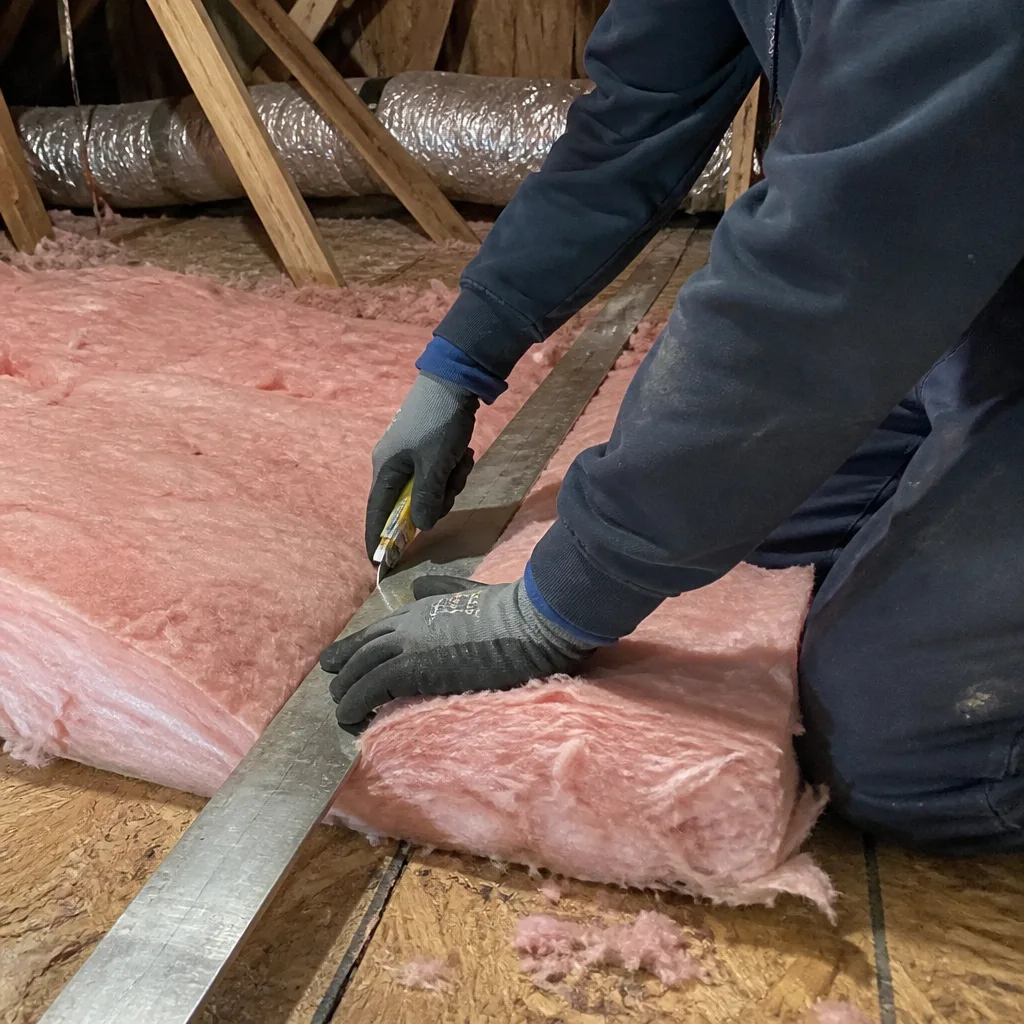
- Mineral wool batts (Rockwool Comfortbatt): Cut-to-fit, no special equipment, handles high temperatures well for Lancaster attics.
- Foam backer rod and acoustical sealant: For small-gap maintenance after professional air sealing.
- Rigid foam board (XPS, EPS, polyiso): Cut and fit for accessible kneewalls or crawl space applications; must be fire-protected per code if left exposed.
Materials Requiring Licensed Application
Spray polyurethane foam (SPF) above 2-inch lifts in a single pass requires a licensed applicator in California. The chemistry involves isocyanates and requires respiratory protection, ventilation engineering, and ratio-calibrated equipment that cannot be rented. Icynene and Demilec products fall in this category. Homeowners sometimes ask about “frosting” or “flash and batt” hybrid systems. The flash layer, even thin, still requires licensed application.
Spray Foam Insulation in Lancaster is a professional-only service for good reason: the material performs exceptionally well when applied correctly, and application errors are difficult and expensive to remediate.
Material Selection Without Lock-In
We specify from Owens Corning, Johns Manville, Knauf, Rockwool, CertainTeed, Icynene, Demilec, and GreenFiber based on what the home needs, not what we stock. No proprietary product lock-in means the specification follows the building science, not the warehouse inventory. A homeowner shopping DIY materials has the same flexibility at the retail level.
The Hybrid Approach: Using a Pro Diagnostic as Your DIY Blueprint
This is the path we recommend most often for capable Lancaster homeowners who want to control costs without sacrificing performance. It treats the professional contractor as a diagnostic and scoping resource, not as the default for every task.
- Hire a blower-door diagnostic. In Lancaster, a standalone blower-door test with written report costs $250-$400. The report should identify and quantify the major leakage zones, specify the sealing materials and methods for each, and state the target CFM50 for your home’s size and type. This is your roadmap. Without it, you’re navigating without coordinates.
- Decide your division of labor. The diagnostic report separates tasks requiring specialized equipment (blower-door verification, spray foam, dense-pack cellulose in closed cavities) from tasks a homeowner can execute with standard tools. Typically, the professional handles air sealing and any spray foam; the homeowner handles blown insulation to depth, batt installation in open bays, and ongoing maintenance sealing.
- Get a written scope for the professional portion. Under Haven Standard Clause 1, this means a flat price, written scope, and written warranty before anyone lifts a tool. You now have a contract for the professional work and a specification for your DIY work.
- Execute DIY work to the contractor’s depth targets. The blower-door report includes insulation depth targets for each attic zone, accounting for framing members and irregular joist spacing. Install to these targets, not to the bag coverage chart alone. The bag chart assumes uniform depth; your attic has valleys around chases and peaks at joist tops.
- Schedule a post-DIY verification. Some contractors offer a reduced-rate blower-door test to confirm that the DIY insulation work hasn’t compromised the air seal. This is worth the $150-$200 it typically costs. You’re verifying that you didn’t block soffit vents, disturb sealed penetrations, or create new bypasses.
This hybrid approach typically saves 30-40% over full professional installation while delivering documented performance. The savings come from your labor on the blown insulation, not from skipping the diagnostic work that makes the insulation effective. For detailed pricing context, see our insulation cost breakdown: the Lancaster homeowner’s reference for 2026.
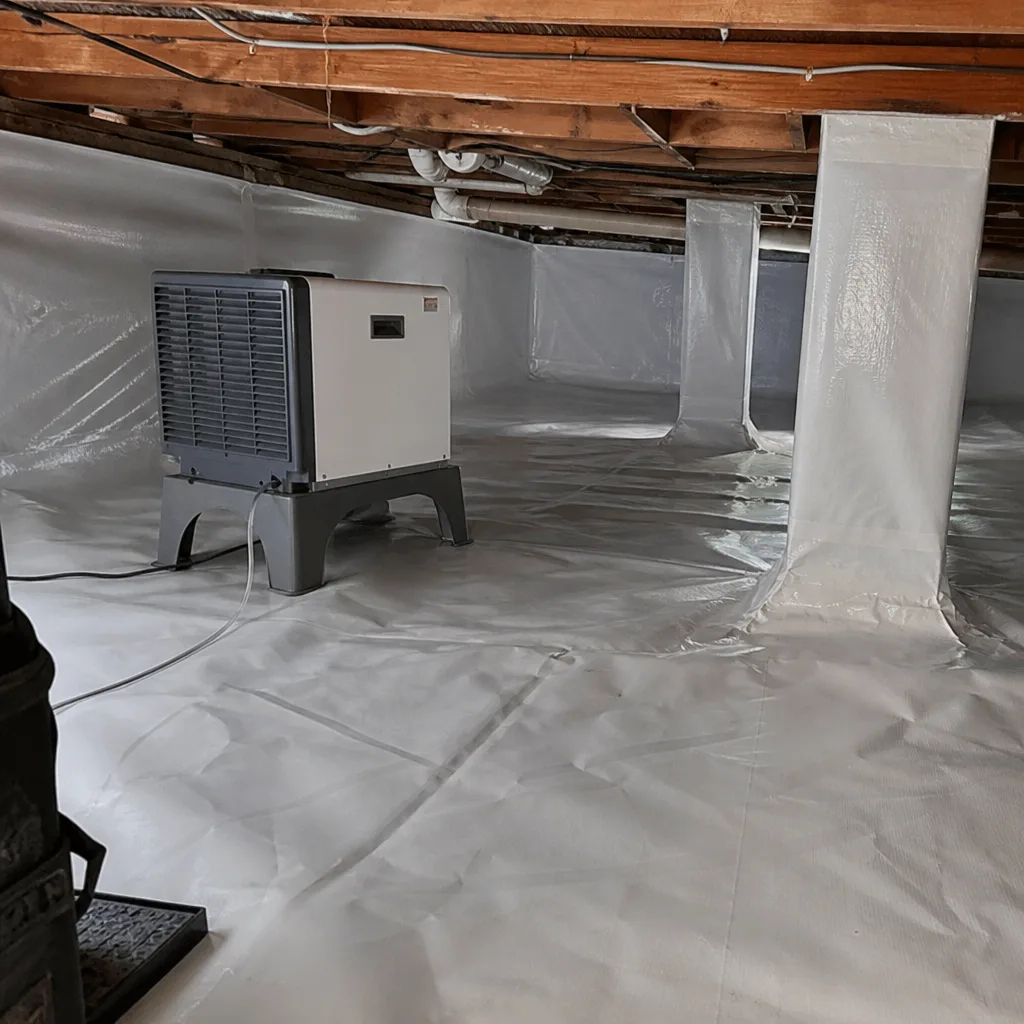
Crawl Space Encapsulation & Vapor Barrier in Lancaster follows the same principle: professional assessment first, then informed execution.
Cost Comparison: DIY, Professional, and Hybrid Scenarios
These ranges reflect Lancaster market conditions as of 2024-2025, based on typical 1,400-2,200 square foot single-family homes in the Antelope Valley. Your specific home may vary based on accessibility, existing conditions, and material selection.
Scenario A: Full DIY (No Professional Diagnostic)
- Rental blower: $30/day × 2 days = $60
- Blown fiberglass material (R-38 to R-49): $350-$550
- Basic PPE and tools: $75-$125
- Total: $485-$735
Risk: Unknown air leakage means unknown insulation effectiveness. Potential for $400+ in wasted material if attic is unsealed. No documentation for resale or warranty.
Scenario B: Hybrid (Professional Diagnostic + DIY Installation)
- Blower-door diagnostic with written report: $250-$400
- Professional air sealing (if needed, scoped in diagnostic): $800-$1,800
- Rental blower: $60
- Blown fiberglass material: $350-$550
- Post-DIY verification blower door: $150-$200
- Total: $1,610-$3,010
Outcome: Documented air leakage reduction, specified insulation targets, verified performance. Written scope and warranty on professional portion.
Scenario C: Full Professional (Blower Door, Air Seal, Insulate)
- Complete attic air sealing and insulation to R-38/R-49: $2,800-$4,500
- Includes blower-door test, documented photo record, before-and-after CFM50 readings
- 365-Day Done Right Promise on all work
- Total: $2,800-$4,500
Outcome: Single-point accountability, documented performance, warranty coverage, no physical risk to homeowner.
The hybrid approach makes sense when the diagnostic shows modest air sealing needs that the homeowner can scope clearly. When the blower door reveals extensive leakage, complex chase configurations, or active knob-and-tube wiring, full professional execution is the better investment.
Common Mistakes to Avoid
- Insulating over unsealed can lights. Standard recessed housings are not airtight. Insulating over them creates a direct path for conditioned air into the attic and can overheat the fixture. In Lancaster’s summer attic temperatures, this is a fire risk as well as an efficiency loss.
- Blocking soffit vents with insulation. Lancaster homes need active attic ventilation to manage summer heat gain. A baffle installed backward or omitted entirely traps insulation against the underside of the roof deck, reducing shingle life and creating moisture risk in winter.
- Compressing batts to fit. A batt compressed from its labeled thickness to half that thickness performs at roughly half its rated R-value. Cut batts to fit the cavity width, never fold or stuff them to fit a narrower space.
- Disturbing vermiculite insulation without testing. Some pre-1990 Lancaster homes contain vermiculite that may be contaminated with asbestos. Disturbing it without professional testing and abatement creates serious health and legal liability.
- Sealing combustion air supplies. Gas-fired water heaters and furnaces in Lancaster attics require specific combustion air pathways. A well-meaning homeowner who seals these openings creates a carbon monoxide hazard. The blower-door diagnostic identifies which penetrations must remain open.
- Ignoring the attic hatch. The attic hatch is often the largest single uninsulated surface in the attic. A piece of fiberglass laid on top is inadequate; it needs rigid insulation, weatherstripping, and latch hardware that maintains compression. This detail is easy to DIY but commonly skipped.
- Working alone in summer heat. We’ve addressed this above, but it bears repeating: Lancaster attic temperatures in July and August can incapacitate a healthy adult in under 30 minutes. Never work alone, never without hydration, and never without a phone within reach.
When to Call a Professional
Call a professional when the work requires equipment you cannot rent, verification you cannot perform, or carries risk you should not assume. Specifically: any home with a blower-door reading above 3,000 CFM50 needs professional air sealing before insulation; any home with knob-and-tube wiring needs electrical assessment before insulation contact; any home with vermiculite insulation needs asbestos testing before disturbance; and any homeowner who cannot work safely in 120°F+ conditions should not be in their attic in summer.
Topside Attic Insulation Lancaster home offers free estimates in Lancaster. We’ll run a blower-door test, show you the leakage map, and write a scope that separates what we should do from what you could do. No work starts without a written price. Call (661) 526-2890 to schedule.
Frequently Asked Questions
A standalone blower-door diagnostic in Lancaster typically runs $250-$400, with a written report identifying major leakage zones and quantifying total envelope leakage in CFM50. Some contractors, including ours, apply this fee toward subsequent work if you hire them for air sealing. The test takes 90 minutes to two hours and you’ll have the report before we leave. Call (661) 526-2890 to schedule - estimates are free, and the blower-door test is scoped separately if you’re using it as a DIY planning tool.
No. Blower-door equipment is not available for homeowner rental in the Lancaster market. The equipment costs $3,500-$5,000, requires calibration, and demands training to interpret results accurately. The $250-$400 professional diagnostic is the only practical path to verified leakage data. Use it as a scoping tool, then decide how much of the remediation to handle yourself.
In Lancaster’s climate, old insulation that’s been disturbed by rodents, water, or extensive air movement typically costs more to remediate than to remove and replace. Removal runs $1.50-$3.00 per square foot, plus disposal. Repair attempts often leave contaminated material in place and don’t address the underlying air leakage that caused the degradation. We provide a documented photo record of the existing condition and a written price for both options so you can compare. Call (661) 526-2890 for an exact quote - estimates are free.
If you don’t have a blower-door report or documentation from a prior contractor, you don’t know. Visual inspection is unreliable: a well-sealed attic and a leaky attic look nearly identical to an untrained eye. The top-plate leaks at interior wall intersections are hidden by drywall. Can light leakage occurs through the housing, not around the trim ring where you might see it. The only verification is a pressurization test.
California Title 24 and IECC Climate Zone 15 requirements specify R-38 minimum for attic insulation in new construction and major renovations. For full regulatory context, see insulation permits, codes & inspections in CA: what you need to know. Many Lancaster homeowners target R-49 for improved summer performance given the extreme attic temperatures. The hybrid approach works well here: professional air sealing to the current code minimum, then DIY blown insulation to R-49 if your framing depth and budget allow.
No. Spray polyurethane foam above 2-inch lifts in a single pass requires a licensed applicator in California. The chemistry involves isocyanates, requires calibrated proportioning equipment, and demands respiratory protection and ventilation engineering that cannot be improvised. Icynene and Demilec products are professional-grade materials. Homeowners who attempt DIY spray foam with “frosting” kits from online retailers risk off-gassing, poor adhesion, and structural damage from overexpansion. This is not a negotiable boundary.
The Bottom Line
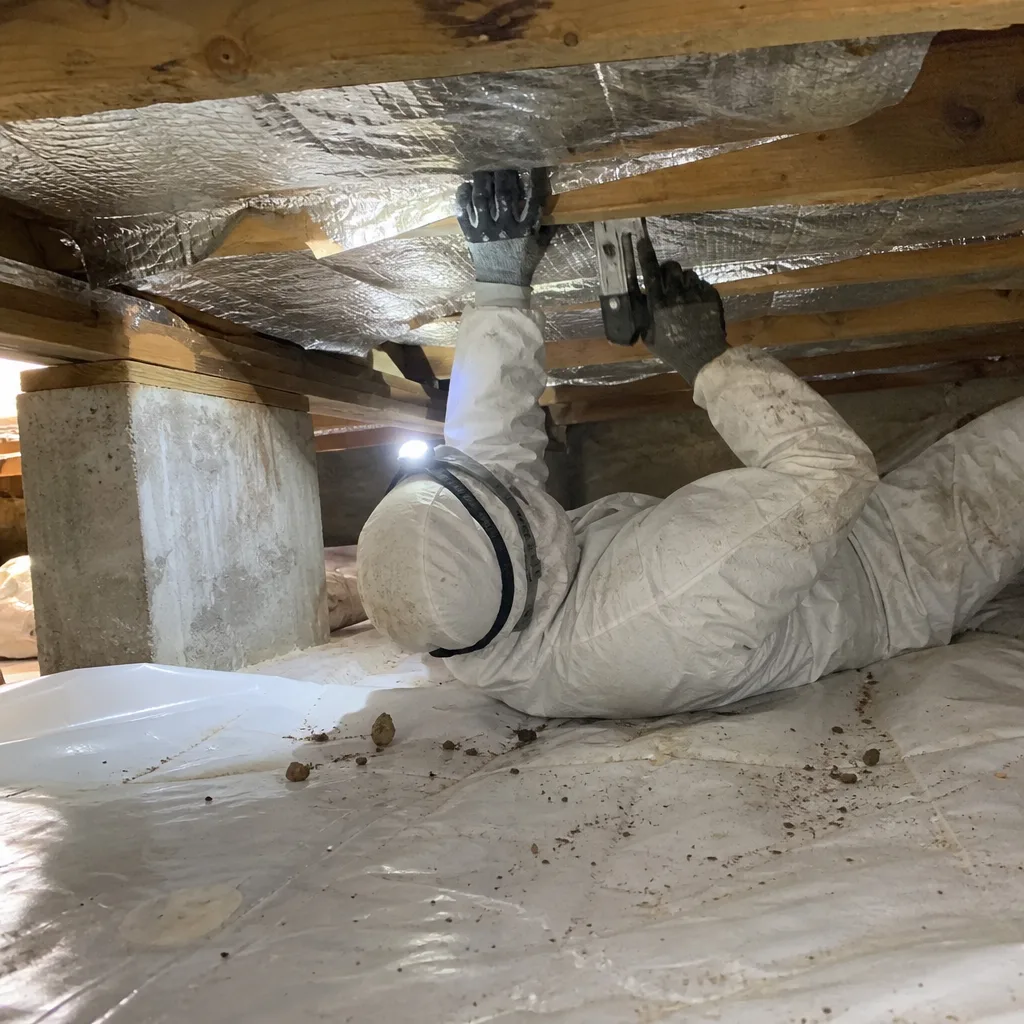
The DIY-vs-professional question for Lancaster insulation isn’t about whether you’re handy enough. It’s about whether you have the instrumentation to know what needs doing. A blower-door test separates guesswork from measurement. With that measurement in hand, a capable homeowner can safely and effectively add blown insulation, install batts in open bays, and maintain small-penetration seals. Without it, even perfect insulation installation is likely insulating outdoor air. The smart money in Lancaster is on the hybrid approach: professional diagnostic and air sealing, then DIY execution to specification. Explore more guides & resources for Lancaster homeowners planning insulation projects. When the conditions are complex or the risks are real, full professional execution with documented before-and-after performance is the better investment.
Written by Wes Okafor, Owner at Topside Attic Insulation Lancaster, serving Lancaster since 2016.