
Blown-In Attic Insulation in Lancaster, CA
Blown-in attic insulation is a process where loose-fill material – cellulose or fiberglass – is machine-blown into your attic floor cavity to reach a target R-value, typically R-38 to R-60 for homes in Lancaster’s climate zone. Most Lancaster jobs run between $1,400 and $3,200 depending on attic square footage and current insulation depth. At Topside Attic Insulation Lancaster, we never start blowing material until the attic floor is air-sealed as part of our Attic Insulation services – because loose-fill over open top plates and unsealed can lights performs significantly worse than the R-value label suggests.
If your energy bills are climbing and your HVAC runs longer than it used to, the attic is almost always the first place to look. Lancaster sits in California Climate Zone 14 – a high-desert corridor where summer attic temperatures regularly exceed 140°F and winter nights can drop into the upper 20s. That’s a brutal daily swing for an under-insulated envelope, and blown-in insulation handles it well because the loose fill conforms to irregular joist bays and surrounds obstructions that batt insulation tends to bridge over.
To see how blown-in fits within our full scope of work, visit our Attic Insulation in Lancaster page. Or call us directly at (661) 526-2890 – a live person answers, no voicemail queue.
When You Need Blown-In Attic Insulation
Not every Lancaster home is a candidate, but the following situations come up constantly in our inspections across neighborhoods like Quartz Hill, West Lancaster, and the older tracts near Avenue I.
- Your attic floor shows less than 10 inches of existing insulation. California’s Title 24 energy code targets R-38 minimum for Lancaster’s climate zone. Ten inches of fiberglass loose-fill gets you there; anything less and the attic is actively undercutting your HVAC system every summer afternoon.
- You have old, settled, or damaged batt insulation. Fiberglass batts installed in the 1980s and 1990s lose loft over time and leave gaps at every joist edge. Blown-in material fills those voids and restores the thermal barrier without requiring a full tear-out, though we always assess whether a removal-first approach makes more sense before we quote.
- Your summer cooling bills are consistently above local averages. We see this regularly in single-story homes on the east side of Lancaster where roof pitches are shallow and attic ventilation is marginal. A blower-door reading – a pressurization test that shows in one number how much conditioned air the home is losing – often confirms the attic floor, not the ductwork, is the primary leak point.
- You’re preparing for a home sale and need documented performance. Buyers in the Antelope Valley increasingly ask for energy documentation. A written scope, before-and-after blower-door numbers, and a photo record of the completed install gives a listing agent something concrete to put in the disclosure packet.
- A home energy audit flagged the attic as the primary heat-gain source. If you’ve already had a home energy assessment, the auditor’s report likely assigned a priority ranking. When the attic tops that list, blown-in is almost always the fastest payback upgrade available.
- You added square footage or converted a room and the attic coverage is now uneven. Additions built before 2005 in Lancaster frequently have mismatched insulation depths – the original structure at R-19, the addition at R-11, or vice versa. Blown-in lets us top-dress to a consistent depth across the whole floor in a single visit.
Our Blown-In Attic Insulation Process
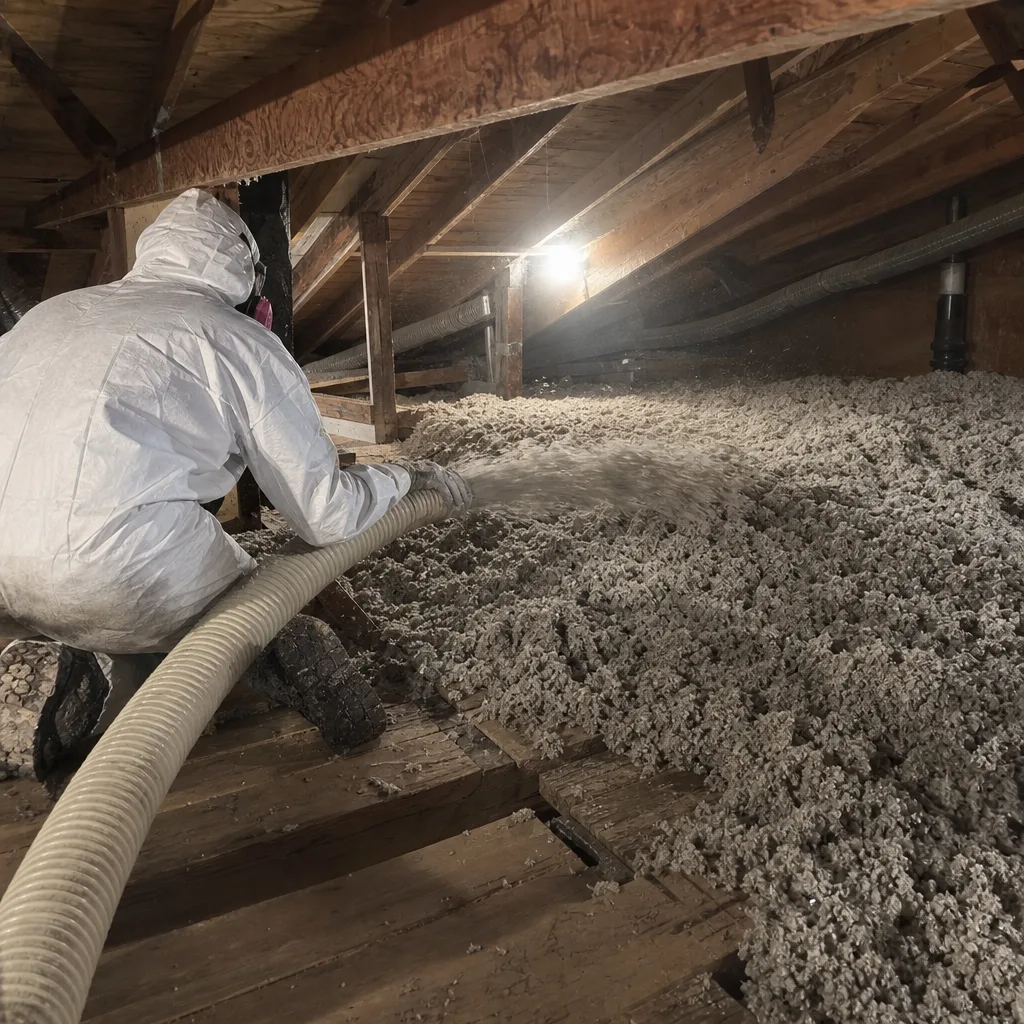
Every job follows the same sequence. The order matters – air sealing before insulation is not a marketing line, it’s the reason the R-value you pay for is the R-value you actually get, which is why we always include Attic Baffles & Ventilation Prep in our process.
- Written Price Before Any Work Starts. Under Haven Standard Clause 1, you receive a flat price, written scope, and written warranty before anyone carries equipment into your home. There are no verbal estimates that change on invoice day. If you have a competing written quote, bring it – we’ll read it with you as part of our Free Second Opinion offer and explain line by line what you’re looking at.
- Pre-installation blower-door test. We pressurize the building envelope and record the CFM50 reading – that’s cubic feet per minute of air loss at 50 pascals of pressure, which is the standard unit used to compare homes of different sizes. This number goes into your job record and onto your invoice. You’ll see it again after we’re done.
- Attic floor air sealing. This step is non-negotiable at Envelope Insulation Co. We seal top plates (the framing members where interior walls meet the attic floor), recessed can lights, plumbing and electrical penetrations, and any HVAC boot gaps using a combination of spray foam and fire-rated caulk. In a typical Lancaster ranch-style home, this process closes somewhere between 30 and 60 individual penetration points. Blown-in material goes over a sealed floor only.
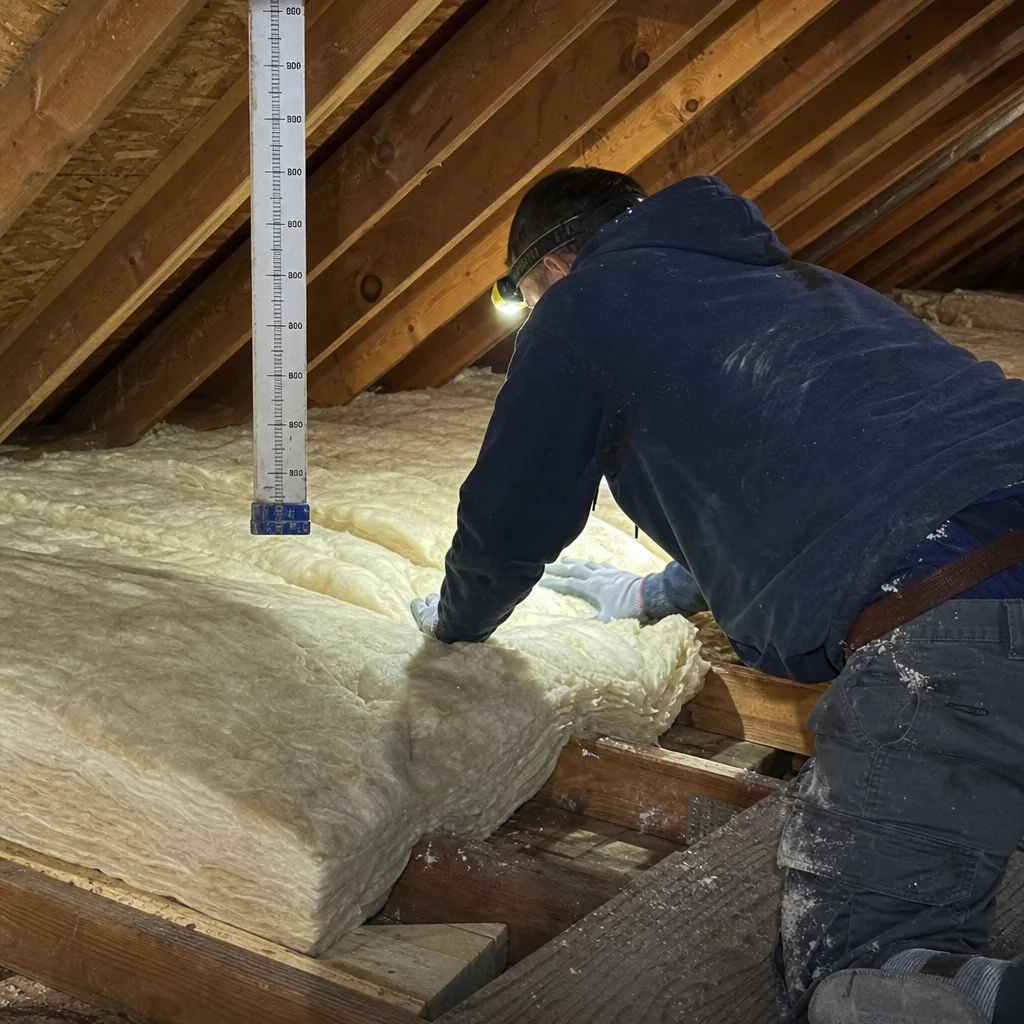
- Machine installation of loose-fill material. We use GreenFiber cellulose or Owens Corning fiberglass loose-fill depending on the job conditions – moisture history in the attic, existing material type, and target R-value. The blowing machine stays outside the home; a single hose runs to the attic access. The technician inside the attic guides the fill to depth markers placed across the floor before installation begins, so the finished depth is consistent rather than eyeballed.
- Depth verification and photo documentation. Once the blow is complete, the technician photographs installed depth at multiple points across the attic floor – including areas furthest from the access hatch where short-filling is most common in the industry. Every photo is timestamped and included in your Documented Photo Record, delivered with your invoice.
- Post-installation blower-door test and written results. We re-pressurize the home and record the new CFM50 number. Both readings – before and after – go on your paperwork. If the air-sealing phase delivered a meaningful reduction, you’ll see it in that second number. If it didn’t move the way we expected, we talk about it before we leave. The 365-Day Done Right Promise covers every completed job: if something isn’t right, we make it right.
Blown-In Attic Insulation Pricing in Lancaster
Blown-in attic insulation in Lancaster typically costs between $1,400 and $3,200 for a standard single-story home, though How Much Does Attic Insulation Cost? (2026 Price Guide) - Lancaster, CA breaks down the full picture. That range is wide because attic square footage, current insulation conditions, and the extent of air sealing required all move the number substantially. Below is how the variables break down.
| Factor | Typical Range | Notes |
|---|---|---|
| Attic square footage (1,000-1,500 sq ft) | $1,400 – $2,000 | Most tract homes in West Lancaster and Quartz Hill fall here |
| Attic square footage (1,500-2,500 sq ft) | $2,000 – $3,200 | Larger footprints near Avenue K-8 corridor and newer builds |
| Air sealing (included, not an upsell) | Included in scope | Top plates, can lights, penetrations sealed before any material is blown |
| Existing insulation removal (if required) | $500 – $1,200 additional | Rodent-contaminated or water-damaged material must come out first |
| Blower-door testing (before and after) | Included on applicable jobs | Both readings delivered in writing with your invoice |
A few things that don’t move the price: a written scope, a written warranty, and a Documented Photo Record are included on every job regardless of size. There is no line item for those. The 365-Day Done Right Promise also applies at no additional charge.
What does move the price: attic access difficulty (a scuttle hole versus a full-size pull-down stair), the presence of knee walls that need separate coverage, and whether the existing insulation is healthy enough to top-dress over or needs removal first. When we inspect the attic before writing your price, we note all of these and build them into the flat quote you receive in writing before any work starts.
Lancaster homeowners may also be eligible for utility rebates through Southern California Edison or SoCalGas for qualifying insulation upgrades. We don’t manage the rebate application, but we can provide the documentation – installed R-value, material type, contractor information – that rebate forms typically require.
For a written price specific to your home’s square footage and current attic conditions, call (661) 526-2890. The estimate is free, the price is flat, and nothing starts until you have it in writing.
FAQs – Blown-In Attic Insulation
How much does blown-in attic insulation cost in Lancaster, CA?
Most blown-in attic insulation jobs in Lancaster run between $1,400 and $3,200, depending on attic square footage, the condition of existing insulation, and how many penetrations need to be air-sealed before the material goes in. A 1,200-square-foot attic in a standard Quartz Hill tract home with minor existing insulation and clean conditions typically lands in the $1,400-$1,800 range. A larger attic with rodent-damaged material that needs removal first will push toward the upper end. The written price you receive before work starts reflects all of these variables – there are no line items added on the day of installation. Call (661) 526-2890 for a free, written estimate specific to your address.
What R-value do I need for blown-in attic insulation in Lancaster?
Lancaster falls in California Climate Zone 14, and Title 24 sets the minimum attic insulation requirement at R-38 for most residential applications. Most energy consultants and building scientists recommend R-49 to R-60 for high-desert climates where summer attic temperatures regularly exceed 140°F, because the temperature differential across the ceiling assembly is larger here than in coastal California. In practical terms, reaching R-49 with GreenFiber cellulose requires approximately 13 inches of settled depth; reaching R-60 requires around 16 inches. We mark target depths across the attic floor before installation begins and document achieved depth at multiple points in the Documented Photo Record.
Is blown-in insulation better than batts for attic floors in Lancaster?
Blown-in loose-fill outperforms batts on Lancaster attic floors in most situations because it conforms to irregular joist spacing, surrounds obstructions like cross-bracing and wiring, and leaves no edge gaps – the gaps along joist sides where batts consistently underperform. Batts are also more likely to be disturbed during HVAC maintenance and less likely to be reinstalled correctly. The one scenario where Attic Batt Insulation may make more sense is a shallow attic with very limited access where running a blow hose is impractical, but those situations are uncommon in Lancaster’s standard residential construction. The bigger variable in any installation is whether the attic floor was air-sealed before the insulation went in – that step matters more than the material choice.
Can blown-in insulation be added over my existing insulation?
Yes, in most cases. If the existing material is dry, uncontaminated, and structurally sound, blown-in loose-fill can be added directly over it to bring the total assembly up to the target R-value. We assess this during the pre-installation inspection. If the existing insulation shows rodent activity, moisture damage, or vermiculite content (an asbestos-adjacent material found in some pre-1990 Lancaster homes), removal comes first – both for health reasons and because contaminated material underneath will eventually compromise the new layer above it. When removal is necessary, we document the condition in photos before and after, and the removal cost is included in your written scope before work starts. Call (661) 526-2890 if you’re unsure about the condition of what’s already in your attic – we can assess it as part of the free estimate visit.
Why Lancaster Homes Specifically Benefit from Blown-In
The construction patterns across Lancaster and the broader Antelope Valley mean a large share of the housing stock was built between 1975 and 2005, during periods when California’s energy code was substantially less demanding than today’s Title 24 requirements. Many of these homes were built to R-19 at the attic floor, which was code-compliant at the time and is now roughly half of what the same homes need to perform adequately in Lancaster’s climate.
The geometry of Lancaster residential construction also favors blown-in over batts. Shallow roof pitches, interior soffits that interrupt the attic floor plane, and HVAC equipment sitting directly on the attic deck create irregular surfaces that batt insulation handles poorly. Blown-in material flows around all of it.
We’ve also found that homes near the older commercial corridors on 10th Street West and in the Avenue J and Avenue K residential grids frequently have original recessed lighting that predates airtight fixture requirements. Sealing those fixtures before insulation goes in is exactly the kind of step that separates a job with documented performance from one that looks complete but still leaks conditioned air into the attic every time the ceiling light is on.
If you’re researching your options and want to understand the full scope of what we do before calling, the Attic Insulation in Lancaster page covers the complete service picture, including removal, radiant barriers, and the blower-door process we use on every applicable job.
Key Takeaways
- Blown-in attic insulation in Lancaster costs $1,400-$3,200 for most single-story homes – written price provided before any work starts, no exceptions.
- Lancaster’s Climate Zone 14 designation and high-desert temperature swings make R-49 to R-60 the practical target, not the R-38 Title 24 minimum.
- Air sealing happens before any material is blown in – top plates, can lights, and penetrations are sealed first, documented in photos, and confirmed by a post-installation blower-door reading.
- Both blower-door readings – before and after – are delivered in writing with your invoice so you can see the air-sealing result in a single measurable number.
- The 365-Day Done Right Promise applies to every completed job: if it’s not right, we make it right.
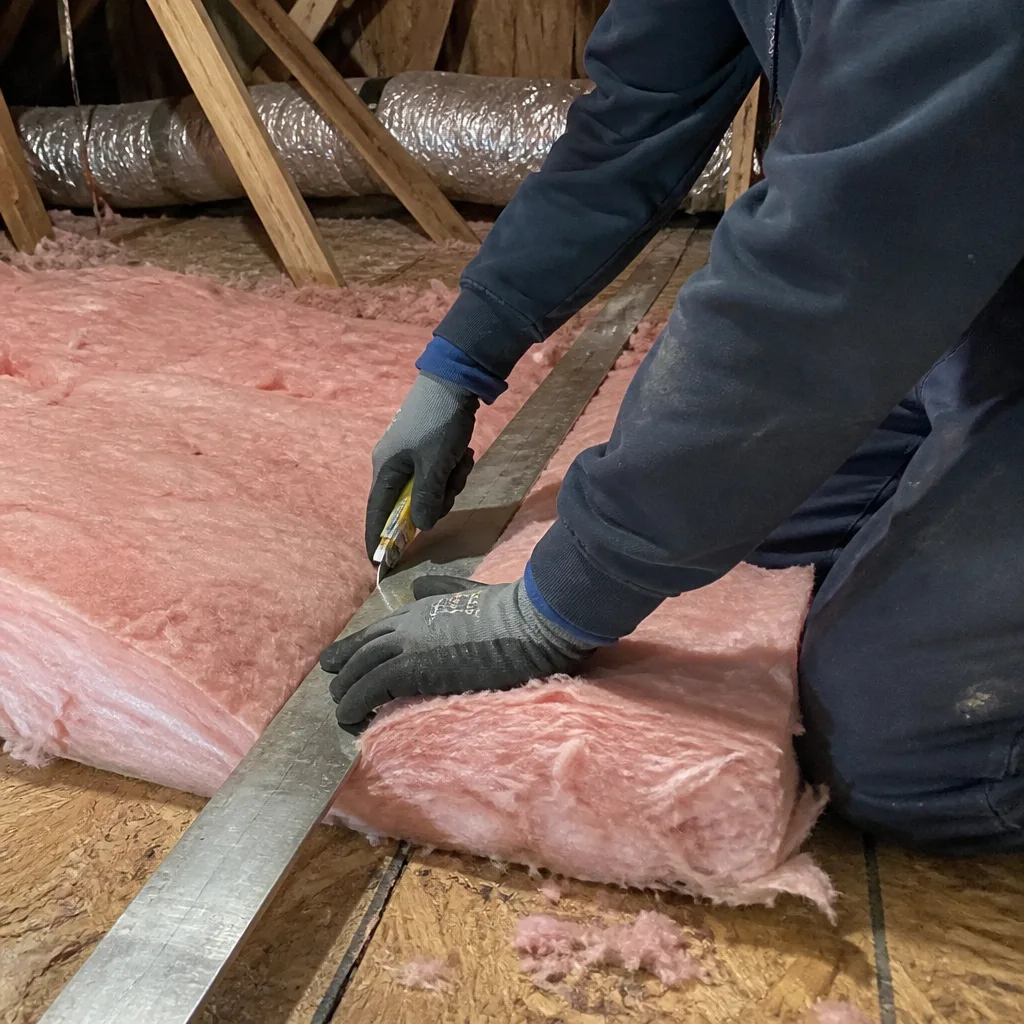
- Existing insulation can usually be topped-off rather than replaced, unless it’s contaminated – the pre-installation inspection determines this, and the answer is in your written scope before work starts.
To get a written price for blown-in attic insulation at your Lancaster home, call (661) 526-2890. A live person answers – not a voicemail, not a callback window. The estimate visit is free, the price is flat and in writing, and no work starts until you’ve seen both.
Written by Wes Okafor, Owner at Topside Attic Insulation Lancaster, serving Lancaster since 2016.