
Attic Insulation Replacement in Lancaster, CA
Our Attic Insulation services for replacement in Lancaster typically runs between $1,800 and $4,500 for a standard single-story home, depending on square footage, current insulation condition, and whether air sealing is needed first – and it almost always is. Most jobs are completed in a single day, and every Topside job closes with a Documented Photo Record and written warranty before anyone leaves the property.
If your attic insulation is compressed, contaminated, water-stained, or simply too thin to meet California’s Title 24 requirements for Lancaster’s climate zone, replacement is not a patch job – it’s a full removal, air-seal, and reinstall. At Topside Attic Insulation Lancaster, we’ve completed this process on well over 9,000 homes since 2016, and we do it in a specific order: air sealing first, insulation second. That sequence is non-negotiable for us, because blowing new insulation over an unsealed attic floor is one of the more expensive mistakes a homeowner in Lancaster can make. Call us at (661) 526-2890 any time – a live person answers, no voicemail.
For the full picture of what we do in attics, our Attic Insulation in Lancaster page covers every service under that umbrella. This page focuses specifically on what replacement involves, what it costs, and what signs tell you it’s time.
When You Need Attic Insulation Replacement
Replacement is different from an Attic Insulation Top-Up. A top-up adds material over what’s already there. Replacement means pulling the old material out entirely, fixing what’s underneath, then starting clean. Here are the conditions that make replacement the right call – and in Lancaster’s high-desert climate, several of these show up more often than homeowners expect.
- Rodent contamination or pest activity. Lancaster sits at the edge of the Mojave, and attic rodent intrusion is common in neighborhoods from Quartz Hill to Sun Village. Mice and rats compress insulation, leave waste throughout, and create pathways that destroy the material’s thermal performance. Contaminated insulation cannot be topped up – it must come out, and the attic must be cleaned and sealed before any new material goes in.
- Water damage or mold. A single roof leak or failed HVAC condensate line can saturate blown-in cellulose or fiberglass batts across a wide area. Wet insulation loses its R-value immediately and creates conditions for mold growth. Once that happens, the material is a liability, not an asset.
- Insulation below R-30. California’s Title 24 energy code requires R-38 in Lancaster’s climate zone (Zone 14). Homes built before 2006 – and many built after – often have R-19 or less. When the material is too degraded to add on top of, replacement to current code is the right path, not a partial add.
- Fire or smoke damage. Lancaster Fire Department responses to attic fires often leave material that looks intact but has absorbed smoke residue and particulates. That material needs to go, full stop.
- Vermiculite or deteriorating older material. Some Lancaster homes built in the 1960s and 1970s still have vermiculite in the attic – a material associated with asbestos contamination. We can assess this; if vermiculite is present, we refer to a licensed abatement contractor before any insulation work begins.
- Energy bills that don’t respond to other fixes. If you’ve already addressed your HVAC system and your summer cooling bills are still climbing past $400 a month, the attic is often where the problem lives. A blower-door test – a pressurization reading that shows, in one number, how much conditioned air your building envelope is losing – usually tells the story quickly.
Our Attic Insulation Replacement Process
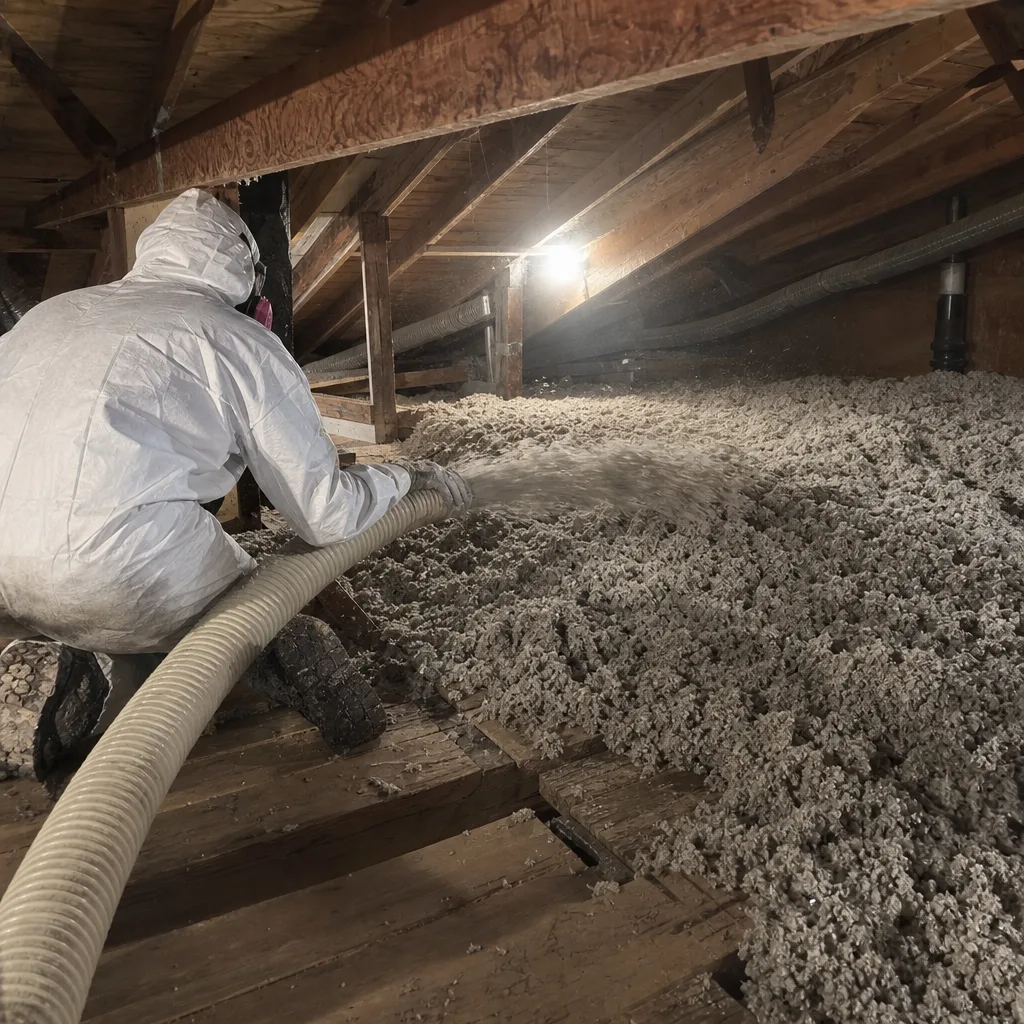
We follow the same documented sequence on every job in Lancaster. There are no shortcuts, and the order of operations is not flexible. Here is what the process looks like from start to finish.
- Written scope and price before anything starts. Under Haven Standard Clause 1, you receive a flat written price and written scope before any crew member touches your attic. No “we’ll know more once we get up there and start” – we do the assessment first, write up exactly what we found, and hand you the price in writing. You decide. That’s it.
- Blower-door baseline reading. On applicable jobs, we run a blower-door test before removal begins. This gives us a CFM50 number – the cubic feet of air per minute escaping your envelope when the house is depressurized to 50 pascals. That number is your before. You’ll have it in writing when we leave.
- Full removal and vacuum extraction. We use commercial-grade insulation vacuums to pull all existing material out of the attic and bag it for disposal. This is not a light job – a 1,500-square-foot attic can hold 30 to 60 bags of material. We protect your living space during this process.
- Attic floor inspection and air sealing. With the old insulation gone, we can see the attic floor clearly – top plates, plumbing penetrations, recessed can lights, electrical chases, and every gap where conditioned air has been escaping into unconditioned space. We seal these with fire-rated foam and mastic before any new insulation goes in. This step is not optional, and it’s not an upsell. We will not install new insulation over an unsealed floor.
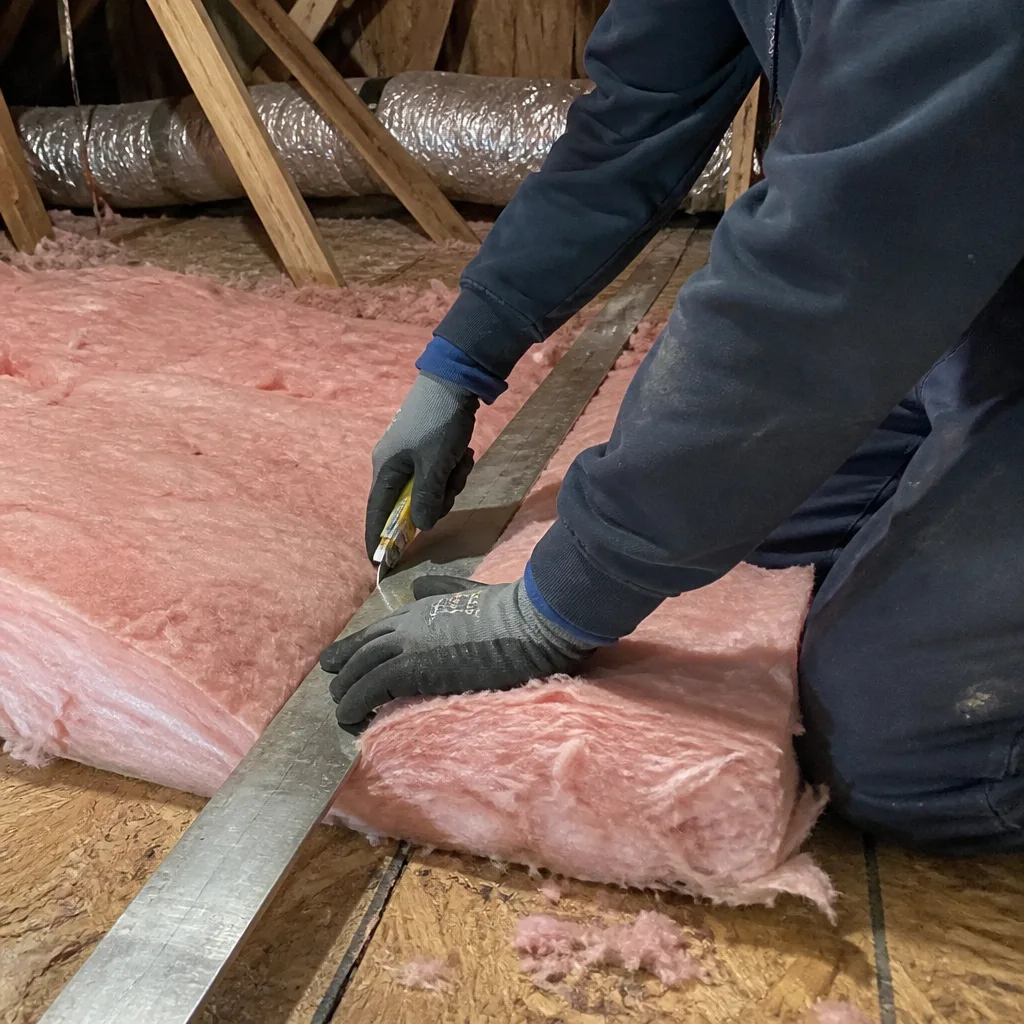
- Insulation installation to specified R-value. Once the floor is sealed and inspected, we install new insulation to the depth and R-value specified in your written scope. Depending on the job, that may be blown-in cellulose from GreenFiber, fiberglass batts from Owens Corning or Johns Manville, or a combination. The material choice is based on your attic’s geometry, ventilation, and budget – not on what we happen to have on the truck.
- Post-install blower-door reading and Documented Photo Record. After installation, we run a second blower-door test. You get the before number and the after number, in writing, so the performance change is a fact you can verify rather than a claim you have to take on faith. We also leave a Documented Photo Record of the completed work – every job, not by request.
Attic Insulation Replacement Pricing in Lancaster
Most attic insulation replacement jobs in Lancaster run between $1,800 and $4,500 for a single-story home. Here is how that range breaks down and what moves a job toward one end or the other.
| Job Type | Typical Range |
|---|---|
| Small attic replacement (under 1,000 sq ft), basic air sealing | $1,800 – $2,400 |
| Mid-size attic (1,000 – 1,800 sq ft), standard air sealing | $2,400 – $3,400 |
| Larger attic (1,800 – 2,500 sq ft), full air sealing, current code depth | $3,400 – $4,500 |
| Contamination cleaning + replacement (rodents, mold) | Add $400 – $900 depending on scope |
A few factors specific to Lancaster move costs in either direction:
- Attic access and headroom. Lancaster has a high proportion of 1970s and 1980s tract homes with low-pitch roofs and tight access points, particularly in older sections of west Lancaster near Avenue J. Limited headroom means slower removal and installation, which affects labor cost.
- Number of can lights and penetrations. More recessed lights and HVAC penetrations mean more air sealing work. A 1,400-square-foot home with 20 can lights in the ceiling takes meaningfully more sealing time than one with 8.
- Target R-value. R-38 (current code minimum for Lancaster) requires more material than R-30. If a customer specifies R-49 for peak performance, material cost increases accordingly.
- Material choice. Blown-in cellulose and blown fiberglass are generally the most cost-effective for full replacement in Lancaster attics. Batts cost less per bag but require more labor to install correctly at depth.
We price every job in writing before work starts. If you have a competing written estimate, bring it to us – we offer a Free Second Opinion on any written estimate and will go through it line by line with you. There’s no pressure attached to that conversation.
FAQs – Attic Insulation Replacement
How long does attic insulation replacement take in Lancaster?
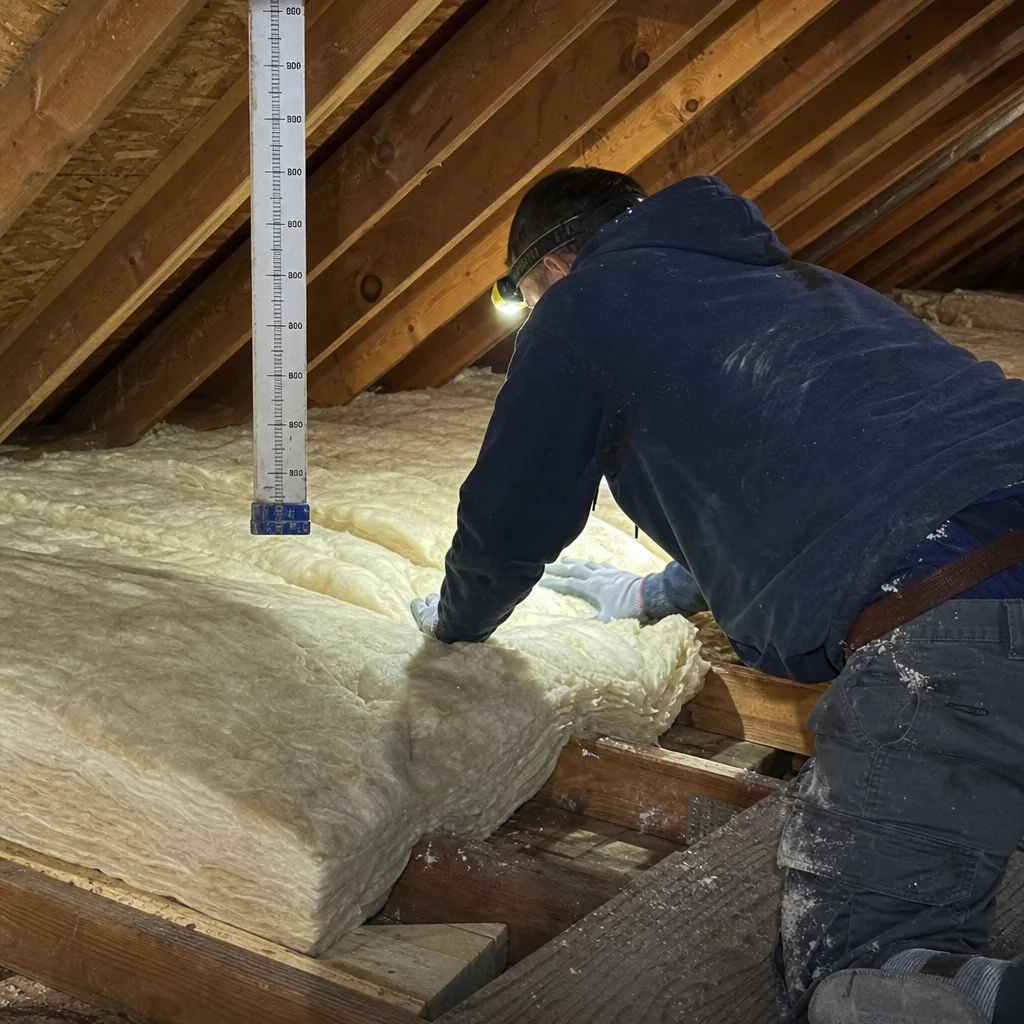
Most attic insulation replacement jobs in Lancaster are completed in one day – typically 4 to 8 hours depending on attic size and the extent of air sealing required. A 1,600-square-foot attic with moderate penetrations and standard access usually runs about 5 to 6 hours from first vacuum to final Attic Baffles & Ventilation Prep blower-door reading. We confirm the schedule in your written scope so you know what to expect before the crew arrives.
Can you just add insulation on top of the old material instead of replacing it?
Sometimes yes, but only when the existing material is dry, uncontaminated, and in reasonable structural condition. If the old insulation is compressed, wet, rodent-damaged, or so thin that there isn’t a stable base, adding on top creates a false sense of improvement without the actual performance gain. More importantly, topping up without sealing the attic floor first – which you can only do properly with the old material out – leaves the biggest air leaks intact. We assess this honestly on every job and tell you which approach applies to your specific attic.
How much does attic insulation replacement cost in Lancaster, CA?
Attic insulation replacement in Lancaster typically runs between $1,800 and $4,500 for a single-story home. The main variables are attic square footage, the number of penetrations and can lights requiring air sealing, and how much contamination cleanup is needed before new material goes in. We put the exact price in writing before any work starts – call us at (661) 526-2890 and we’ll schedule a free assessment to give you a written number, not a range.
Is the work covered by a warranty?
Yes. Every completed job at Topside Attic Insulation Lancaster is backed by the 365-Day Done Right Promise: if it’s not done right, we make it right. You receive the written warranty before work starts, not after – so you know exactly what it covers before anyone enters your attic. The materials we use from manufacturers like Owens Corning and Johns Manville carry their own separate product warranties, which we document and pass along as part of your job record.
Why Attic Insulation Replacement Works Differently in Lancaster
Lancaster’s climate is not the same as coastal Southern California, and that matters for attic insulation. At roughly 2,300 feet elevation in the Antelope Valley, Lancaster sees summer attic temperatures that regularly exceed 150 degrees Fahrenheit. The high desert also produces wide daily temperature swings – a 35-degree drop between midday and midnight is common in October and November. That thermal cycling compresses fiberglass batts faster than it would in a moderate coastal climate and causes Blown-In Attic Insulation to settle more aggressively in attics without adequate depth.
The Antelope Valley also gets more wind than most of Los Angeles County. Sustained winds through Tehachapi Pass and across the valley floor create stack effect conditions in homes – warm air rising through unsealed ceiling penetrations and being replaced by outside air pulled in at lower levels. In a poorly sealed Lancaster attic, that stack effect is running against your HVAC system every hour of every day. A blower-door test makes this visible as a number. Air sealing eliminates it. New insulation holds the result. That’s the sequence, and it’s why the order matters here more than most places.
We’ve worked in neighborhoods across Lancaster – from the established streets near Lancaster Boulevard and 10th Street West to newer construction in the Ritter Ranch and Amargosa Creek areas. The problems are different from block to block. Older homes near the fairgrounds tend to have original blown vermiculite or degraded fiberglass batts from the 1970s. Newer track homes in North Lancaster often have adequate depth but no air sealing at the top plates, meaning the insulation is doing a fraction of its potential work. We document what we find, give you the price for what it actually takes to fix it, and don’t move until you’ve agreed in writing.
If you want to understand the broader scope of what attic work can involve, the Topside Attic Insulation Lancaster home page covers our full service line. For questions specific to insulation type, depth, and material options for your home, our Attic Insulation in Lancaster overview is the right starting point.
Key Takeaways
- Attic insulation replacement in Lancaster runs $1,800 to $4,500 for most single-story homes – you get an exact written price before any work starts.
- Air sealing always comes before new insulation. We seal top plates, can lights, and penetrations first, then install to specified R-value.
- Before-and-after blower-door readings are included on applicable jobs so you have documented evidence of the performance change, not just a claim.
- Every job closes with a Documented Photo Record and a written warranty under the 365-Day Done Right Promise.
- Lancaster’s climate – high desert heat, strong winds, wide temperature swings – makes proper air sealing more critical here than in milder Southern California markets.
- Rodent contamination is common in the Antelope Valley; contaminated insulation must be fully removed and the attic cleaned before any new material is installed.
Get a Written Price for Your Attic Insulation Replacement
If your attic insulation is damaged, compressed, contaminated, or simply not performing, the next step is a straightforward assessment – we look at what’s there, measure the space, identify the air sealing scope, and hand you a written price. No vague estimates, no “we’ll know more once we get started.” Under Haven Standard Clause 1, you have the price in writing before anyone enters your attic.
Call Topside Attic Insulation Lancaster at (661) 526-2890. A live person will answer. We’ll schedule the assessment, walk you through what we find, and put the price in writing. That’s the whole process, and it starts with one call.
Written by Wes Okafor, Owner at Topside Attic Insulation Lancaster, serving Lancaster.